‘Campus Life: 150 Years of Human and More-Than-Human Relationships‘
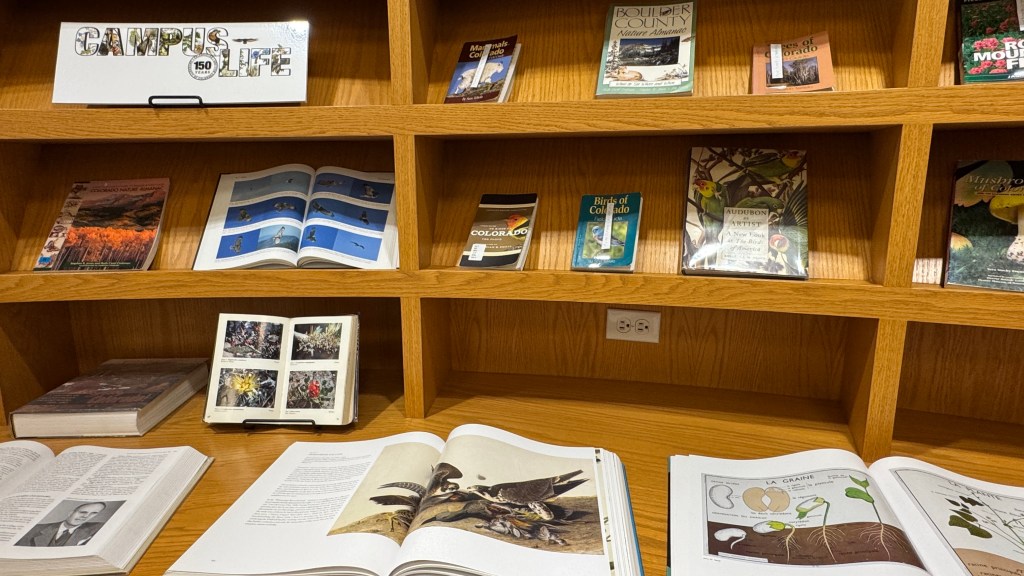
Historical landscape books, field guides, and illustrated volumes of CU Boulder flora and fauna line the shelves at the “Campus Life” exhibit inside the Jerry Crail Johnson Earth Sciences & Map Library. (CU Independent / Melodie Miller)
The University of Colorado was founded on a treeless plain 150 years ago, but today, more than 5,000 trees later, the campus is recognized as an Arbor Day Foundation Campus of Higher Education that effectively maintains urban forests.
This history is at the center of “Campus Life,” an exhibit in the Jerry Crail Johnson Earth Sciences & Map Library that traces 150 years of relationships between people, plants and animals on campus. The planning decisions made more than a century ago continue to shape how the campus community coexists with its biological neighbors.
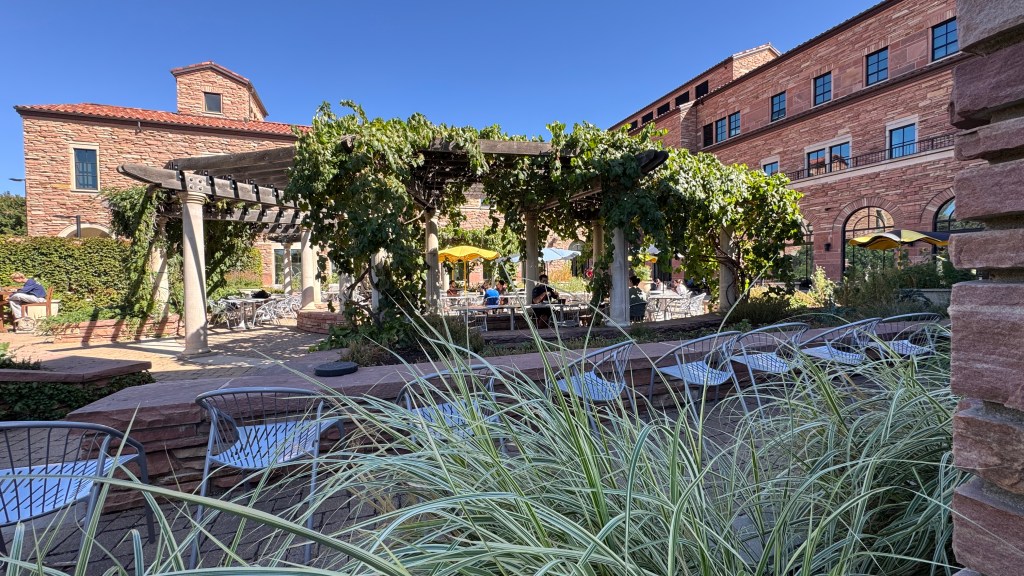
The Center for Community dining garden is surrounded and filled with drought-resistant plantings. (CU Independent / Melodie Miller)
Throughout the campus grounds, plantings enhance the beauty of the environment while maintaining a commitment to non-human habitats, minimal water use and other environmental considerations.
Sundance will maintain its mission while building a new festival rooted in Boulder culture
Boulder Theater marquee displays the Sundance Film Festival name (Photo courtesy of Miles Fujimoto)
Someone’s next big break in a film career might come while waiting in line for a screening or riding a bus across town in Boulder. This was the message Sundance Film Festival director Eugene Hernandez and Sundance Institute managing director Paula DuPré Pesmen shared with Colorado student reporters at a Sept. 30 press conference on the festival’s move from Park City, Utah, to Boulder.
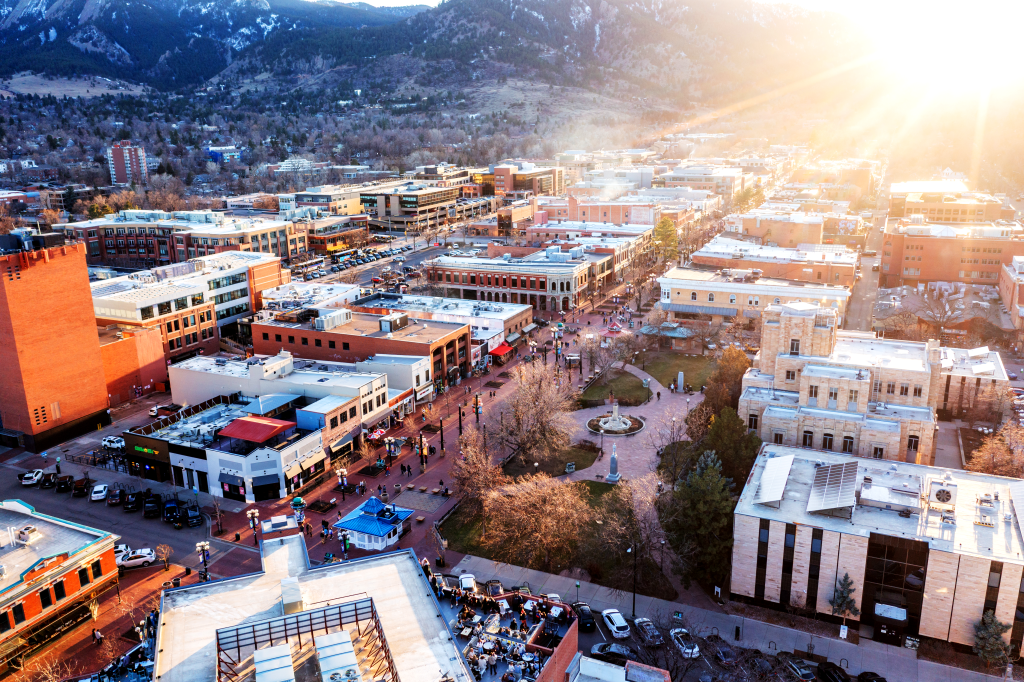
When Sundance opens Jan. 21-31, 2027, its venues will sit within a 2.4-mile radius of the Hotel Boulderado, a more compact footprint than the Utah festival’s three locations.
Asked what will define the Sundance Film Festival’s new home, festival director Eugene Hernandez offered one word: community.
Part of the Sundance Film Festival footprint spans from the Boulder Theater, north, up Pearl Street toward Broadway, a direct route to the University of Colorado campus and more venues (Photo courtsey of Justin Bilancieri)
A 19th-century gold-rush mining town is alive in Durango
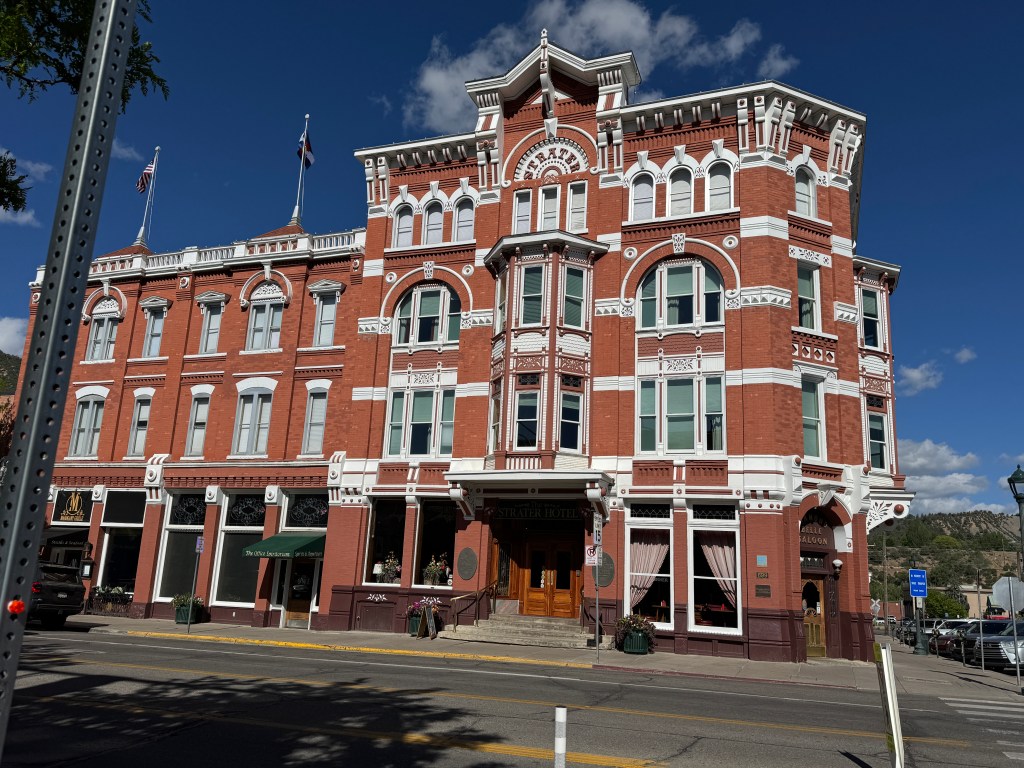
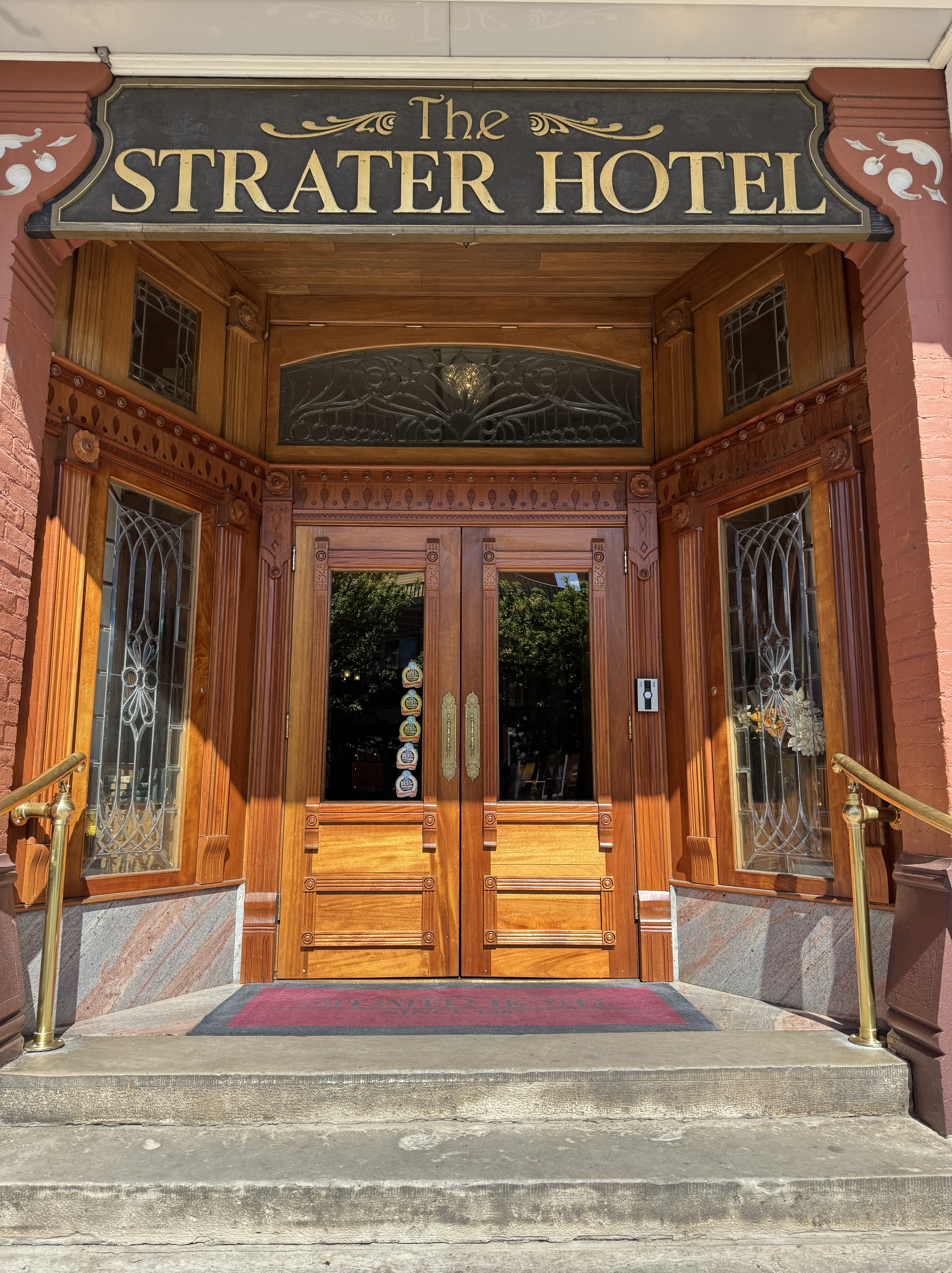
The historic Strater Hotel on Main Street, Durango (Melodie Miller | Photographer)
ByMelodie Dawn Miller Reporting from Durango, Colorado June 16, 2026 2:00 p.m. MDT
The Strater Hotel is a distinctive red-brick building situated on Durango’s Main Street in the Historic District, where visitors can rest their heads in the Wild West without traveling back in time. Built in 1887 by Fred, Frank and Antone Strater, the Boomtown hotel is filled with historically accurate furnishings and decor that take visitors back to the 19th century without sacrificing modern conveniences or civil order.
“American mining towns were mostly civil,” Jennifer M. Larson writes in Why the West Became Wild. The American West “grew so rapidly during the nineteenth-century gold rush that they were dubbed boomtowns.”
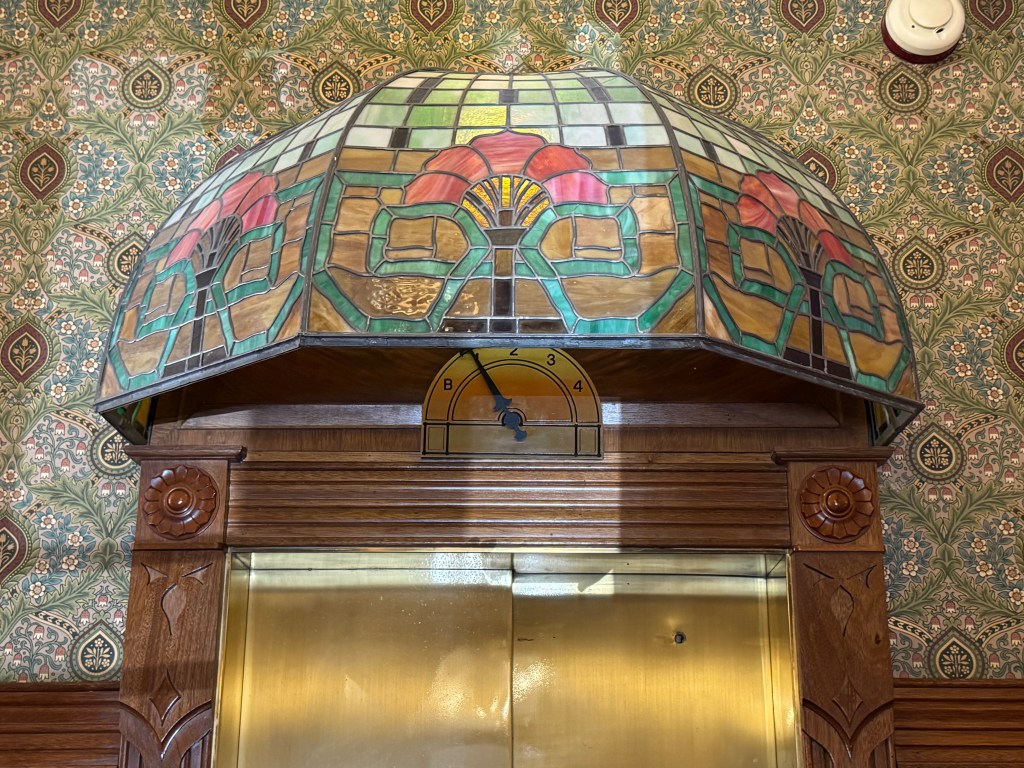
Tiffany-inspired elevator awning emulates the 1880s Art Nouveau decorative period (Melodie Miller | Photographer)
Designed and built during the region’s mining boom, the Strater Hotel management strives for authenticity with century-old oak furnishings, replicated 19th-century wallpaper, and Tiffany Art Nouveau-emulated lighting fixtures, giving guests a Wild West experience.
“The hotel is dedicated to providing factual information. The hotel is a living museum,” Tori Ossola, the General Manager of the Strater Hotel, said.
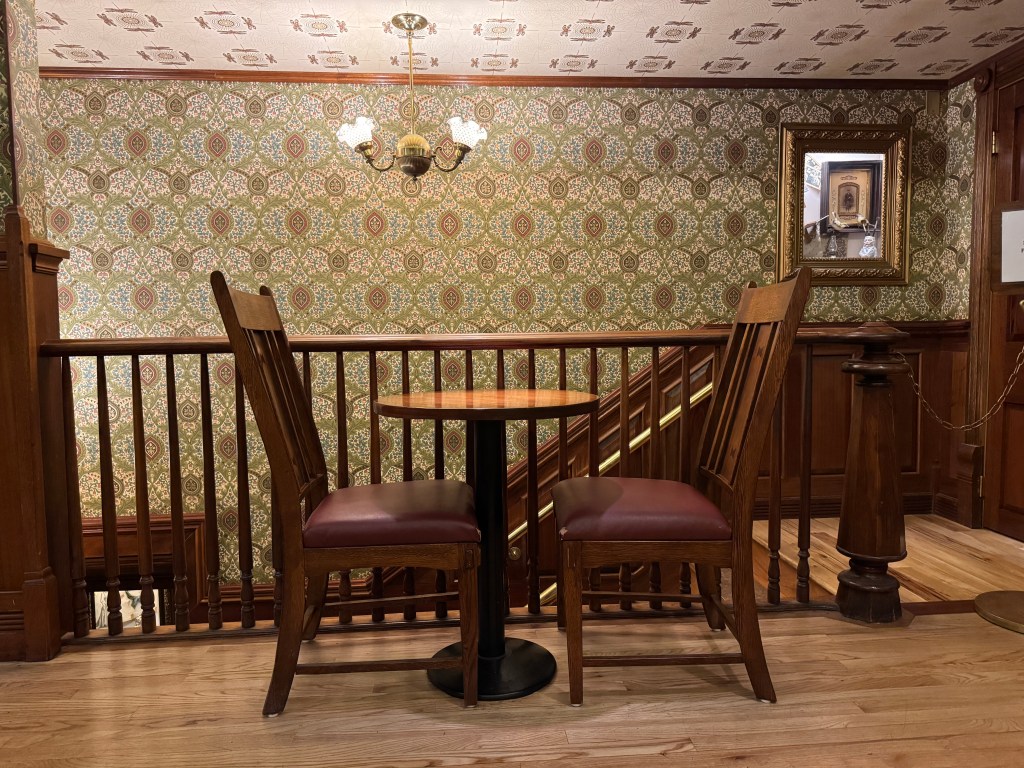
Historical maple furnishings and Bradbury & Bradbury wallpaper at the Strater Hotel Melodie Miller | Photographer
The ladder-back Mission chairs, hand-milled oak staircase railing, and heavy balusters showcase the early American Craftsman-style set against a backdrop of color that favors gently aged tones of the late Victorian era.
According to Historic Hotels of America, in 1926, owner Earl A. Barker, Sr. became dedicated to preserving the hotel’s prestigious status and he inspired the following generations to follow in his footsteps.
“The large collection of Victorian antique furniture we have throughout the property can be attributed to the second-generation Barker family,” Ossola said. Then, the third generation, Mr. Rod Barker and his wife Lori, “did the major heavy lifting on the renovation.”
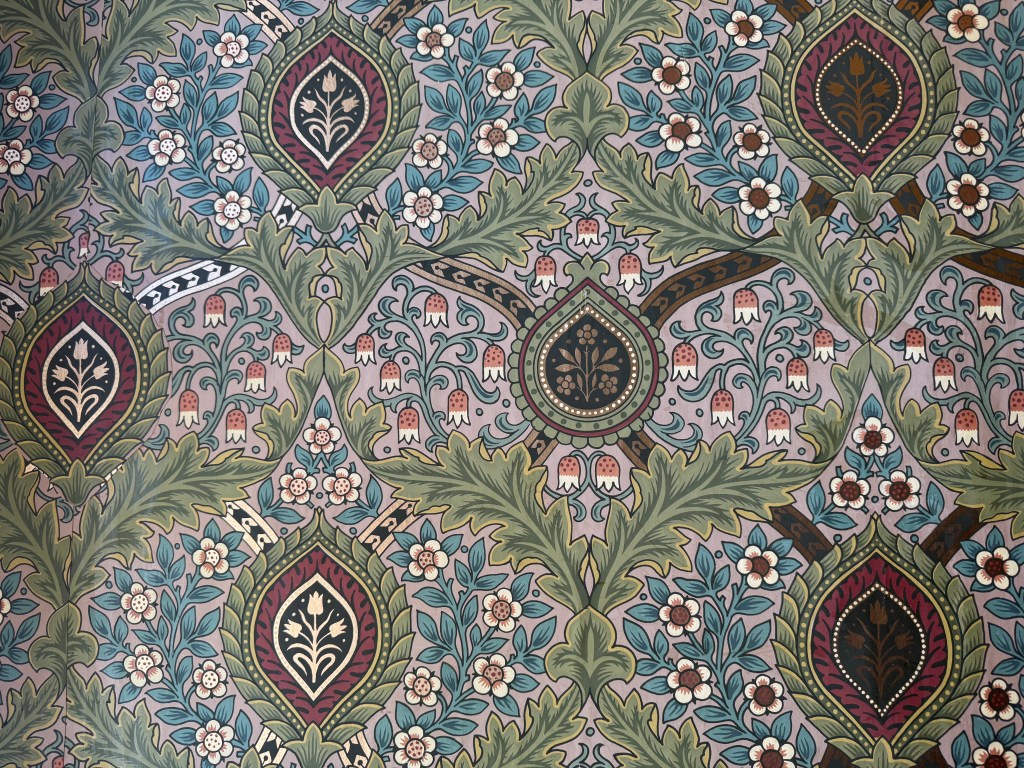
Historically inspired Gilded Age Bradbury and Bradbury wallpaper covers the walls of the Strater Hotel (Melodie Miller | Photographer)
The Knightsbridge Damask wallpaper by Bradbury & Bradbury of San Francisco recreates the Anglo-Japanese Aesthetic Movement, using motifs from 1875 to 1890. Designed in 1986 by artistic director and co-owner Stephen Bauer, the motifs recreate patterns following the transition of the 19th-century designer William Morris.
The late-Victorian-inspired wallpaper is reminiscent of the Gilded Age, featuring teardrop-shaped ogee and gold-metallic floral medallions joined by a lattice of leaves.
“We strive to be a resource to historic properties for the preservation and restoration of their buildings,” a representative of Bradbury & Bradbury, Lisa Bauer, said.
The Strater Hotel wallpaper colors are unique because “the pattern has recently received a refresh,” Bauer said, but “it has never been retired, only revised.”
The historic Strater Hotel on Main Street, Durango (Melodie Miller | Photographer)
An original mining boomtown, Durango was founded in September 1880, according to the City of Durango History. Henry Strater built the hotel in 1887 “right after the Silver Panic,” Ossola said.
According to Historical Hotels.org, Strater believed that a contemporary Durango offered a “great economic opportunity,” deserving of a grand hotel.
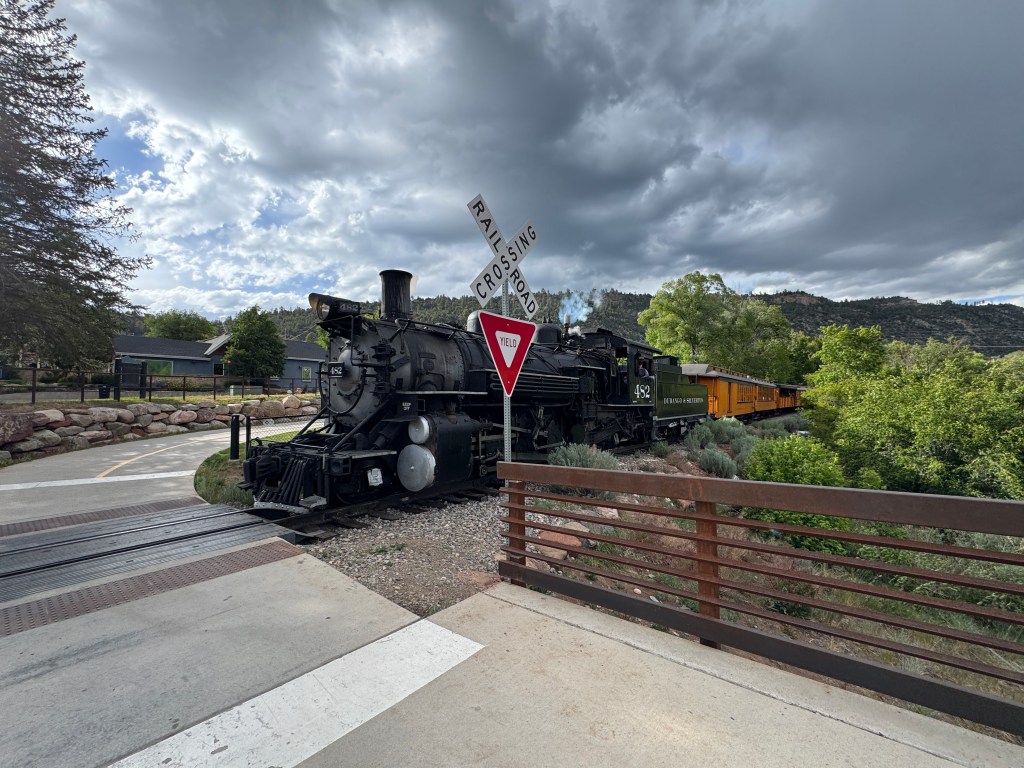
The Durango Silverton Gauge Railway steam engine and passenger car train (Melodie Miller | Photographer)
Along with the hotel, the economic boom brought the Durango to Silverton Gauge Railway steam engine that continues to carry passengers through the rugged San Juan Mountains of Southwestern Colorado. Built in 1882 to haul silver and gold ore, the historic steam-powered train transports passengers on a 45-mile round trip along the Animas River through canyons, forests, and landscapes largely unchanged since the 19th century. The train station is 0.2 miles, approximately a 3-minute walk, from the Strater Hotel.
In 2021, the Garrett family bought the hotel from the Barker family and “upgraded every single one of our hotel rooms to have its own heating and cooling system,” Ossola said.
“Not super sexy stuff, right? But still making sure that our guests having that historic experience are comfortable,” Ossola said.
You can visit a 12th-century community of Puebloan structures at the Aztec Ruins National Monument in New Mexico, near Durango, Colorado. If the Pueblos built the community, why is it named the Aztec Ruins?
“The Spanish are calling the Aztec ruins Aztec before non-Spanish Europeans show up,” Dr. Steve Lekson, Professor of Anthropology at the University of Colorado, said.
During the 19th century, scholars in Mexico City, Mexico, wrote that the Aztecs had built the 400-room community. However, most modern archaeologists accept that the ancestral Puebloans, a farming culture, built the dwellings, and the Aztecs, an elite class, lived there for a period of time.
“It’s a complicated story,” Dr. Scott Ortman, of the University of Colorado Boulder, said. One concern is “naming a site in one particular indigenous language” when many tribes view themselves as descendants of the area.
Thus, the 19th-century name took hold and remains.
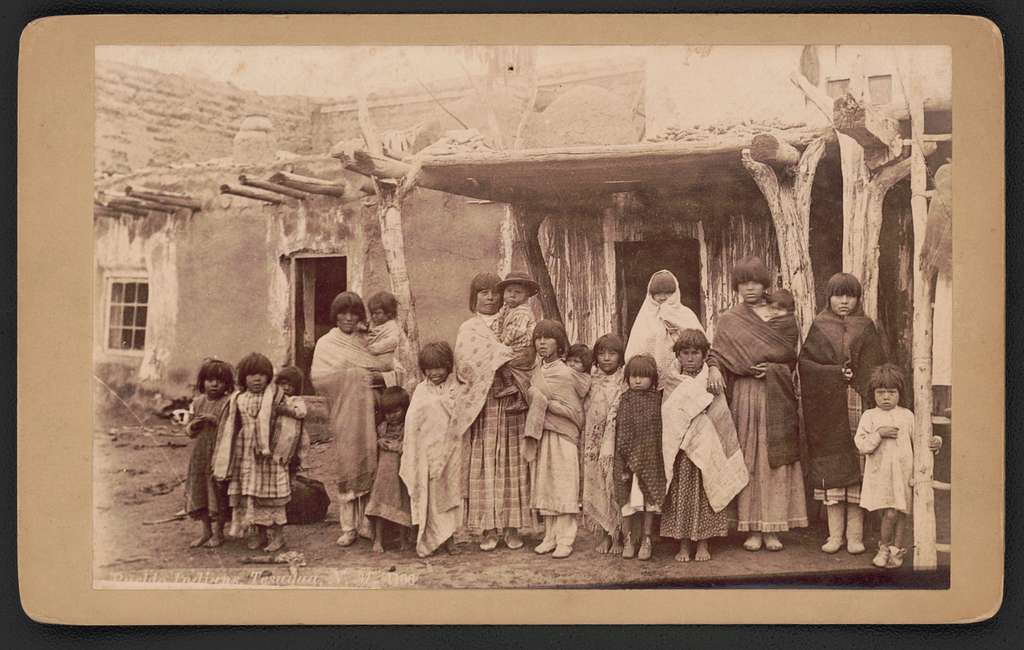
Pueblo Indians, Tesuque, N.M. (1893) (William Edward Hook | Courtesy of the Library of Congress)
Migration lies at the heart of the Aztec and Pueblo ancestral origin story. More than a record of movement, their ancestors’ journeys shape identity and belonging today.
According to Mexican scholars of the 1800s, the Aztec Ruins were the “first home of the Aztecs” before they migrated south to Mexico, Lekson, said.
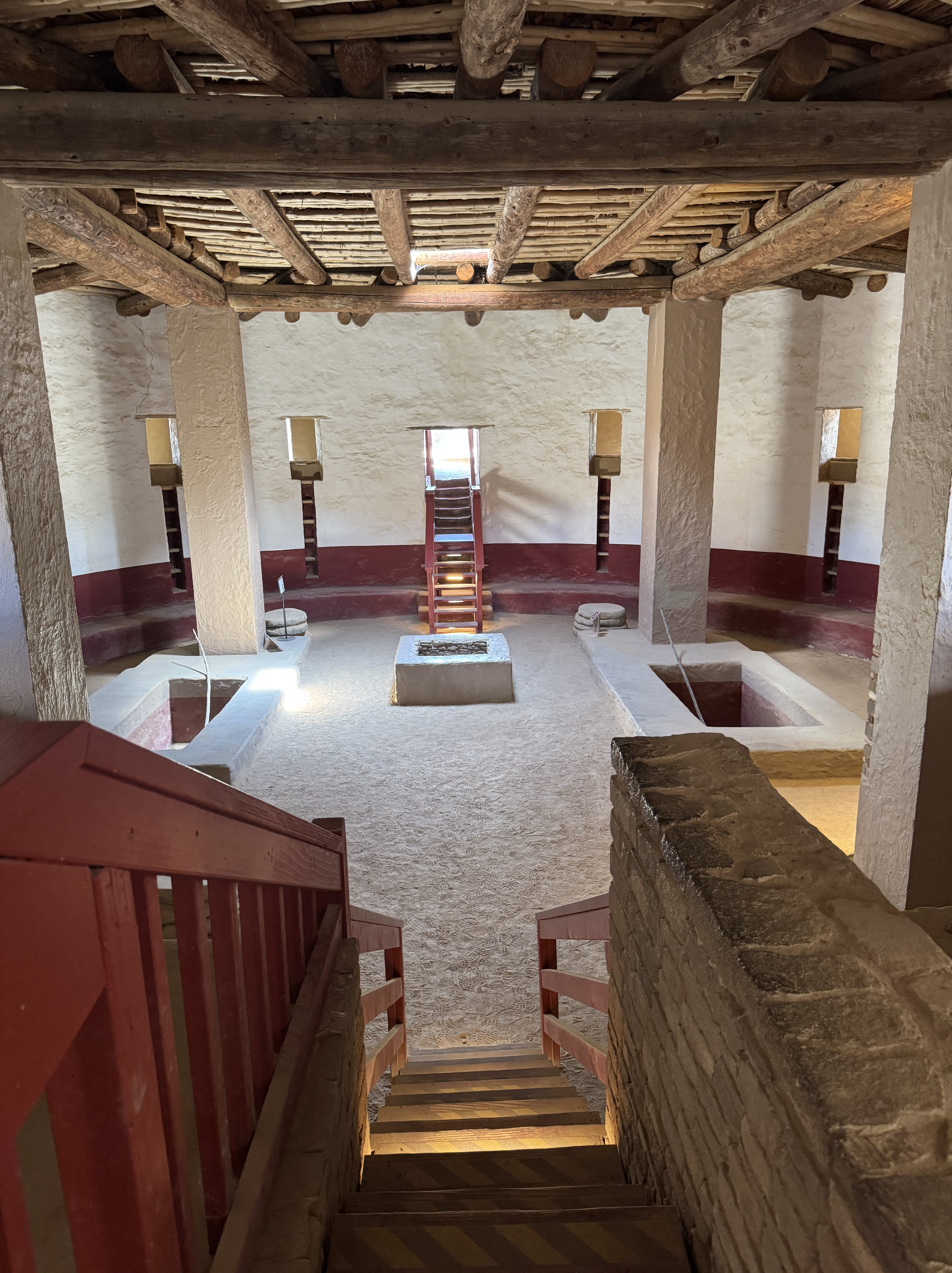
The Aztec Ruins kiva replica, Aztec, New Mexico (Photography | Melodie Miller)
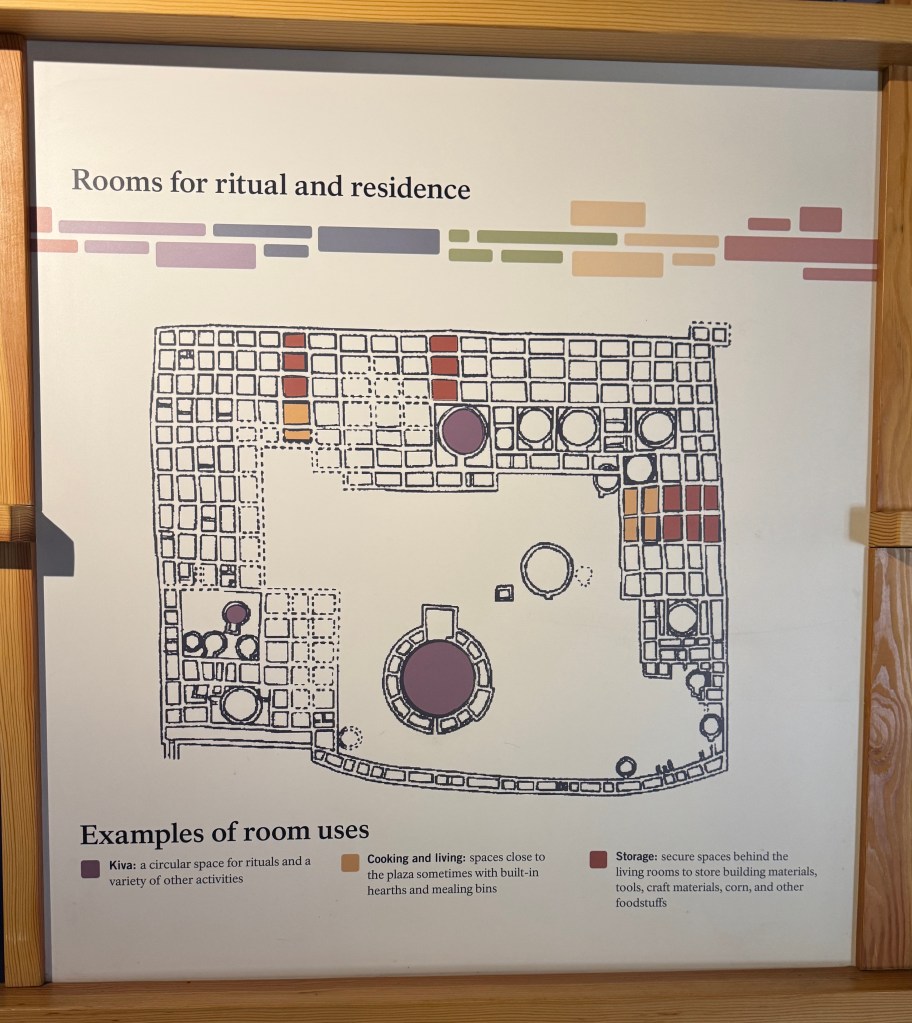
The 381-acre National Park protects the Ancestral Pueblo great house community and the kiva ceremonial room replica. Kivas are built with ventilation, a fire pit, and a sipapu — a spiritual gateway to and from the underworld. An important part of modern Pueblo and Hopi communities is sacred dances and rituals held in community kivas.
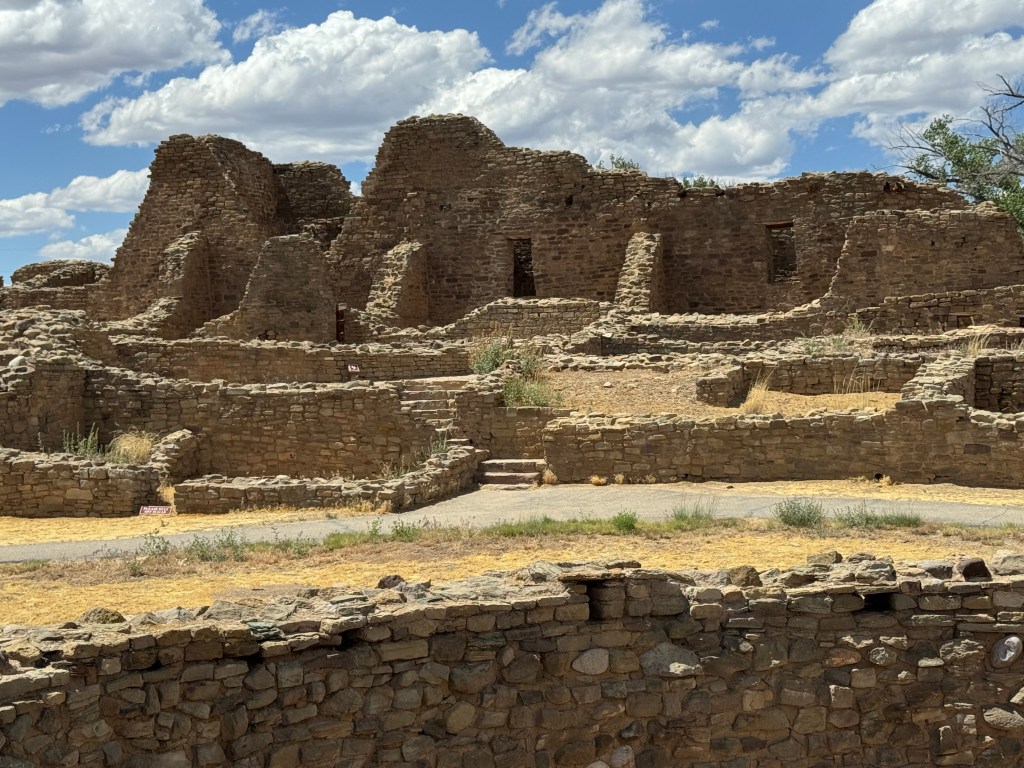
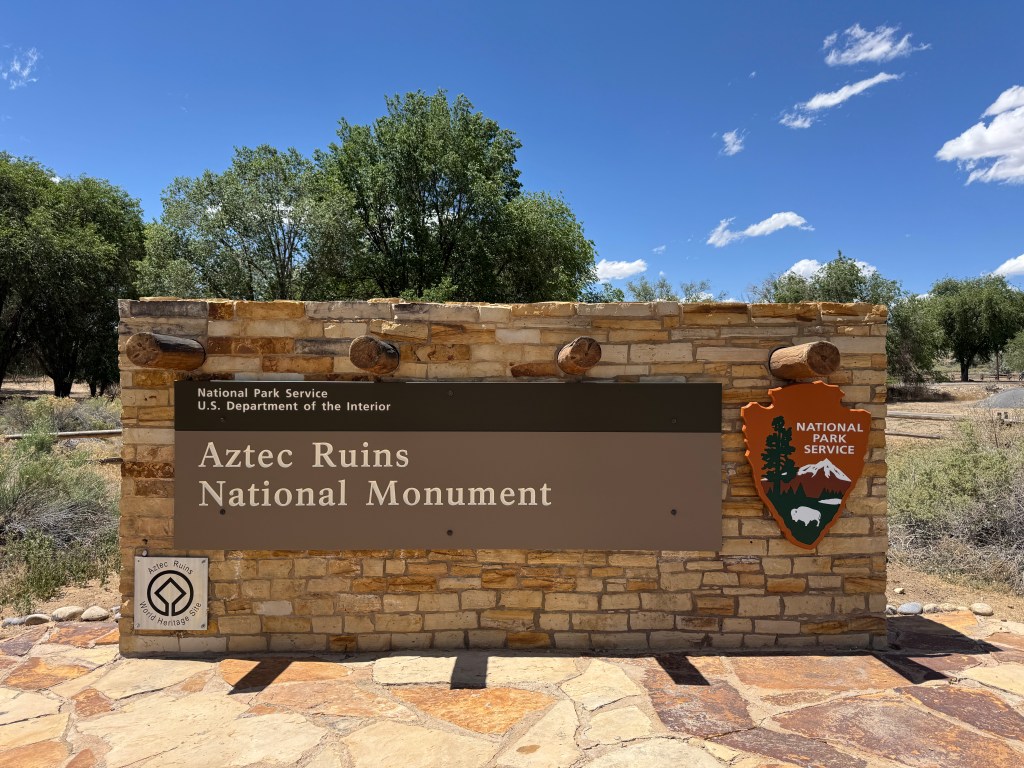
The Aztec Ruins National Monument, New Mexico (Photography | Melodie Miller)
President Warren G. Harding used the Antiquities Act of 1906 to designate the site as the Aztec Ruins National Monument on January 24, 1923.
Nathan Hatfield, Aztec National Park Ranger Supervisor of Interpretation, said, “I believe that by 1928 most southwestern scholars and archaeologists agreed that the Aztecs of Mexico were not responsible for building” the Aztec Ruins.
Consensus among archaeologists grew, accepting the continuity between the Ancestral Pueblo builders and the Aztec ruins.
Archaeologists have come to accept that “Aztec was built by ancestors of today’s Pueblo people,” Ortman said. “We didn’t need DNA. It was just recognizing the continuity and culture.”
Now the name is accepted as an artifact of history. A name change would require an act of Congress.
______________________________________________
The Aztec Ruins National Monument is located 40 miles (ca. 64 km) south of Durango, at 725 Ruins Rd, Aztec, New Mexico 87410.
Humor offers a chance to challenge the narrative of marginalization. This is according to Dallas Goldtooth, Res Ball (film) actor and environmental activist, who spoke on Tuesday, Sept. 24, at the University of Colorado Macky Theater. Goldtooth mixed his signature storytelling and humor with advocacy, gaining the audience’s trust.
“Buy American Spirit cigarettes,” he said when asked how non-indigenous allies can get involved.
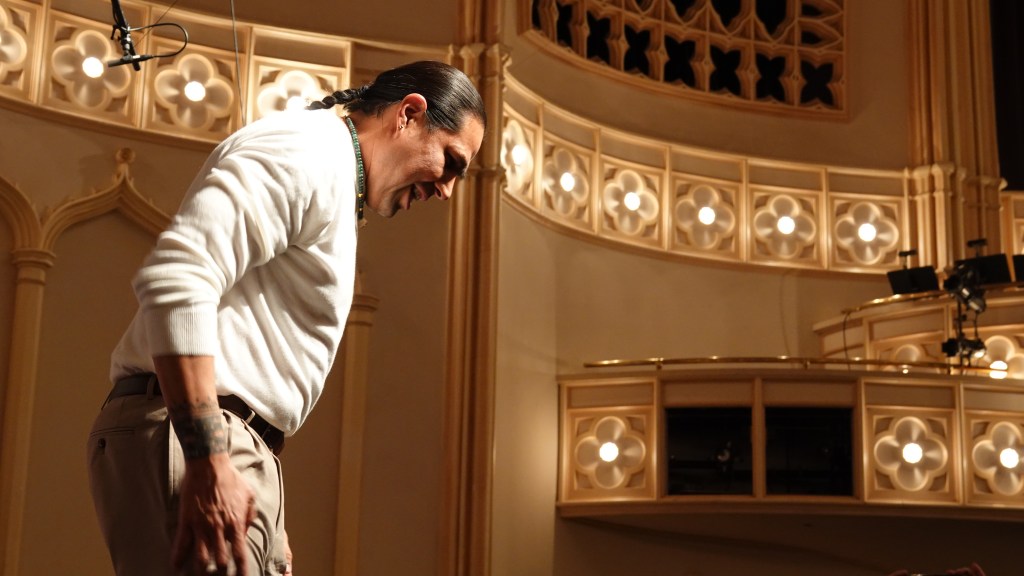
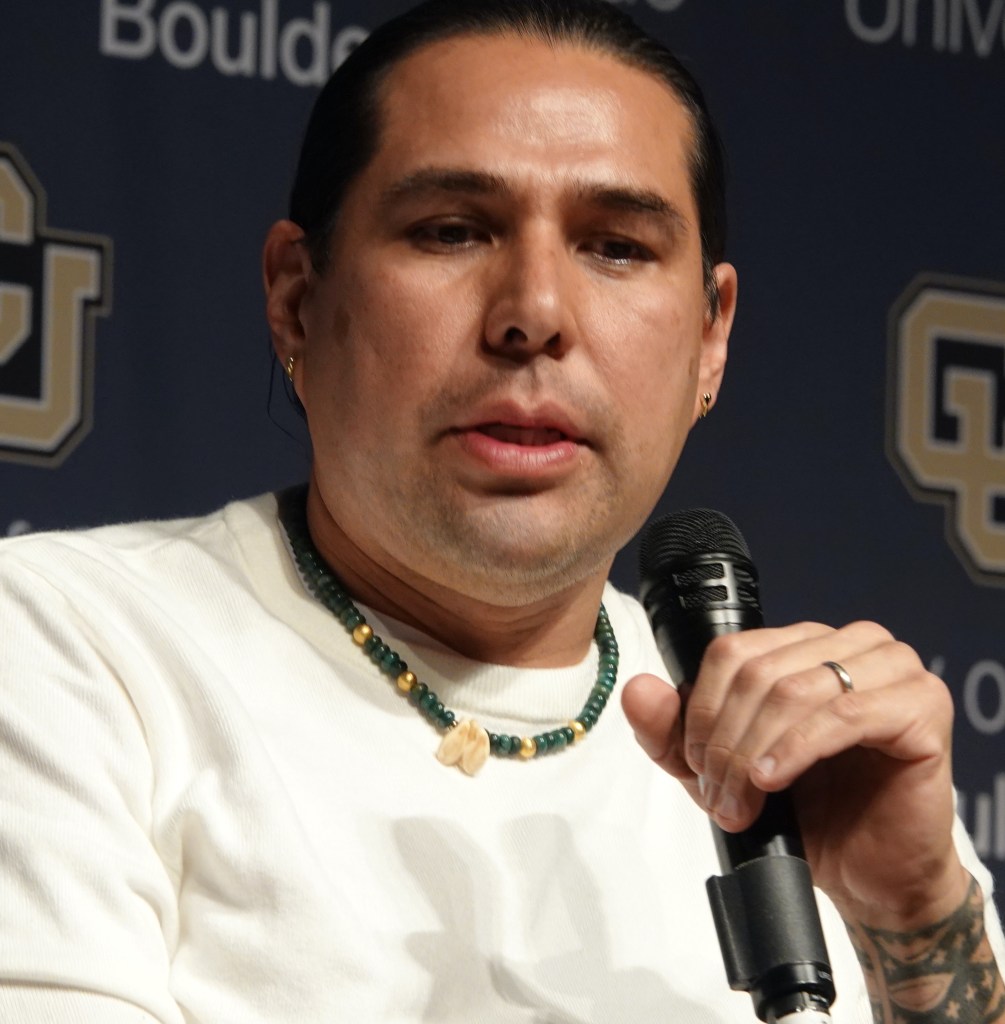
Dallas Goldtooth of Dakota and Diné heritage speaks at Macky Theater on the Campus of University of Colorado at Boulderof his experience with environmental issues and activism . (Melodie Miller | Photographer)
Goldtooth is known for his character William Spirit Knifeman in the FX series Reservation Dogs. He is also the founding member of the 1491’s comedy group. He joked with the Boulder audience and reminded them that solving the climate crisis means acting on a larger scale. The climate crisis disproportionately impacts Indigenous communities and other marginalized groups.
Actor and activist Dallas Goldtooth as William Knife-Man in FX’s Reservation Dogs. (Photograph by Shane Brown / FX)
“I’m sure all of you are really happy about your hybrid car that you’re driving or that you switched your light bulbs to LED lights. It’s great. But we have to remind ourselves as we understand that the causation of climate chaos is capitalism. It also means that the fight to protect this planet is much more than environmentalism,” Goldtooth said.
Activist Dallas Goldtooth encourages the audience to . (Melodie Miller | Photographer)
The fight for climate change is a fight for liberation, according to Goldtooth. Many areas affected by climate chaos are marginalized communities. Their citizens often lack the power to influence what happens to the land. They have no voice regarding the water, the air, or their bodies. He encouraged the audience to help lift marginalized voices.
“This will allow us to imagine a future that’s livable for everyone,” Goldtooth said.
Dallas Goldtooth combined humor and inspiration for action with audience at Macky Theater on the Campus of University of Colorado at Boulder. (Melodie Miller | Photographer)
“Just bring people together around a common issue and let them talk with one another. You have right-wing ranchers, and you have left-leaning natives,” Goldtooth said, “working together to stop the Keystone XL pipeline to preserve clean water on their lands. I’m happy to say that we won the Keystone XL campaign.”
Dallas Goldtooth joked with the audience at Macky Theater on the Campus of University of Colorado at Boulder. (Melodie Miller | Photographer)
Goldtooth amplified the importance of the world’s “climate chaos as an issue that we are all dealing with on this planet.” He softened the message with a personalized joke when asked how he began his career as an activist. Goldtooth told the audience, “Well, I was 13 pounds when I was born. So, my mom knew injustice.”
Dallas Goldtooth reminded the audience at Macky Theater on the Campus of University of Colorado at Boulder that the climate crisis affects marginalized communities disproportionately. (Melodie Miller | Photographer)
Storytelling is a “big part of the organizing effort to make this planet better,” Goldtooth said. Humor provides the “opportunity for you to disrupt the narrative because all of our fields have been impacted” by marginalization. For example, the United States insurance companies secure capitalistic investments. Goldtooth told the audience that “insurance companies are complicit in the destruction of the earth.”
Benny Shendo attended Goldtooth’s speech. He is the vice chancellor for Native American Affairs at the University of Colorado. Shendo is also a member of New Mexico’s Democratic Senate. “I think you will find humor across any country. I mean, it’s not any different in Pueblo or any different in Pani or any other tribe,” said Shendo.
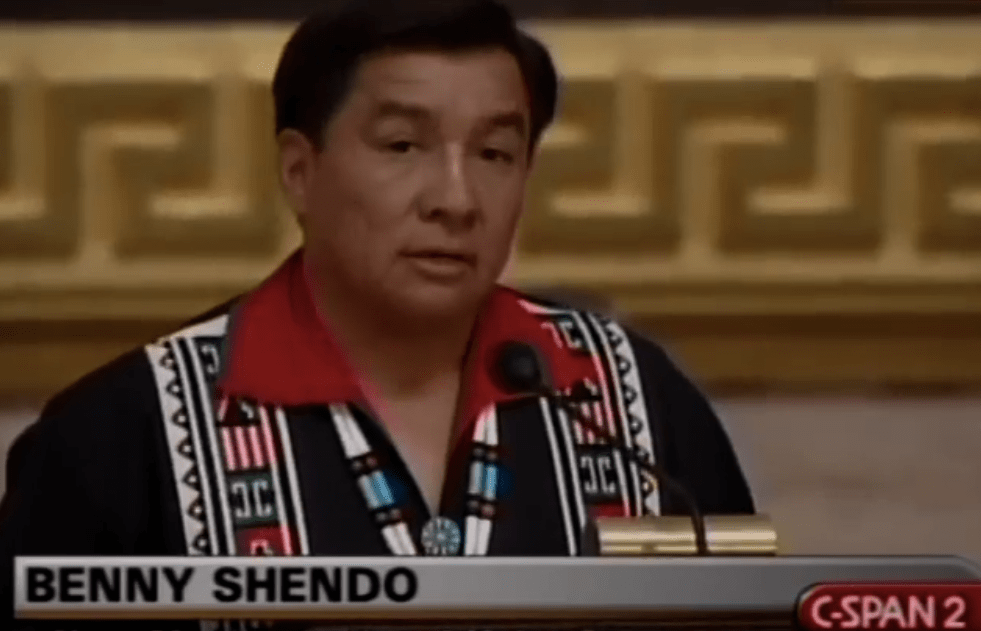
Benny Shendo. University of Colorado alumni speaks to Congress. Members of Congress formally accepted a sculpture of Po’pay, a medicine man from Ohkay Owingeh who led the Pueblo Indian Revolt of 1680, to complete the U.S. Capitol’s Statuary Hall collection. (Photograph courtesy of the C-SPAN 2 Archives)
Phillip Gover is a Tribal Affairs Specialist for the Colorado Department of Human Service. He is an advocate for Indigenous Coloradoans and said, “I think Native Americans have always dealt with tragedy with a sense of humor. Most people would say, ‘What?’ Why would you laugh at that? If I’m not laughing, then I’m crying, and I’d rather be laughing.”
Phillip Gover, a Tribal Affairs Specialist for the Colorado Department of Human Service (Melodie Miller | Photographer)
Goldtooth uses joy and laughter to advocate for marginalized Native American communities disproportionately facing climate change.
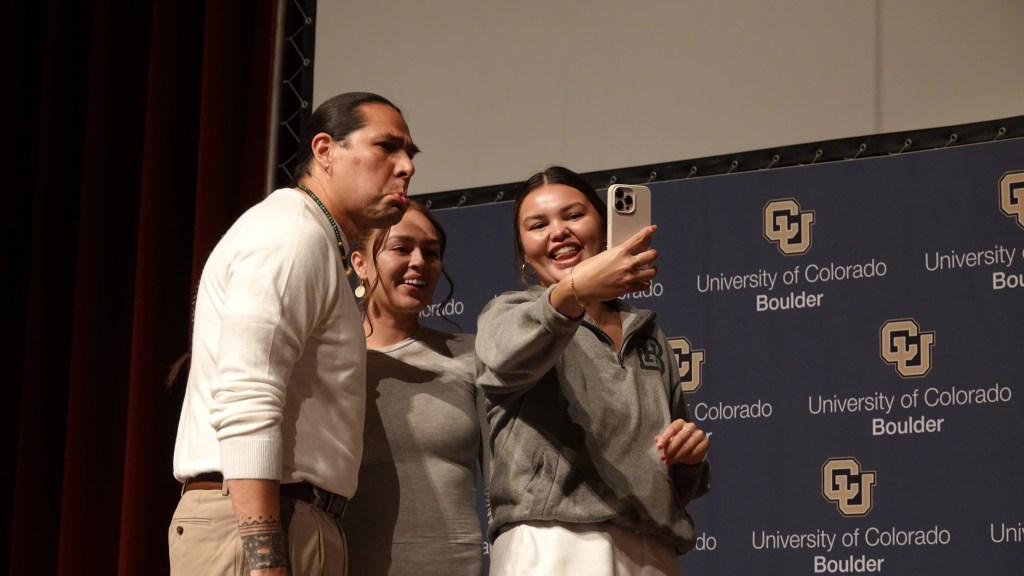
Dallas Goldtooth shared the stage with students at Macky Theater on the Campus of University of Colorado at Boulder. (Melodie Miller | Photographer)
He is descended from the Minnesota Dakota/Diné (Navajo) tribe. He is a member of the Lower Sioux Indian Community. He is also a Dakota language instructor.
C.U. Presents closed its modern vampire love story to a packed house at the University of Colorado Loft Theatre in Boulder.
Director Heather Kelley’s adaption of Jack Thorne’s play “Let the Right One In” completed its run to a sold-out theater on Sunday, Oct. 20, at the University of Colorado Loft Theatre.
The audience waits for the sold out presentation of Let the Right One in to begin. Scenic design by Hyley Delich. (Melodie Miller | Photographer)
Based on the novel by John Ajvide Lindqvist, first love, sexual intimidation, and school bullying transcend the borders of time and space in “Let the Right One In.” Eli, a 200-year-old vampire fixed at the age of 12, befriends Oskar, their 13-year-old neighbor, on the playground where Eli is bullied by schoolmates in 1981 Sweden.
Eli, a 12 year old trapped in the body of a 200 year old vampire is played by Wyleigh Watson. (Melodie Miller | Photographer)
The childhood friendship between Eli and Oskar is complex, creating “a dynamic narrative that centers on empathy and fighting for each other despite all the blood and scars,” Brosnan Bustamante, the stage manager said.
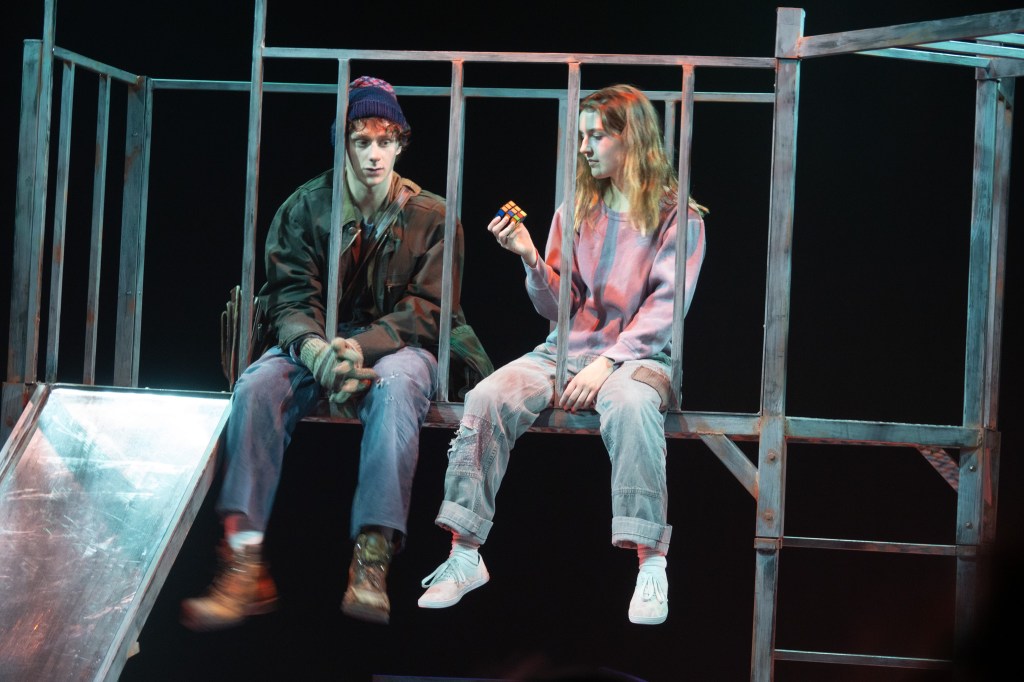
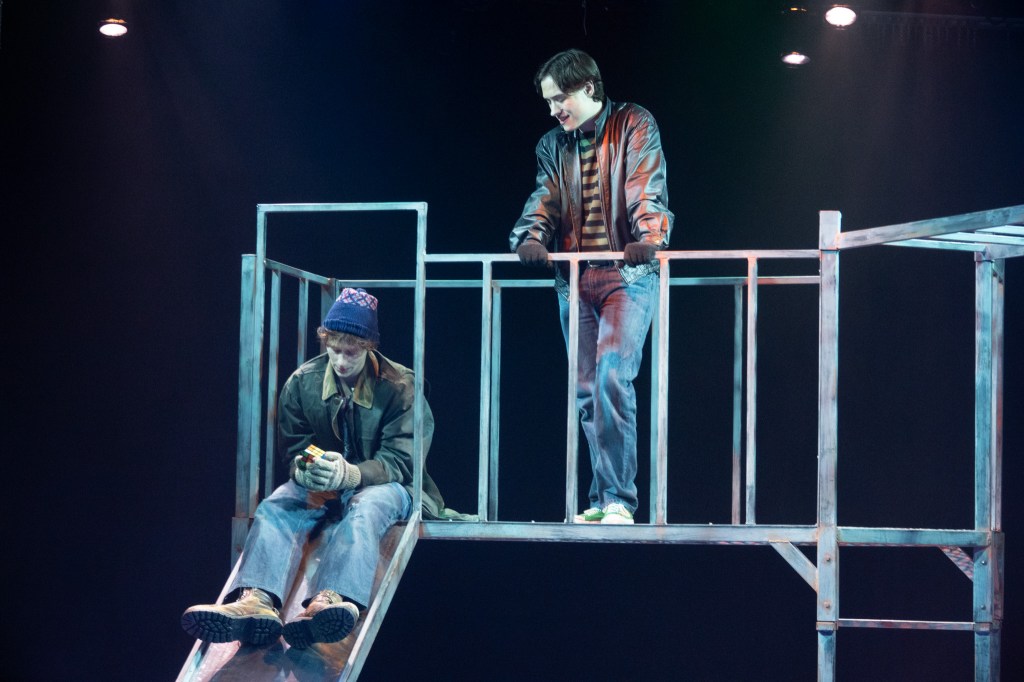
Oskar, played by Salem Channell, lives next door to Eli the vampire. Eli, played by Wyleigh Watson, contemplates a Rubix Cube. (Melodie Miller | Photographer)
Let the Right One In ”is a macabre story with a happy ending,” Scenic Designer, Haley Delich, a Bachelor of Fine Arts in Design, Technology, and Management said. Oskar is “dealing with bullying and first love,” and Eli “is trapped with the body and the mind of a child.”
When Hakan dies, Oskar becomes Eli’s new companion, giving purpose to their lives.
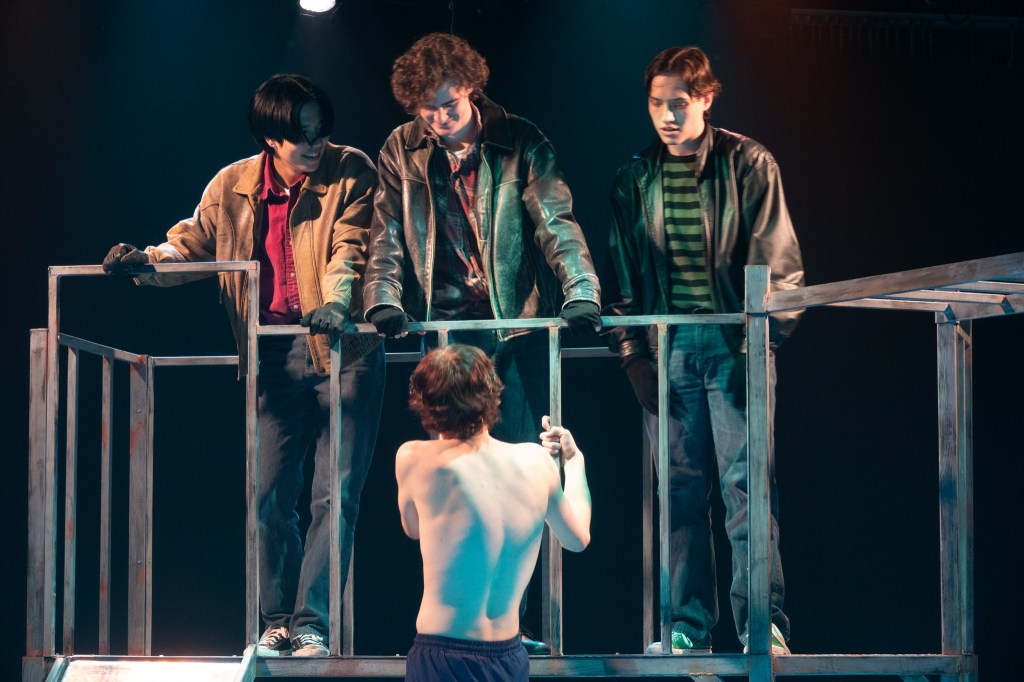
Bullies Jonny, Jimmy and Micke, play by Ian Von Pechmann, Sam Stitt and Cade respectively, threaten to drown Oskar, played by Salem Channell.
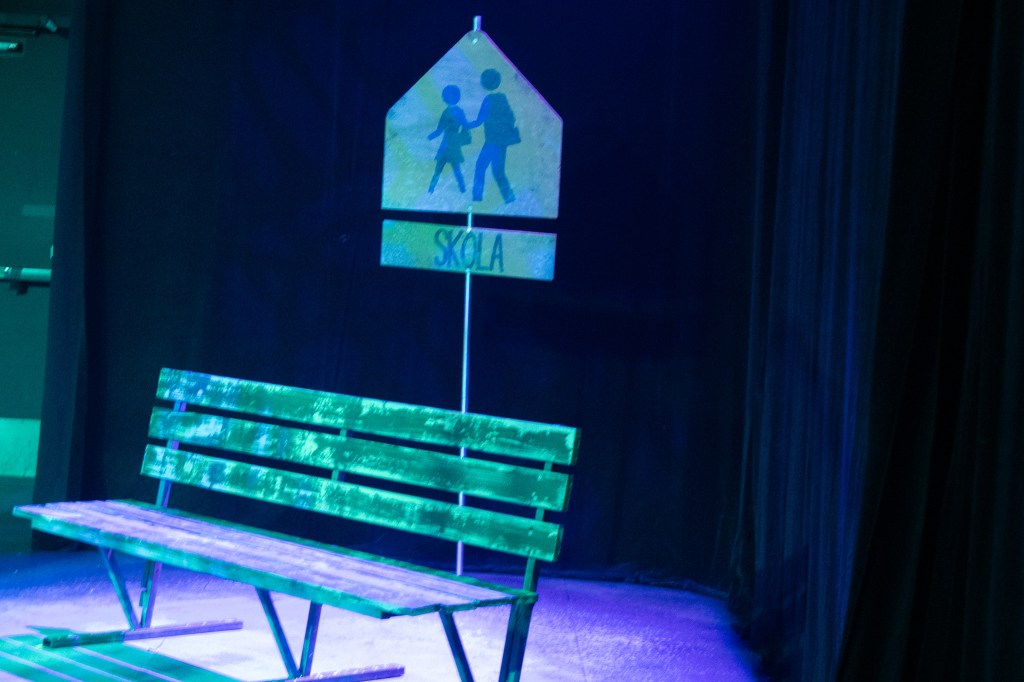
Situated in 1981 Blackeberg, Sweden, the playgrond was the setting where Hakan, Eli’s parent figure, killed and procured blood from his victims for the thirsty 12-year-old child.
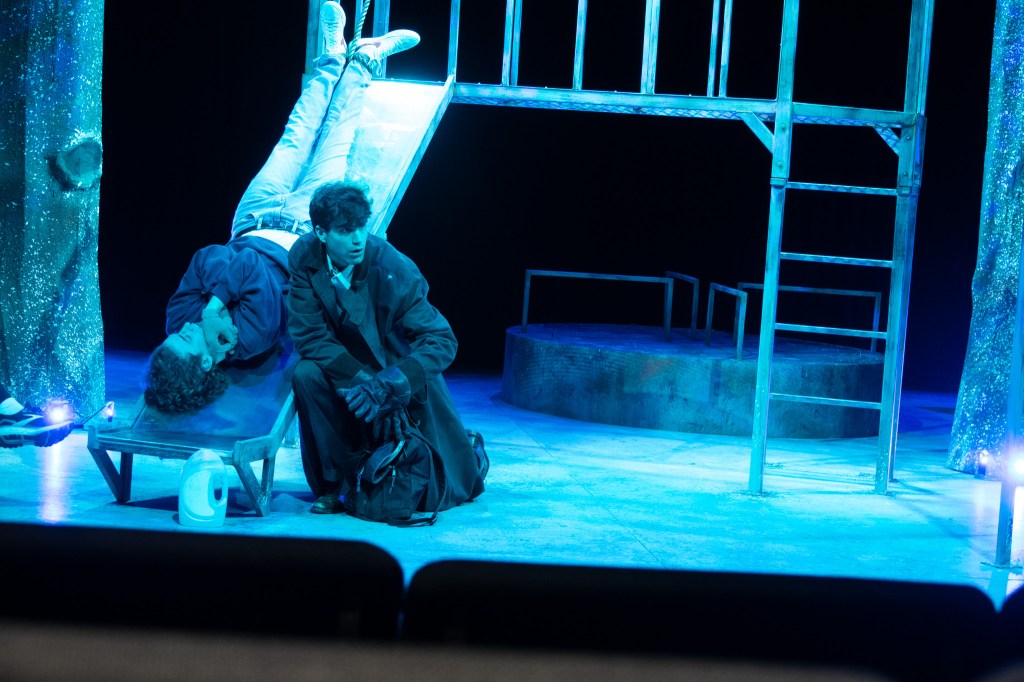
Roan Cochrane as Hakan (Right) drains the blood from his victim played by Ian McCance (Left). (Melodie Miller | Photographer)
The emotional topics of the play demanded that stage manager Brosnan Bustamante, a C.U. student, ensure a smooth production. Brosnan prioritized a supportive environment. He minimized stress to keep the team focused on the performance.
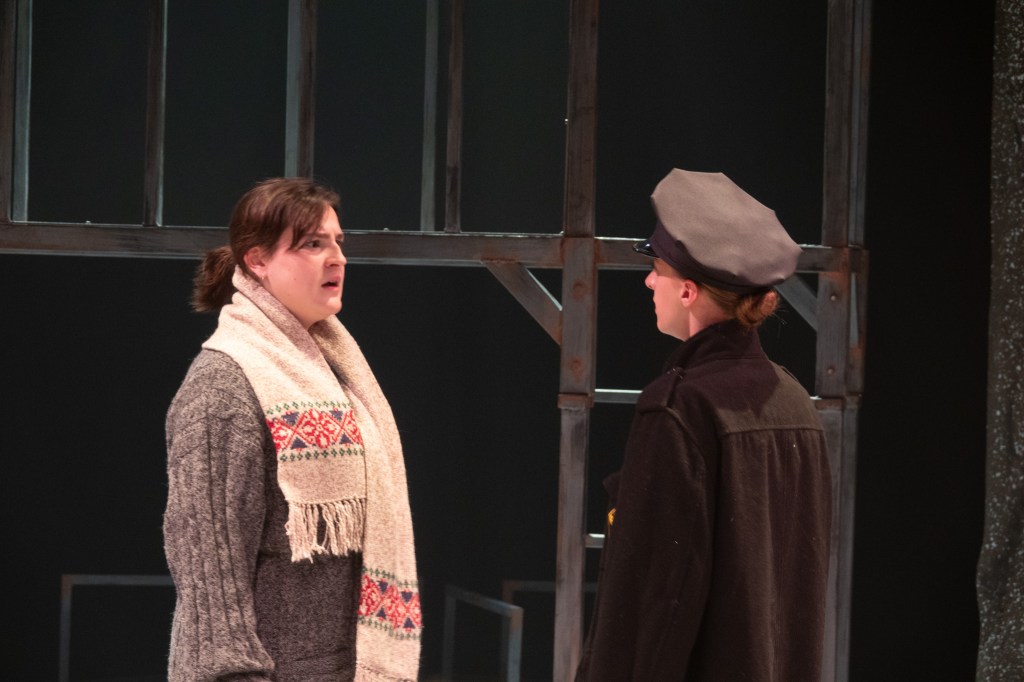
Savannah Gullett plays Oskar’s Mum (Left). Norah Shuey plays Halmberg, the police commissioner. (Right)(Melodie Miller | Photographer)
“It’s crucial that the stage, cast, and crew are functioning smoothly, especially in a production that is emotionally intense and technically demanding,” Bustamante said.
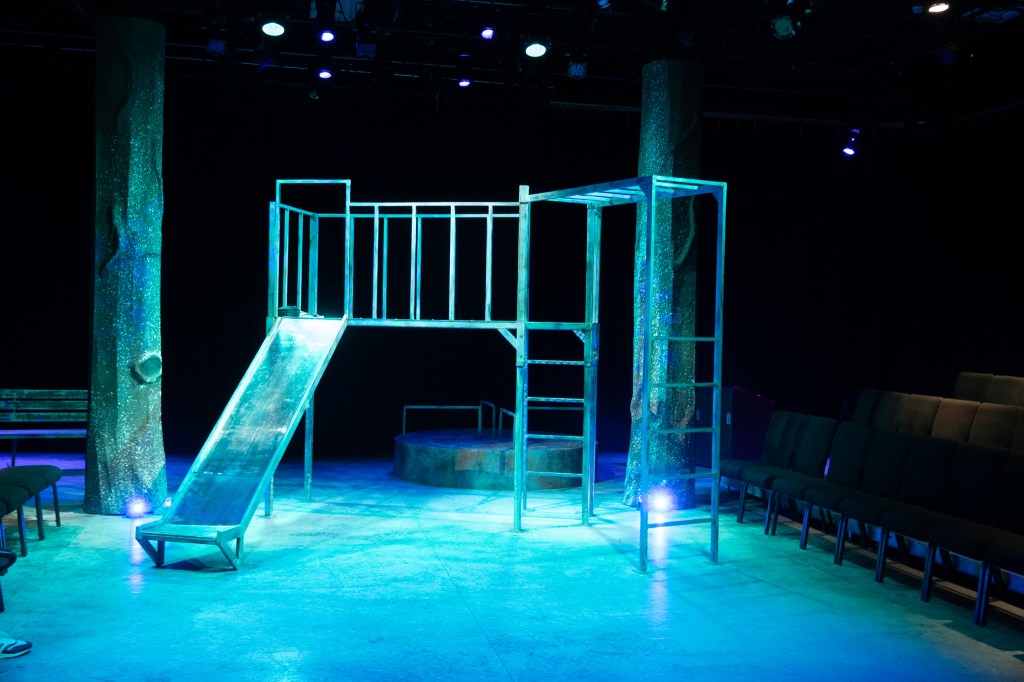
The menacing play ground of “Let the Right One In.” (Melodie Miller | Photographer)
Filled with death, blood and bulling, the setting is ironic as a playground but fitting as a place of horror, where children act as monsters.
Bully Jonny, play by Ian Von Pechmann, talks with Oskar, played by Salem Channell.(Melodie Miller | Photographer)
Delich designed the set to evoke a “bit of the horrors of growing up and outgrowing the playground,” she said.
“Let the Right One In” play ground setting designed by Hayley Delich. (Melodie Miller | Photographer)
The cast of “Let the Right One In” take a bow at the close of their successful run.
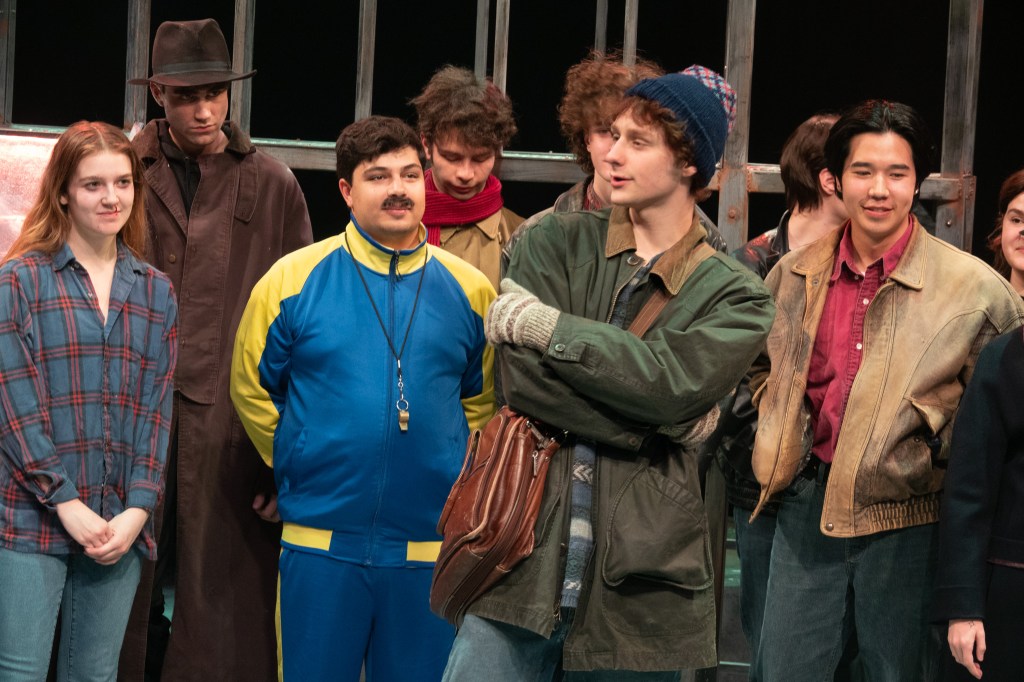
Salem Channell as Oscar (center front) Middle row: Wyleigh Watson as Eli, Charlie Hough as Mr. Avila, Sam Stitt as Jimmy, Pechmann as Jonny. Back row: Roan Cochrane as Hakan, Ian McCance as Dad, Cade Heaton as Micke, Savannah Gullett (far right, back) as Mum. (Melodie Miller | Photographer)
The minimalistic rusted monkey bar set, designed by Delich, was intended to “mirror the stark lives of the characters,” she said. The characters had outgrown the playground but were emotionally stuck in their childhood experiences where they faced bulling and isolation everyday in “Let the Right One In.”
“Let The Right One In” play ground Scenic design by Hyley Delich. (Melodie Miller | Photographer)
The 2024 C.U. Presents, “Let the Right One In,” is part of the Artists Series, which spans over 80 years on campus. Kelley is pursuing a PhD in Theatre & Performance Studies at C.U. Boulder.
University Theatre Building, 261 University of Colorado, Boulder, CO 80302
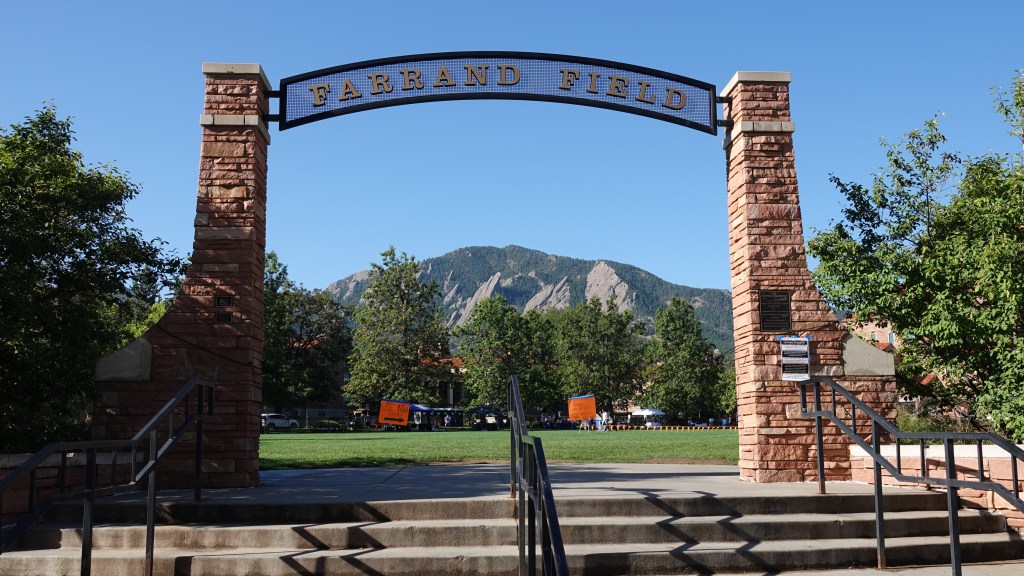
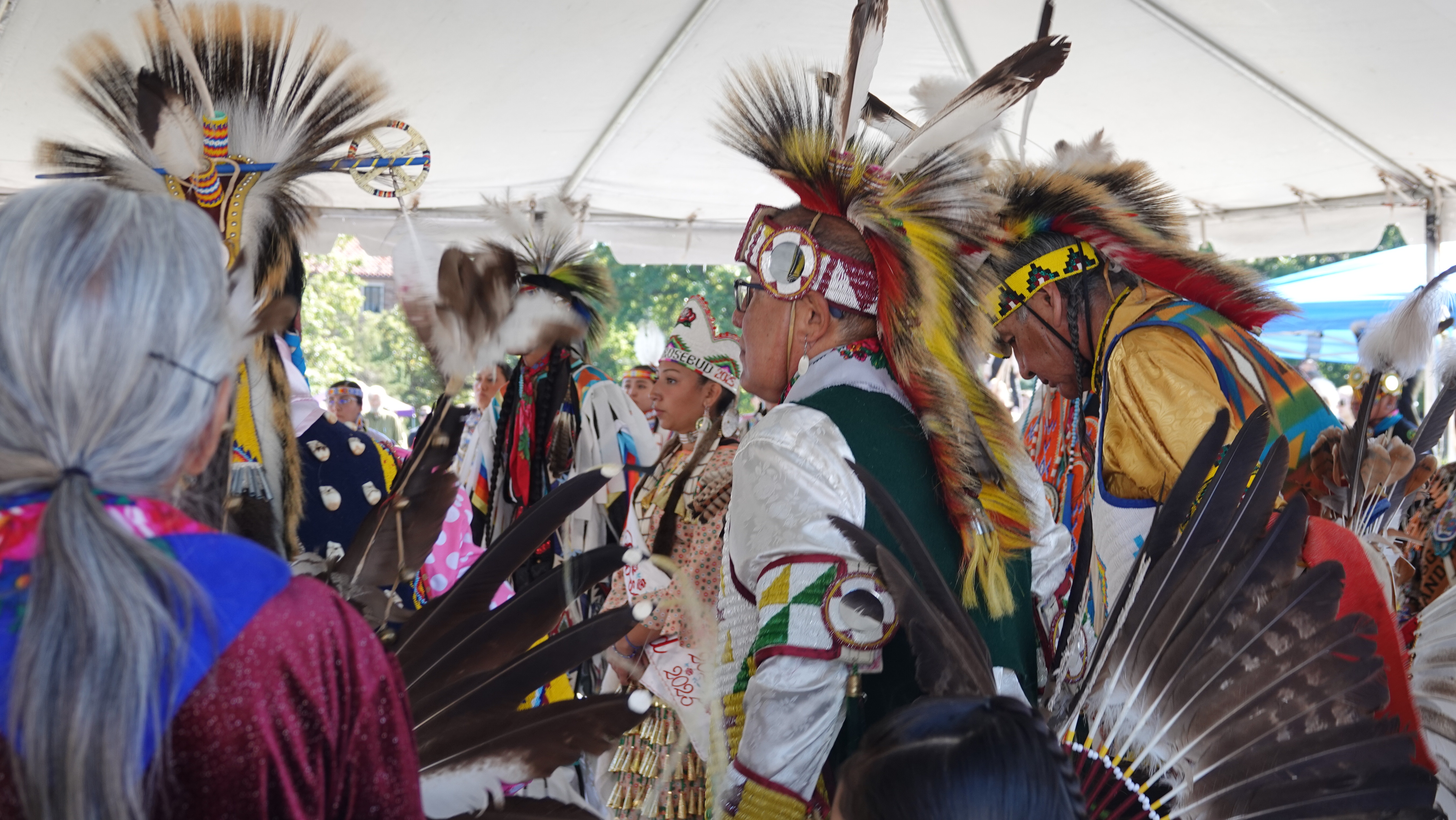
The Heartbeat of the Powwow returned to the University of Colorado at Farrand Field on Sept. 28, 2024. (Melodie Miller | Photographer)
Listen to powwow musician Tony Crank at the University of Colorado Farrand Field Sept. 28, 2024. The Colorado American Indian Tribes In-State Tuition Act (CO SB 21-029) was passed to allow eligible students to pay in-state tuition at Colorado public universities and colleges.(Melodie Miller | Photographer)
I went to historic Farrand Field on the University of Colorado campus in Boulder for the 2024 Native American powwow. It was a beautiful bluebird day without a cloud in the sky. The campus was built on the traditional territories and homelands of the Arapaho, the Cheyenne, and the Ute nations. The powwow is part of the universities commitment to continually improving and enhancing engagement with indigenous peoples locally and nationwide. It is the first powwow on campus in 23 years.
Farrand Field was named after Livingston Farrand, the university’s fourth president who served from 1914 to 1919.
After 23 years, the powwow returns to campus as a celebration of faith and tradition for the indigenous peoples of Colorado.
The 2024 CU Boulder Powwow was organized by the Oyate Native American and Indigenous Student Organizations on campus. It was a collaboration between the Center for Inclusion and Social Change (CISC), the Center for Native American and Indigenous Studies (CNAIS), the Oyate Native American and Indigenous student group and the native Graduate Student Group and the Theater and Dance Department.
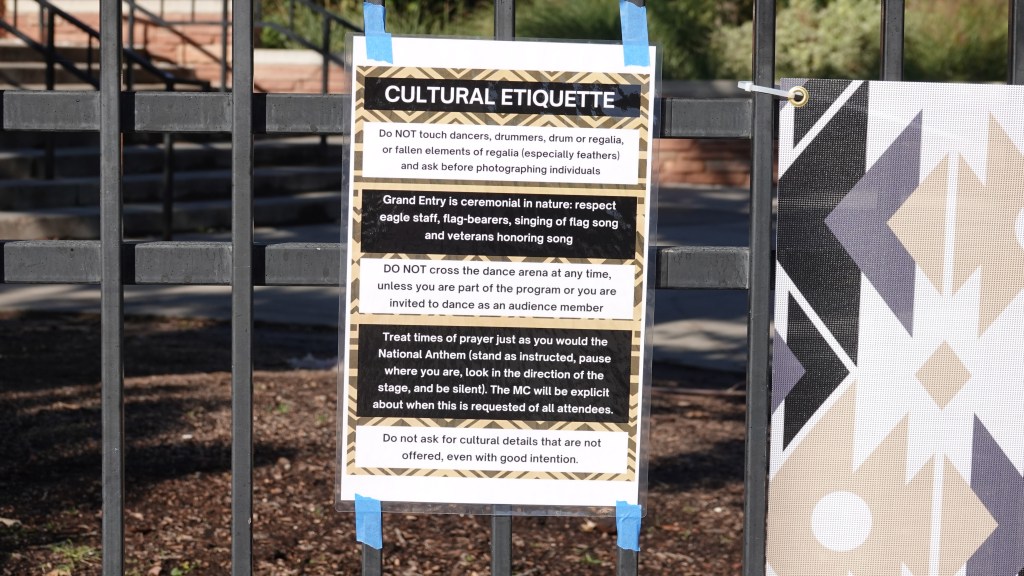
Cultural etiquette was encouraged with guidelines posted as reminders for the audience. The aim was to elevate understanding and sensitivity towards respecting the customs of Native American nations.
Cultural etiquette is a unique set of understandings that guide people when interacting in different societies. At the powwow, these guidelines include not touching the dancers, their regalia, instruments or fallen feathers. “Do no ask for cultural details that are not offered even with good intentions.” Sensitivity and respect for these norms fosters positive cross-cultural understanding and connection.
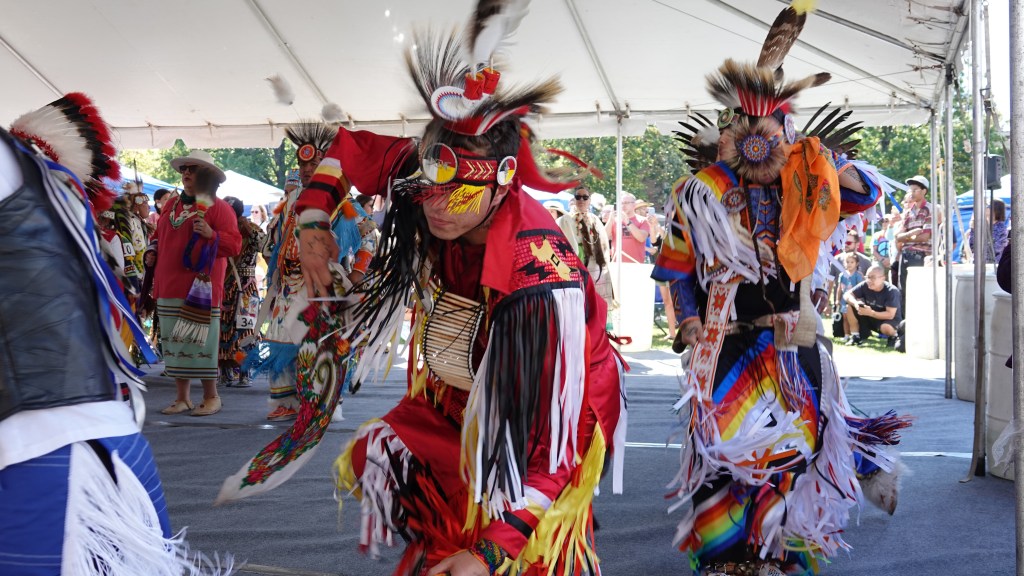
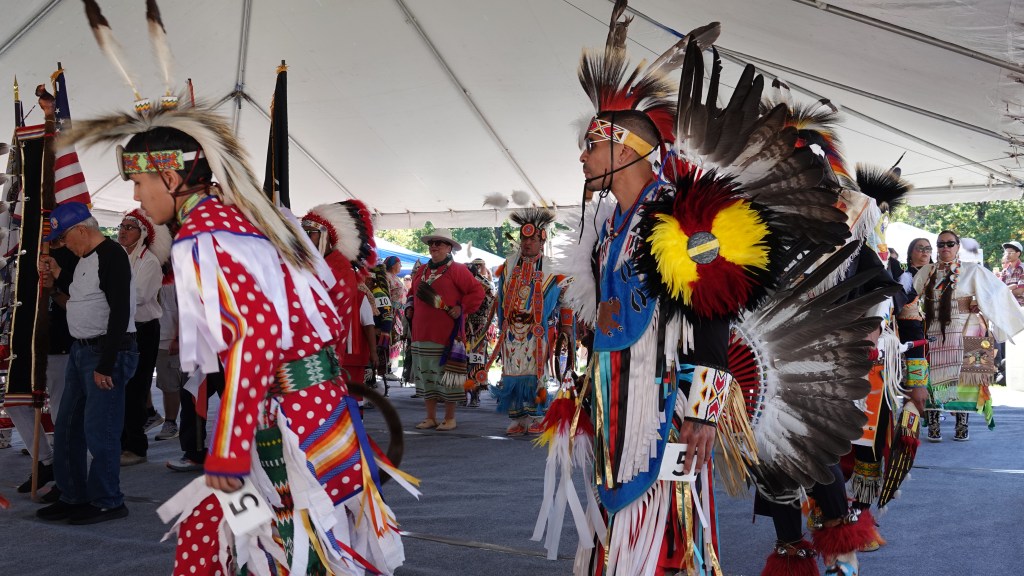
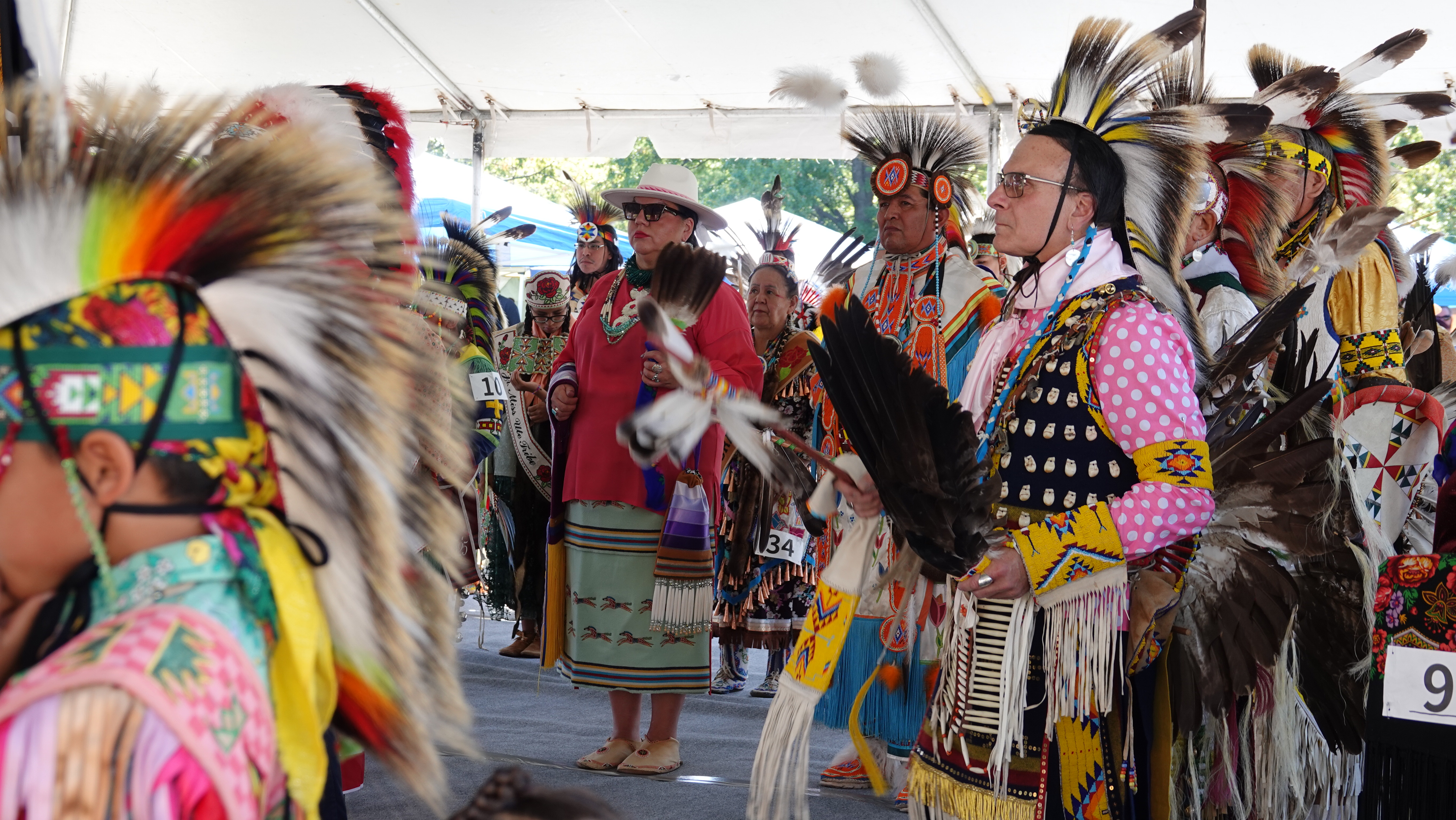
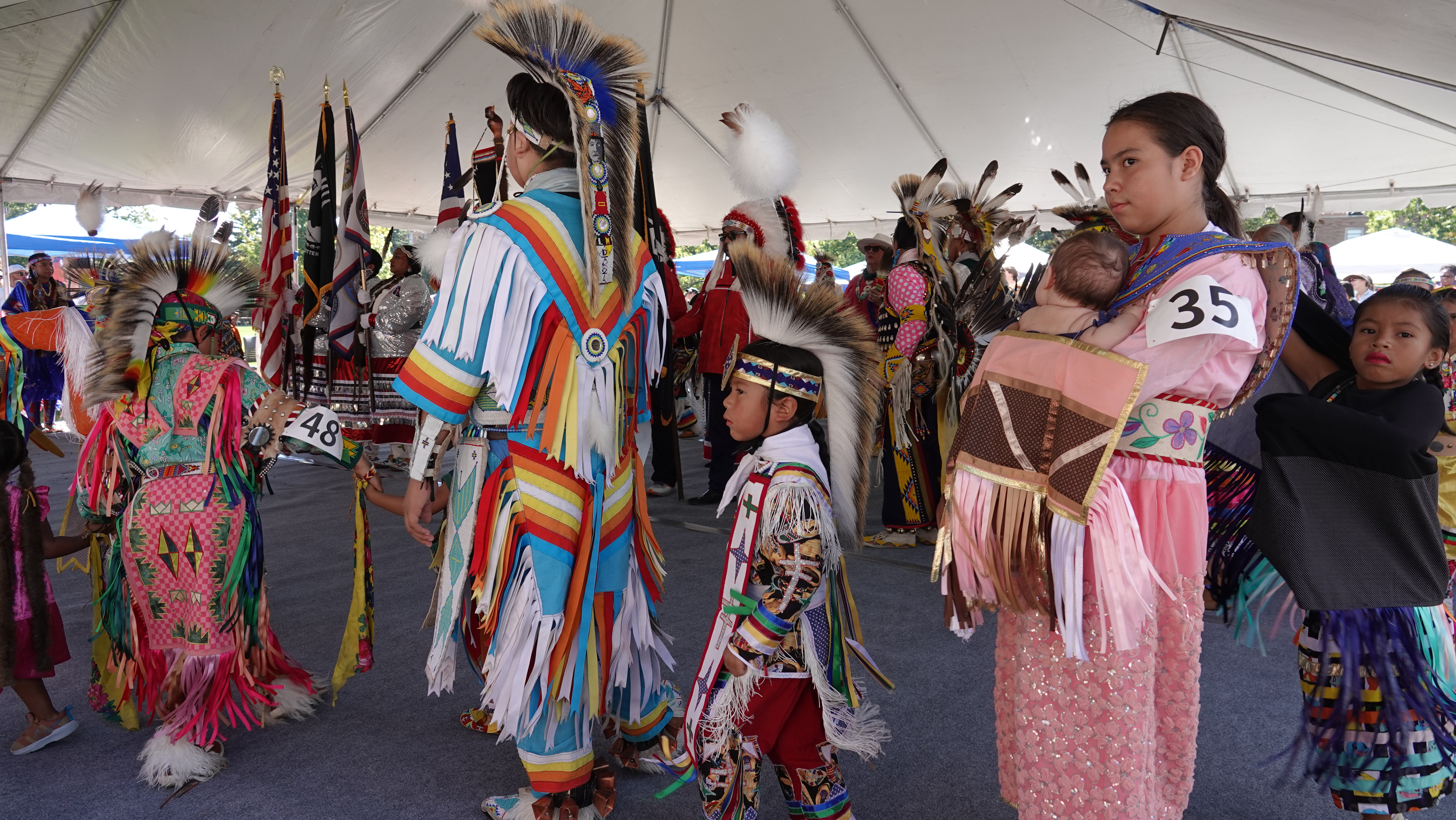
Grand entry for the powwow. (Melodie Miller | Photographer)
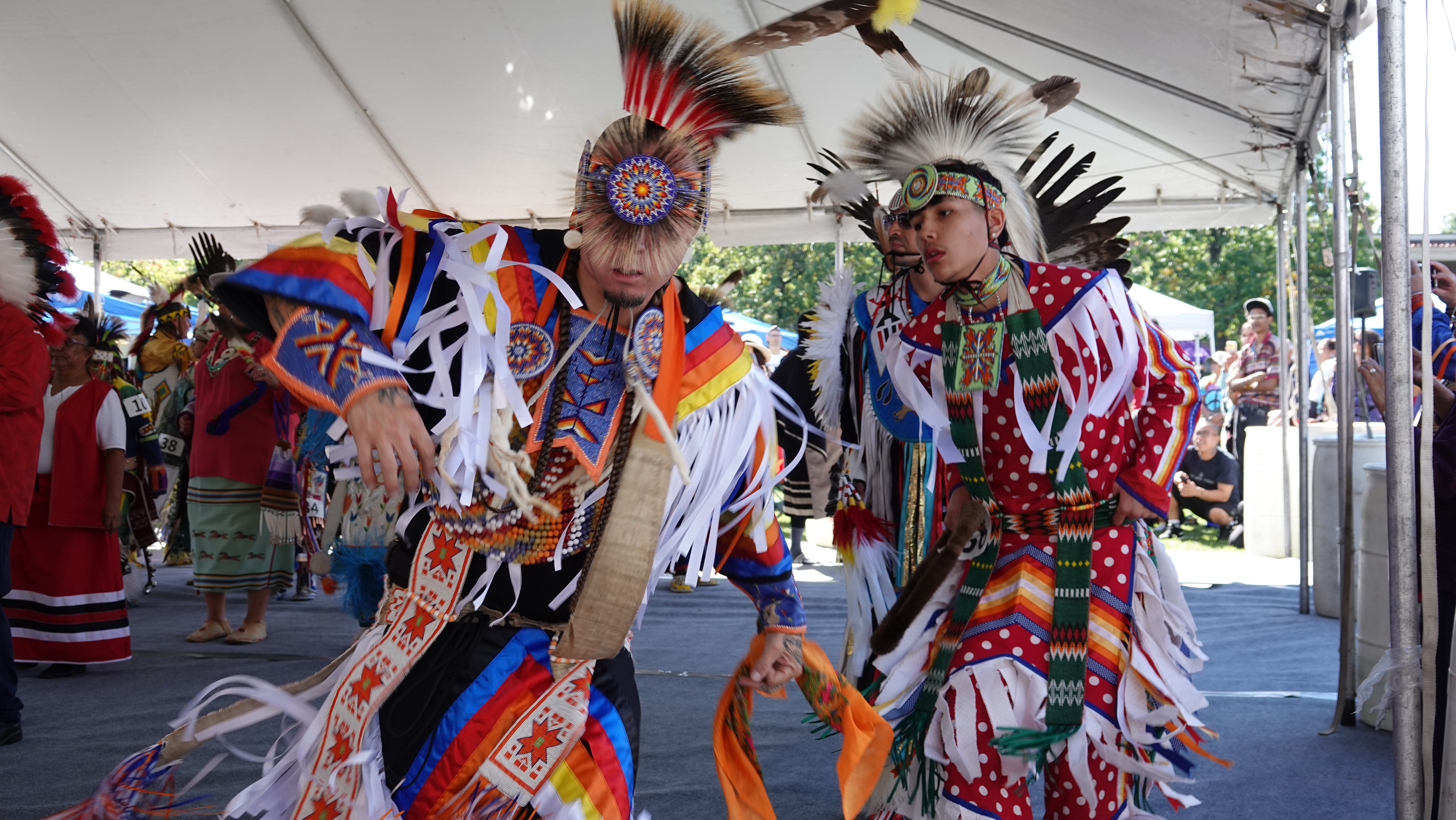
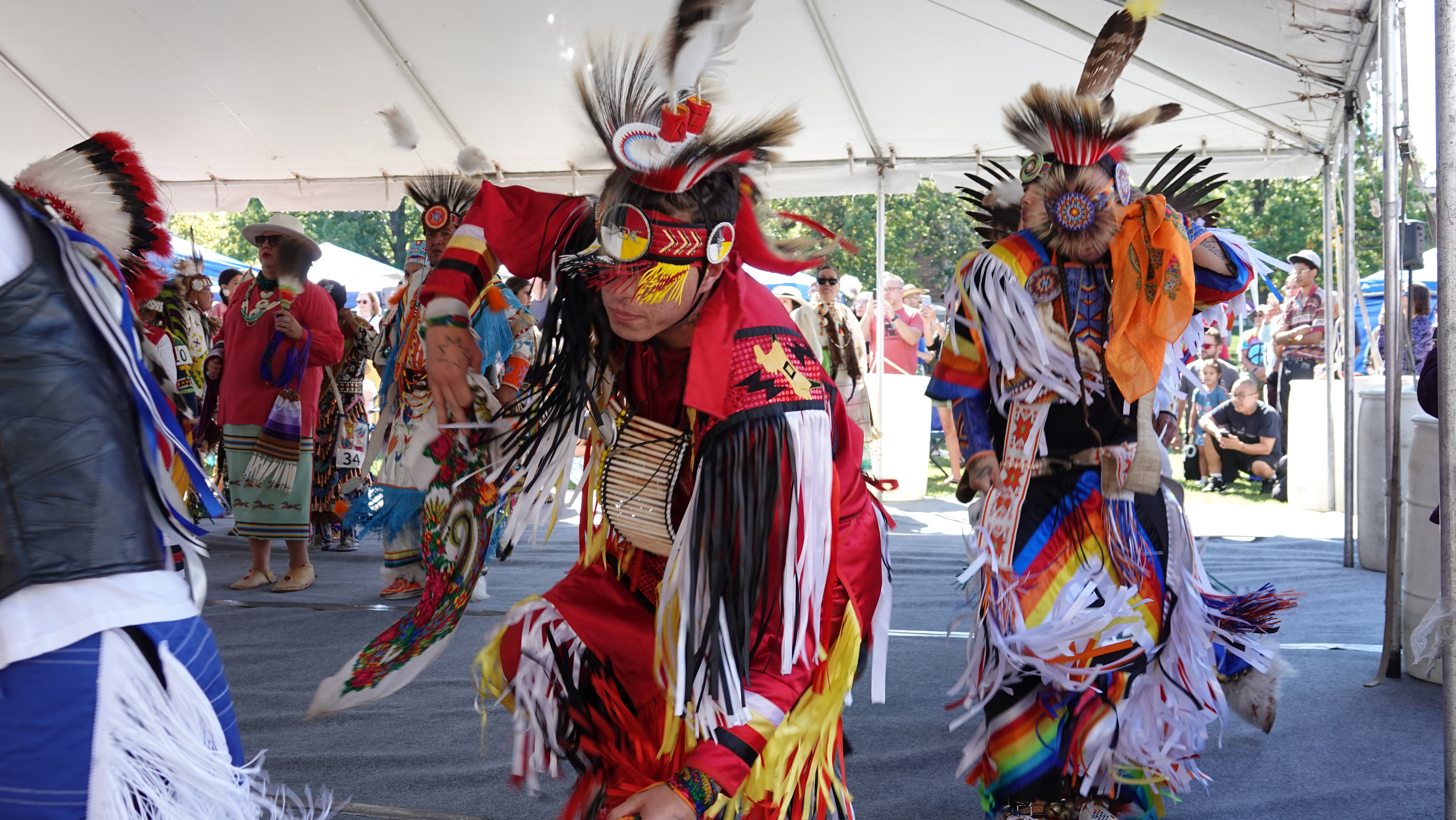
After 23 years, the powwow returns to campus as a celebration of faith and tradition for the indigenous peoples of Colorado. The grand entry victory song and two rounds of intertribals.
Saydie Sago told me she went to the last powwow 23 years ago, in 2001 with her parents when she was a small child. We are “bringing some Cheyenne, and Rapaho community from northern Rapajo members, southern Rapaho members, and Cheyenne members to come dance and be a partner. Of course, they were part of one of the many tribes that are historically tied to this part of the land and also Colorado. So we are inviting them back to their ancestral lands,” Sago said.
Saydie Sago, one of the powwow organizers, is a fourth year PhD student here at CU. (Melodie Miller | Photographer)
“I know that my parents, I think, have actually been to the powwow 23 years ago. So it’s really nice to see it coming back, Redhorse said. “I’ve been going to powwows ever since I was one of the tiny tots. My mom put me in a jingle dress dance, and I got up on the dance floor. I really hope we can continue this ongoing tradition.”
Shaleen Redhorse is an aerospace engineering student here at CU. She danced powwows when she was younger. (Melodie Miller | Photographer)
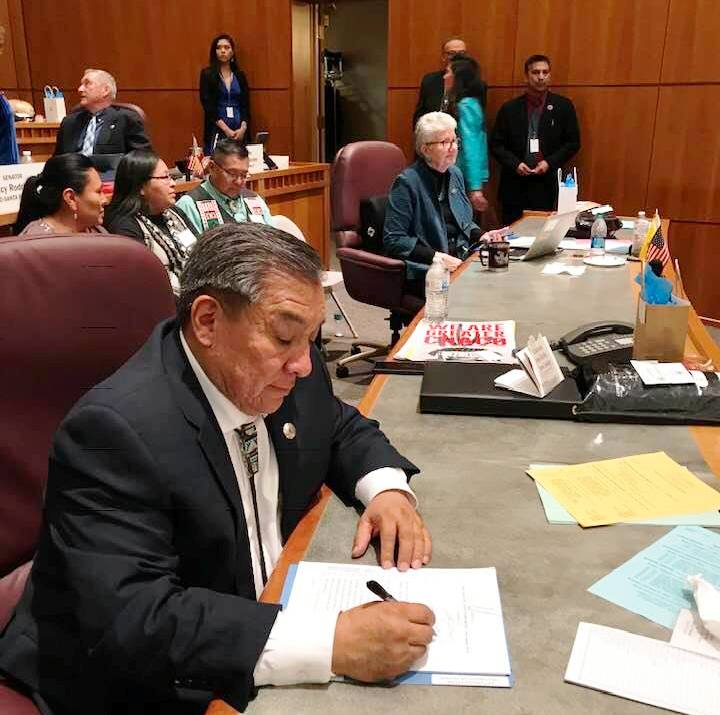
I spoke with CU graduate Benny Shendo, the vice chancellor of Native American Affairs, about the future for native american students in states outside of Colorado.
“We only have two federally recognized tribes here in the state of Colorado. But then there’s 46 other tribes that have historical connection to the state of Colorado,” Shendo said. Colorado state “passed the law signed by the governor that will allow any students from those tribes to come into state tuition. Not only will this increase our Native American enrollment, both undergraduate, graduate, but also faculty and staff.”
“It’s a new day,” Shendo said. “It’s a new day, you know, it’s for us, and we’re hoping to elevate the presence of our native students at all levels.”
CU graduate Benny Shendo, the vice chancellor of Native American Affairs is a state senator for New Mexico. (Photograph courtesy of Common Ground Rising.org Blog)
Powwow Gallery
Welcome to the 2024 Powwow on the University of Colorado at Boulder campus. This event offers an exhilarating experience that spans 200 years of cultural history . Every moment is an opportunity to witness and partake in the spiritual ceremony of the powwow. (Melodie Miller | Photographer)
The University of Colorado Boulder is a public research university in Boulder, Colorado. It was founded in 1876, five months before Colorado became a state. Colorado’s flagship university honors and recognizes the many contributions of Indigenous peoples in the state. The university acknowledges that it is located on the traditional territories of the Cheyenne, Arapaho, and Ute. It is also on the ancestral homelands of many other Native American nations. The university is dedicated to recognizing and amplifying the voices of Indigenous CU Boulder students, staff, faculty and their work.