A 19th-century gold-rush mining town is alive in Durango
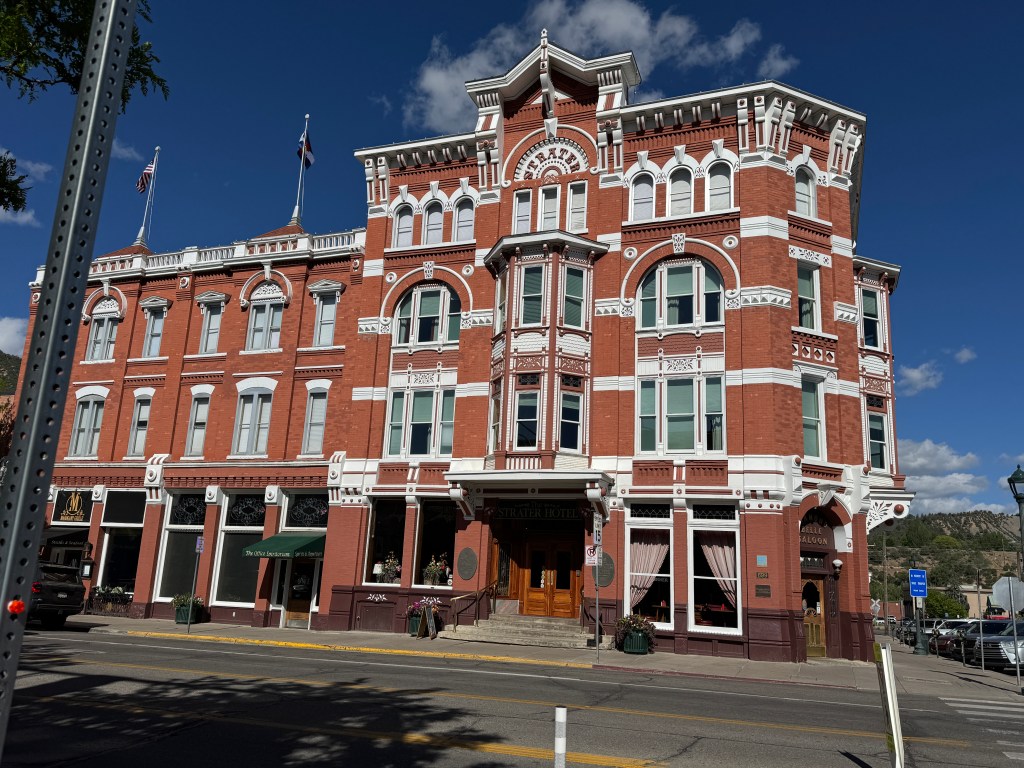
The historic Strater Hotel on Main Street, Durango (Melodie Miller | Photographer)

By Melodie Dawn Miller Reporting from Durango, Colorado June 16, 2026 2:00 p.m. MDT
The Strater Hotel is a distinctive red-brick building situated on Durango’s Main Street in the Historic District, where visitors can rest their heads in the Wild West without traveling back in time. Built in 1887 by Fred, Frank and Antone Strater, the Boomtown hotel is filled with historically accurate furnishings and decor that take visitors back to the 19th century without sacrificing modern conveniences or civil order.
“American mining towns were mostly civil,” Jennifer M. Larson writes in Why the West Became Wild. The American West “grew so rapidly during the nineteenth-century gold rush that they were dubbed boomtowns.”
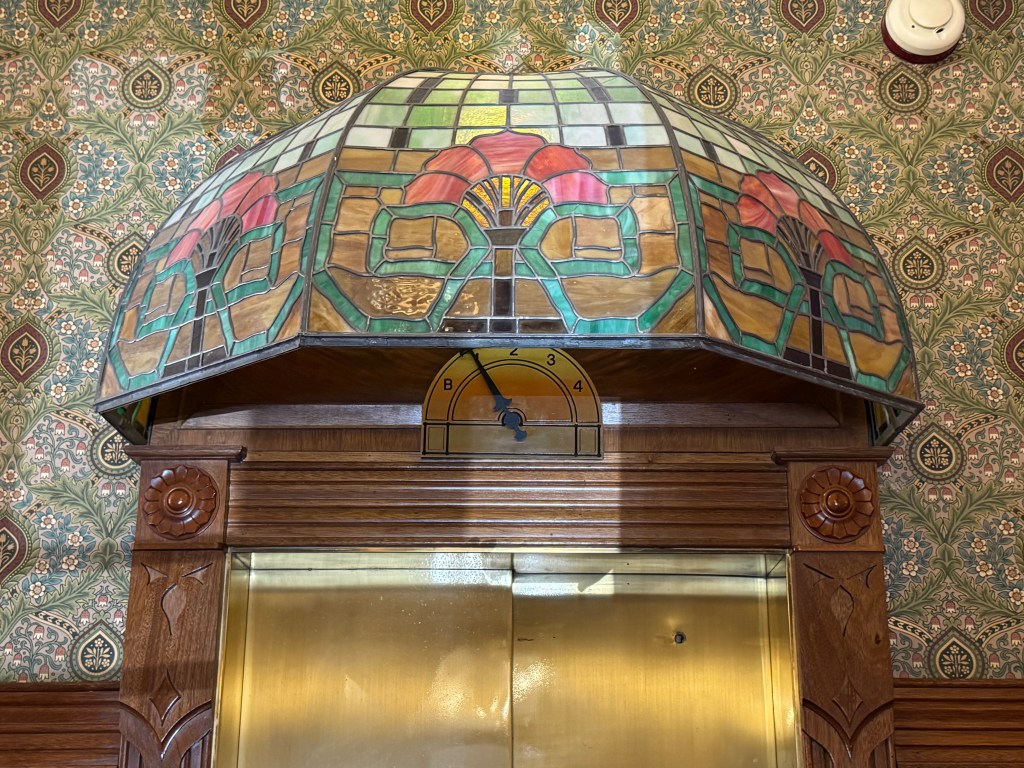
Tiffany-inspired elevator awning emulates the 1880s Art Nouveau decorative period (Melodie Miller | Photographer)
Designed and built during the region’s mining boom, the Strater Hotel management strives for authenticity with century-old oak furnishings, replicated 19th-century wallpaper, and Tiffany Art Nouveau-emulated lighting fixtures, giving guests a Wild West experience.
“The hotel is dedicated to providing factual information. The hotel is a living museum,” Tori Ossola, the General Manager of the Strater Hotel, said.
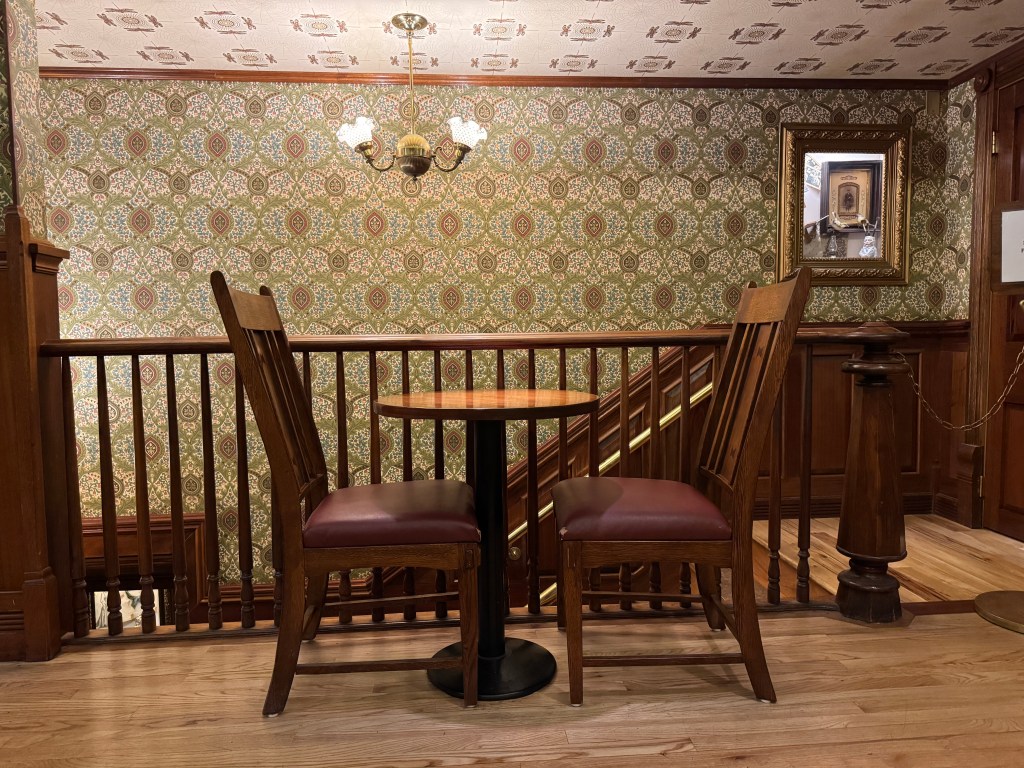
Historical maple furnishings and Bradbury & Bradbury wallpaper at the Strater Hotel Melodie Miller | Photographer
The ladder-back Mission chairs, hand-milled oak staircase railing, and heavy balusters showcase the early American Craftsman-style set against a backdrop of color that favors gently aged tones of the late Victorian era.
According to Historic Hotels of America, in 1926, owner Earl A. Barker, Sr. became dedicated to preserving the hotel’s prestigious status and he inspired the following generations to follow in his footsteps.
“The large collection of Victorian antique furniture we have throughout the property can be attributed to the second-generation Barker family,” Ossola said. Then, the third generation, Mr. Rod Barker and his wife Lori, “did the major heavy lifting on the renovation.”
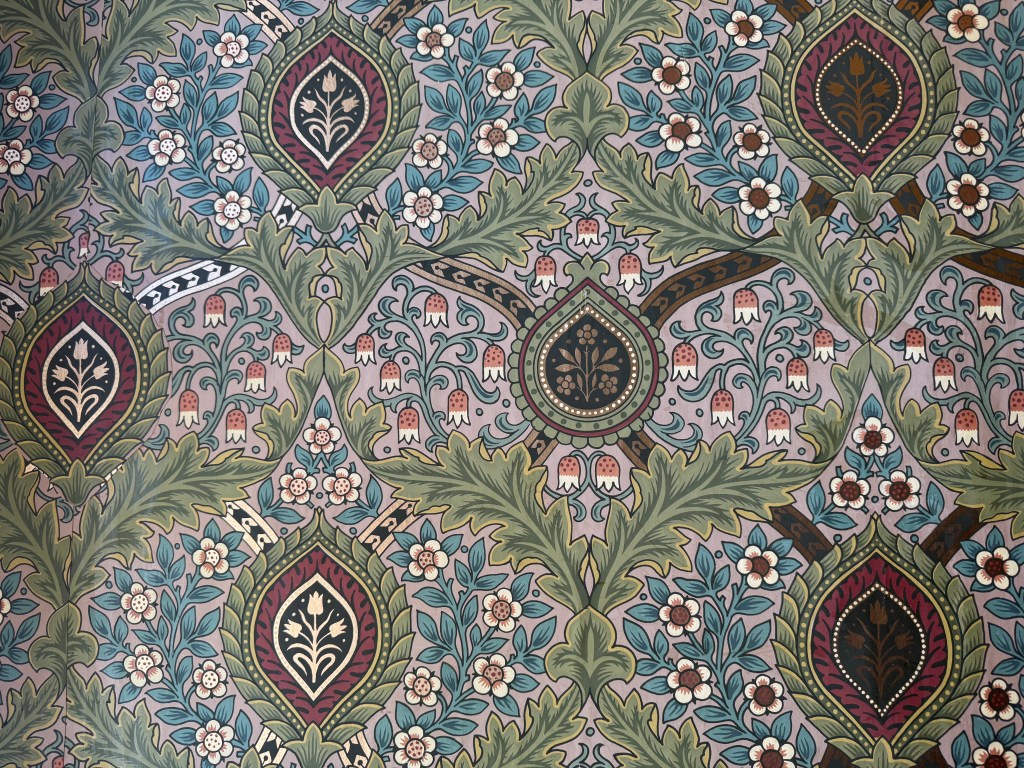
Historically inspired Gilded Age Bradbury and Bradbury wallpaper covers the walls of the Strater Hotel (Melodie Miller | Photographer)
The Knightsbridge Damask wallpaper by Bradbury & Bradbury of San Francisco recreates the Anglo-Japanese Aesthetic Movement, using motifs from 1875 to 1890. Designed in 1986 by artistic director and co-owner Stephen Bauer, the motifs recreate patterns following the transition of the 19th-century designer William Morris.
The late-Victorian-inspired wallpaper is reminiscent of the Gilded Age, featuring teardrop-shaped ogee and gold-metallic floral medallions joined by a lattice of leaves.
“We strive to be a resource to historic properties for the preservation and restoration of their buildings,” a representative of Bradbury & Bradbury, Lisa Bauer, said.
The Strater Hotel wallpaper colors are unique because “the pattern has recently received a refresh,” Bauer said, but “it has never been retired, only revised.”
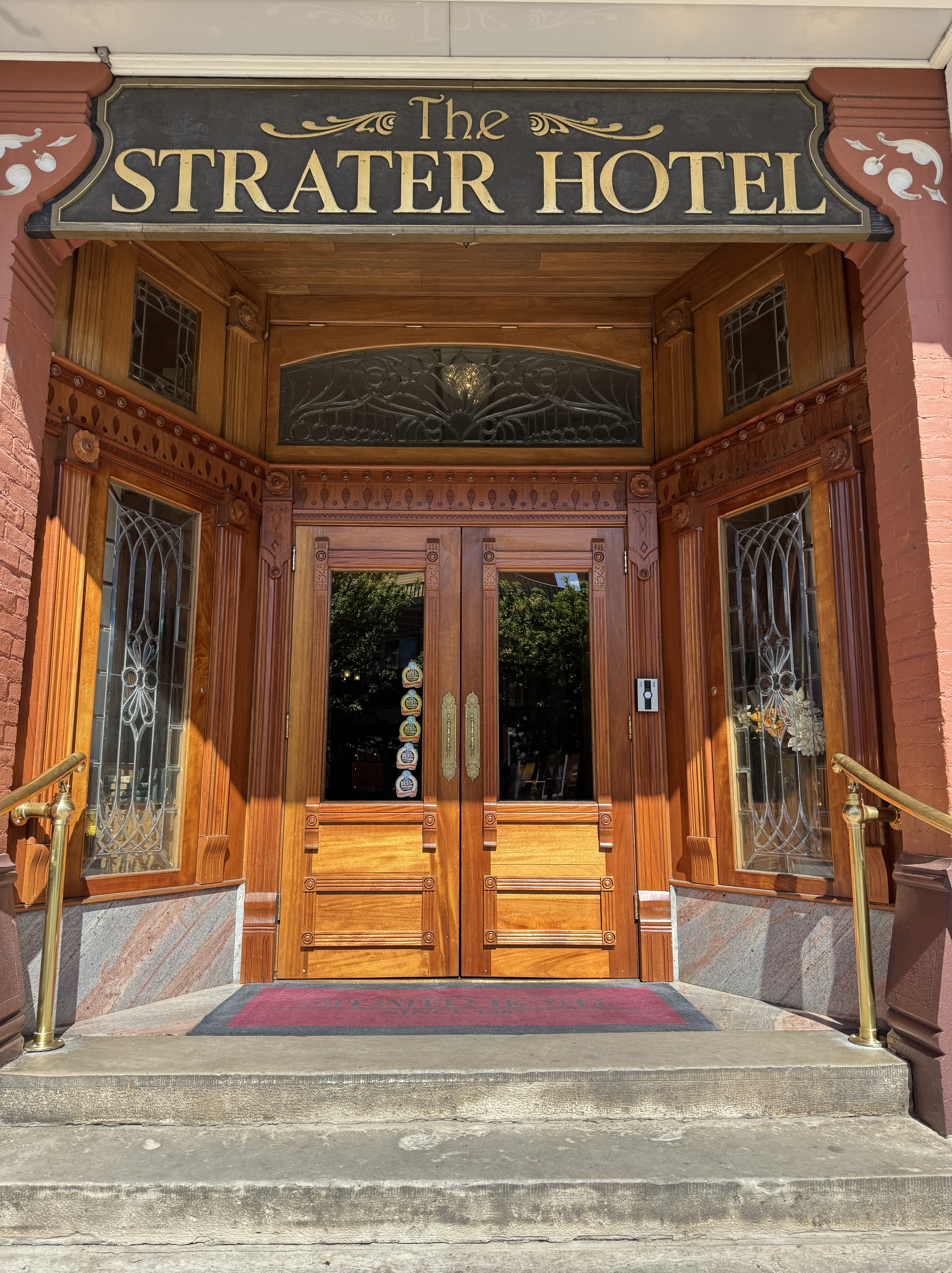
The historic Strater Hotel on Main Street, Durango (Melodie Miller | Photographer)
An original mining boomtown, Durango was founded in September 1880, according to the City of Durango History. Henry Strater built the hotel in 1887 “right after the Silver Panic,” Ossola said.
According to Historical Hotels.org, Strater believed that a contemporary Durango offered a “great economic opportunity,” deserving of a grand hotel.
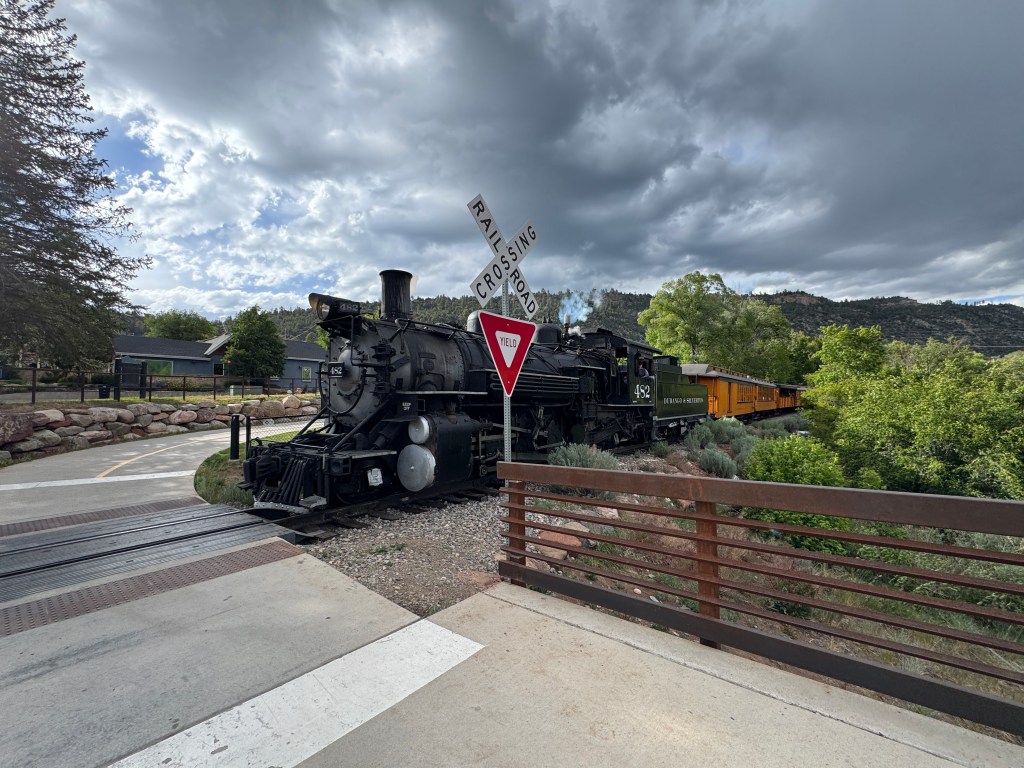
The Durango Silverton Gauge Railway steam engine and passenger car train (Melodie Miller | Photographer)
Along with the hotel, the economic boom brought the Durango to Silverton Gauge Railway steam engine that continues to carry passengers through the rugged San Juan Mountains of Southwestern Colorado. Built in 1882 to haul silver and gold ore, the historic steam-powered train transports passengers on a 45-mile round trip along the Animas River through canyons, forests, and landscapes largely unchanged since the 19th century. The train station is 0.2 miles, approximately a 3-minute walk, from the Strater Hotel.
In 2021, the Garrett family bought the hotel from the Barker family and “upgraded every single one of our hotel rooms to have its own heating and cooling system,” Ossola said.
“Not super sexy stuff, right? But still making sure that our guests having that historic experience are comfortable,” Ossola said.
____________________________________________
The Strater Hotel is listed on the National Register of Historic Places and the Historic Hotels of America.
699 Main Avenue, Durango, CO 81301 — www.strater.com — 800.247.4431
____________________________________________
Contact
Melodie Dawn Miller
- melodie.miller@colorado.edu
- www.melodiemiller.com
Melodie Dawn Miller is an apparel industry professional with expertise in design, development, and production.
She holds bachelor’s degrees in English Literature and Classic Civilizations.
She is currently studying History and Journalism at the University of Colorado.
 Melodie Dawn Miller