CU students volunteer to lay out the red carpet in Boulder
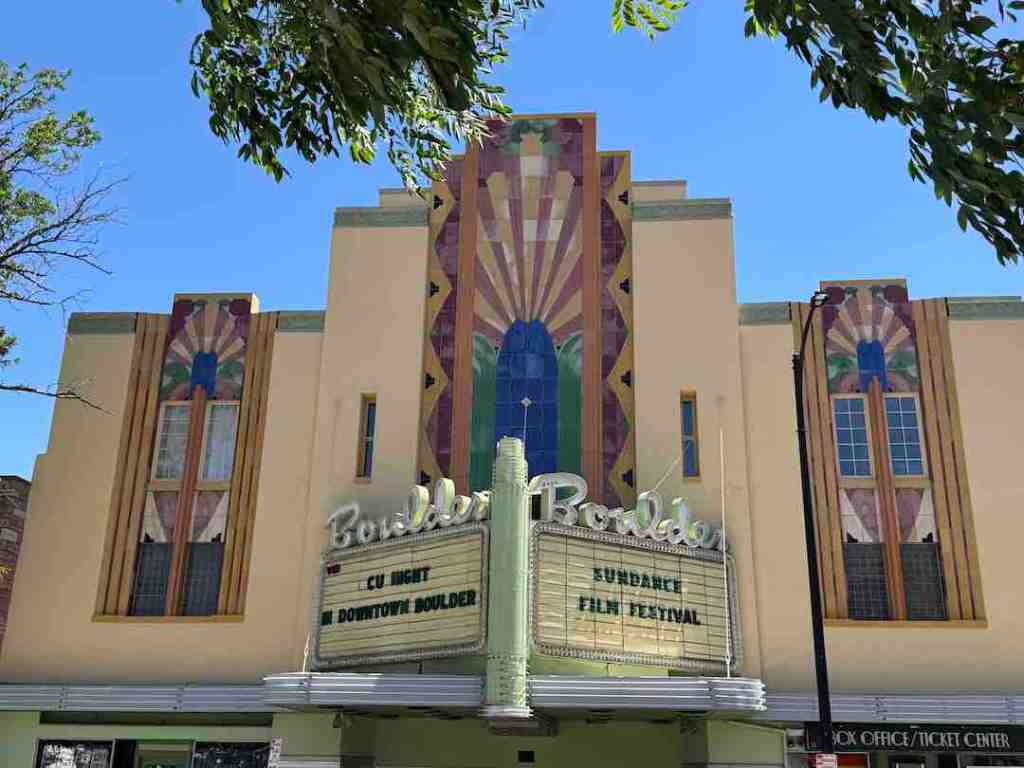
The Boulder Theater displays the launch of the Sundance Film Festival. (Melodie Miller)
Brian Marquez spends his days recruiting the volunteers who make the “shows must go on” at the Sundance Film Festival. As a senior manager of talent at the Sundance Institute, Marquez will place more than 2,000 volunteers in theaters, press offices and on production crews this January. For Marquez, volunteers are the festival’s heart and soul.
“Volunteers truly make the Sundance Film Festival happen,” Marquez said. “We couldn’t do it without them.”
This year, hundreds of volunteers will be CU Boulder students. When the festival premieres in Boulder, January 21 through 31, students can trade 18 hours of service for free screenings, industry connections, and firsthand experience working with an internationally attended film festival.
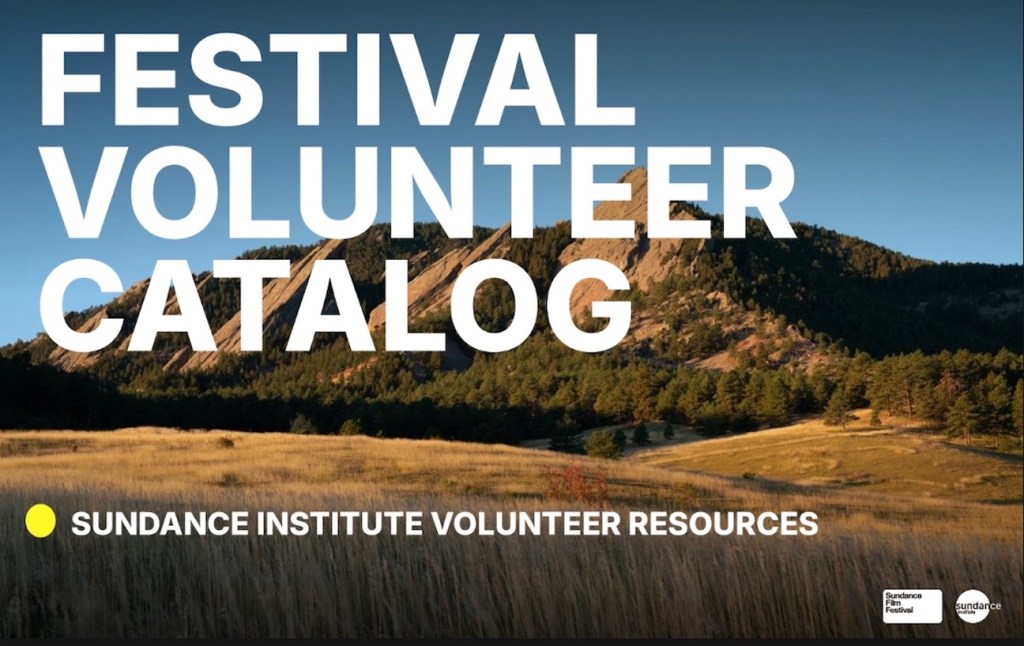
Screenshot
Sundance Film Festival Volunteer Catalog 2027. (Photo courtesy of Sundance Film Festival)
The university worked closely with Sundance to make the volunteering schedule manageable for students. Megan Medina, who directs Service Learning and Impact in Community Engagement at CU Boulder, helped lower the volunteer minimum from 24 hours to 18 so the shifts could fit around classes.
Nathan Paul Jones of Career Services sees the festival as a networking gateway for students. Jones said that Sundance has already begun posting internships on Handshake. The real career benefit is in the time spent working with industry professionals.
Cinema Studies Senior Cadence Tucker recommends volunteering, especially for first- and second-year students.
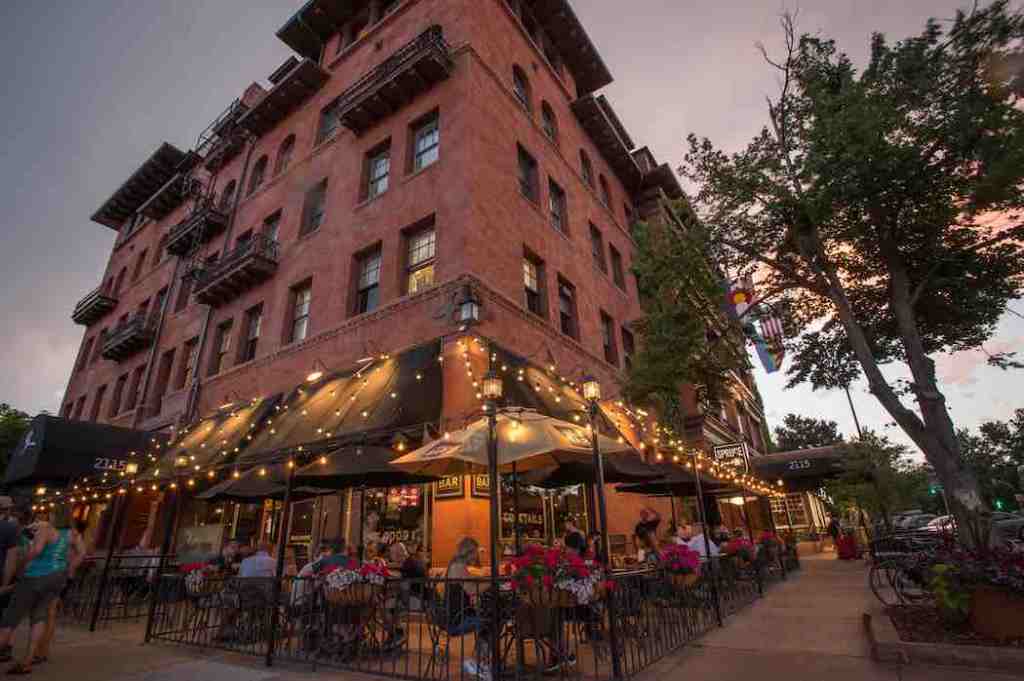
The Hotel Boulderado outdoor corner bar. (Photo courtesy of Tim Romano|The Boulderado)
The festival footprint is compact. About 150 films will be screened at the 2027 film festival in fifteen theaters in Boulder, all within a two-mile radius of the Sundance hub at the Hotel Boulderado. Governor Jared Polis’s office estimates the festival could bring up to $2 billion to Colorado over the next decade.
A 19th-century gold-rush mining town is alive in Durango
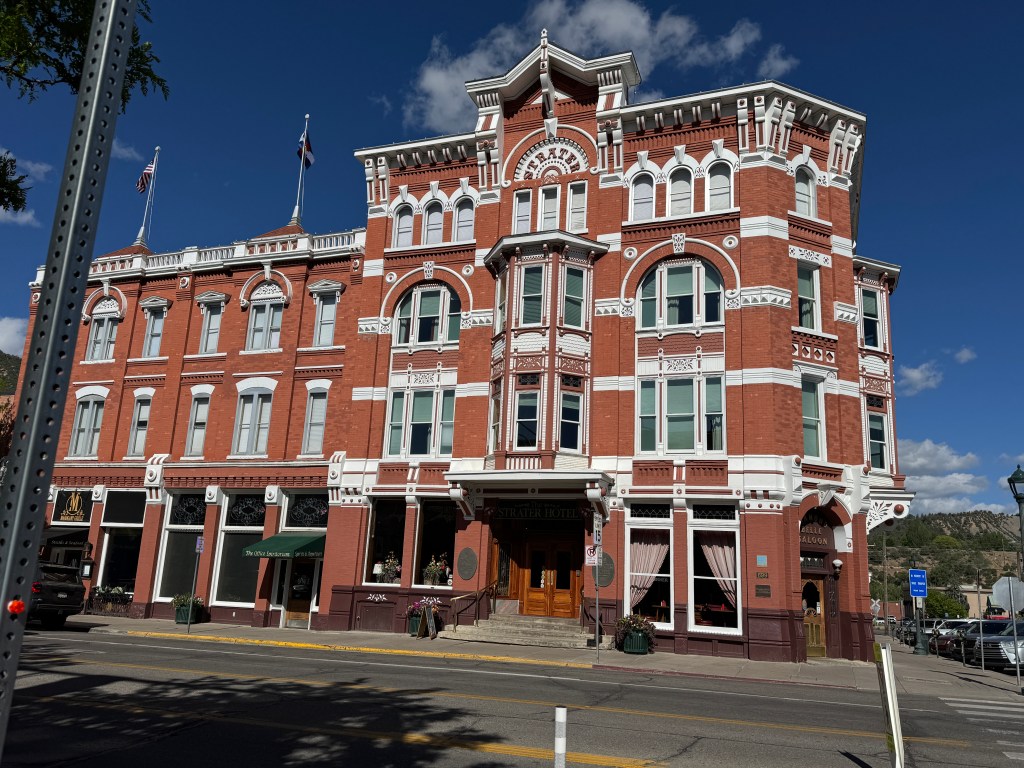
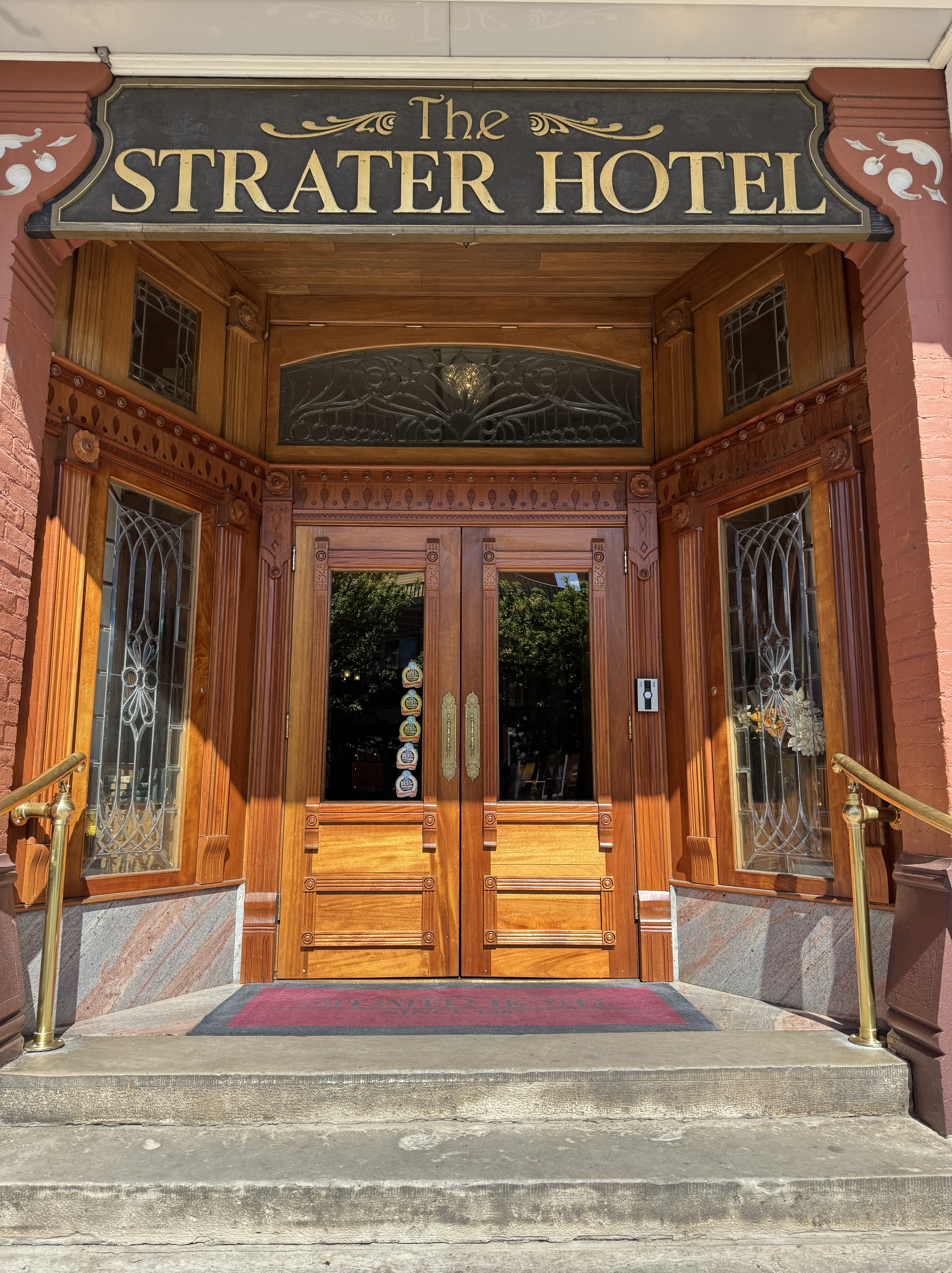
The historic Strater Hotel on Main Street, Durango (Melodie Miller | Photographer)
ByMelodie Dawn Miller Reporting from Durango, Colorado June 16, 2026 2:00 p.m. MDT
The Strater Hotel is a distinctive red-brick building situated on Durango’s Main Street in the Historic District, where visitors can rest their heads in the Wild West without traveling back in time. Built in 1887 by Fred, Frank and Antone Strater, the Boomtown hotel is filled with historically accurate furnishings and decor that take visitors back to the 19th century without sacrificing modern conveniences or civil order.
“American mining towns were mostly civil,” Jennifer M. Larson writes in Why the West Became Wild. The American West “grew so rapidly during the nineteenth-century gold rush that they were dubbed boomtowns.”
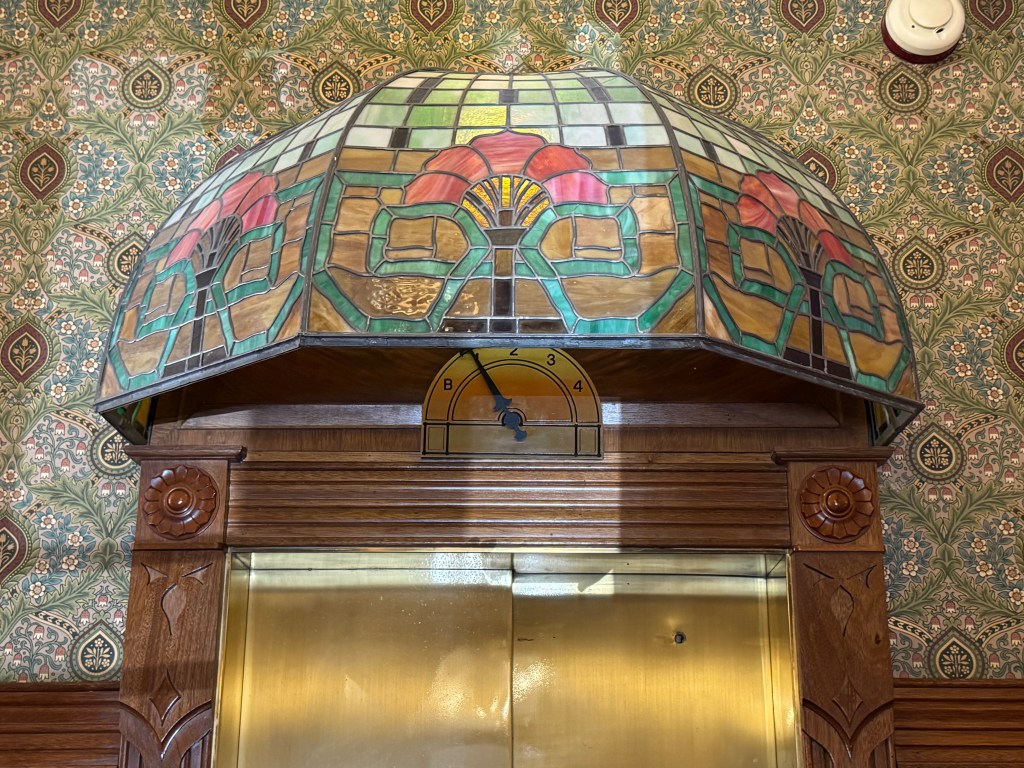
Tiffany-inspired elevator awning emulates the 1880s Art Nouveau decorative period (Melodie Miller | Photographer)
Designed and built during the region’s mining boom, the Strater Hotel management strives for authenticity with century-old oak furnishings, replicated 19th-century wallpaper, and Tiffany Art Nouveau-emulated lighting fixtures, giving guests a Wild West experience.
“The hotel is dedicated to providing factual information. The hotel is a living museum,” Tori Ossola, the General Manager of the Strater Hotel, said.
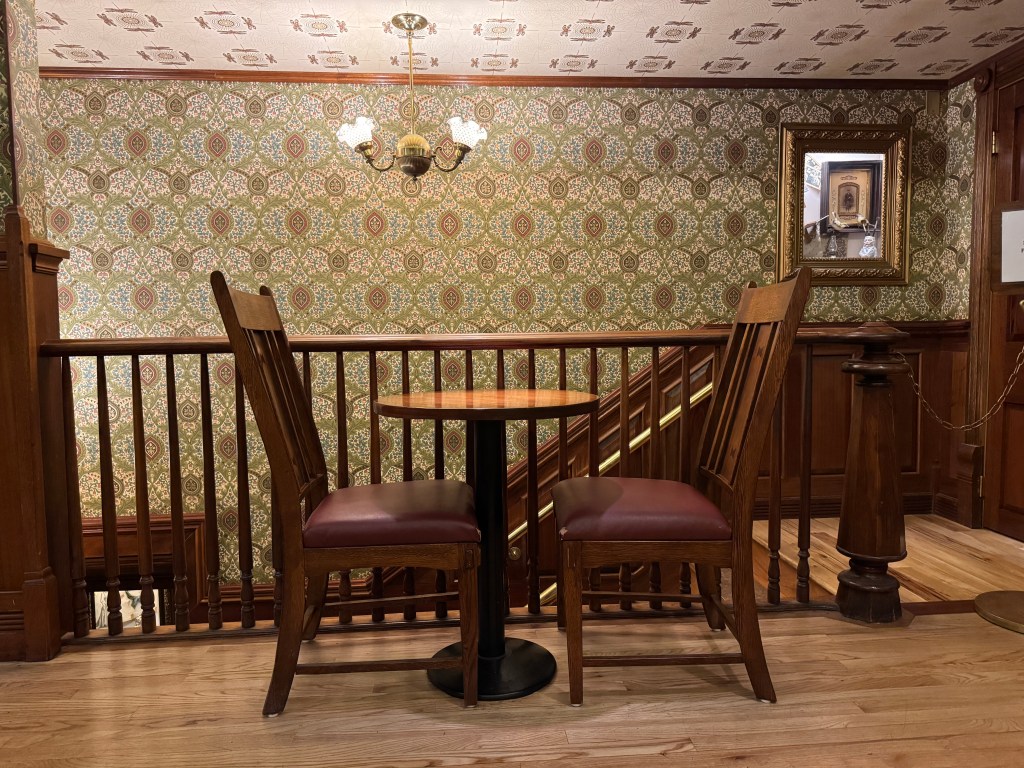
Historical maple furnishings and Bradbury & Bradbury wallpaper at the Strater Hotel Melodie Miller | Photographer
The ladder-back Mission chairs, hand-milled oak staircase railing, and heavy balusters showcase the early American Craftsman-style set against a backdrop of color that favors gently aged tones of the late Victorian era.
According to Historic Hotels of America, in 1926, owner Earl A. Barker, Sr. became dedicated to preserving the hotel’s prestigious status and he inspired the following generations to follow in his footsteps.
“The large collection of Victorian antique furniture we have throughout the property can be attributed to the second-generation Barker family,” Ossola said. Then, the third generation, Mr. Rod Barker and his wife Lori, “did the major heavy lifting on the renovation.”
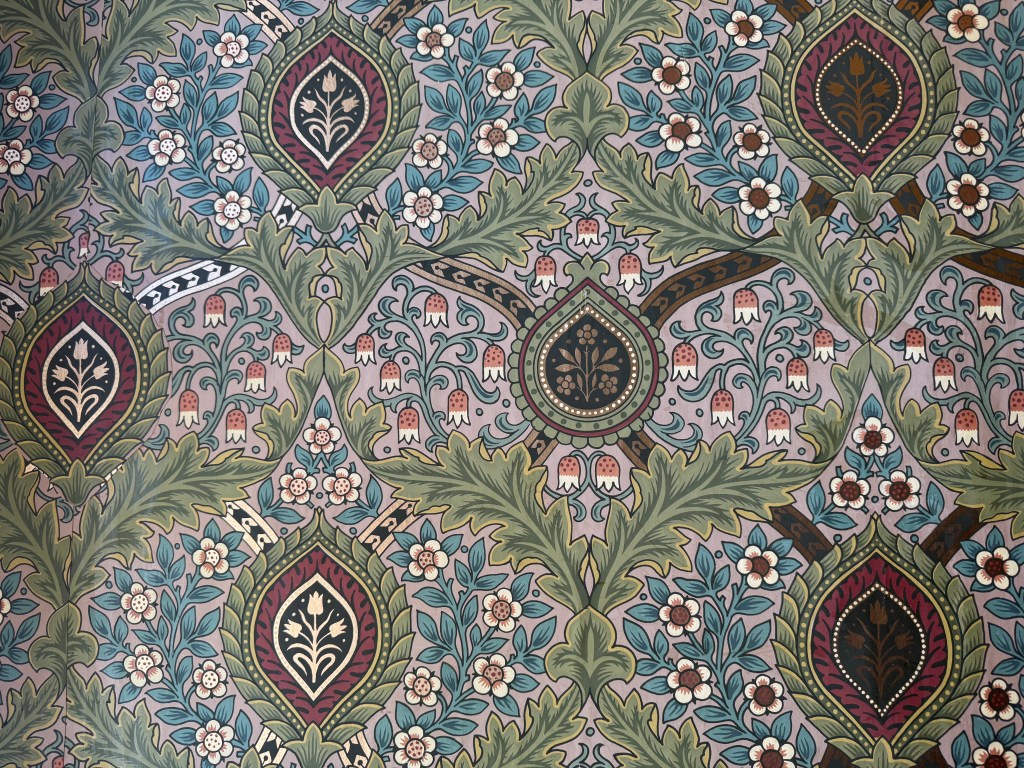
Historically inspired Gilded Age Bradbury and Bradbury wallpaper covers the walls of the Strater Hotel (Melodie Miller | Photographer)
The Knightsbridge Damask wallpaper by Bradbury & Bradbury of San Francisco recreates the Anglo-Japanese Aesthetic Movement, using motifs from 1875 to 1890. Designed in 1986 by artistic director and co-owner Stephen Bauer, the motifs recreate patterns following the transition of the 19th-century designer William Morris.
The late-Victorian-inspired wallpaper is reminiscent of the Gilded Age, featuring teardrop-shaped ogee and gold-metallic floral medallions joined by a lattice of leaves.
“We strive to be a resource to historic properties for the preservation and restoration of their buildings,” a representative of Bradbury & Bradbury, Lisa Bauer, said.
The Strater Hotel wallpaper colors are unique because “the pattern has recently received a refresh,” Bauer said, but “it has never been retired, only revised.”
The historic Strater Hotel on Main Street, Durango (Melodie Miller | Photographer)
An original mining boomtown, Durango was founded in September 1880, according to the City of Durango History. Henry Strater built the hotel in 1887 “right after the Silver Panic,” Ossola said.
According to Historical Hotels.org, Strater believed that a contemporary Durango offered a “great economic opportunity,” deserving of a grand hotel.
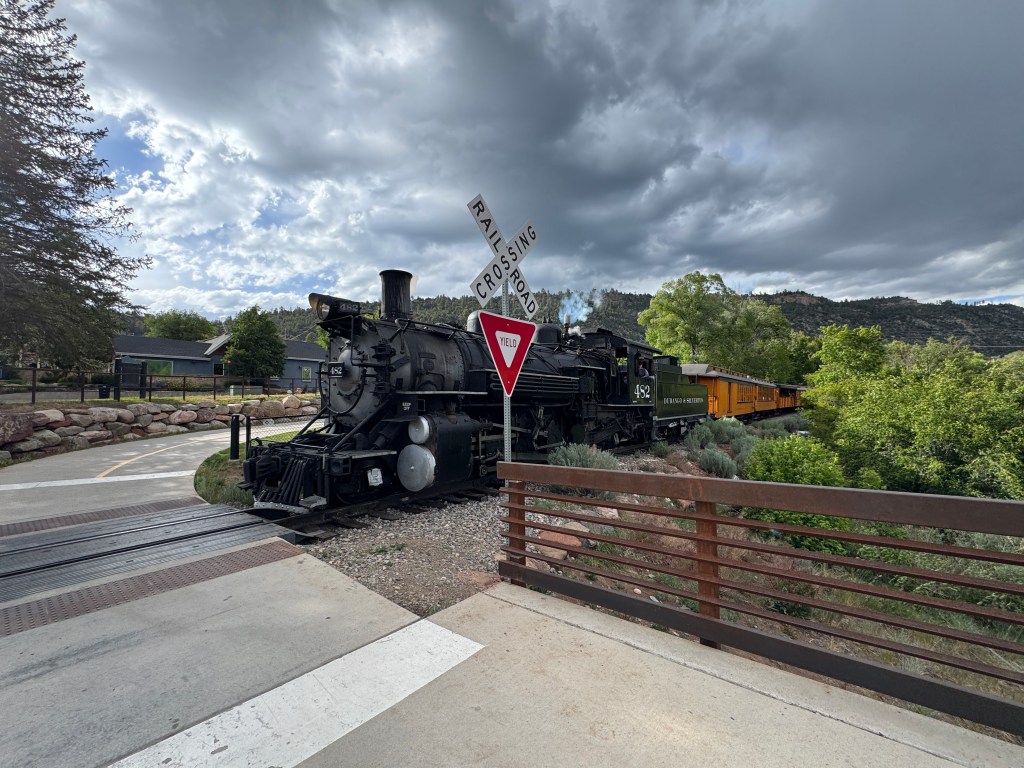
The Durango Silverton Gauge Railway steam engine and passenger car train (Melodie Miller | Photographer)
Along with the hotel, the economic boom brought the Durango to Silverton Gauge Railway steam engine that continues to carry passengers through the rugged San Juan Mountains of Southwestern Colorado. Built in 1882 to haul silver and gold ore, the historic steam-powered train transports passengers on a 45-mile round trip along the Animas River through canyons, forests, and landscapes largely unchanged since the 19th century. The train station is 0.2 miles, approximately a 3-minute walk, from the Strater Hotel.
In 2021, the Garrett family bought the hotel from the Barker family and “upgraded every single one of our hotel rooms to have its own heating and cooling system,” Ossola said.
“Not super sexy stuff, right? But still making sure that our guests having that historic experience are comfortable,” Ossola said.
You can visit a 12th-century community of Puebloan structures at the Aztec Ruins National Monument in New Mexico, near Durango, Colorado. If the Pueblos built the community, why is it named the Aztec Ruins?
“The Spanish are calling the Aztec ruins Aztec before non-Spanish Europeans show up,” Dr. Steve Lekson, Professor of Anthropology at the University of Colorado, said.
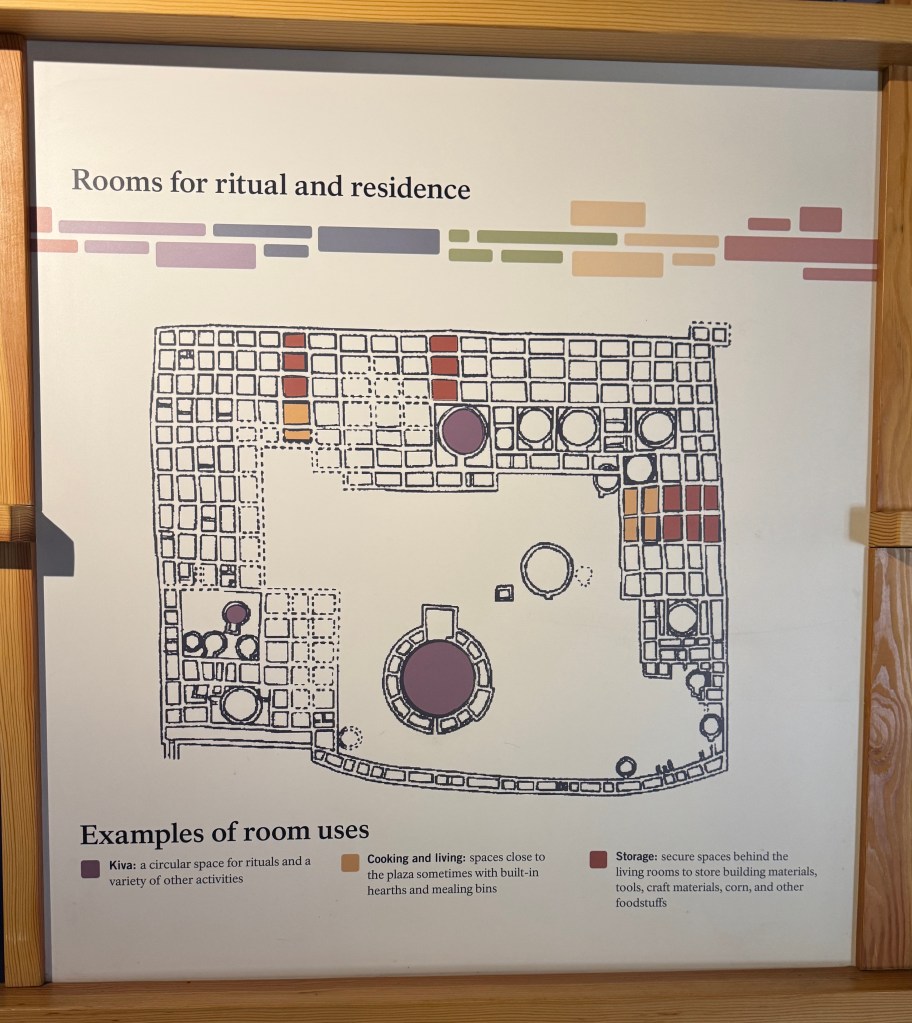
During the 19th century, scholars in Mexico City, Mexico, wrote that the Aztecs had built the 400-room community. However, most modern archaeologists accept that the ancestral Puebloans, a farming culture, built the dwellings, and the Aztecs, an elite class, lived there for a period of time.
“It’s a complicated story,” Dr. Scott Ortman, of the University of Colorado Boulder, said. One concern is “naming a site in one particular indigenous language” when many tribes view themselves as descendants of the area.
Thus, the 19th-century name took hold and remains.
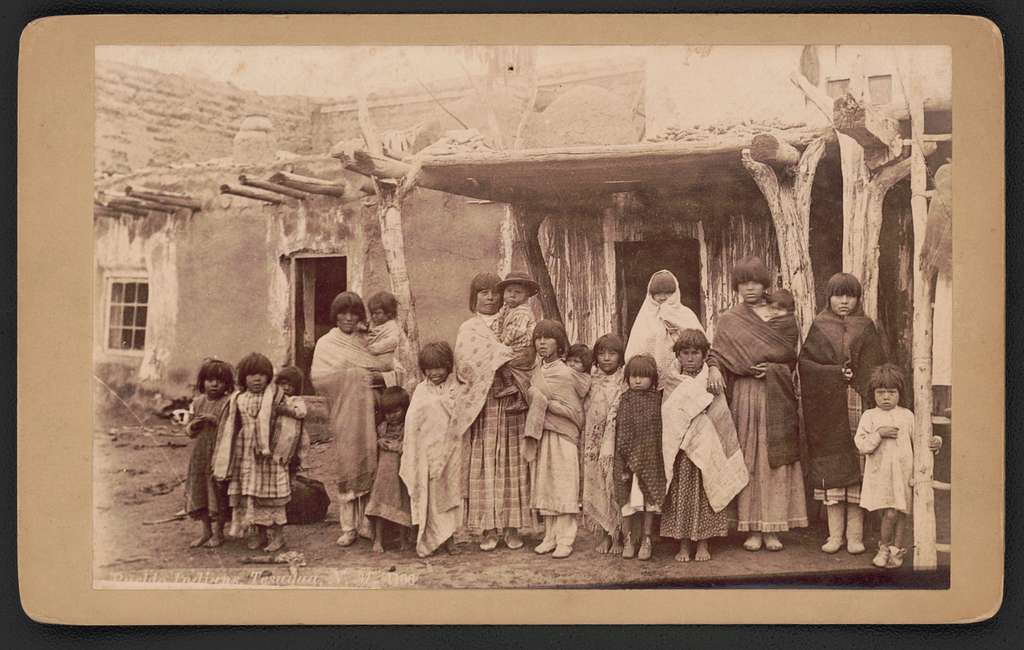
Pueblo Indians, Tesuque, N.M. (1893) (William Edward Hook | Courtesy of the Library of Congress)
Migration lies at the heart of the Aztec and Pueblo ancestral origin story. More than a record of movement, their ancestors’ journeys shape identity and belonging today.
According to Mexican scholars of the 1800s, the Aztec Ruins were the “first home of the Aztecs” before they migrated south to Mexico, Lekson, said.
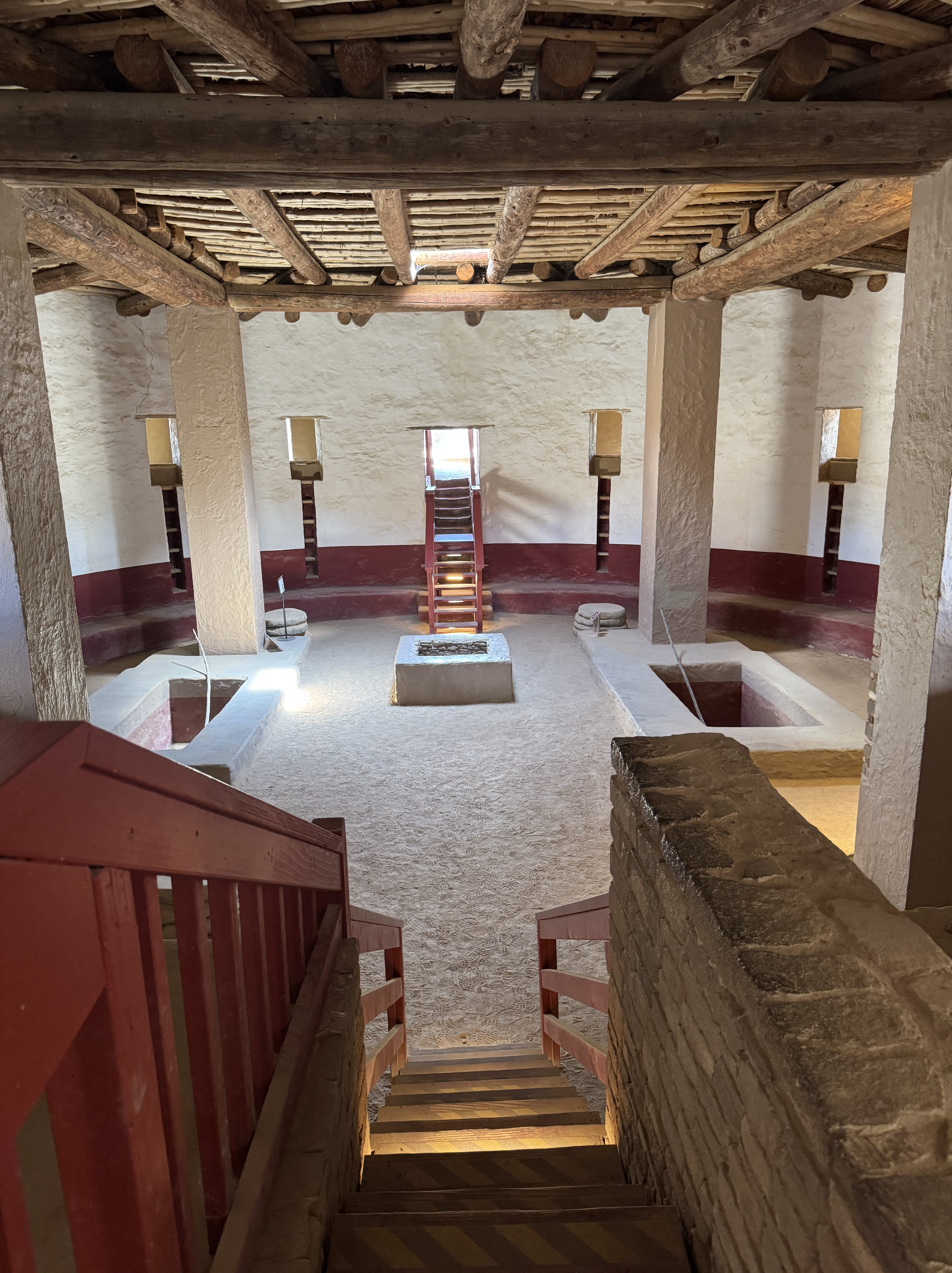
The Aztec Ruins kiva replica, Aztec, New Mexico (Photography | Melodie Miller)
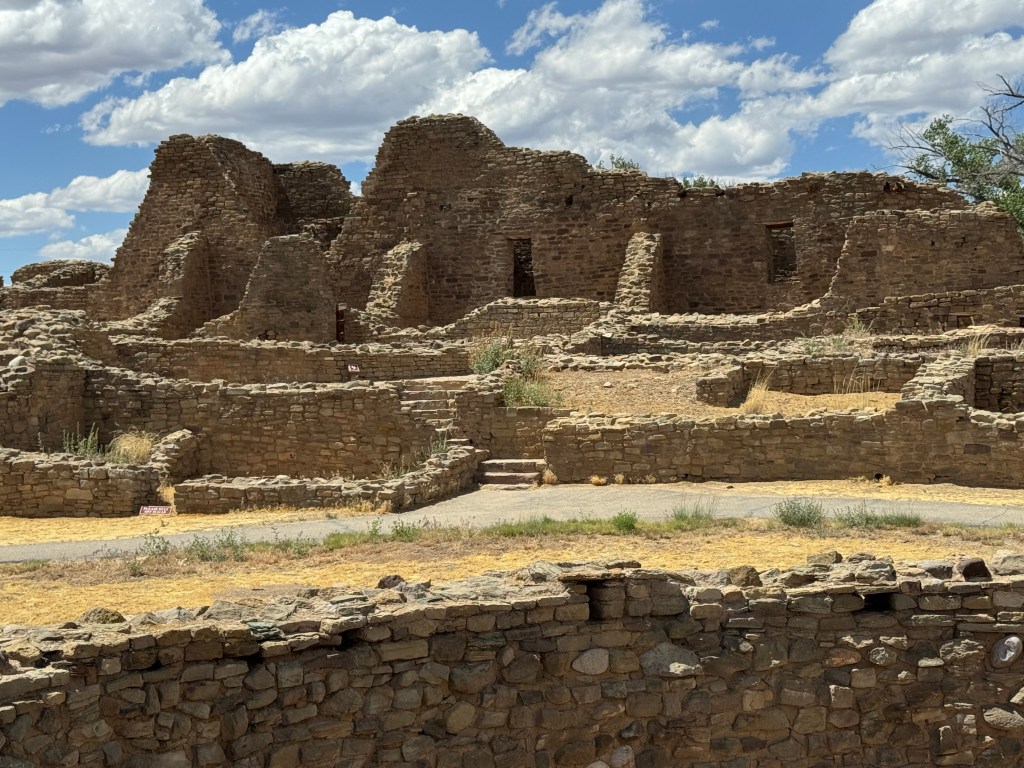
The 381-acre National Park protects the Ancestral Pueblo great house community and the kiva ceremonial room replica. Kivas are built with ventilation, a fire pit, and a sipapu — a spiritual gateway to and from the underworld. An important part of modern Pueblo and Hopi communities is sacred dances and rituals held in community kivas.
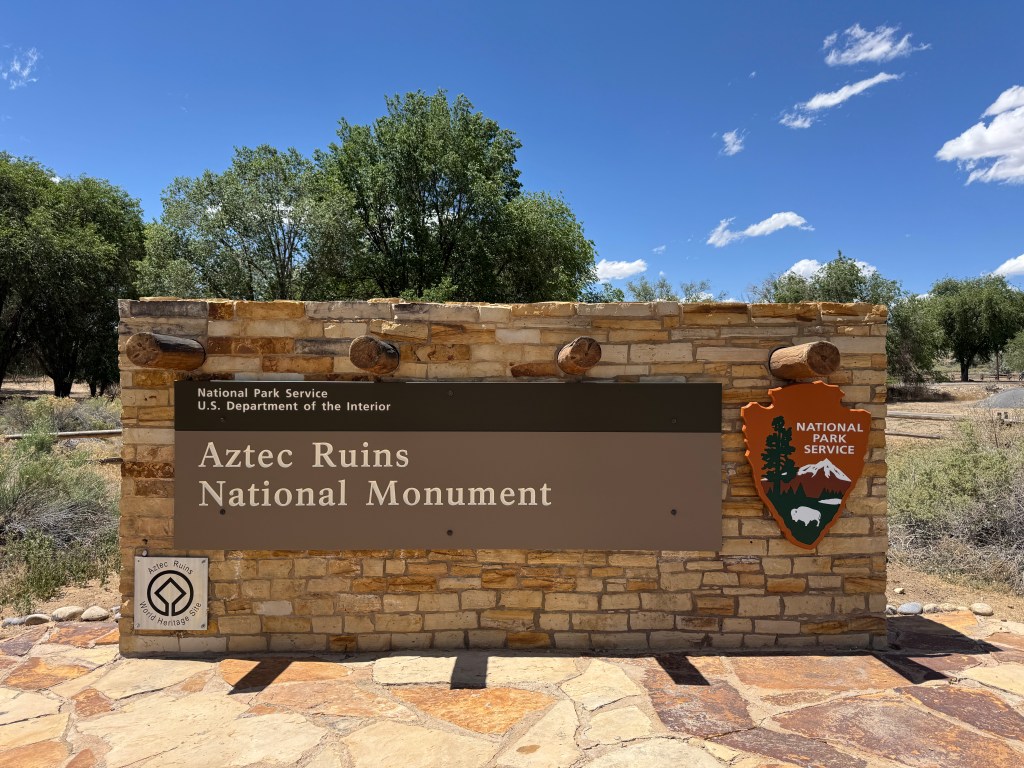
The Aztec Ruins National Monument, New Mexico (Photography | Melodie Miller)
President Warren G. Harding used the Antiquities Act of 1906 to designate the site as the Aztec Ruins National Monument on January 24, 1923.
Nathan Hatfield, Aztec National Park Ranger Supervisor of Interpretation, said, “I believe that by 1928 most southwestern scholars and archaeologists agreed that the Aztecs of Mexico were not responsible for building” the Aztec Ruins.
Consensus among archaeologists grew, accepting the continuity between the Ancestral Pueblo builders and the Aztec ruins.
Archaeologists have come to accept that “Aztec was built by ancestors of today’s Pueblo people,” Ortman said. “We didn’t need DNA. It was just recognizing the continuity and culture.”
Now the name is accepted as an artifact of history. A name change would require an act of Congress.
______________________________________________
The Aztec Ruins National Monument is located 40 miles (ca. 64 km) south of Durango, at 725 Ruins Rd, Aztec, New Mexico 87410.
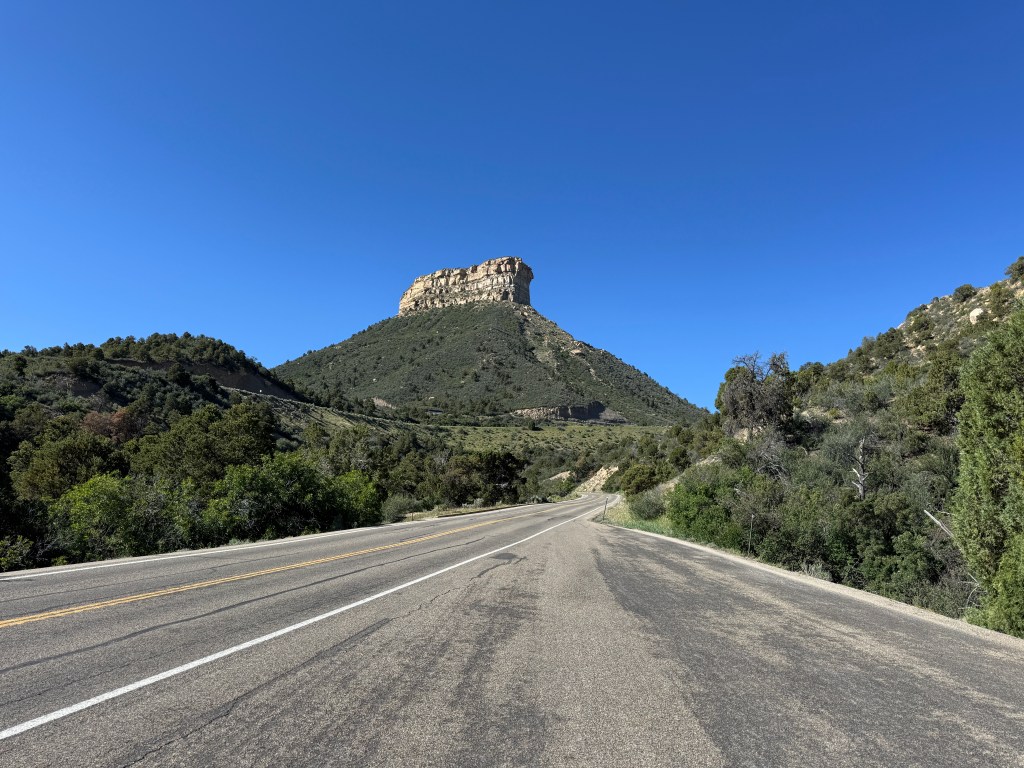
The Mesa at Mesa Verde National Park appears to be a green table, but it is a cuesta, a cliff with a flat ridge and a slope. (Melodie Miller | Photographer)
“Many of the Pueblos were named by the Spanish,” Dr. Scott Ortman, of the University of Colorado Boulder, said. “It tends not to be very common for archaeological sites to be renamed to the indigenous language names.”
Attribution of Mesa Verde started with early speculation about the Aztecs and Aztlan. However, cultural consistency emerged between Cliff Palace and the modern Pueblos of the Four Corners, connecting the two places.
Dr. Steve Lekson, Professor of Anthropology at the University of Colorado, writes in A History of the Ancient Southwest that “Cliff Palace might be empty and abandoned, but only a few days’ walk away were Pueblo peoples who built towns that looked like Cliff Palace.”
In 1776, according to Legends of America, two Mexican-Spanish missionaries, Francisco Atanasio Dominguez and Silvestre Vélez de Escalante, were leading explorers from Spain through the region. They camped at the base of the La Plata Mountains, near the flat forested area of Mesa Verde. 83 years later, in 1859, Mesa Verde is attributed to John S. Newberry, although the name had been in use prior to his writing.
“The earliest permanent settlements here at Mesa Verde date back to between 500 and 600 CE and are often characterized by pit houses which can be seen on the mesa tops of both Chapin and Wetherill Mesas. The alcove sites (cliff dwellings) were mostly constructed beginning in the late 1100s to early 1200s CE,” Dalton Dorrell, Mesa Verde National Park Service Supervisory Park Ranger of Education, Community Outreach, and Interpretation, said.
The Spanish word mesa translates to table, a flat surface. But Mesa Verde is a cuesta, a steep cliff with a flat ridge on top and a sloping plain on the other side.
“Cuesta has been used as a geological term only since the early 19th century. It is not unusual for the geological term and the place name given to a location to differ,” Dorrell said.
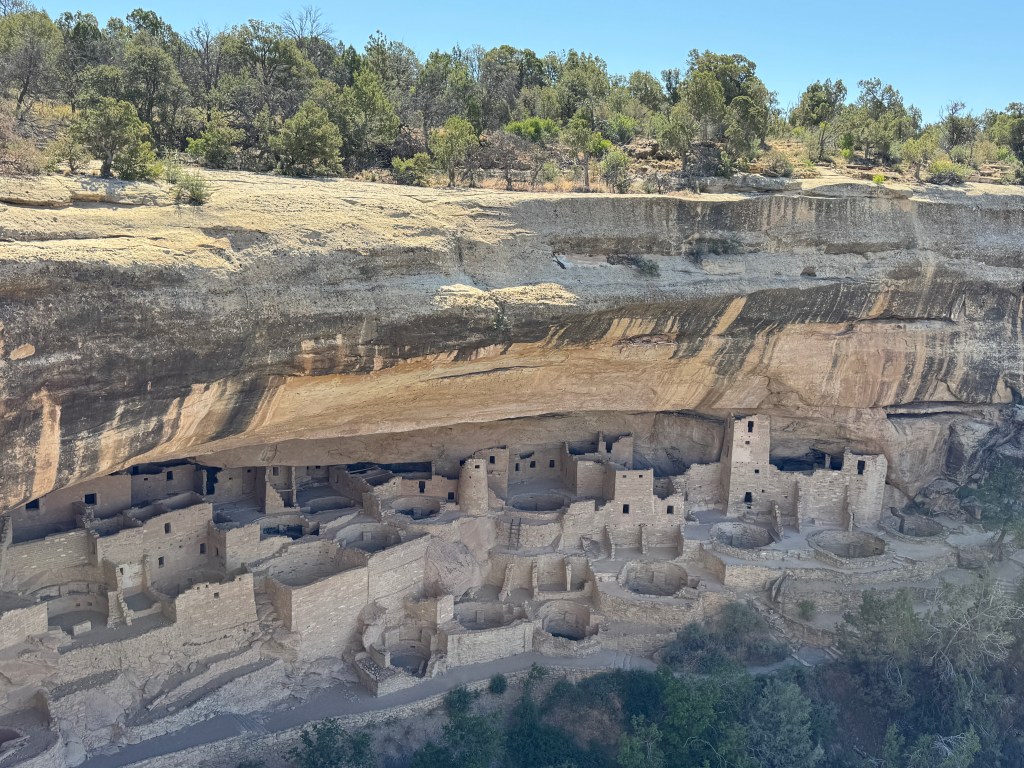
Cliff Palace, Mesa Verde National Park Ancestral Puebloan dwellings ( Melodie Miller | Photographer)
Then, in 1888, according to Lekson, Richard Wetherill and Charlie Mason came across the Cliff Palace.
“Cliff Palace is discovered by this cowboy who lived in Mancos named Richard Wetherill,” Lekson said.
On December 18, 1888, Wetherill, his brother-in-law Charles Mason, and their Ute guide Acowitz saw Cliff Palace and went on horseback to investigate.
Wetherill, Mason, and Acowitz, came across the cliff dwellings of the Ancestral Puebloans while “rounding up cattle in the snowstorm. And I guess there’s some questions to whose cattle was he rounding up,” Lekson said.
After the discovery, a significant movement emerged to preserve the 12th-century cliff dwellings and the artifacts found at Mesa Verde.
Wetherill “leaves the place seven ways to Sunday, and it’s just full of stuff. The Pueblos left pots and baskets and all kinds of stuff.” Lekson said. Wetherill “takes a bag full of this stuff up to and tries to sell it. I’ve seen the newspaper advertisements.”
According to the New Mexico Historical Review, Wetherill’s father, Benjamin Wetherill, “looked at the relics and realized the importance of the finds.”
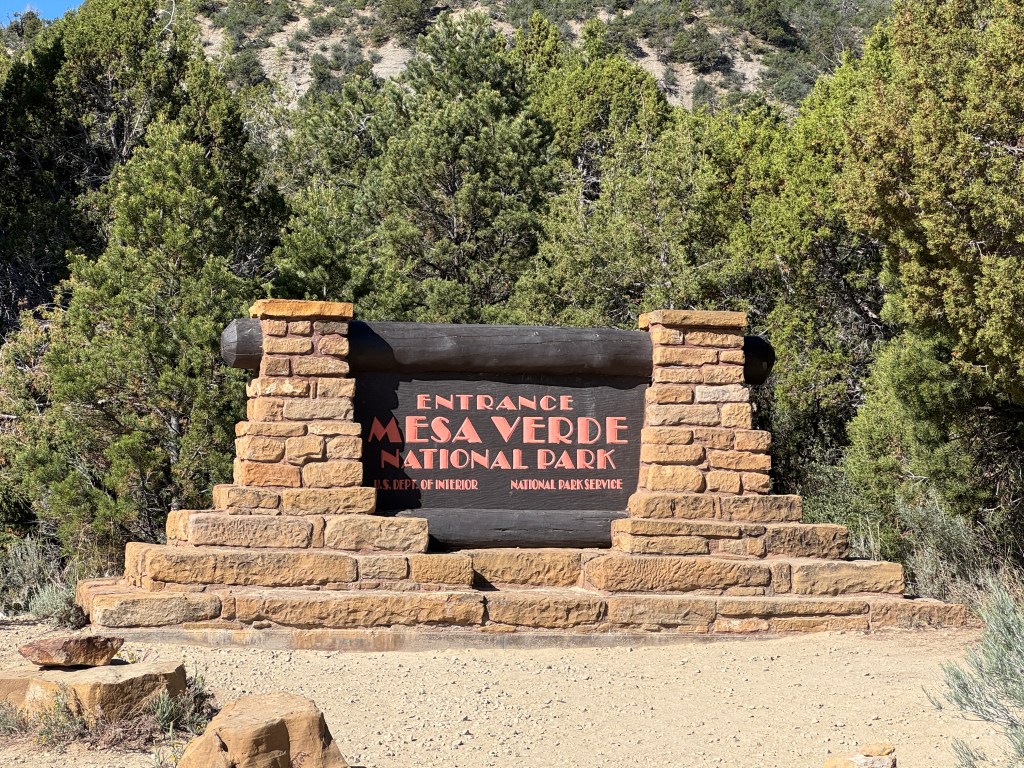
The Mesa Verde National Park sign is emblematic of the Art Deco style popular in 1906. ( Melodie Miller | Photographer)
In 1906, President Theodore Roosevelt signed the congressional bill to preserve the area’s ancient works, specifically 5,000 ancestral man-made sites and artifacts. Although Mesa Verde is a cuesta, the name remains, and the Ancestral Puebloans’ cliff dwellings are preserved.
Mesa Verde is located 35 miles west of Durango, at 35780 US-160, Mancos, CO 81328.
Melodie Dawn Miller is an apparel industry professional with expertise in design, development, and production. She holds bachelor’s degrees in English Literature and Classic Civilizations. She is currently studying French and Journalism at the University of Colorado.
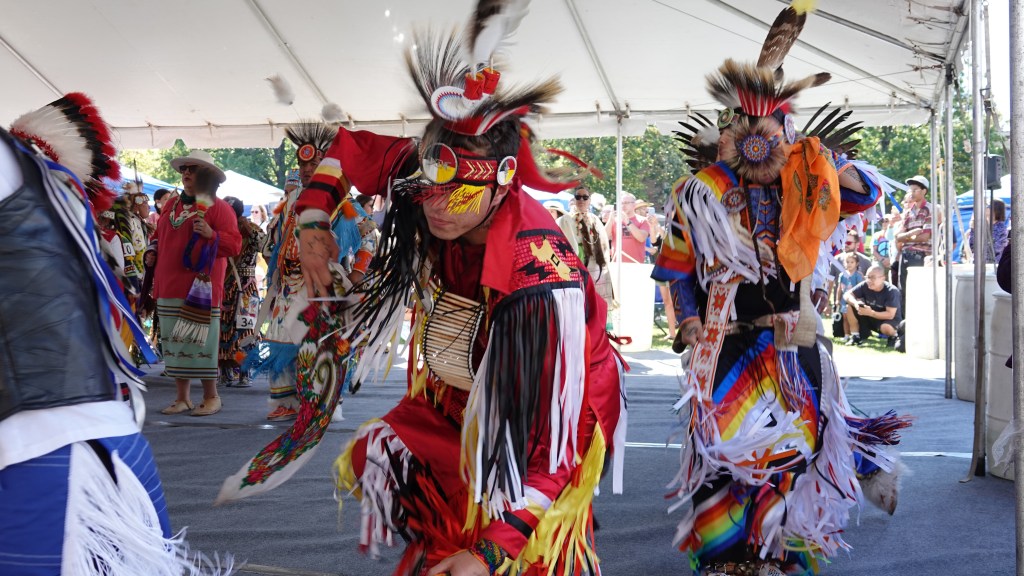
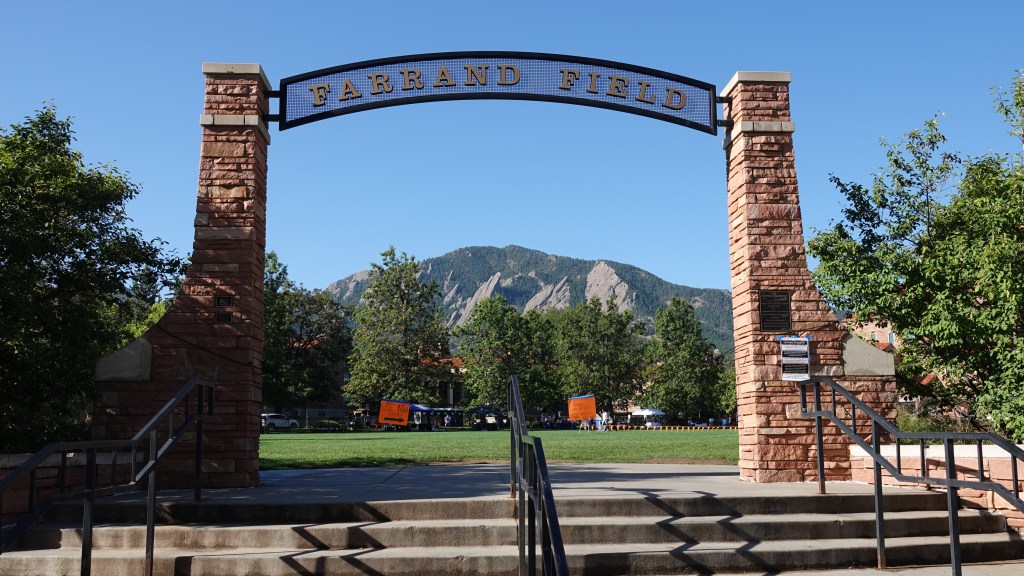
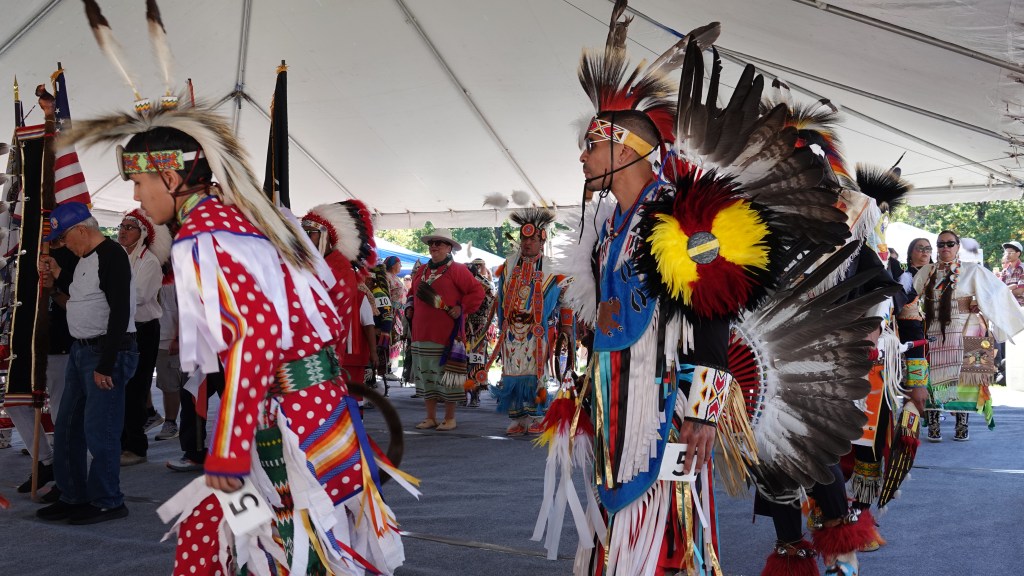
The Heartbeat of the Powwow returned to the University of Colorado at Farrand Field on Sept. 28, 2024. (Melodie Miller | Photographer)
Listen to powwow musician Tony Crank at the University of Colorado Farrand Field Sept. 28, 2024. The Colorado American Indian Tribes In-State Tuition Act (CO SB 21-029) was passed to allow eligible students to pay in-state tuition at Colorado public universities and colleges.(Melodie Miller | Photographer)
After 23 years, the powwow returns to campus as a celebration of faith and tradition for the indigenous peoples of Colorado. The grand entry victory song and two rounds of intertribals.