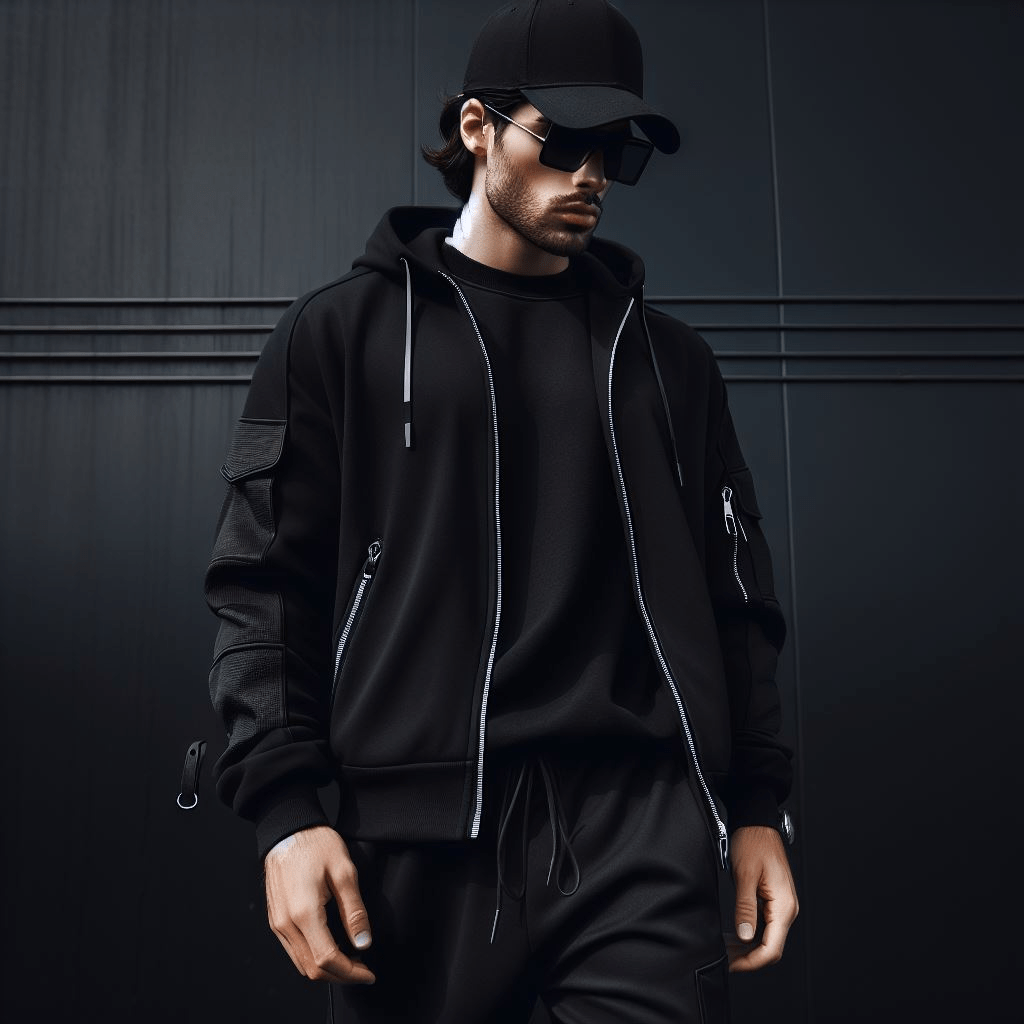
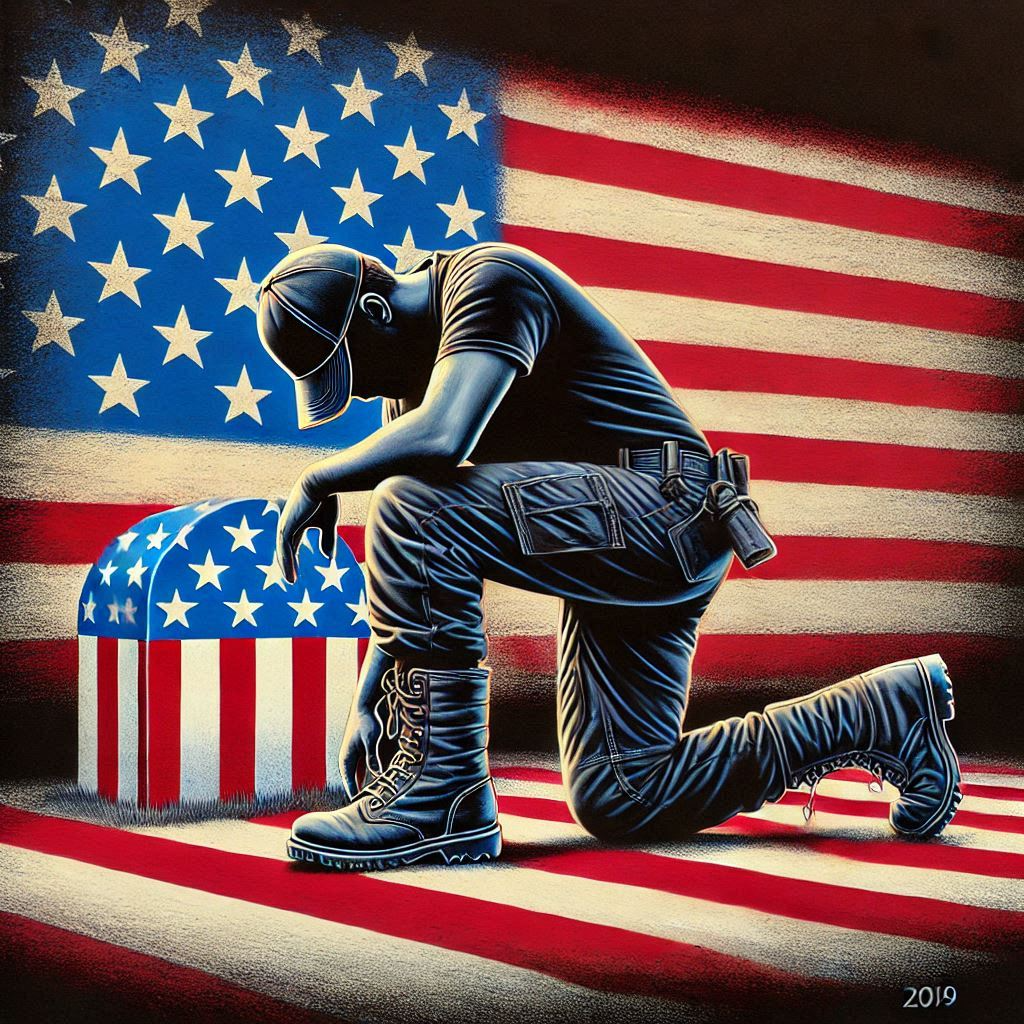
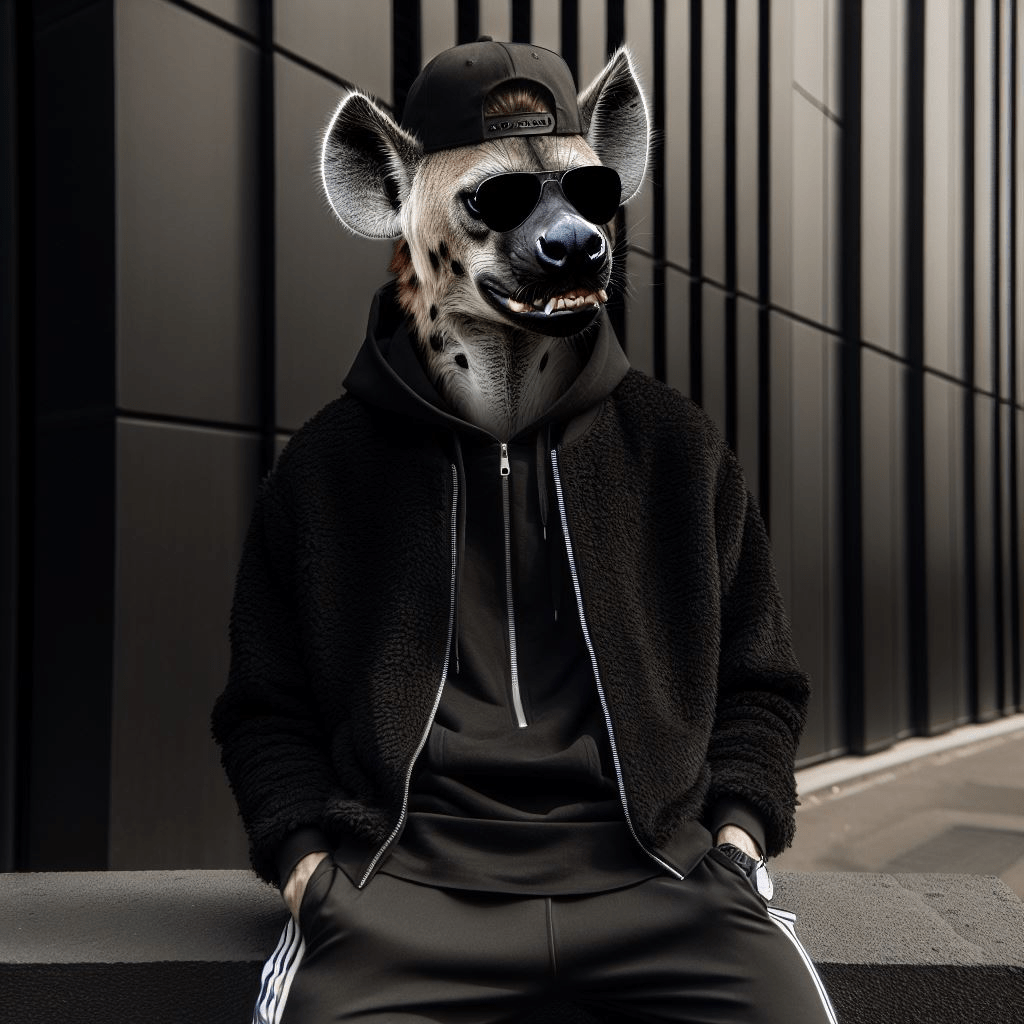
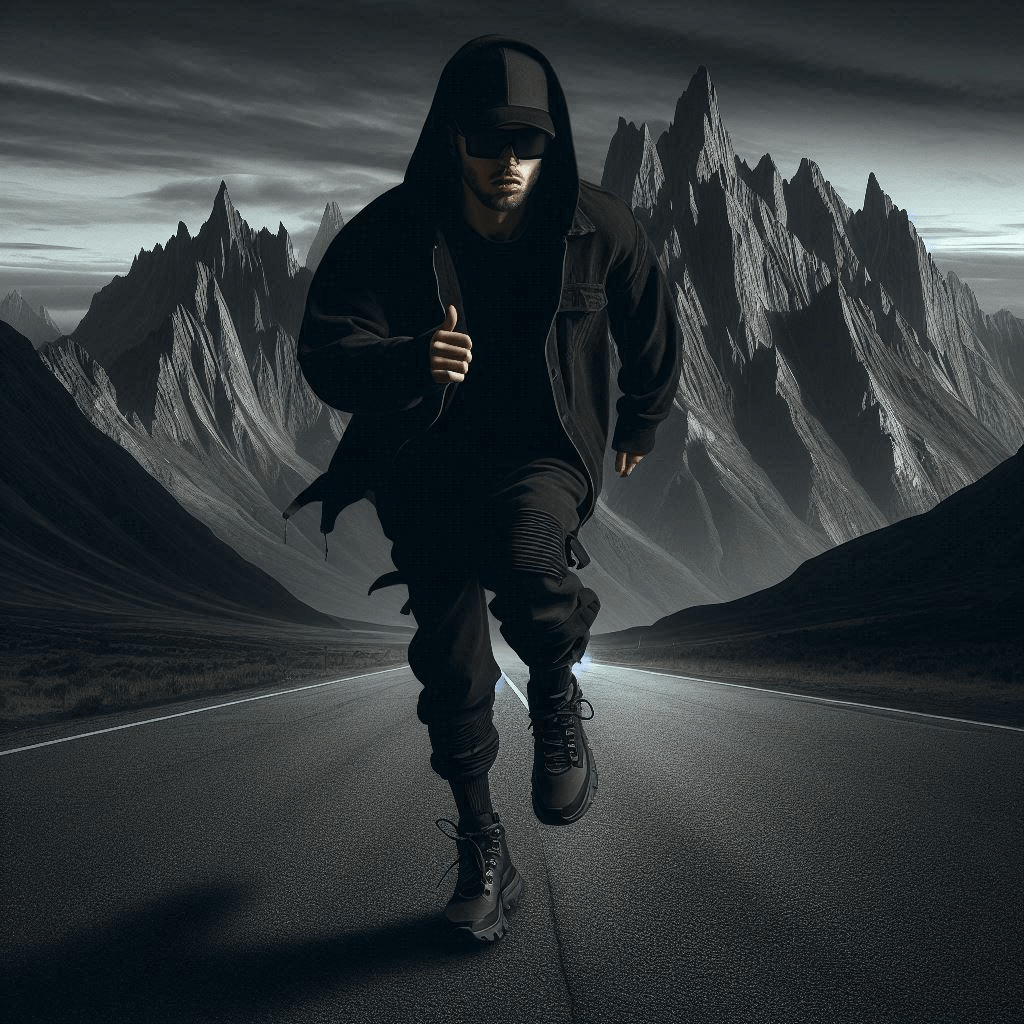
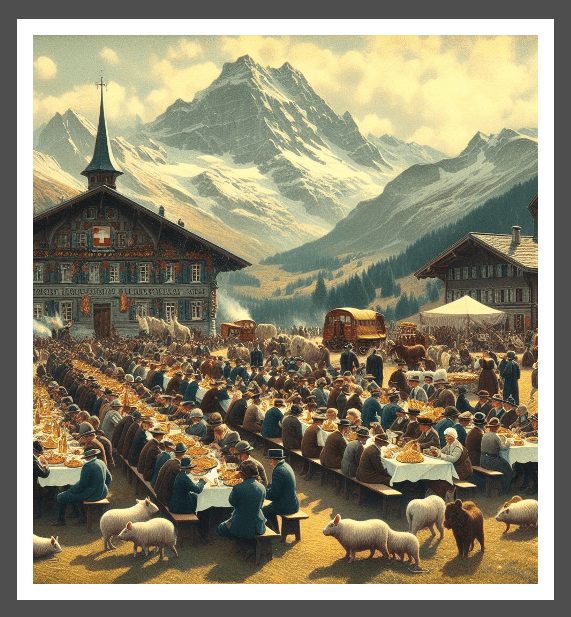
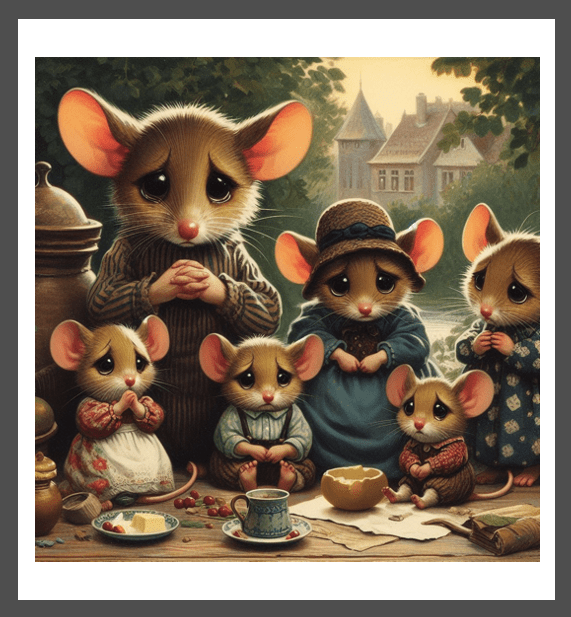
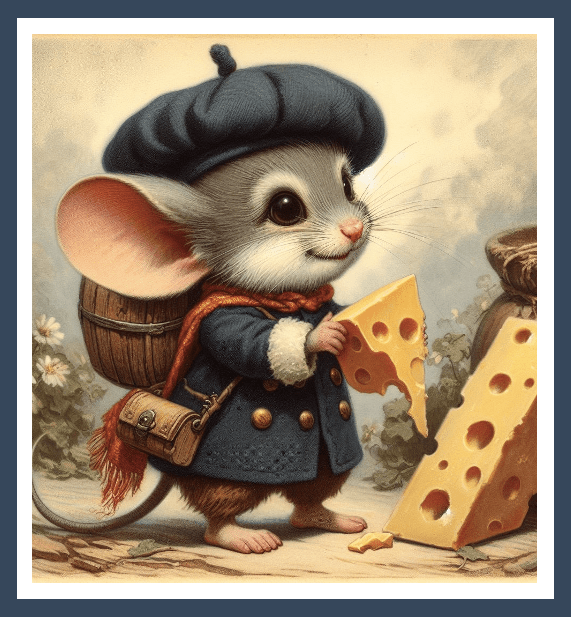
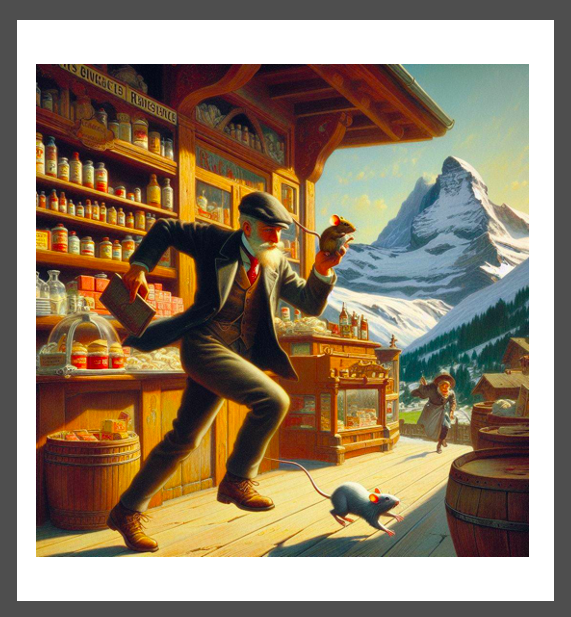
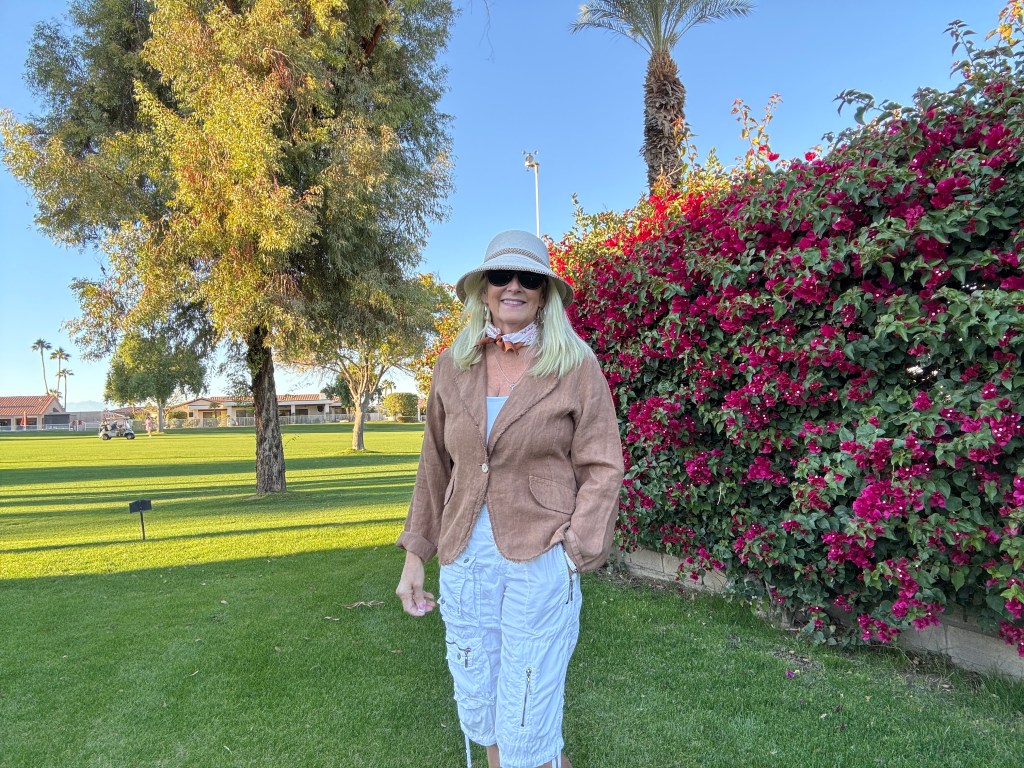
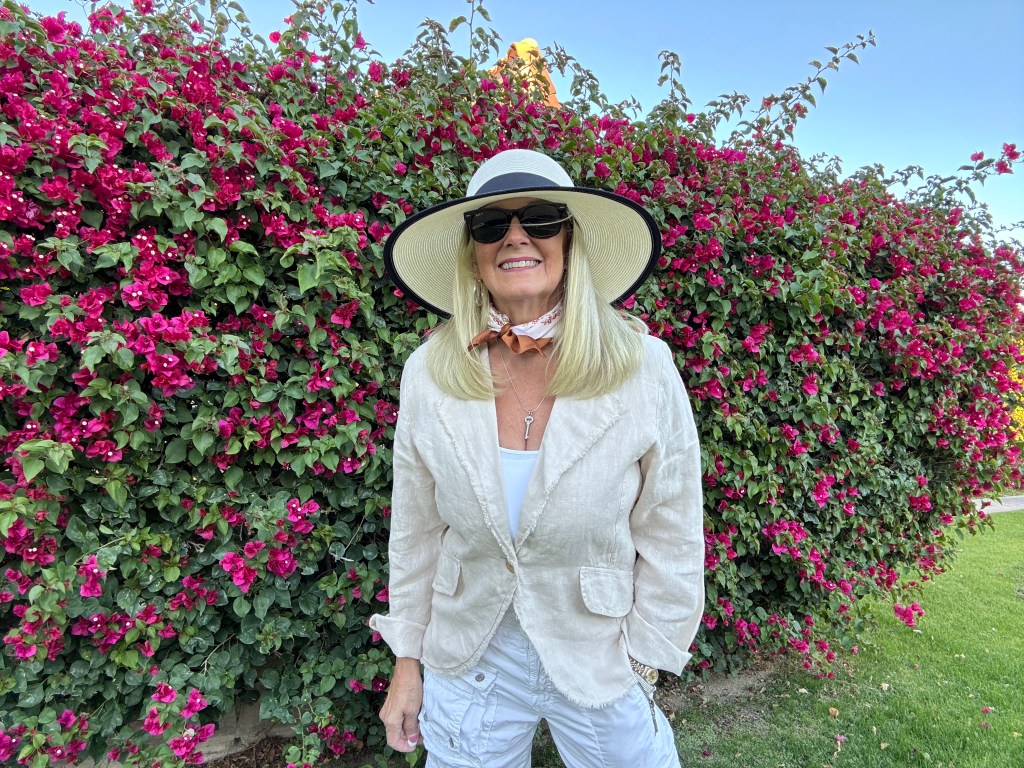
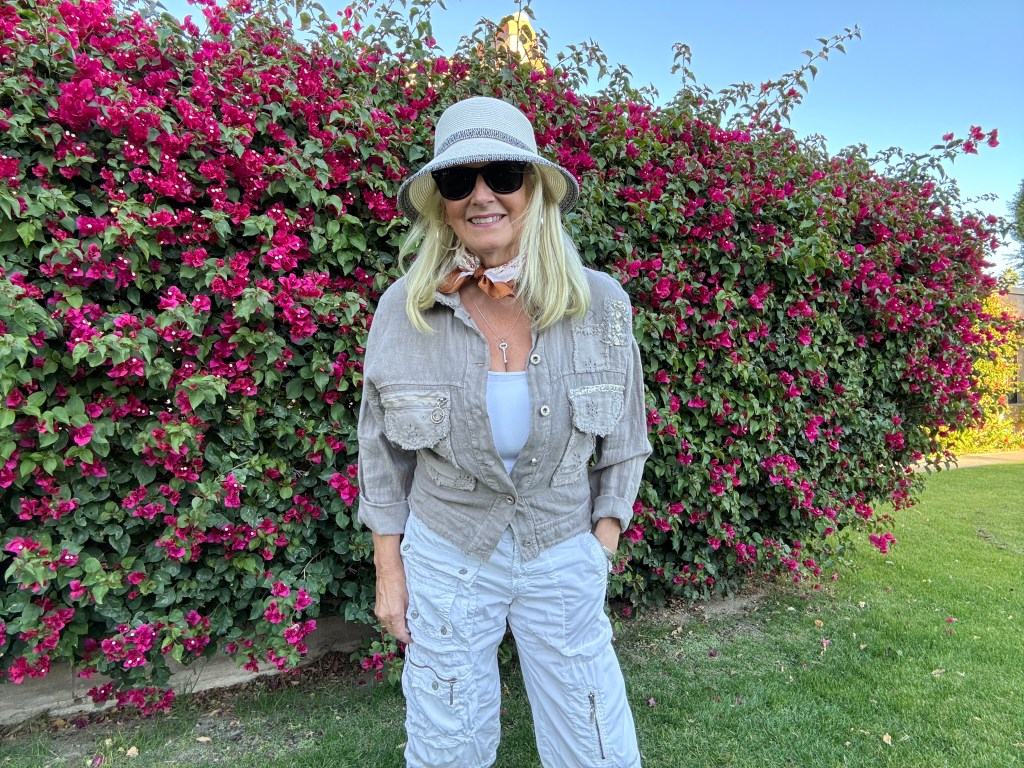
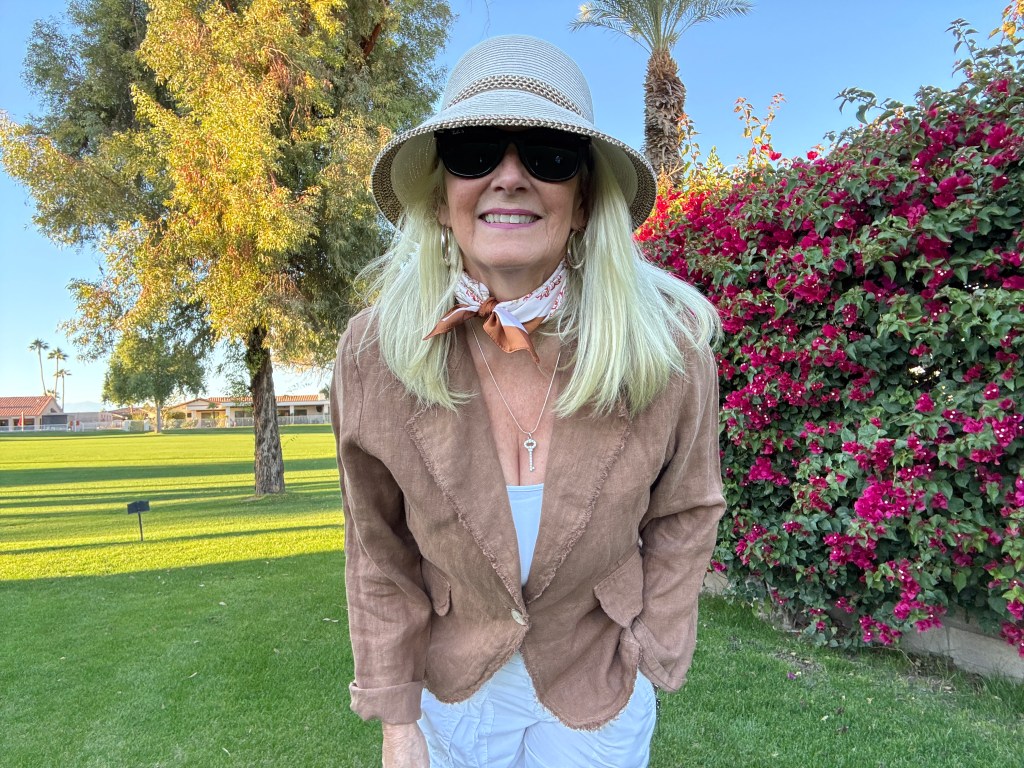
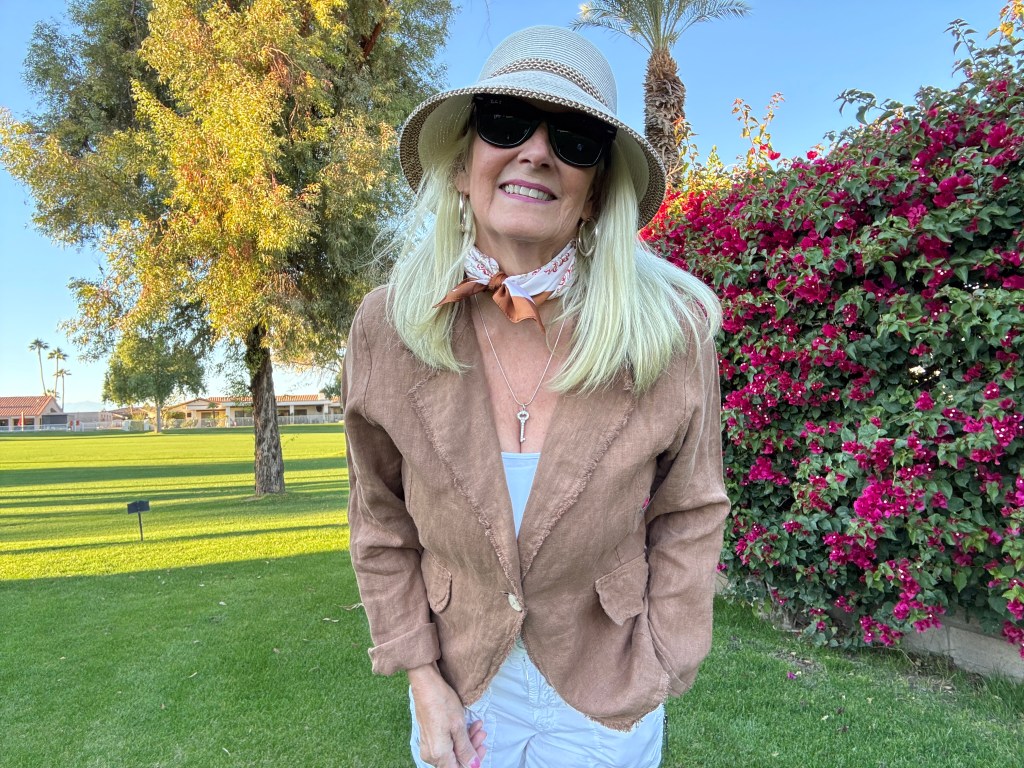
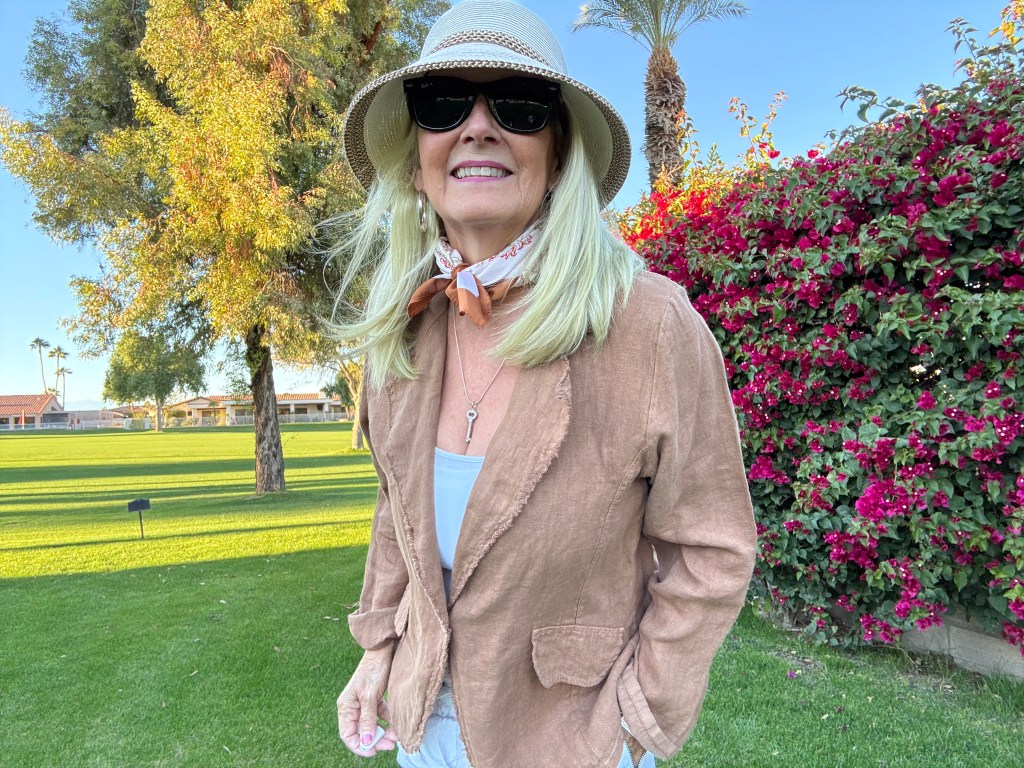
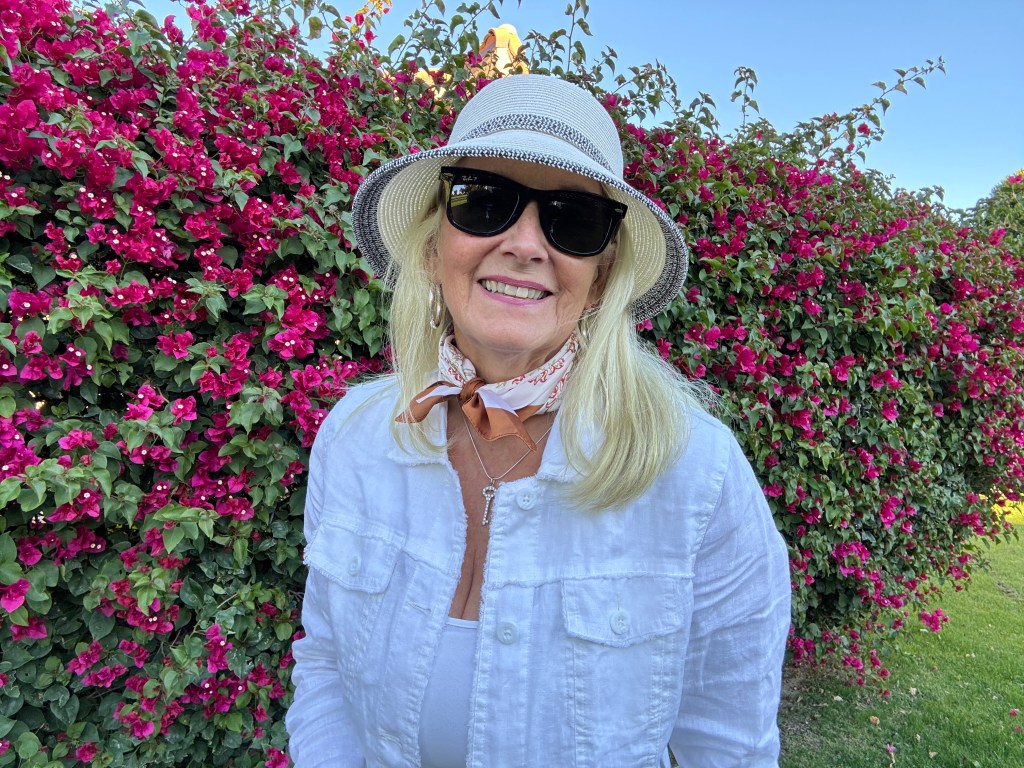
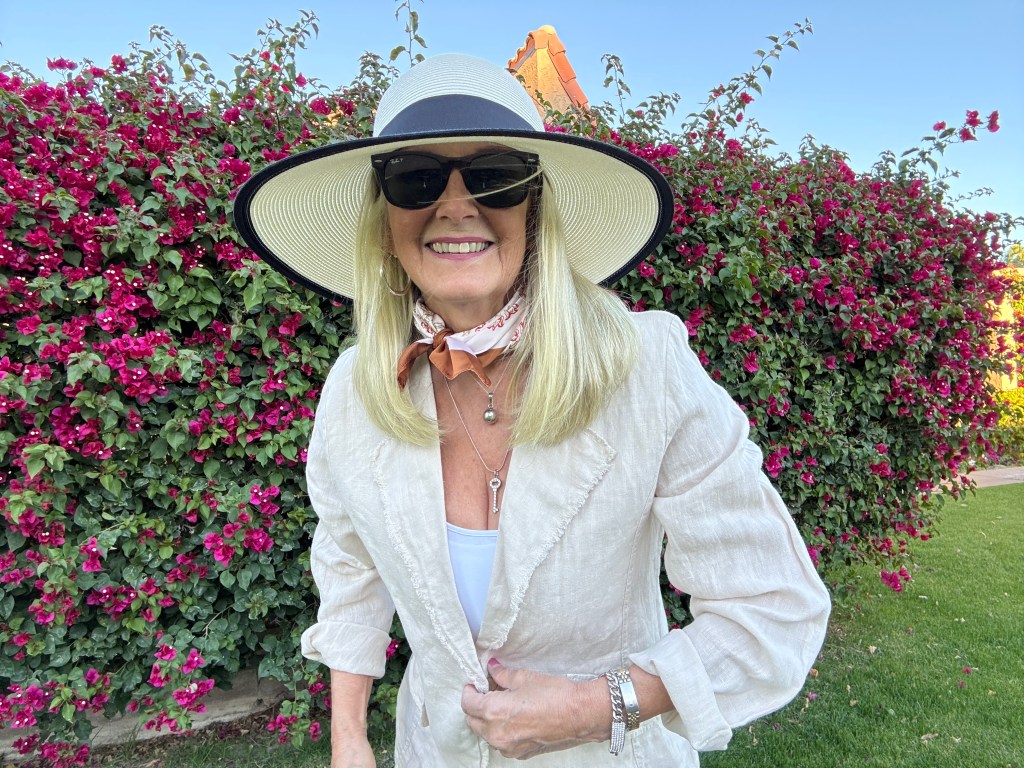
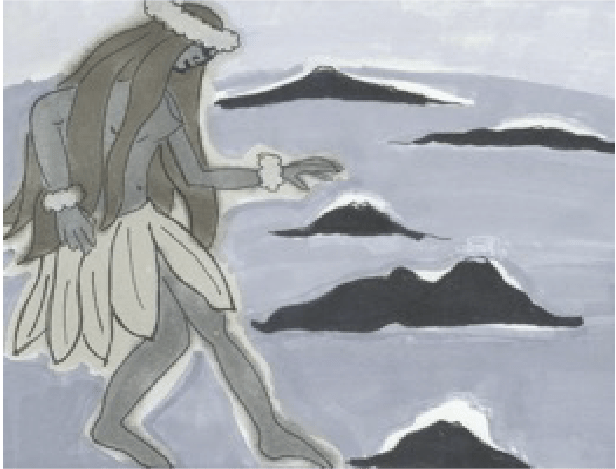
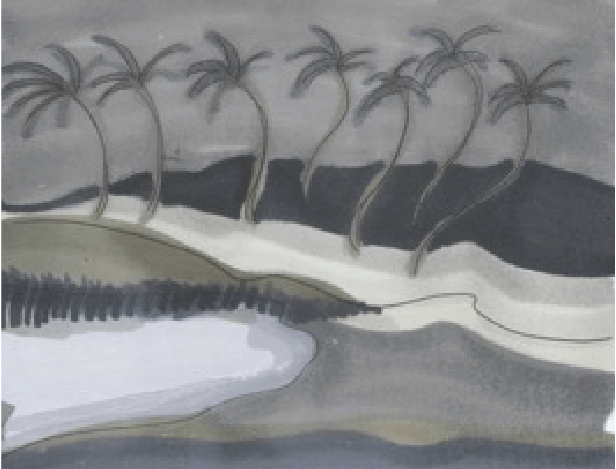
I live in Boulder, Colorado and create AI prompted images to match your story and marketing needs.
I am a writer, teacher, tutor, designer and artist. I have spent my career creating commercial products that people use to enrich their lives. I have a bachelor’s degree in English Literature from the University of Colorado. I am currently studying French there. I am also tutoring students in the Writing Center. While I working with English as a second language students I became inspired to write and illustrate simple French stories. Luc Apprend à Partager is the first in this series.
In the Luc Apprend series, my goal is to create a sympathetic mouse character. I want the character to be relatable. Children will adore and want to emulate this mouse. The stories are simple and entertaining. The mission is that Luc’s character will encourage positive behavior while readers are learning French and English words.
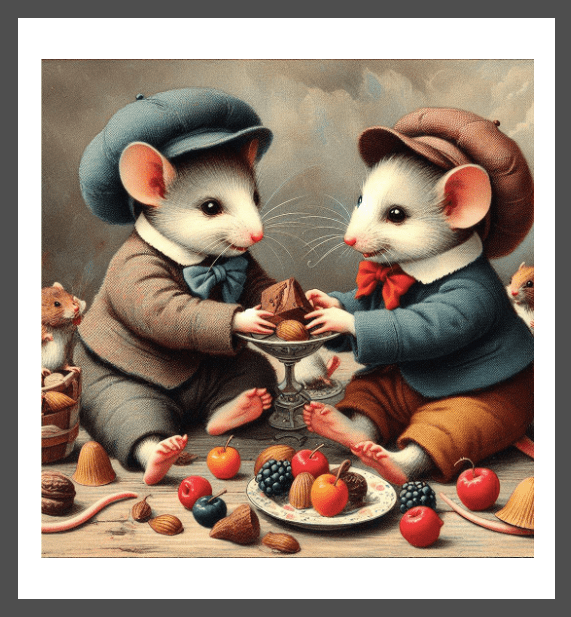
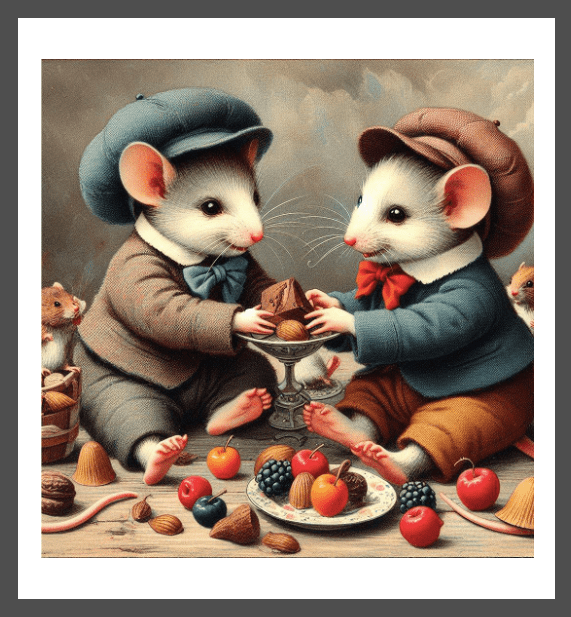
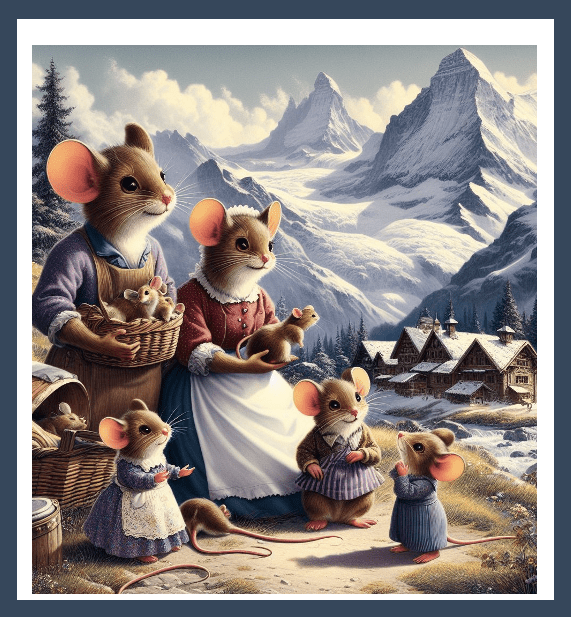
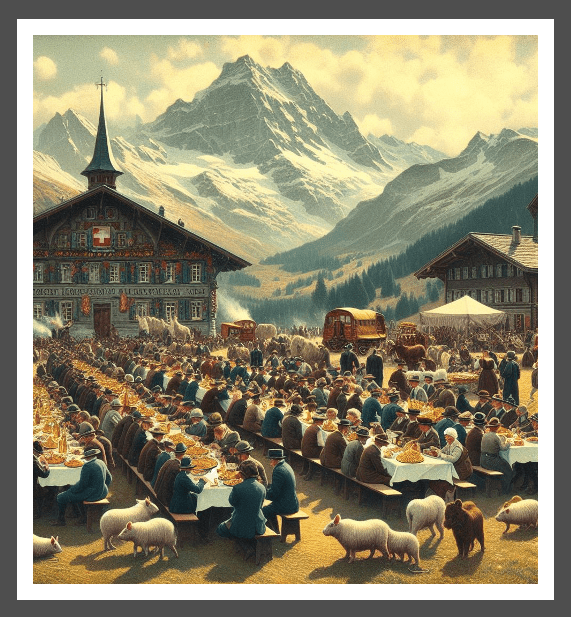
In Luc Apprend à Partager, Luc learns the importance of sharing after he encounters a shop keeper who wants to keep all his food for himself.
Luc Apprend à Partager – Microsoft Designer
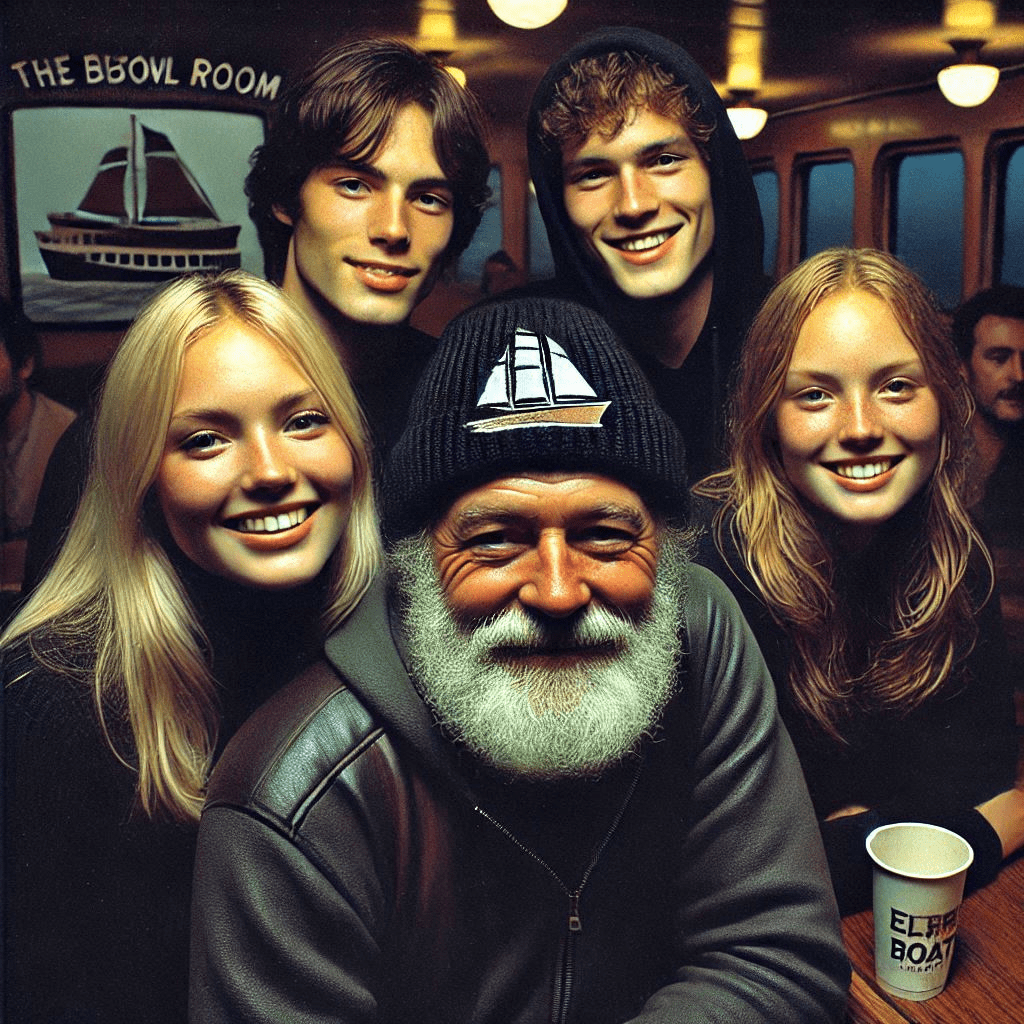
I created this group of AI generated images with detailed word prompts to build on a model image. I worked to maintain consistency in the setting, place, and time. The character’s faces and clothing remained consistent. I used Microsoft Design.
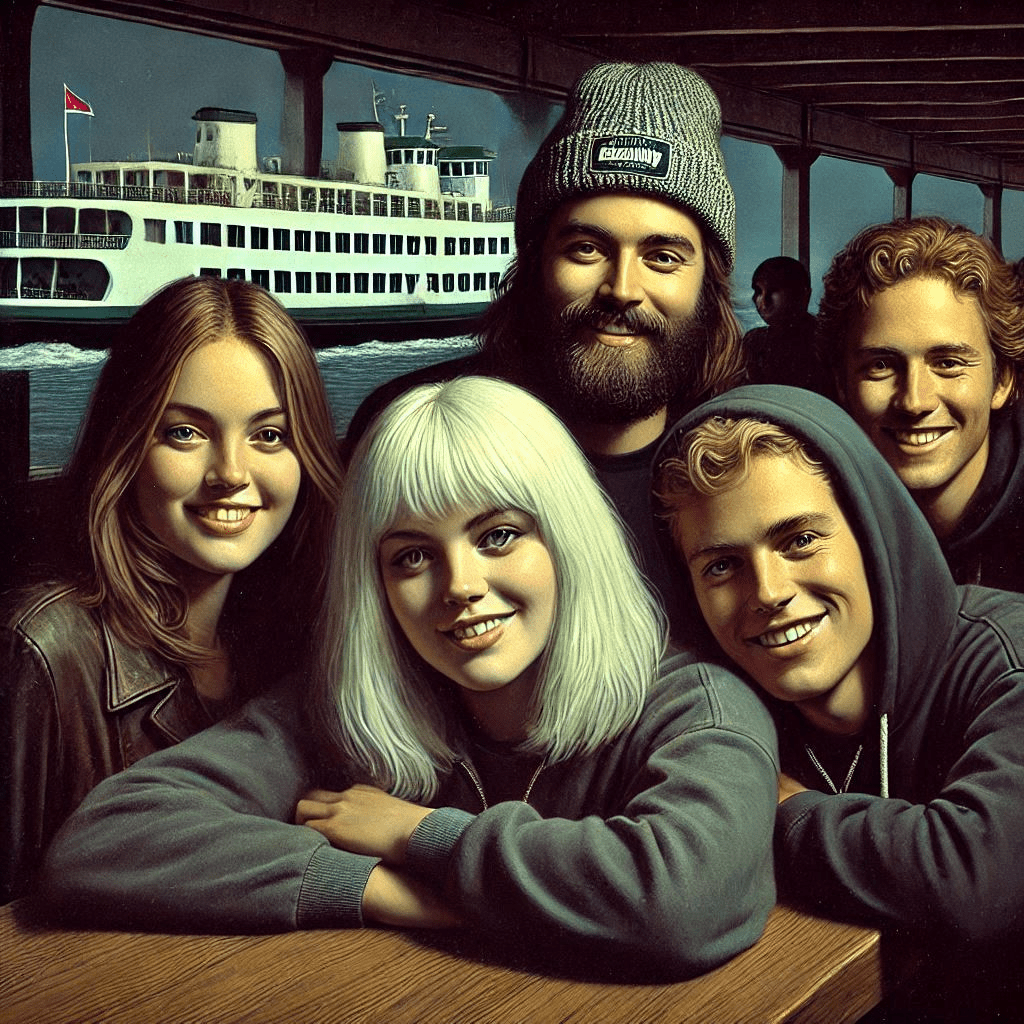
A Sublime Experience – Microsoft Designer
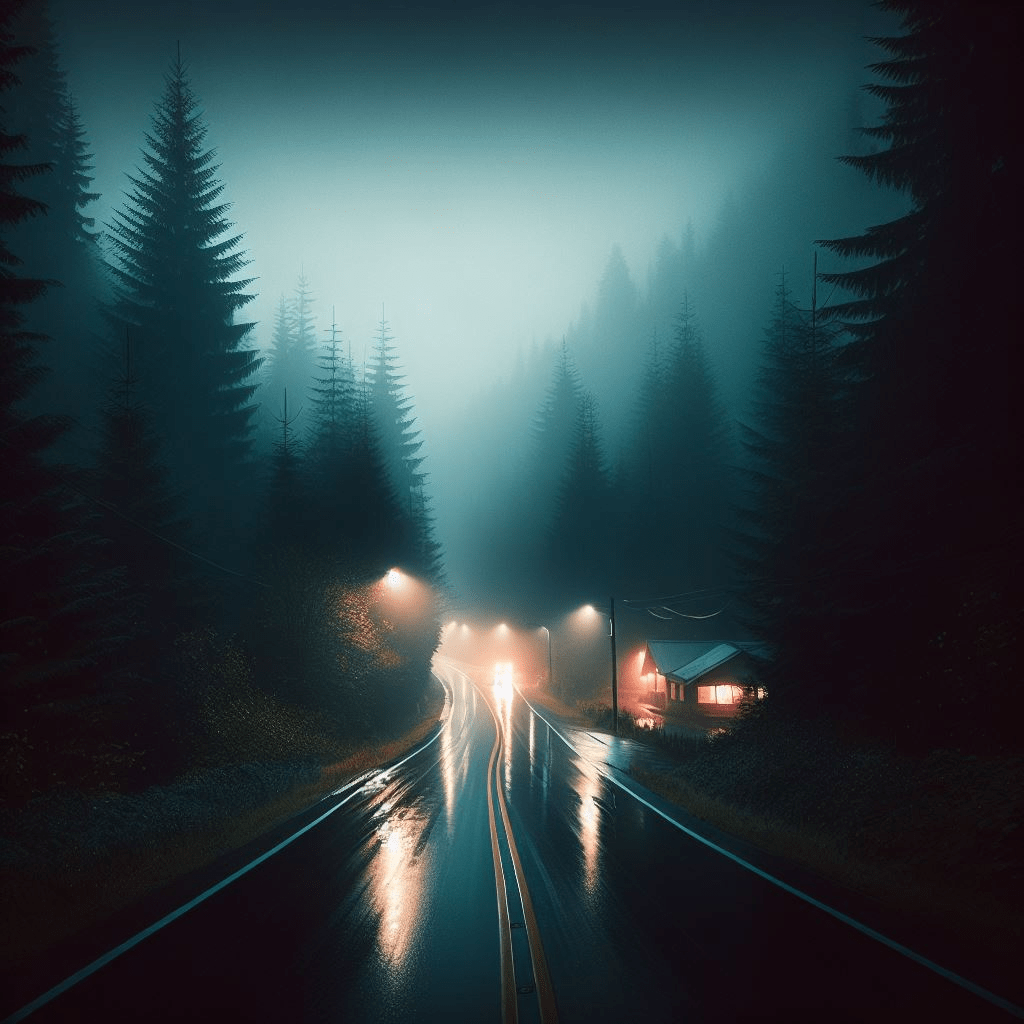
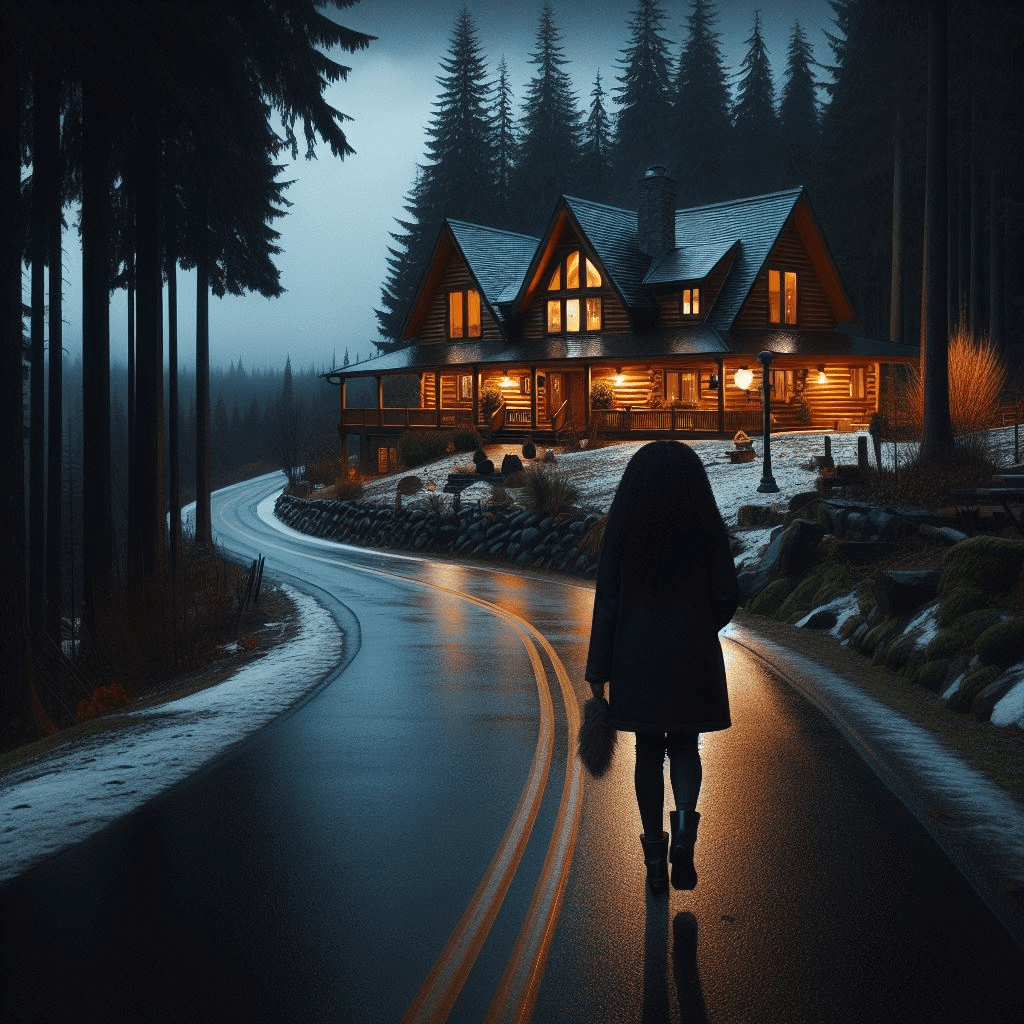
These sublime ferry images were created to capture the feeling of a dark winter’s night in the Northwest. The main character commutes home from work via Seattle to Bainbridge Island, Washington. This night follows the discover of a female murder victim in the parking lot near the ferry dock. The perpetrator was still at large.
Artifacts of a Murder: The Dead Girls Paintbrushes – Microsoft Designer
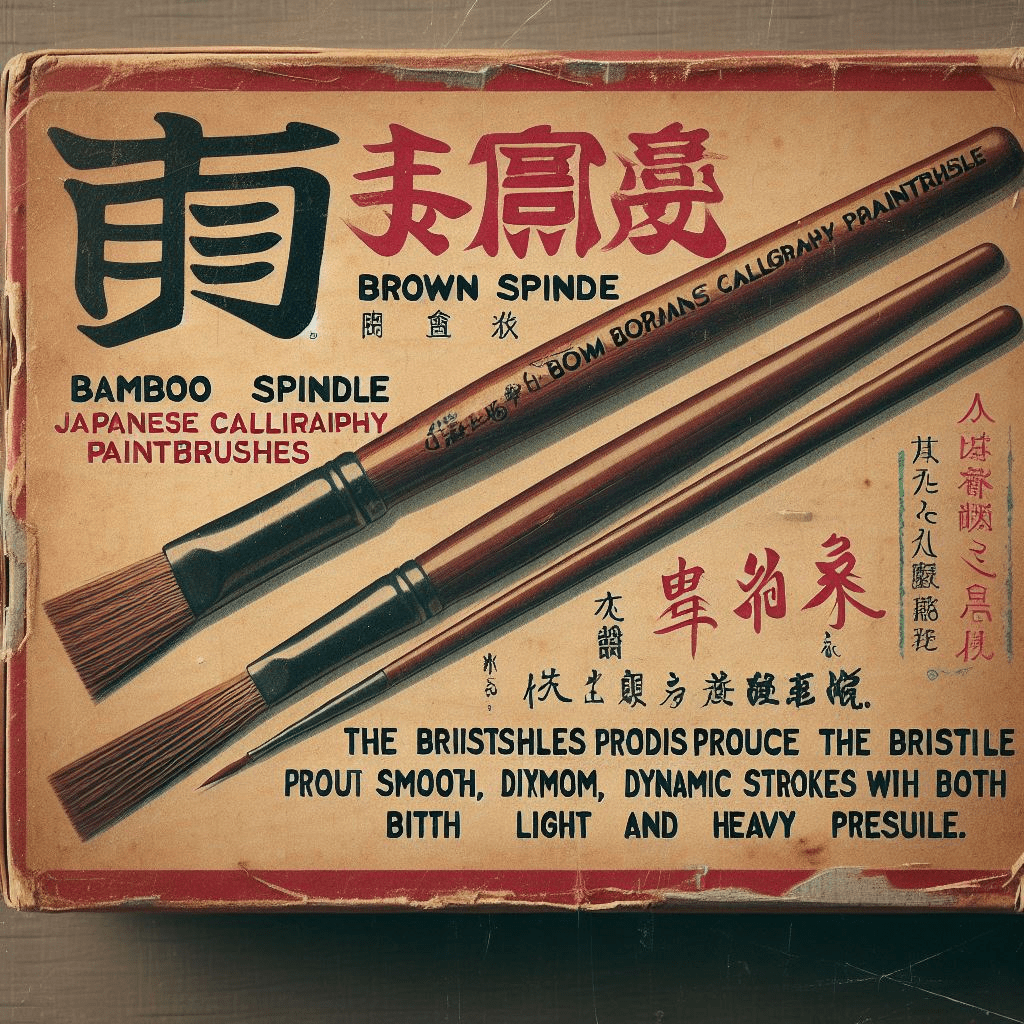
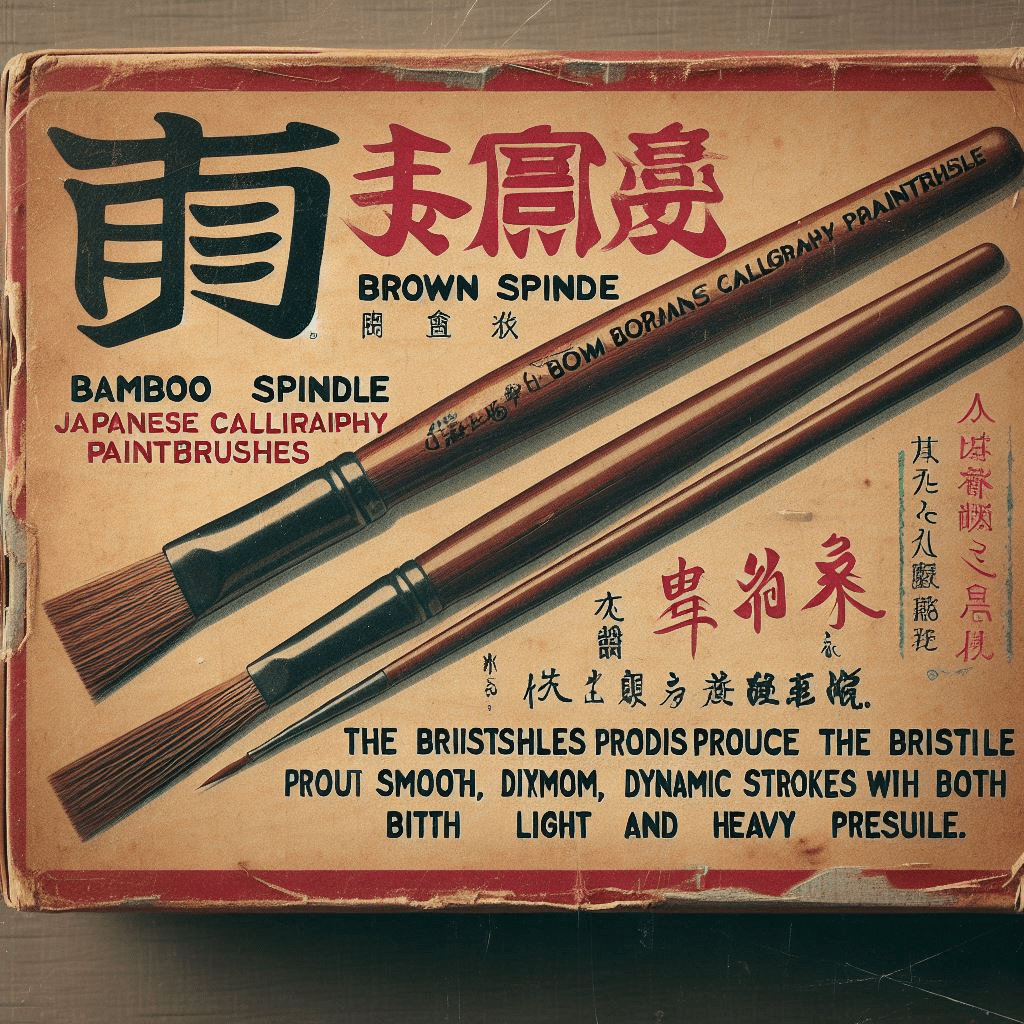
These AI images were created as imagery for the introduction to my story Artifacts of a Murder. The soft brush bristles and the pale, gentle blond wood color scheme was used intending as a contrast to the violence of murder. The handles are smooth and polished as a professional killer.
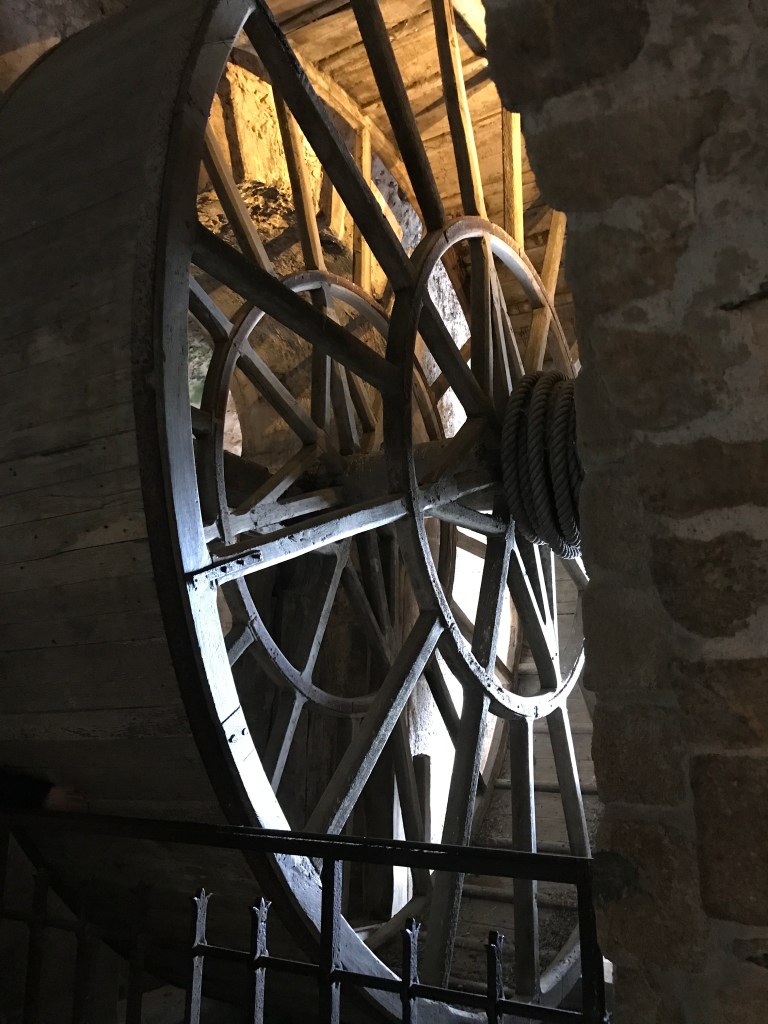
The Frozen Castle, a Murderous Tale – Microsoft Designer
This is the cover image for a gothic story about a women who marries a mysterious, wealthy man who transports her to his castle in Scotland where she is imprisoned and her youth is slowly drained from her soul to keep his 200 year old mistress from aging.
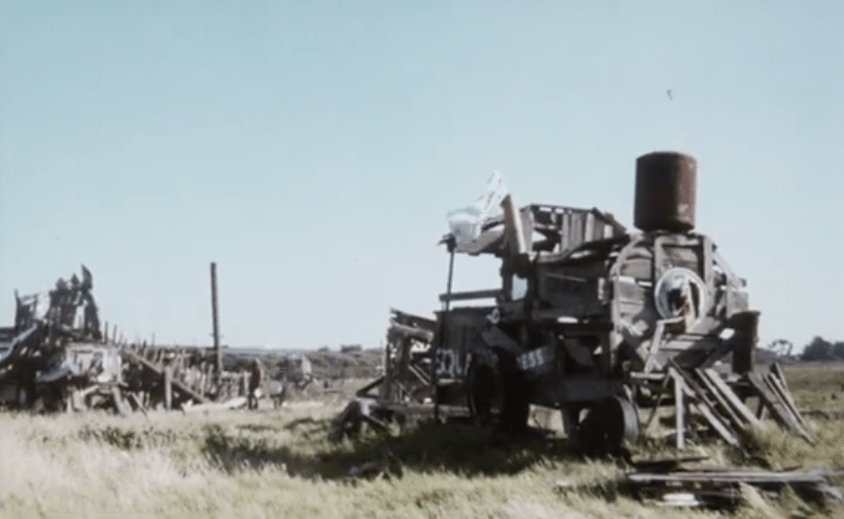
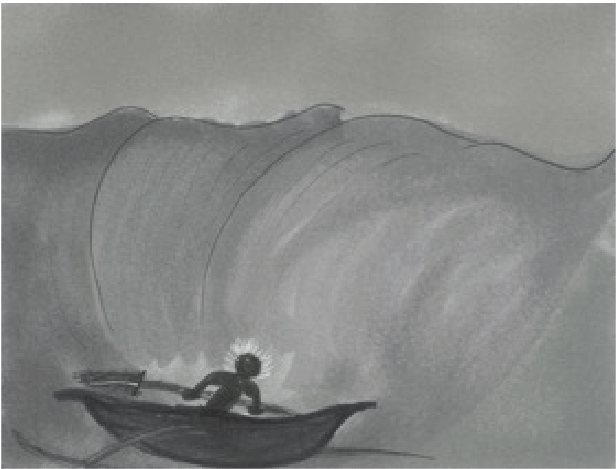
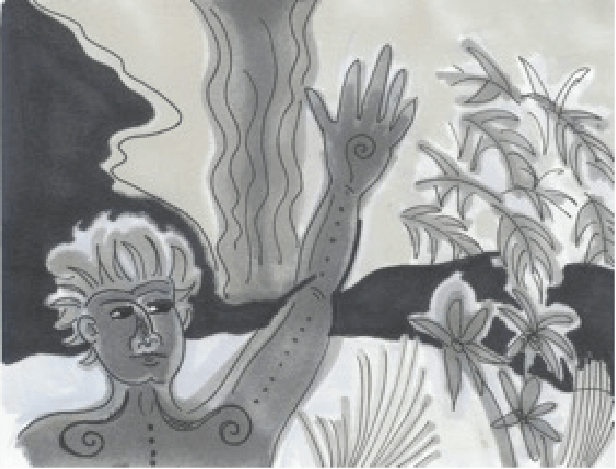
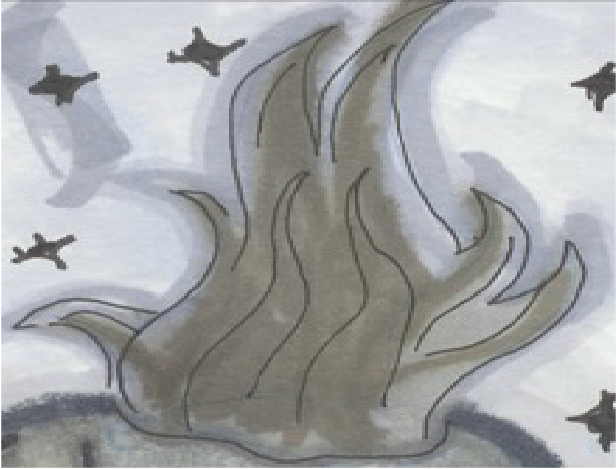
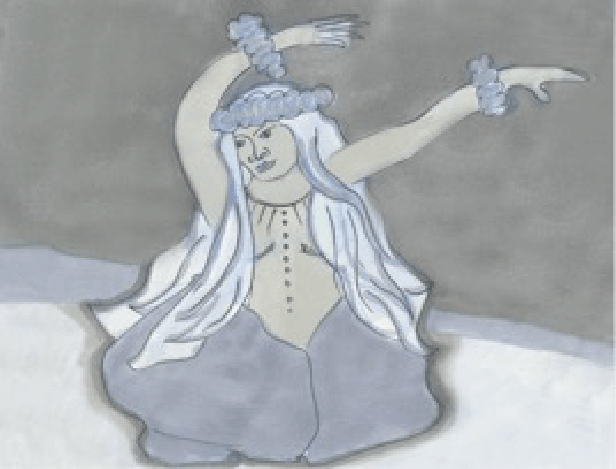
My Glamourous Career: A Memoir of Designing for U.S. Special Forces – Microsoft Copilot
I generated these AI images to set the dramatic mood of danger that is captured in my memoir about designing apparel for U.S. Special Forces to hunt Osama bin Laden in the Hindu Kush mountain range.
Le titre de mon histoire est Luc Apprend à Partager. Cette histoire est une lecture pour débutante français. Je suis débutant dans l’apprentissage du français.
The title of my story is “Luc Learns to Share.” This story is beginning French reading. I am a beginner in learning French.
Luc est le personnage principal du histoire. Il a dix ans. Il est un souris grise et brun.
Luc is the main character of the story. He is 10 years old. He is a grey and brown mouse.
The image of Luc is generated by Microsoft Copilot (Melodie Miller / AI Prompt Engineer)
La région de mon histoire est la Suisse, dans la ville de Berne.
The region of my story is Switzerland, in the town of Berne.
The image of Luc’s village is generated by Microsoft Copilot (Melodie Miller / AI Prompt Engineer)
La famille de Luc est très grande.
The family of Luc is very big.
The image of Luc’s family is generated by Microsoft Copilot (Melodie Miller / AI Prompt Engineer)
Le père de Luc est professeur. Le père de Luc lui a appris à partager.
The father of Luc is a professor. The father of Luc taught him to share.
The image of Luc’s father is generated by Microsoft Copilot (Melodie Miller / AI Prompt Engineer)
La mère de Luc est professeur. La mère de Luc lui a appris à partager..
The mother of Luc is a professor. The mother of Luc taught him to share.
The image of Luc’s mother is generated by Microsoft Copilot (Melodie Miller / AI Prompt Engineer)
Et son village aime partager avec tout le monde.
And his village likes to share with everyone.
The image of Luc’s village is generated by Microsoft Copilot (Melodie Miller / AI Prompt Engineer)
Mais, Luc n’aimait pas partager. Alors, Luc est allé dans la grande ville.
But, Luc did not like to share. So, Luc went to the big city.
The image of Luc in the big city is generated by Microsoft Copilot (Melodie Miller / AI Prompt Engineer)
Sa famille était triste.
His family was sad.
The image of Luc’s family is generated by Microsoft Copilot (Melodie Miller / AI Prompt Engineer)
Mais, Luc est heureux. Il rêve de ne pas partager sa nourriture.
But, Luc is happy. He dreams of not sharing his food.
The image of Luc is generated by Microsoft Copilot (Melodie Miller / AI Prompt Engineer)
Il rêve de manger tout le fromage seul.
He dreams of eating all the cheese alone.
The image of Luc is generated by Microsoft Copilot (Melodie Miller / AI Prompt Engineer)
Il pense qu’il y a beaucoup de nourriture dans la grande ville.
He thinks that there is a lot of food in the big city.
The image of Luc’s imagination of food in the big city is generated by Microsoft Copilot (Melodie Miller / AI Prompt Engineer)
Mais, quand Luc est allé au magasin pour trouver de la nourriture, un homme l’a chassé. L’homme n’aimait pas avec Luc.
But, when Luc goes to the store to find food, the man chases him. The man did not like to share with Luc.
The image of Luc and the store keeper is generated by Microsoft Copilot (Melodie Miller / AI Prompt Engineer)
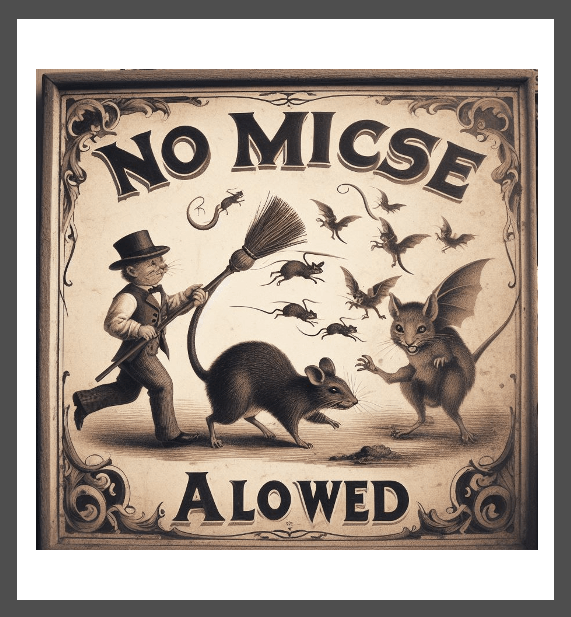
L’homme dit “Pas de souris autorisée.”
The man says “No mice allowed.”
The image of Luck and the “No Micse Alowed” is generated by Microsoft Copilot (Melodie Miller / AI Prompt Engineer)
Luc a appris qu’il doit partager pour avoir des amis.
Luc learns that he must share to have friends.
The image of a sad Luc is generated by Microsoft Copilot (Melodie Miller / AI Prompt Engineer)
Luc a appris à aimer partager parce que qu’il adore ses amis.
Luc learns that he likes to share because he loves his friends.
The image of Luc is generated by Microsoft Copilot (Melodie Miller / AI Prompt Engineer)
CU students volunteer to lay out the red carpet in Boulder
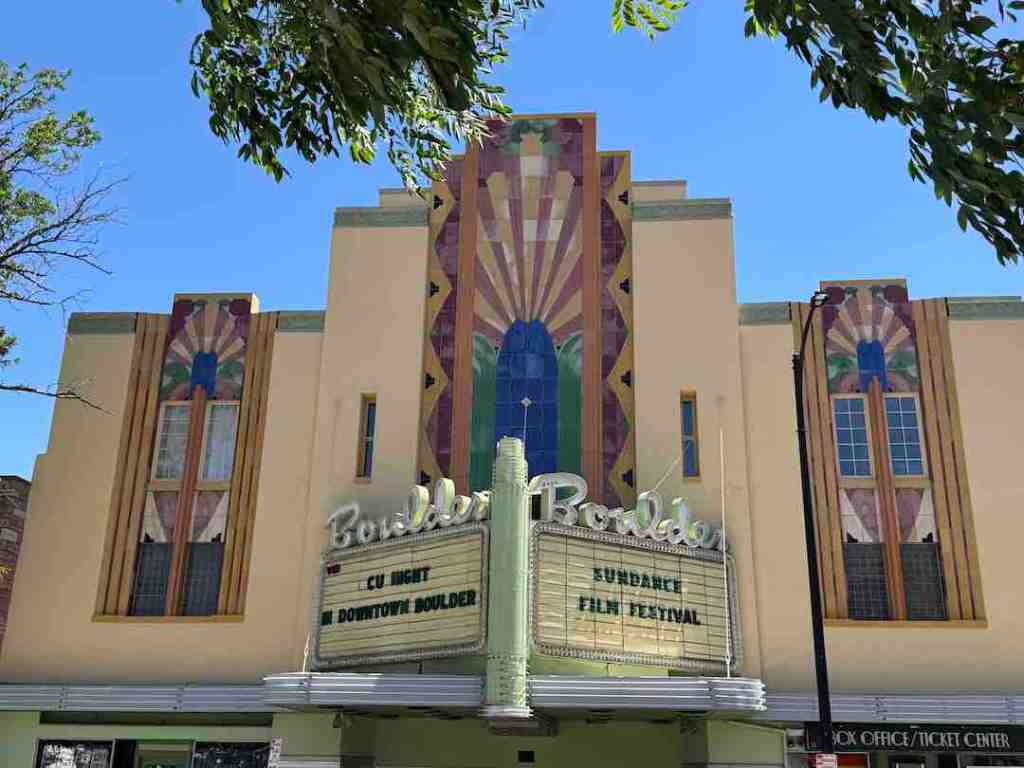
The Boulder Theater displays the launch of the Sundance Film Festival. (Melodie Miller)
Brian Marquez spends his days recruiting the volunteers who make the “shows must go on” at the Sundance Film Festival. As a senior manager of talent at the Sundance Institute, Marquez will place more than 2,000 volunteers in theaters, press offices and on production crews this January. For Marquez, volunteers are the festival’s heart and soul.
“Volunteers truly make the Sundance Film Festival happen,” Marquez said. “We couldn’t do it without them.”
This year, hundreds of volunteers will be CU Boulder students. When the festival premieres in Boulder, January 21 through 31, students can trade 18 hours of service for free screenings, industry connections, and firsthand experience working with an internationally attended film festival.
Screenshot
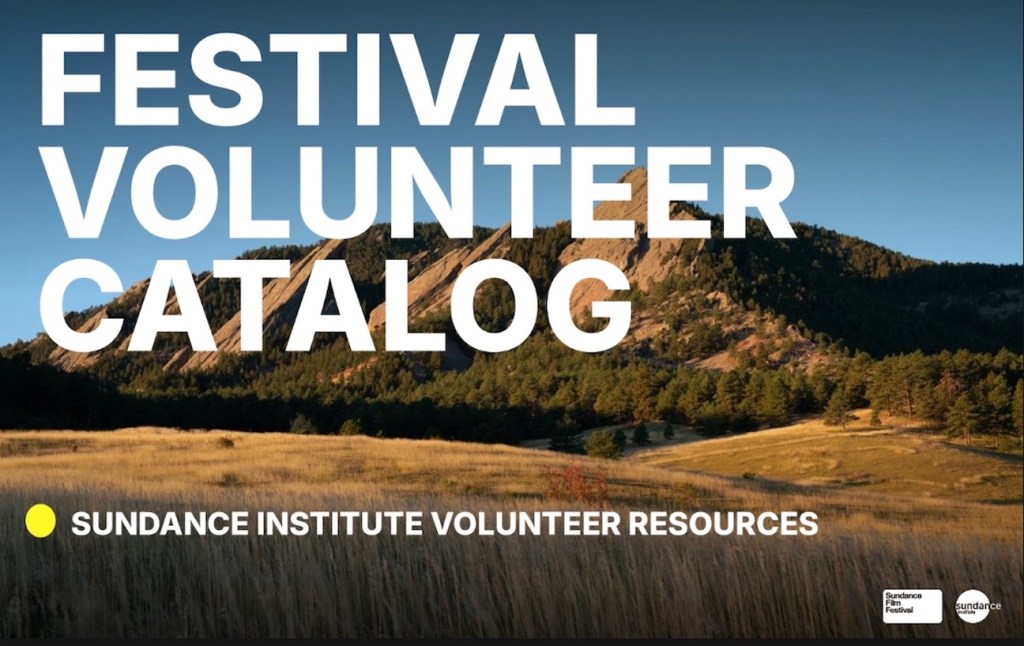
Sundance Film Festival Volunteer Catalog 2027. (Photo courtesy of Sundance Film Festival)
The university worked closely with Sundance to make the volunteering schedule manageable for students. Megan Medina, who directs Service Learning and Impact in Community Engagement at CU Boulder, helped lower the volunteer minimum from 24 hours to 18 so the shifts could fit around classes.
Nathan Paul Jones of Career Services sees the festival as a networking gateway for students. Jones said that Sundance has already begun posting internships on Handshake. The real career benefit is in the time spent working with industry professionals.
Cinema Studies Senior Cadence Tucker recommends volunteering, especially for first- and second-year students.
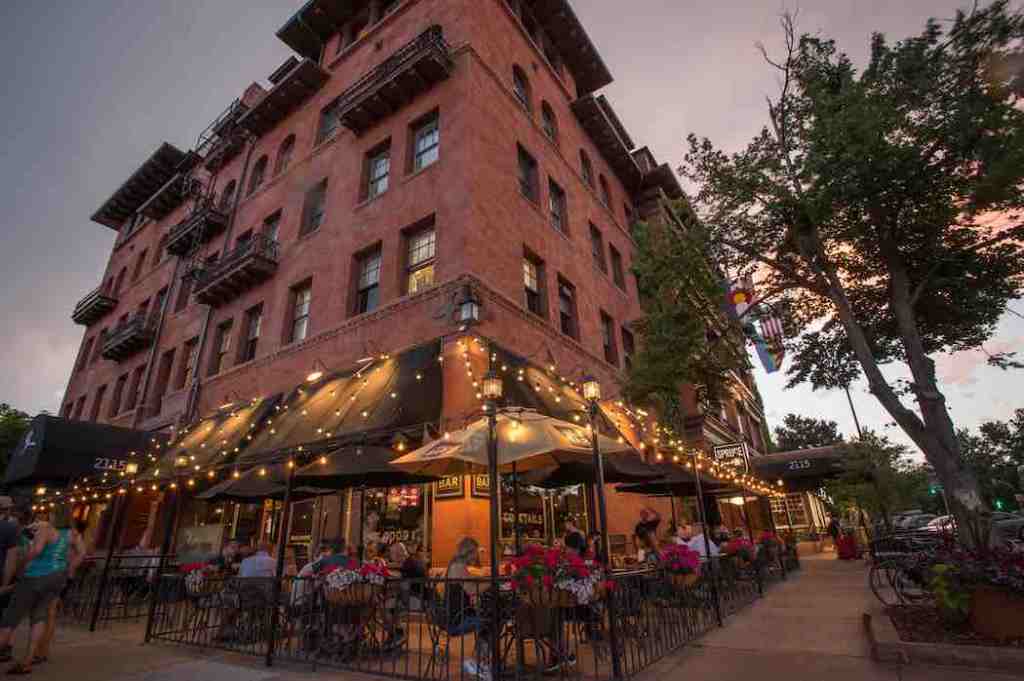
The Hotel Boulderado outdoor corner bar. (Photo courtesy of Tim Romano|The Boulderado)
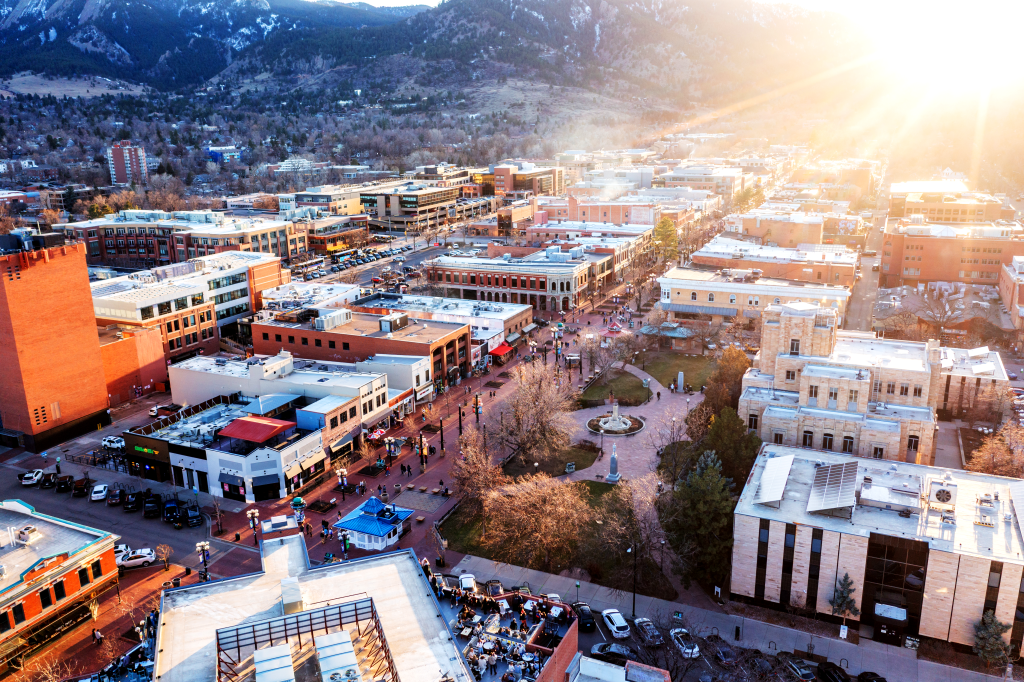
The festival footprint is compact. About 150 films will be screened at the 2027 film festival in fifteen theaters in Boulder, all within a two-mile radius of the Sundance hub at the Hotel Boulderado. Governor Jared Polis’s office estimates the festival could bring up to $2 billion to Colorado over the next decade.
‘Campus Life: 150 Years of Human and More-Than-Human Relationships‘
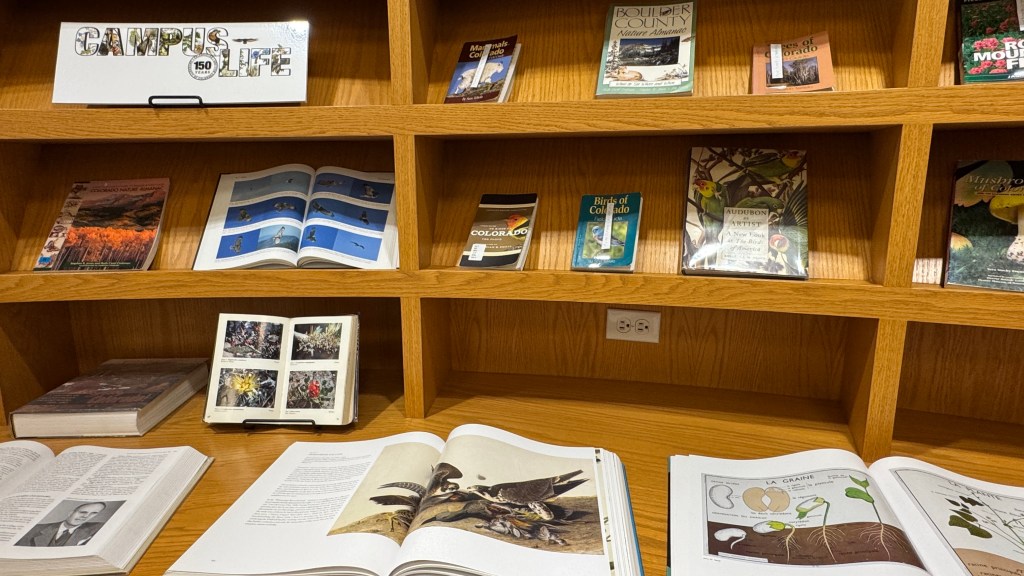
Historical landscape books, field guides, and illustrated volumes of CU Boulder flora and fauna line the shelves at the “Campus Life” exhibit inside the Jerry Crail Johnson Earth Sciences & Map Library. (CU Independent / Melodie Miller)
The University of Colorado was founded on a treeless plain 150 years ago, but today, more than 5,000 trees later, the campus is recognized as an Arbor Day Foundation Campus of Higher Education that effectively maintains urban forests.
This history is at the center of “Campus Life,” an exhibit in the Jerry Crail Johnson Earth Sciences & Map Library that traces 150 years of relationships between people, plants and animals on campus. The planning decisions made more than a century ago continue to shape how the campus community coexists with its biological neighbors.
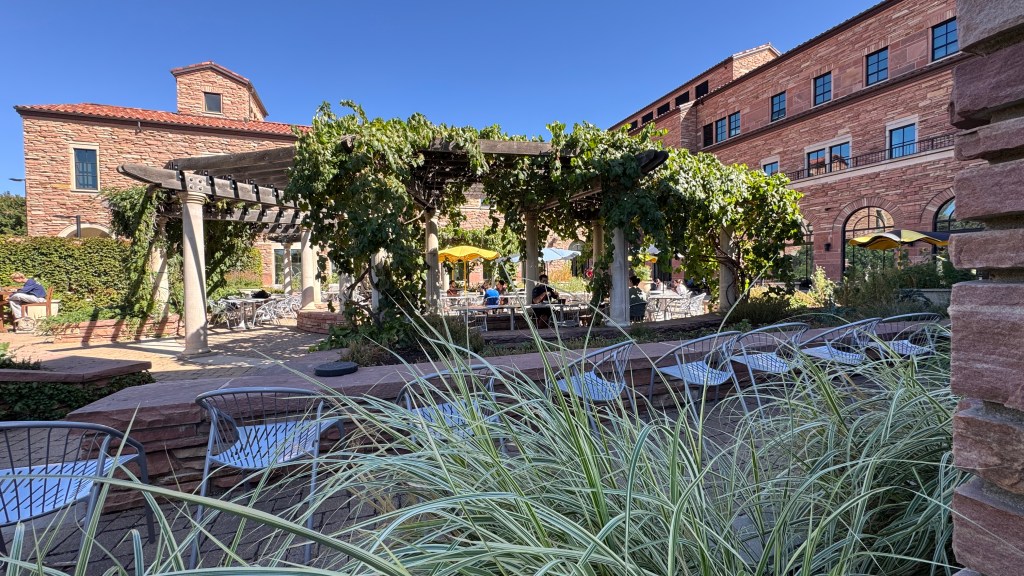
The Center for Community dining garden is surrounded and filled with drought-resistant plantings. (CU Independent / Melodie Miller)
Throughout the campus grounds, plantings enhance the beauty of the environment while maintaining a commitment to non-human habitats, minimal water use and other environmental considerations.
Sundance will maintain its mission while building a new festival rooted in Boulder culture
Boulder Theater marquee displays the Sundance Film Festival name (Photo courtesy of Miles Fujimoto)
Someone’s next big break in a film career might come while waiting in line for a screening or riding a bus across town in Boulder. This was the message Sundance Film Festival director Eugene Hernandez and Sundance Institute managing director Paula DuPré Pesmen shared with Colorado student reporters at a Sept. 30 press conference on the festival’s move from Park City, Utah, to Boulder.
When Sundance opens Jan. 21-31, 2027, its venues will sit within a 2.4-mile radius of the Hotel Boulderado, a more compact footprint than the Utah festival’s three locations.
Asked what will define the Sundance Film Festival’s new home, festival director Eugene Hernandez offered one word: community.
Part of the Sundance Film Festival footprint spans from the Boulder Theater, north, up Pearl Street toward Broadway, a direct route to the University of Colorado campus and more venues (Photo courtsey of Justin Bilancieri)
The chilling ‘post-truth’ mechanics of Putin’s Russia and its coercive control
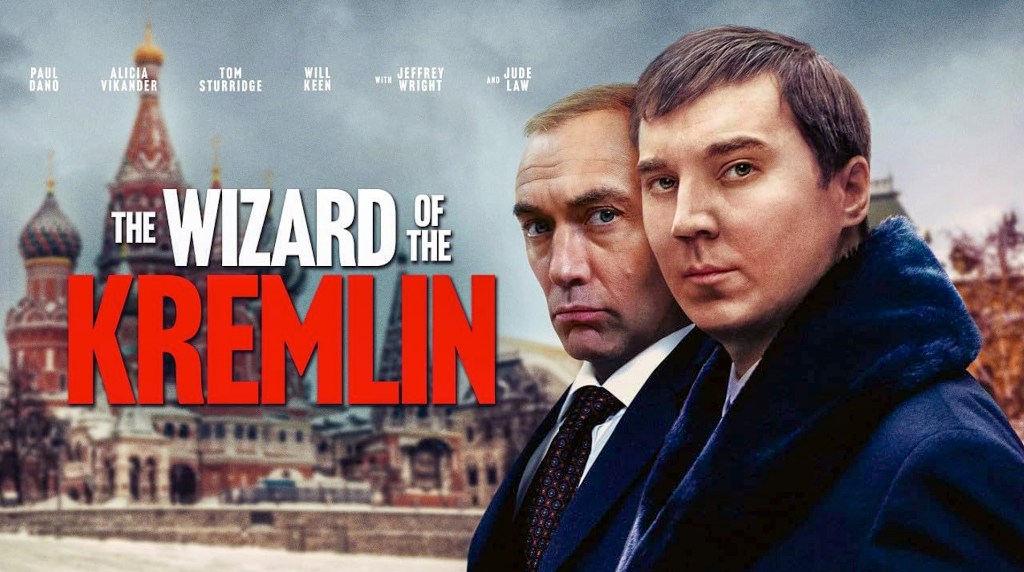
Jude Law as Vladimir Putin and Paul Dano as Vadim Baranov appear in “The Wizard of the Kremlin.” (Photo courtesy of Vertical Entertainment/Gaumont)
In a remote, frozen blue forest far from Moscow’s politics, Vladimir Putin’s former spin doctor walks his dog without once looking over his shoulder. Snow-encrusted trees twist behind him like prison barbed wire, a fence he helped build. The silence feels more like a warning than a peaceful retirement.
The Melodious Report breaks down Olivier Assayas’ “The Wizard of the Kremlin,” a film adapted from Giuliano da Empoli’s novel.
The film traces two paths that open after the fall of the Soviet Union, one toward wealth and one toward power; both lead to the Kremlin’s door. Jude Law plays Putin, icy cold in appearance and soul. Paul Dano plays Vadim Baranov, a reserved, steady strategist who rides alongside Putin as he rises to power.
Released on streaming platforms weeks before the 2026 midterm elections, it is a portrait of political power, psychological control and dark Russian humor that may serve as a cautionary tale.
The poster released by 20th Century Studios shows, from left, Josh Brolin as Bangley, Jacob Elordi as Hig, Margaret Qualley as Cima, and Guy Pearce as Pops, with Jasper the dog, in “The Dog Stars.” (20th Century Studios via IMDb)
A 1956 Cessna, nicknamed “The Beast,” glides over the conifer-filled canyons, and for a moment, the end of the world looks peaceful. Then the violence begins.
The Melodious Report takes a closer look at Ridley Scott’s “The Dog Stars,” adapted from Peter Heller’s 2012 novel. Starring Jacob Elordi and Josh Brolin as two survivors guarding an abandoned airport in post-apocalyptic Erie, Colorado, the film weighs violence toward strangers against the risk of human connection. The review draws parallels between the film and today’s immigration debates, pandemic isolation and misinformation.
The film offers a portrait of a divided America.
Speaking at a live Colorado Public Radio event, Heller responded to the film’s mixed critical reception in a conversation with CPR’s Ryan Warner at the Denver Press Club. The Melodious Report attended and photographed the event.
A 19th-century gold-rush mining town is alive in Durango
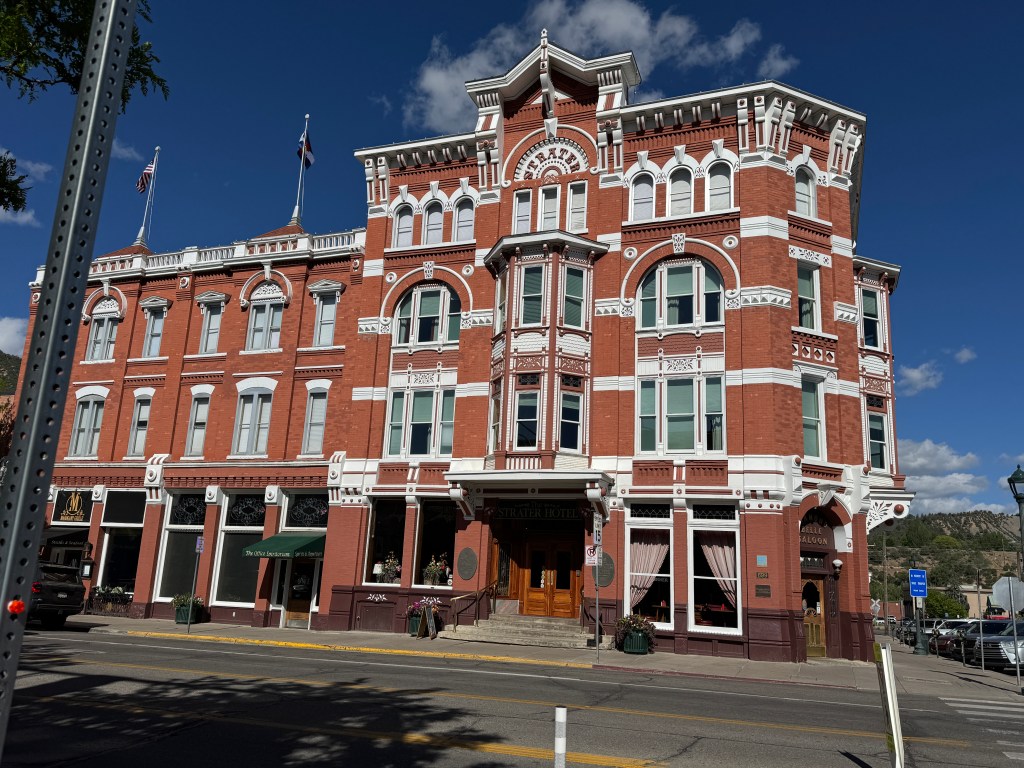
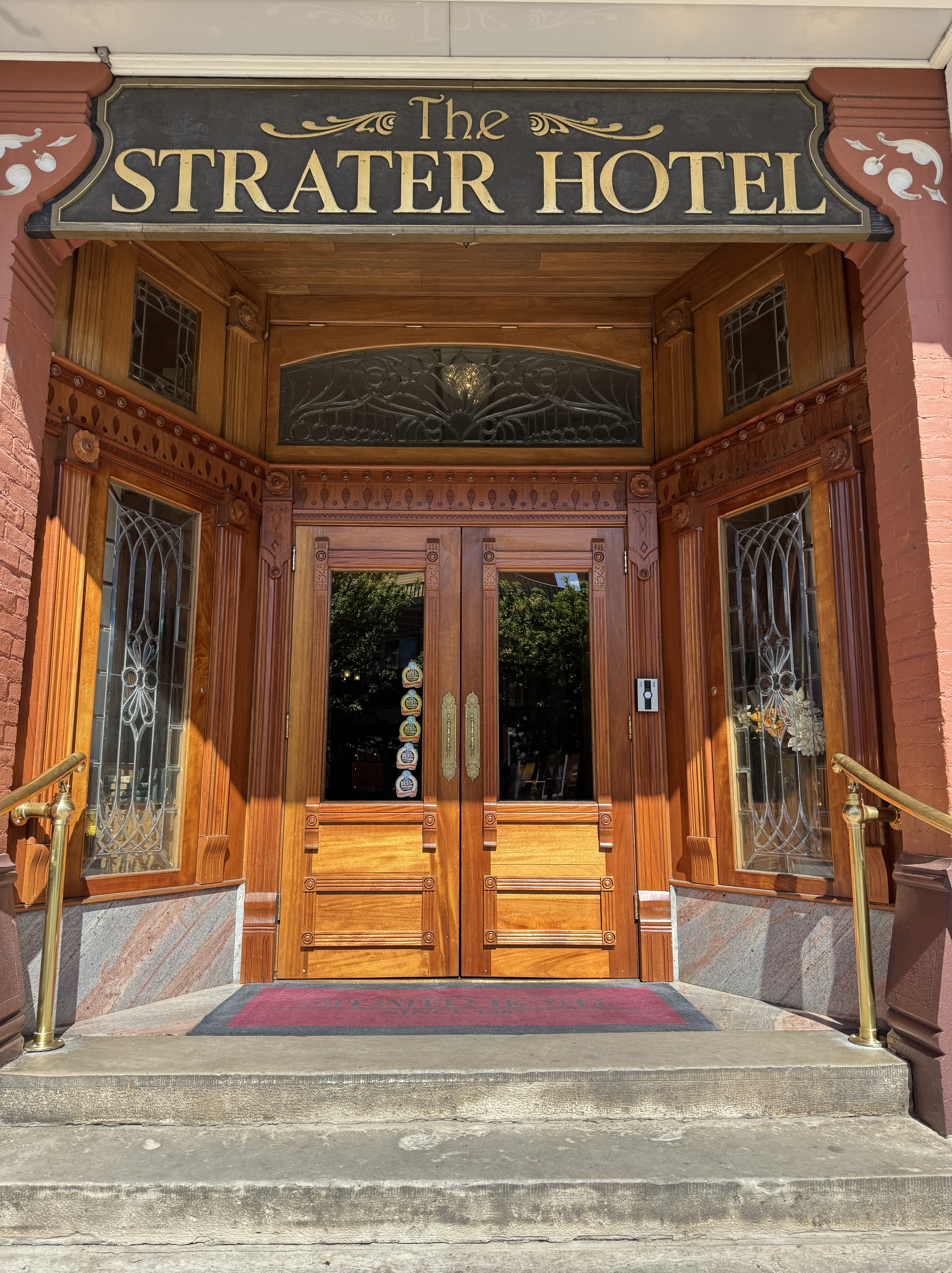
The historic Strater Hotel on Main Street, Durango (Melodie Miller | Photographer)
ByMelodie Dawn Miller Reporting from Durango, Colorado June 16, 2026 2:00 p.m. MDT
The Strater Hotel is a distinctive red-brick building situated on Durango’s Main Street in the Historic District, where visitors can rest their heads in the Wild West without traveling back in time. Built in 1887 by Fred, Frank and Antone Strater, the Boomtown hotel is filled with historically accurate furnishings and decor that take visitors back to the 19th century without sacrificing modern conveniences or civil order.
“American mining towns were mostly civil,” Jennifer M. Larson writes in Why the West Became Wild. The American West “grew so rapidly during the nineteenth-century gold rush that they were dubbed boomtowns.”
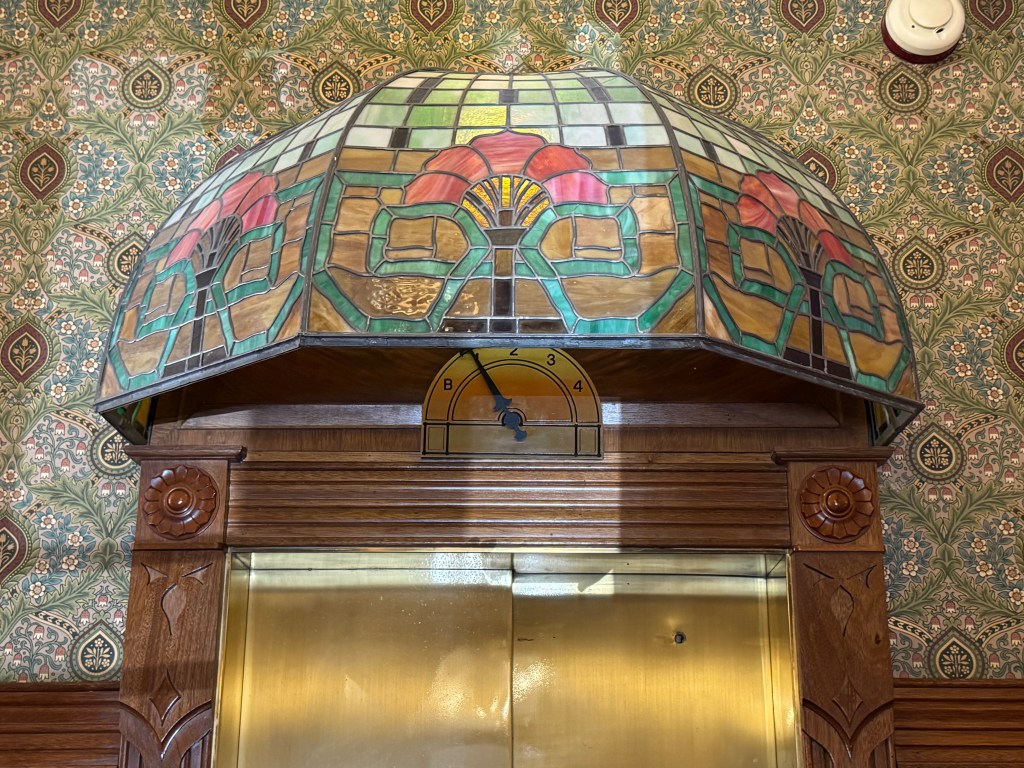
Tiffany-inspired elevator awning emulates the 1880s Art Nouveau decorative period (Melodie Miller | Photographer)
Designed and built during the region’s mining boom, the Strater Hotel management strives for authenticity with century-old oak furnishings, replicated 19th-century wallpaper, and Tiffany Art Nouveau-emulated lighting fixtures, giving guests a Wild West experience.
“The hotel is dedicated to providing factual information. The hotel is a living museum,” Tori Ossola, the General Manager of the Strater Hotel, said.
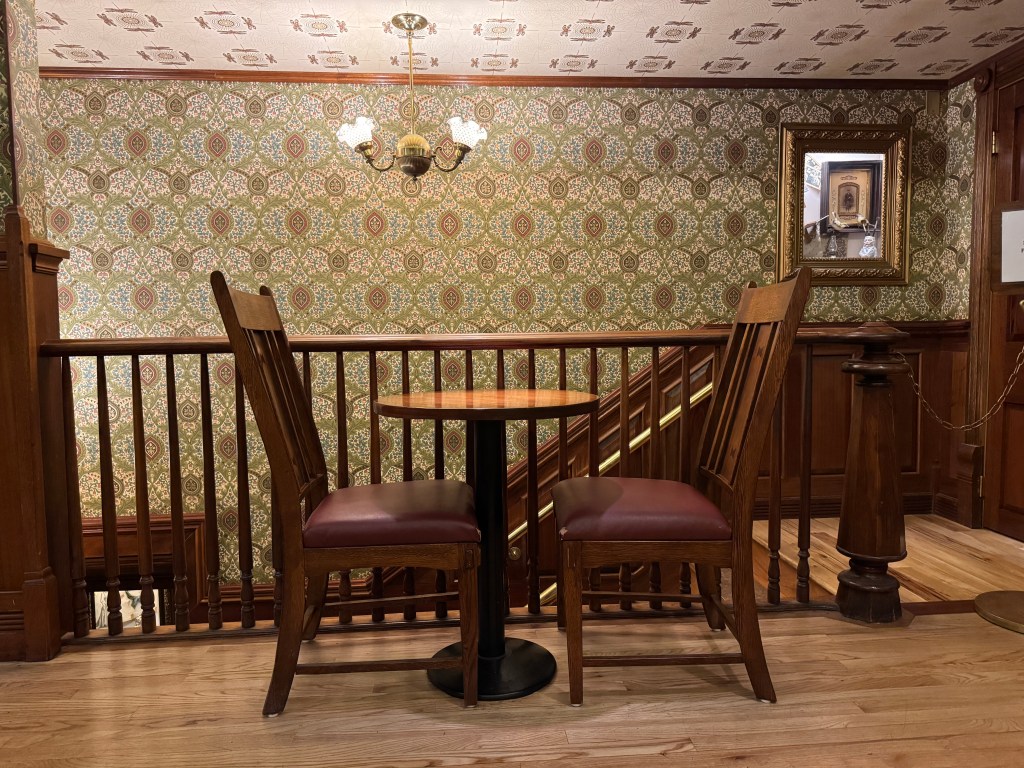
Historical maple furnishings and Bradbury & Bradbury wallpaper at the Strater Hotel Melodie Miller | Photographer
The ladder-back Mission chairs, hand-milled oak staircase railing, and heavy balusters showcase the early American Craftsman-style set against a backdrop of color that favors gently aged tones of the late Victorian era.
According to Historic Hotels of America, in 1926, owner Earl A. Barker, Sr. became dedicated to preserving the hotel’s prestigious status and he inspired the following generations to follow in his footsteps.
“The large collection of Victorian antique furniture we have throughout the property can be attributed to the second-generation Barker family,” Ossola said. Then, the third generation, Mr. Rod Barker and his wife Lori, “did the major heavy lifting on the renovation.”
Historically inspired Gilded Age Bradbury and Bradbury wallpaper covers the walls of the Strater Hotel (Melodie Miller | Photographer)
The Knightsbridge Damask wallpaper by Bradbury & Bradbury of San Francisco recreates the Anglo-Japanese Aesthetic Movement, using motifs from 1875 to 1890. Designed in 1986 by artistic director and co-owner Stephen Bauer, the motifs recreate patterns following the transition of the 19th-century designer William Morris.
The late-Victorian-inspired wallpaper is reminiscent of the Gilded Age, featuring teardrop-shaped ogee and gold-metallic floral medallions joined by a lattice of leaves.
“We strive to be a resource to historic properties for the preservation and restoration of their buildings,” a representative of Bradbury & Bradbury, Lisa Bauer, said.
The Strater Hotel wallpaper colors are unique because “the pattern has recently received a refresh,” Bauer said, but “it has never been retired, only revised.”
The historic Strater Hotel on Main Street, Durango (Melodie Miller | Photographer)
An original mining boomtown, Durango was founded in September 1880, according to the City of Durango History. Henry Strater built the hotel in 1887 “right after the Silver Panic,” Ossola said.
According to Historical Hotels.org, Strater believed that a contemporary Durango offered a “great economic opportunity,” deserving of a grand hotel.
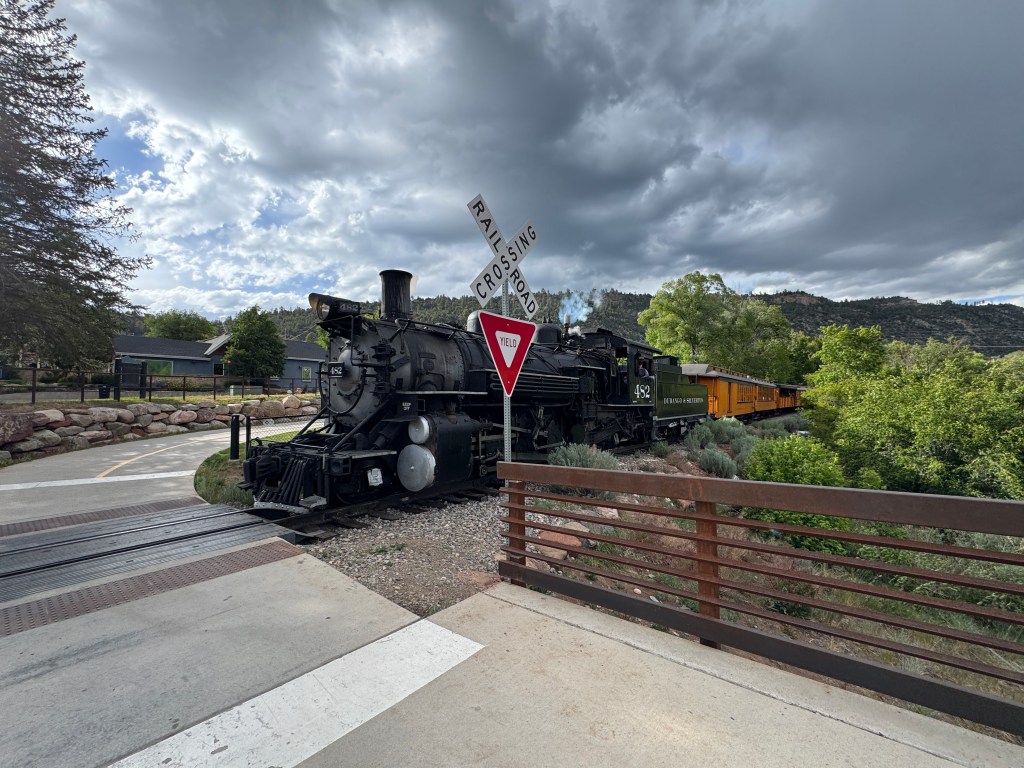
The Durango Silverton Gauge Railway steam engine and passenger car train (Melodie Miller | Photographer)
Along with the hotel, the economic boom brought the Durango to Silverton Gauge Railway steam engine that continues to carry passengers through the rugged San Juan Mountains of Southwestern Colorado. Built in 1882 to haul silver and gold ore, the historic steam-powered train transports passengers on a 45-mile round trip along the Animas River through canyons, forests, and landscapes largely unchanged since the 19th century. The train station is 0.2 miles, approximately a 3-minute walk, from the Strater Hotel.
In 2021, the Garrett family bought the hotel from the Barker family and “upgraded every single one of our hotel rooms to have its own heating and cooling system,” Ossola said.
“Not super sexy stuff, right? But still making sure that our guests having that historic experience are comfortable,” Ossola said.
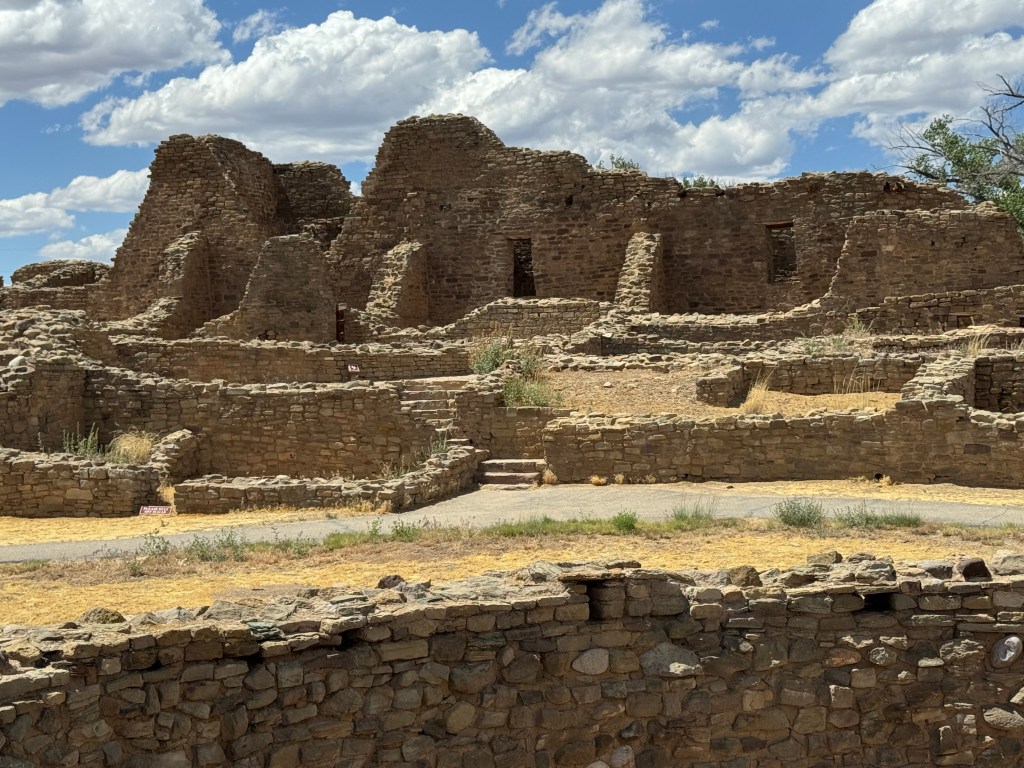
You can visit a 12th-century community of Puebloan structures at the Aztec Ruins National Monument in New Mexico, near Durango, Colorado. If the Pueblos built the community, why is it named the Aztec Ruins?
“The Spanish are calling the Aztec ruins Aztec before non-Spanish Europeans show up,” Dr. Steve Lekson, Professor of Anthropology at the University of Colorado, said.
During the 19th century, scholars in Mexico City, Mexico, wrote that the Aztecs had built the 400-room community. However, most modern archaeologists accept that the ancestral Puebloans, a farming culture, built the dwellings, and the Aztecs, an elite class, lived there for a period of time.
“It’s a complicated story,” Dr. Scott Ortman, of the University of Colorado Boulder, said. One concern is “naming a site in one particular indigenous language” when many tribes view themselves as descendants of the area.
Thus, the 19th-century name took hold and remains.
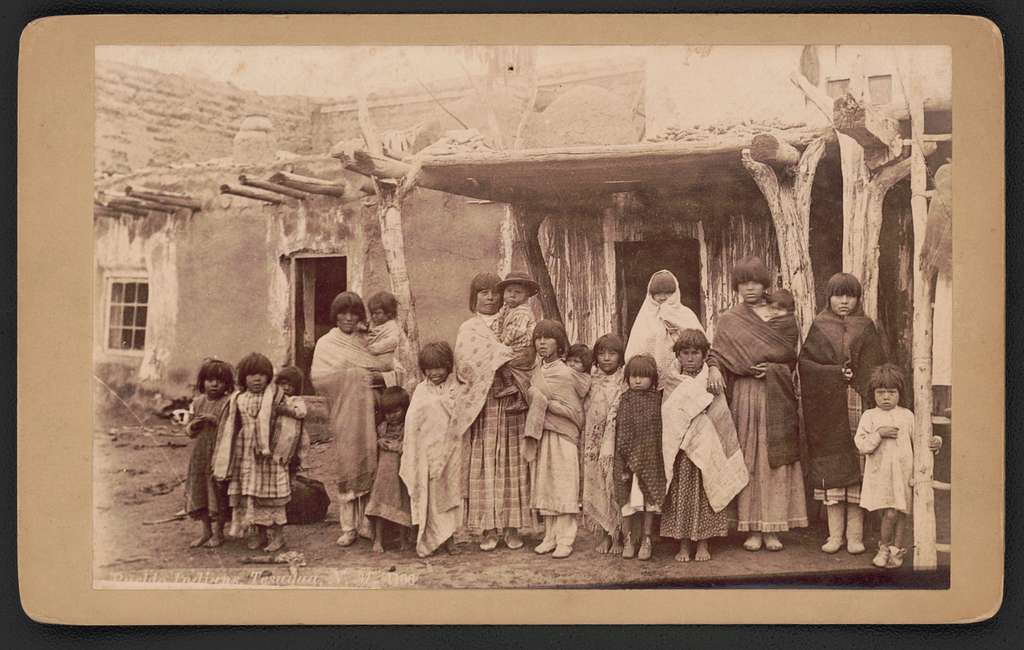
Pueblo Indians, Tesuque, N.M. (1893) (William Edward Hook | Courtesy of the Library of Congress)
Migration lies at the heart of the Aztec and Pueblo ancestral origin story. More than a record of movement, their ancestors’ journeys shape identity and belonging today.
According to Mexican scholars of the 1800s, the Aztec Ruins were the “first home of the Aztecs” before they migrated south to Mexico, Lekson, said.
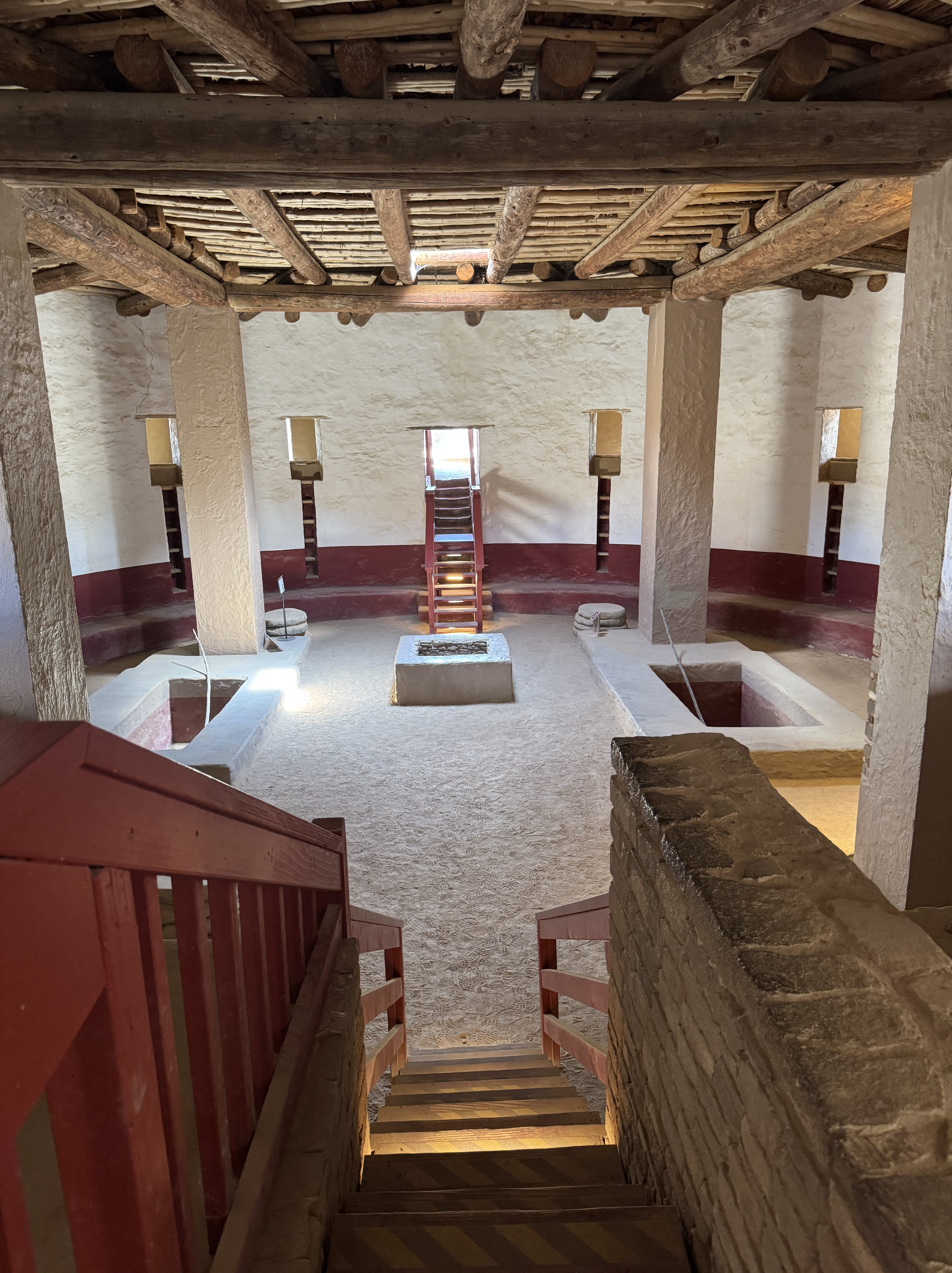
The Aztec Ruins kiva replica, Aztec, New Mexico (Photography | Melodie Miller)
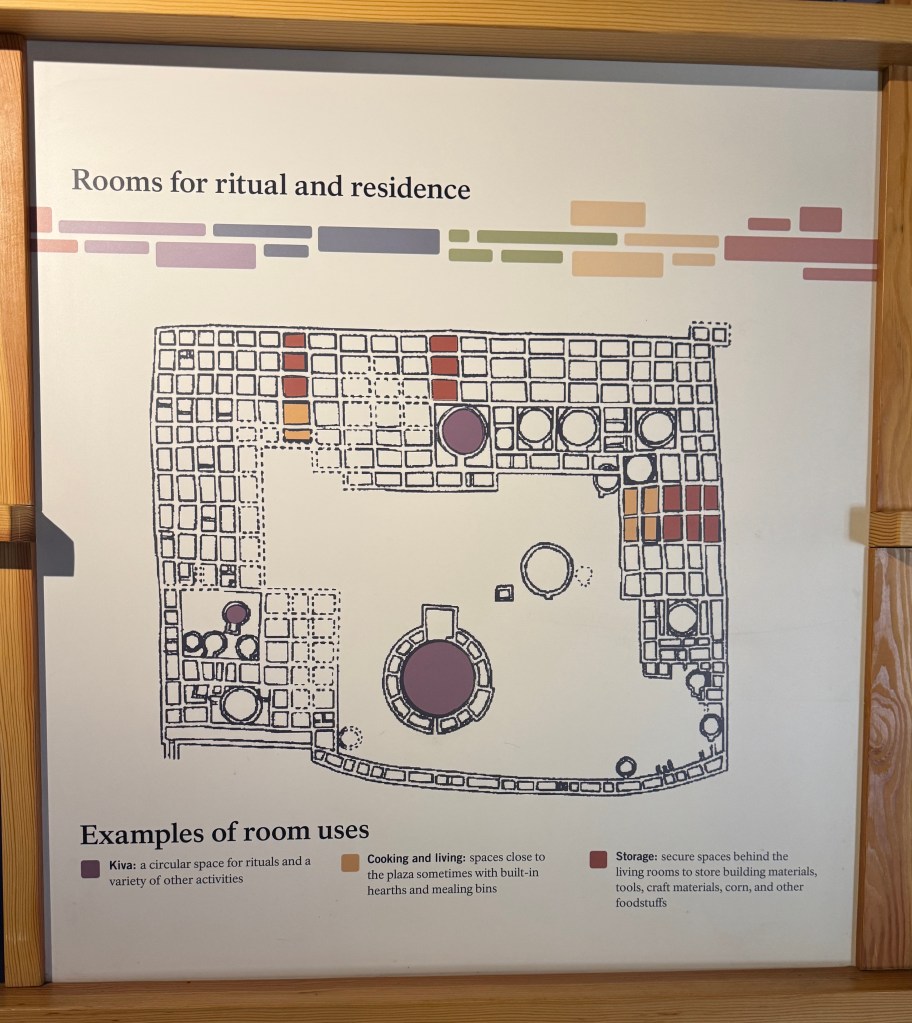
The 381-acre National Park protects the Ancestral Pueblo great house community and the kiva ceremonial room replica. Kivas are built with ventilation, a fire pit, and a sipapu — a spiritual gateway to and from the underworld. An important part of modern Pueblo and Hopi communities is sacred dances and rituals held in community kivas.
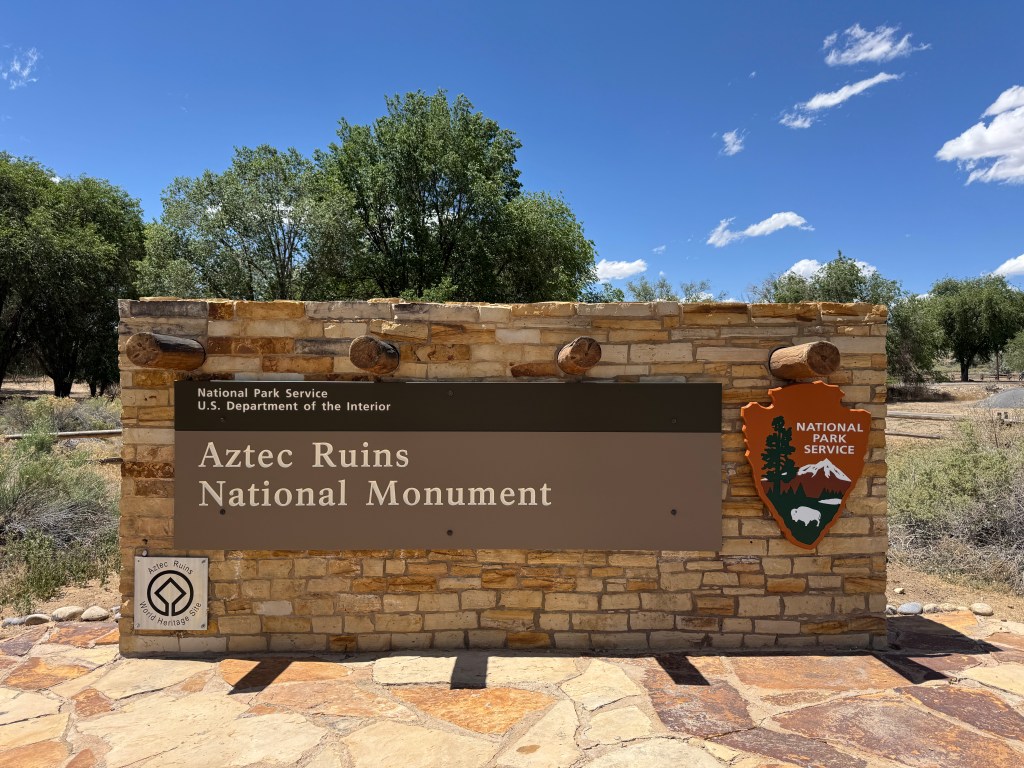
The Aztec Ruins National Monument, New Mexico (Photography | Melodie Miller)
President Warren G. Harding used the Antiquities Act of 1906 to designate the site as the Aztec Ruins National Monument on January 24, 1923.
Nathan Hatfield, Aztec National Park Ranger Supervisor of Interpretation, said, “I believe that by 1928 most southwestern scholars and archaeologists agreed that the Aztecs of Mexico were not responsible for building” the Aztec Ruins.
Consensus among archaeologists grew, accepting the continuity between the Ancestral Pueblo builders and the Aztec ruins.
Archaeologists have come to accept that “Aztec was built by ancestors of today’s Pueblo people,” Ortman said. “We didn’t need DNA. It was just recognizing the continuity and culture.”
Now the name is accepted as an artifact of history. A name change would require an act of Congress.
______________________________________________
The Aztec Ruins National Monument is located 40 miles (ca. 64 km) south of Durango, at 725 Ruins Rd, Aztec, New Mexico 87410.
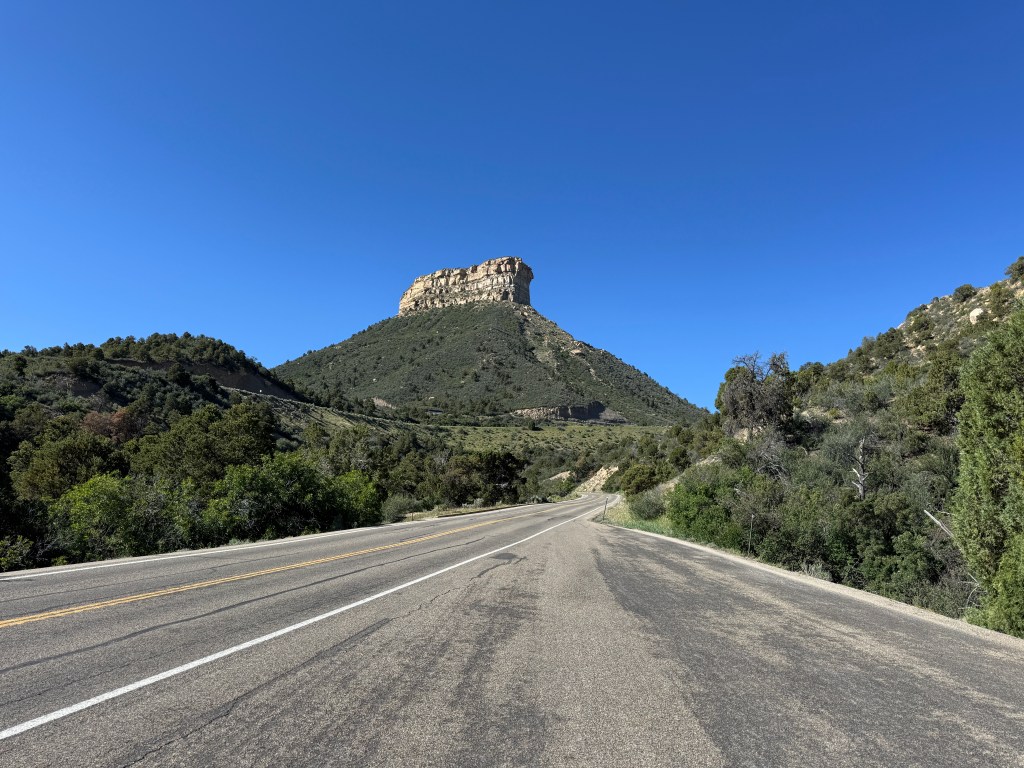
The Mesa at Mesa Verde National Park appears to be a green table, but it is a cuesta, a cliff with a flat ridge and a slope. (Melodie Miller | Photographer)
“Many of the Pueblos were named by the Spanish,” Dr. Scott Ortman, of the University of Colorado Boulder, said. “It tends not to be very common for archaeological sites to be renamed to the indigenous language names.”
Attribution of Mesa Verde started with early speculation about the Aztecs and Aztlan. However, cultural consistency emerged between Cliff Palace and the modern Pueblos of the Four Corners, connecting the two places.
Dr. Steve Lekson, Professor of Anthropology at the University of Colorado, writes in A History of the Ancient Southwest that “Cliff Palace might be empty and abandoned, but only a few days’ walk away were Pueblo peoples who built towns that looked like Cliff Palace.”
In 1776, according to Legends of America, two Mexican-Spanish missionaries, Francisco Atanasio Dominguez and Silvestre Vélez de Escalante, were leading explorers from Spain through the region. They camped at the base of the La Plata Mountains, near the flat forested area of Mesa Verde. 83 years later, in 1859, Mesa Verde is attributed to John S. Newberry, although the name had been in use prior to his writing.
“The earliest permanent settlements here at Mesa Verde date back to between 500 and 600 CE and are often characterized by pit houses which can be seen on the mesa tops of both Chapin and Wetherill Mesas. The alcove sites (cliff dwellings) were mostly constructed beginning in the late 1100s to early 1200s CE,” Dalton Dorrell, Mesa Verde National Park Service Supervisory Park Ranger of Education, Community Outreach, and Interpretation, said.
The Spanish word mesa translates to table, a flat surface. But Mesa Verde is a cuesta, a steep cliff with a flat ridge on top and a sloping plain on the other side.
“Cuesta has been used as a geological term only since the early 19th century. It is not unusual for the geological term and the place name given to a location to differ,” Dorrell said.
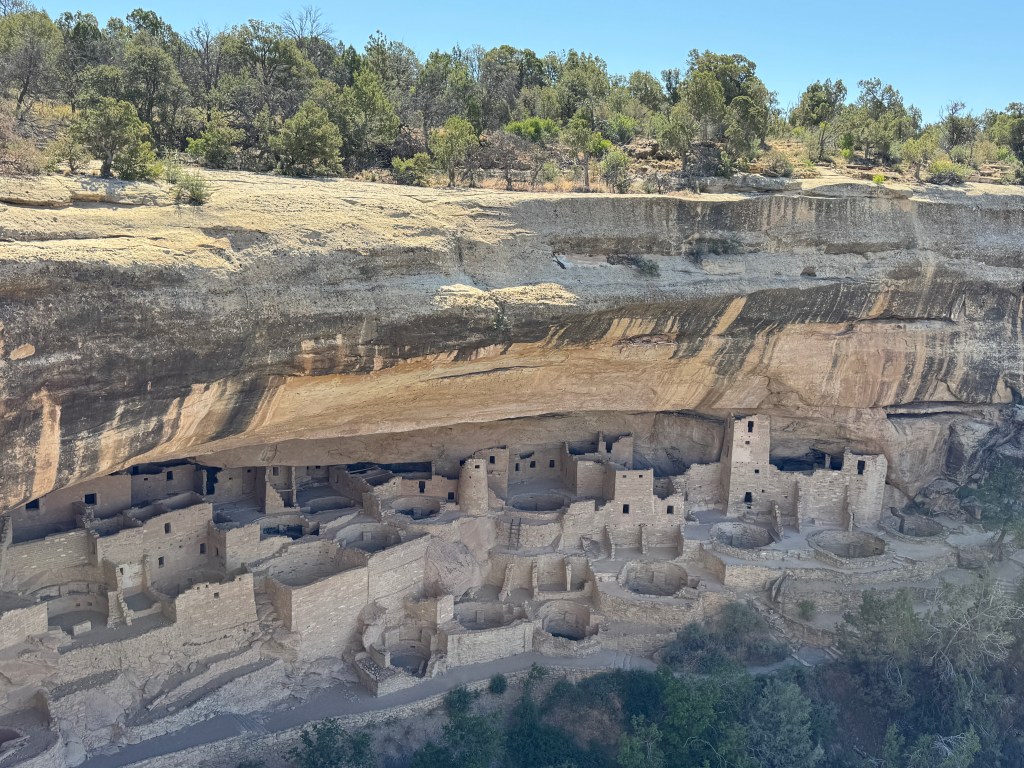
Cliff Palace, Mesa Verde National Park Ancestral Puebloan dwellings ( Melodie Miller | Photographer)
Then, in 1888, according to Lekson, Richard Wetherill and Charlie Mason came across the Cliff Palace.
“Cliff Palace is discovered by this cowboy who lived in Mancos named Richard Wetherill,” Lekson said.
On December 18, 1888, Wetherill, his brother-in-law Charles Mason, and their Ute guide Acowitz saw Cliff Palace and went on horseback to investigate.
Wetherill, Mason, and Acowitz, came across the cliff dwellings of the Ancestral Puebloans while “rounding up cattle in the snowstorm. And I guess there’s some questions to whose cattle was he rounding up,” Lekson said.
After the discovery, a significant movement emerged to preserve the 12th-century cliff dwellings and the artifacts found at Mesa Verde.
Wetherill “leaves the place seven ways to Sunday, and it’s just full of stuff. The Pueblos left pots and baskets and all kinds of stuff.” Lekson said. Wetherill “takes a bag full of this stuff up to and tries to sell it. I’ve seen the newspaper advertisements.”
According to the New Mexico Historical Review, Wetherill’s father, Benjamin Wetherill, “looked at the relics and realized the importance of the finds.”
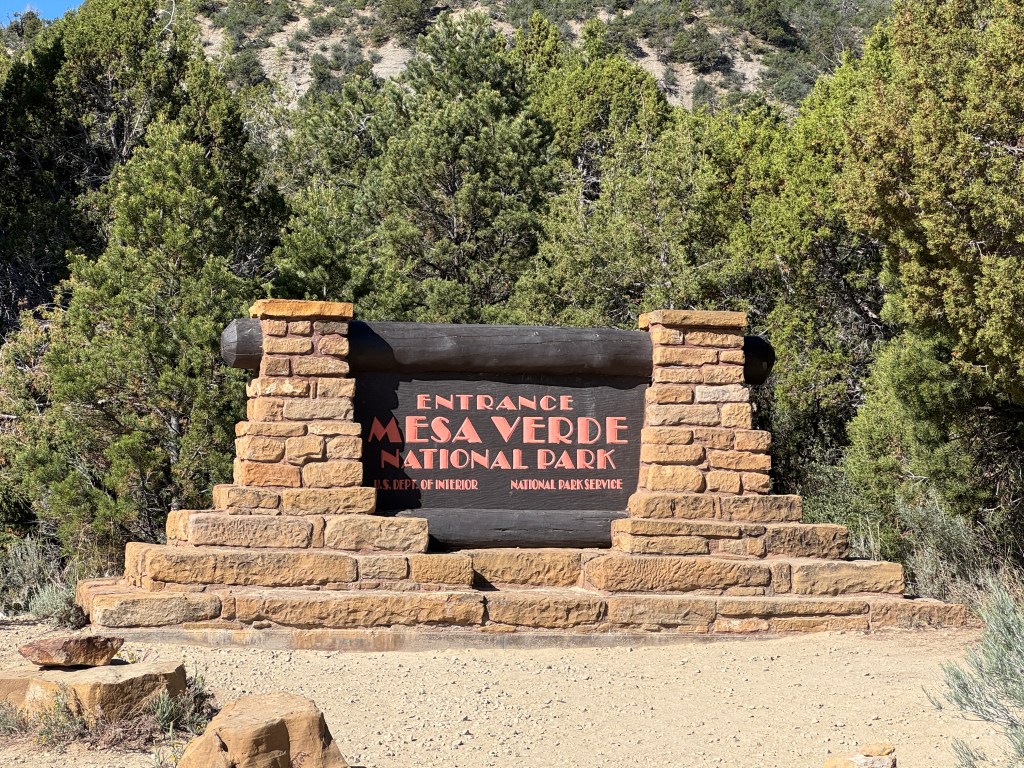
The Mesa Verde National Park sign is emblematic of the Art Deco style popular in 1906. ( Melodie Miller | Photographer)
In 1906, President Theodore Roosevelt signed the congressional bill to preserve the area’s ancient works, specifically 5,000 ancestral man-made sites and artifacts. Although Mesa Verde is a cuesta, the name remains, and the Ancestral Puebloans’ cliff dwellings are preserved.
Mesa Verde is located 35 miles west of Durango, at 35780 US-160, Mancos, CO 81328.
Melodie Dawn Miller is an apparel industry professional with expertise in design, development, and production. She holds bachelor’s degrees in English Literature and Classic Civilizations. She is currently studying French and Journalism at the University of Colorado.
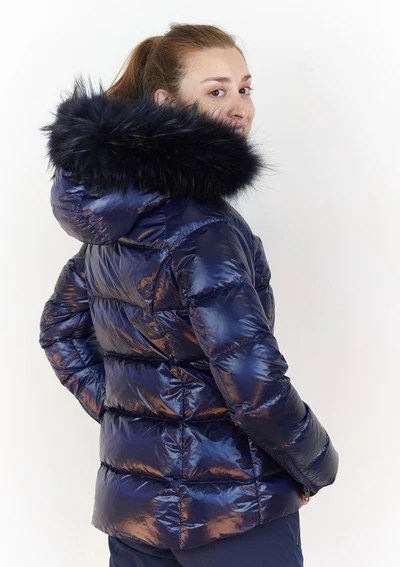
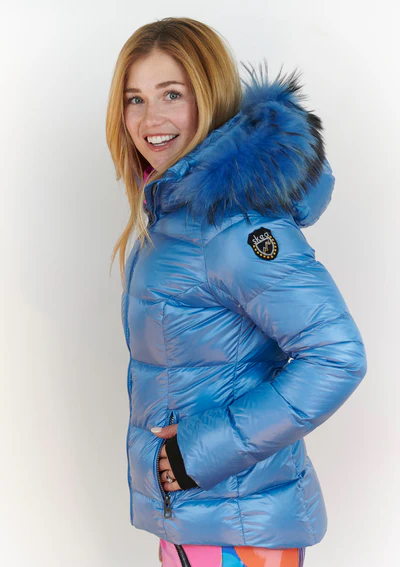
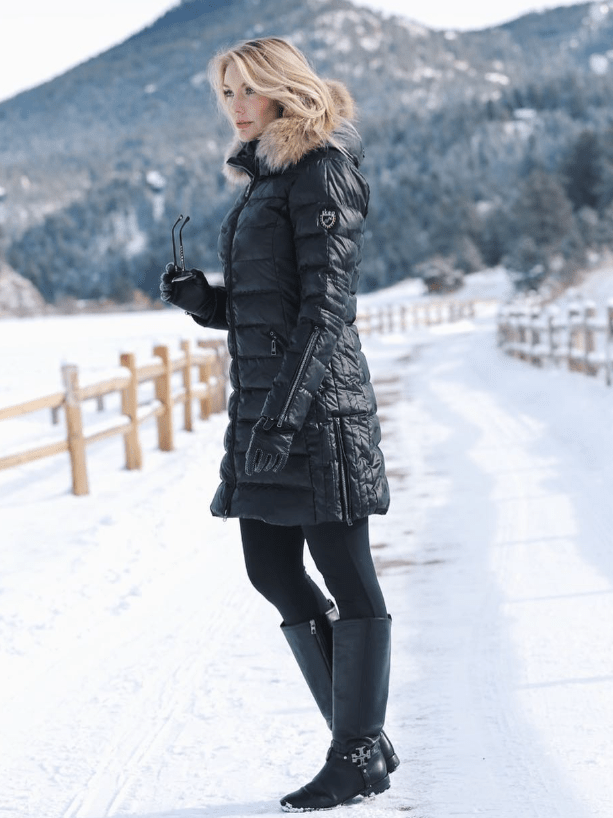
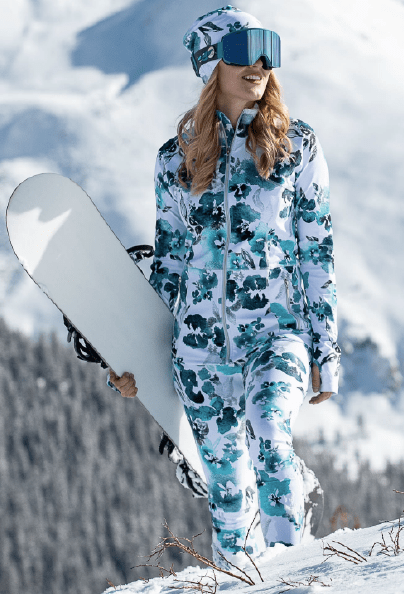
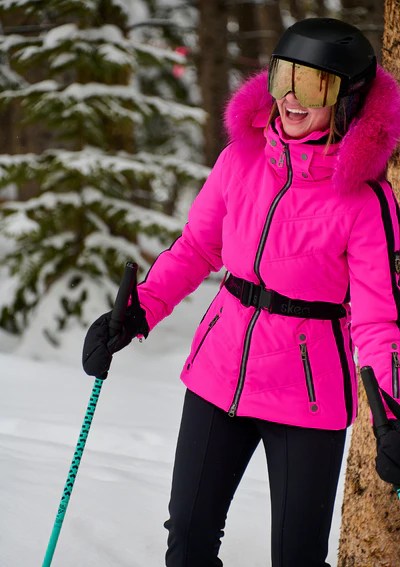
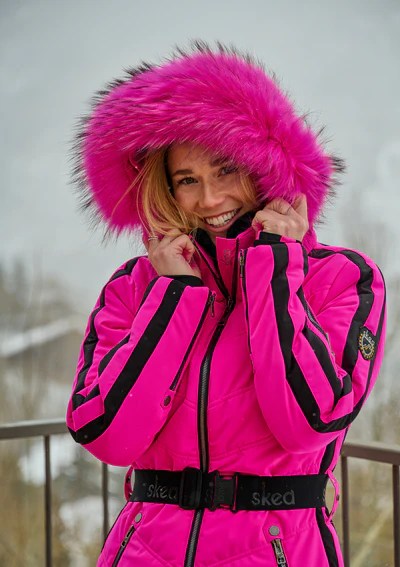
The SKEA Elsa down filled ski parka with matching fur ruff.
Photos courtesy of SKEA
Nylon Ciré – Ciré is a highly glazed wax finish that creates a water resistant barrier.
Down filled insulation throughout
Underarm ventilation zips.
Interior sleeve cuff with thumb holes.
Interior snow-skirt
3 zipper pockets
Fixed collar and hood
Optional snap-on real/faux fur trim
An athletic fit with room to move
Unleash your skiing flair with the SKEA Elsa Jacket. This jacket is not just breathable and hydrophobic, but effortlessly shifts from the slopes to the streets. Filled with down, it offers unbeatable warmth and adaptability for your mountain adventures. The Elsa parka combines purpose and femininity, and comes in a range of colors to match your taste.
Photos courtesy of SKEA
The SKEA Elsa down filled parka sketch and production instructions
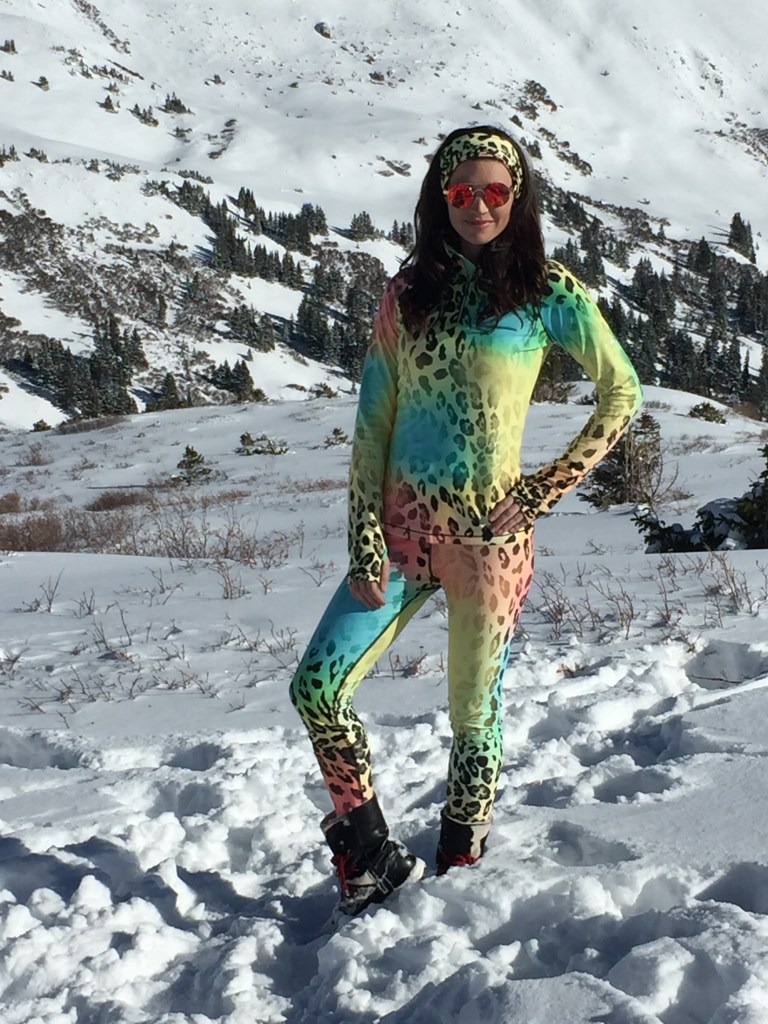
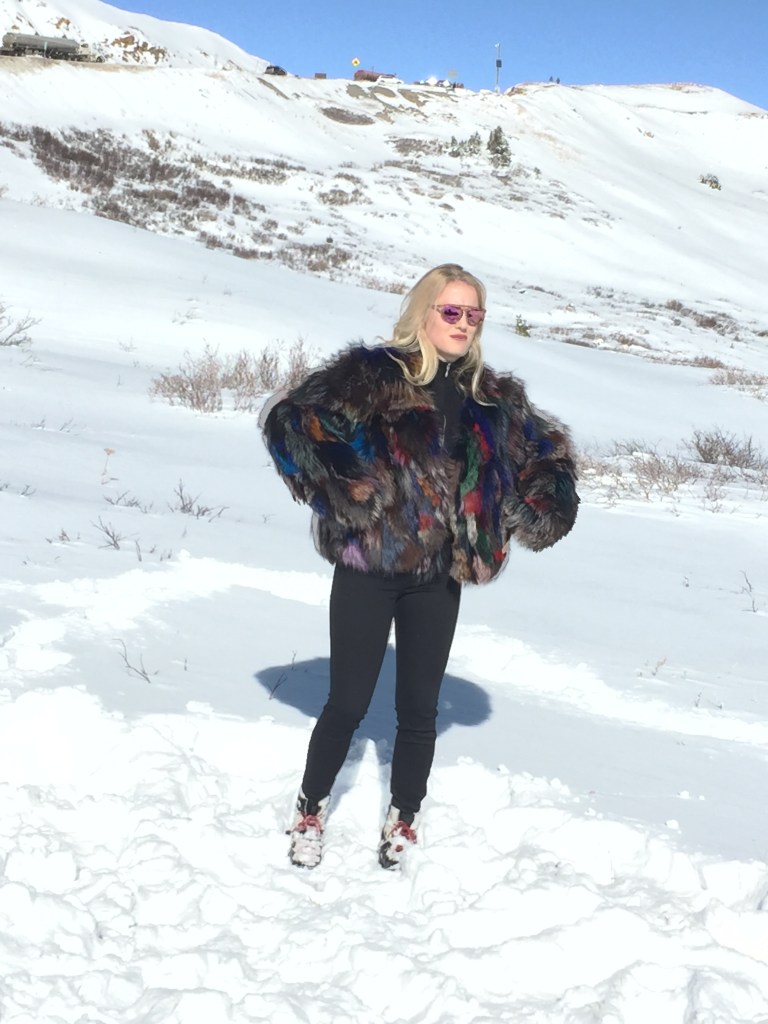
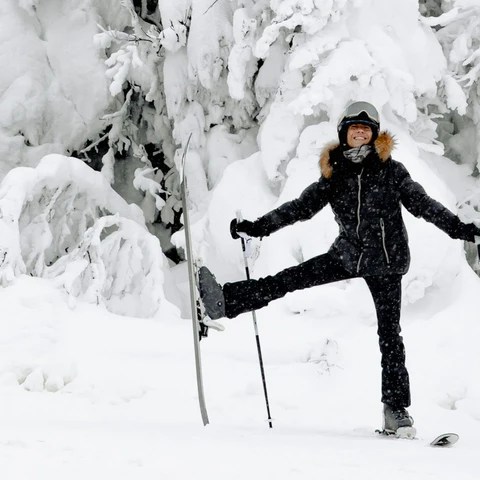
SKEA photo shoot at Loveland Pass, Colorado
Photos courtesy of SKEA
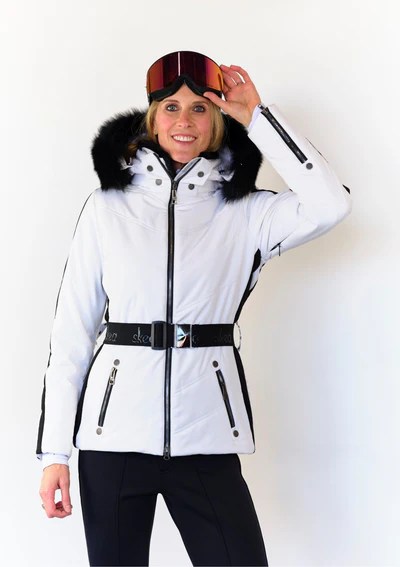
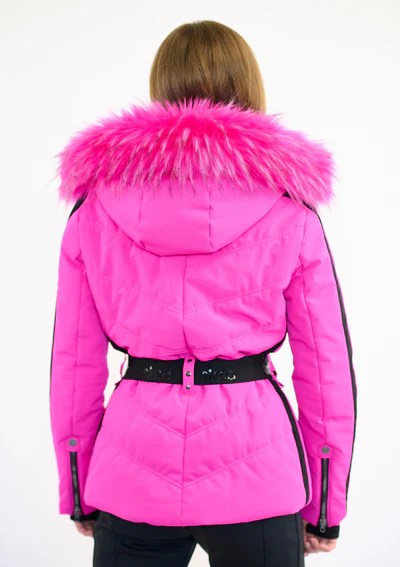
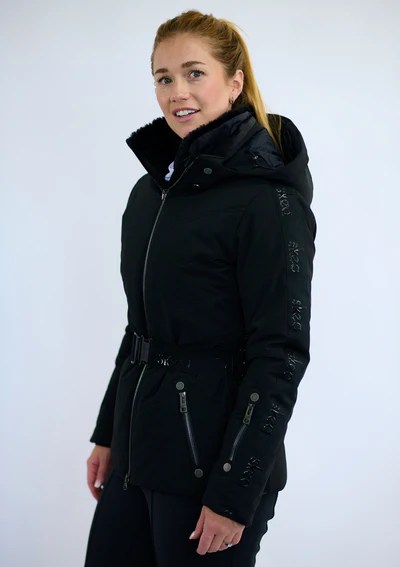
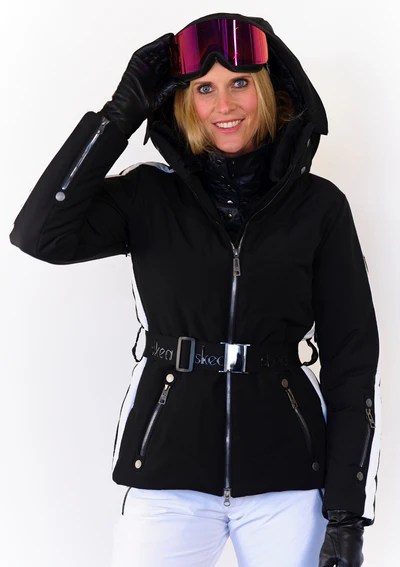
The SKEA vintage ski-wear inspired Thinsulate insulated Coco Parka
Photos courtesy of SKEA
Polyester Stretch super water repellant 20K WP
200 grams Thinsulate Insulation
4 zip pockets
Faux fur lined inner collar
Helmet compatible hood with optional fur trim
Removable belt to wear or not with snap down belt loops
Snow skirt
Cinch bottom
Slim fit
The Coco Thinsulate insulated parka sketch and production instructions
Photos courtesy of SKEA
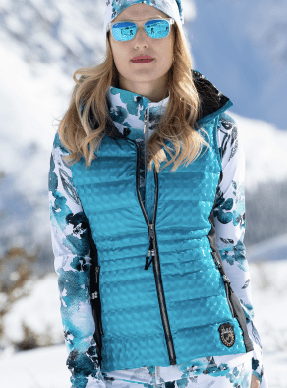
Cosmic Vest is the perfect layering garment. Snuggle into the collar on icy days.
Photos courtesy of SKEA
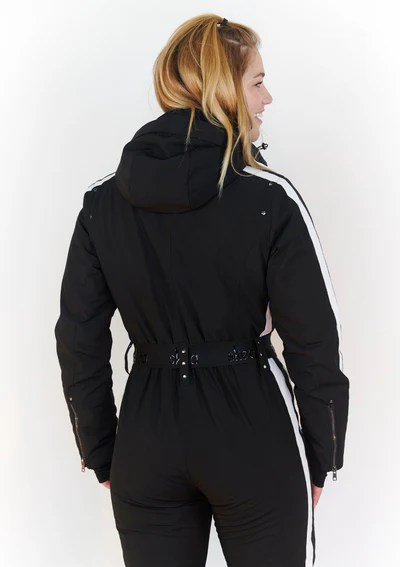
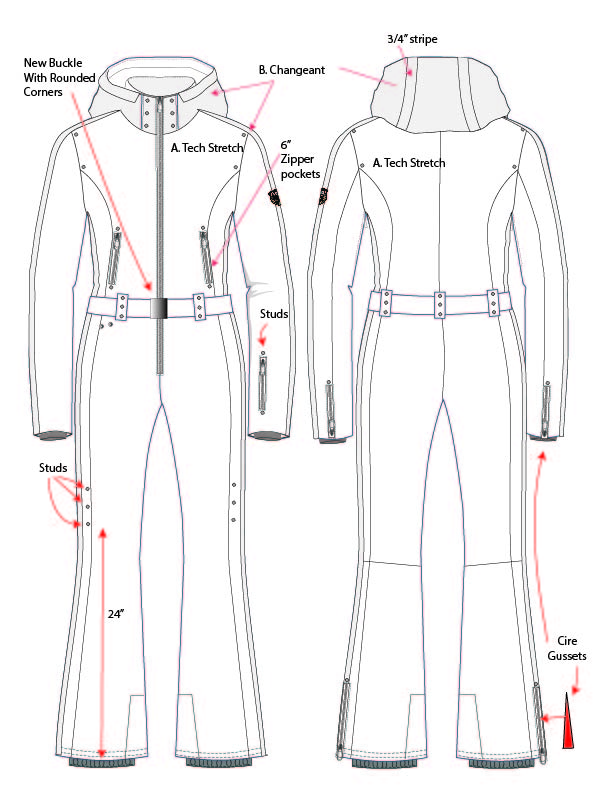
The SKEA Brit insulated ski suit
Photos courtesy of SKEA
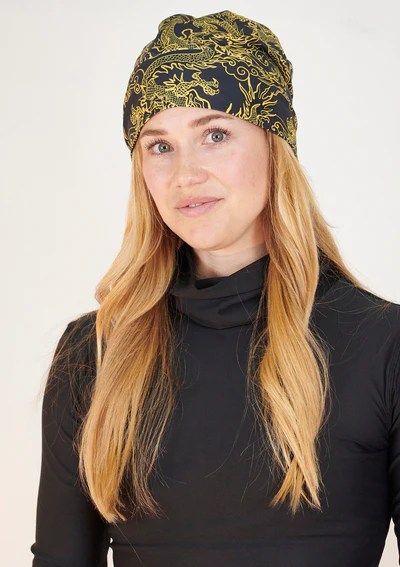
Stay warm in Skea high quality, quick drying polyster knit baselayer’s designed by Melodie Miller
Tennis and Golf for Skea by Melodie Miller
Sierra Design extreme elevation mountain apparel designed by Melodie Miller
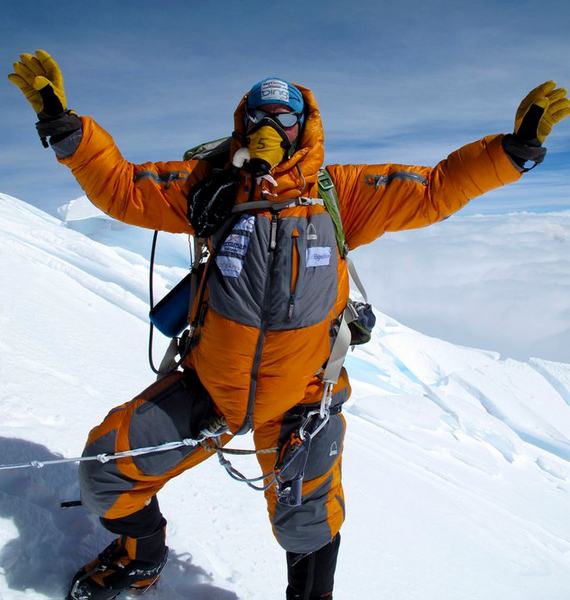
Paul Nanawa wearing Sierra Designs designed by Melodie Miller | Mt. Rainier | Photo courtesy of Eric Larsen
Paul Nanawa | Mt. Rainier | Eric Larsen | Both men wear Sierra Designs extreme weather gear designed by Melodie Miller | Photos courtesy of Eric Larsen
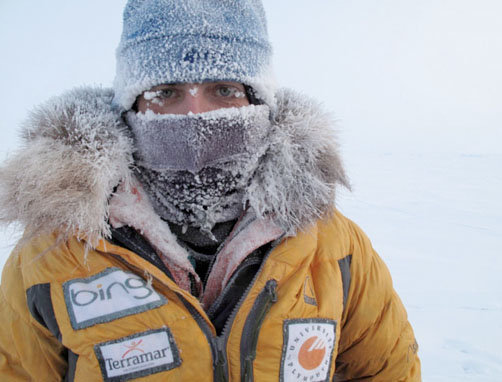
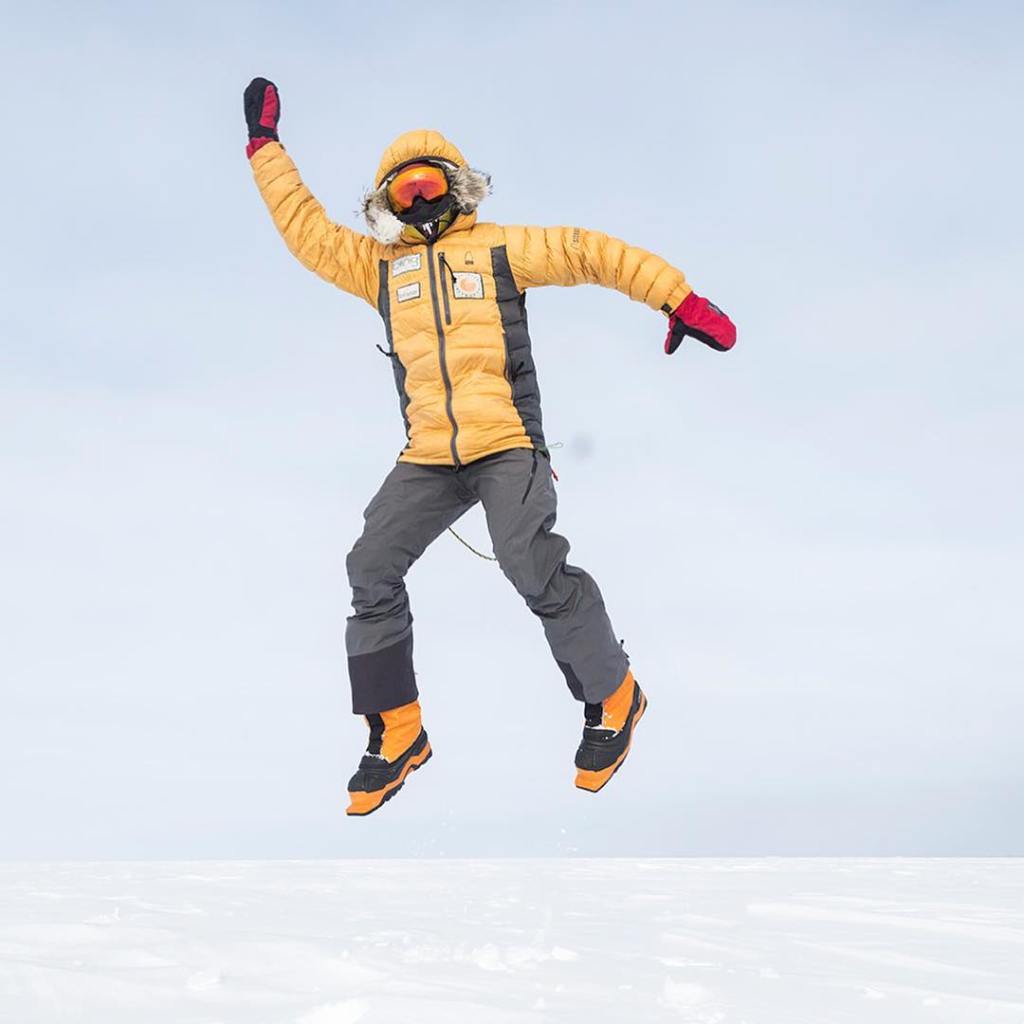
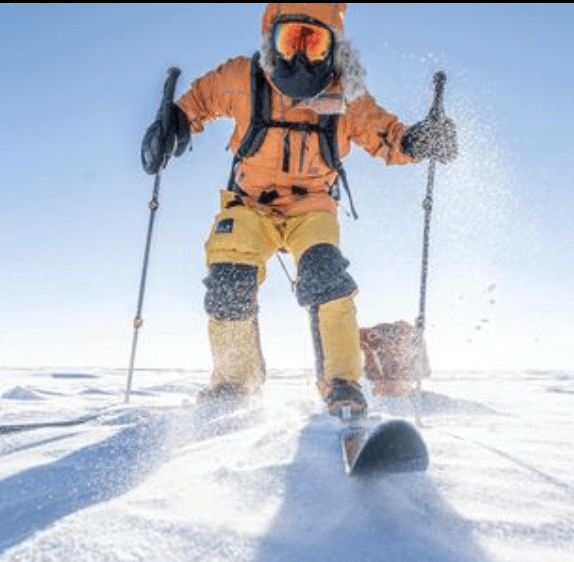
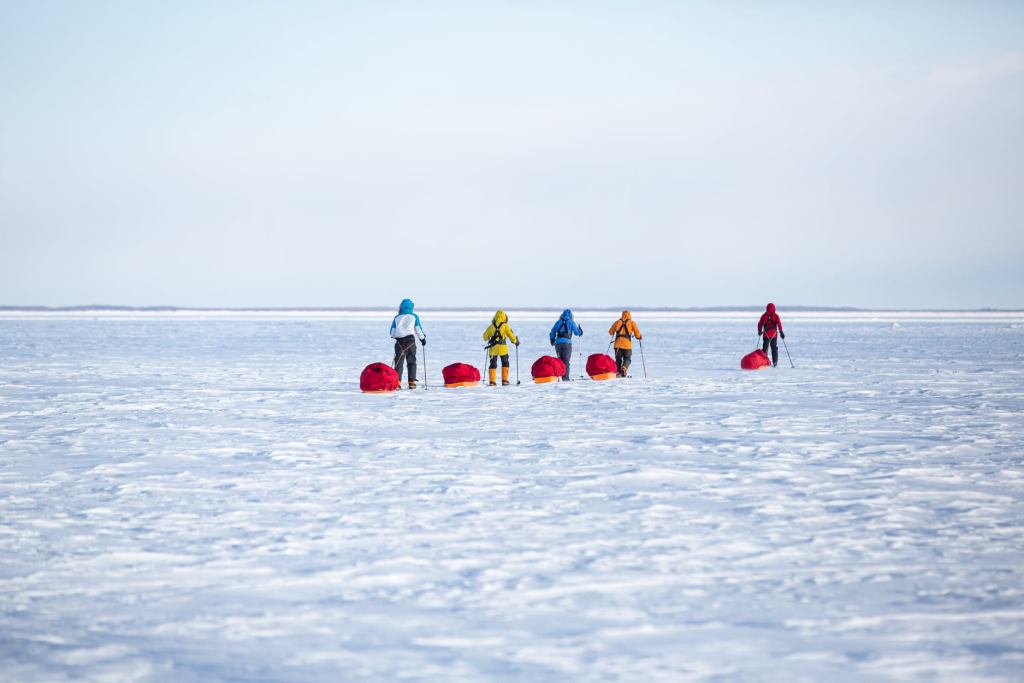
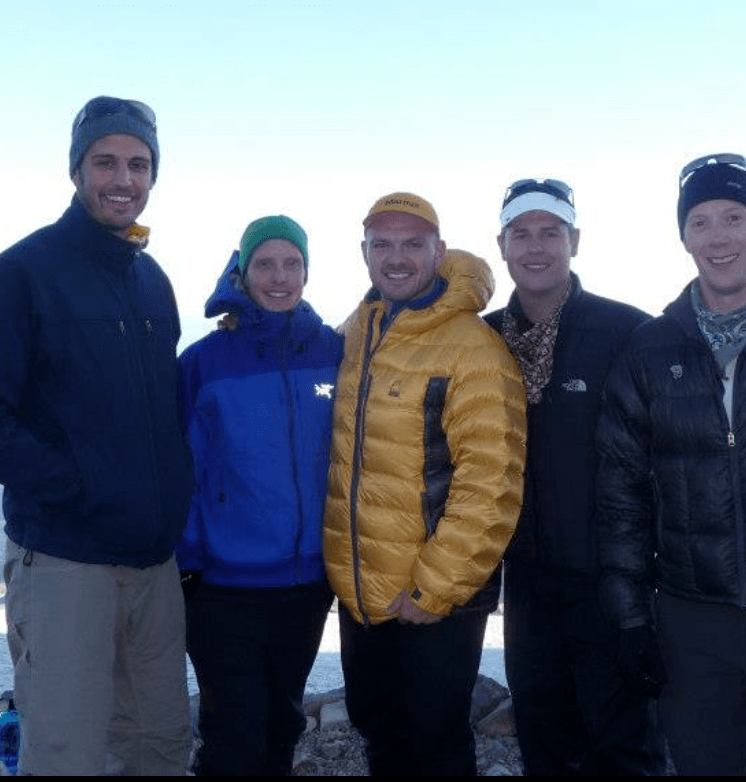
Eric Larsen and his team wear yellow and orange Sierra Designs cold weather gear designed by Melodie Miller | Photos courtesy of Eric Larsen
Eric Larsen and his team wear yellow and orange Sierra Designs cold weather gear designed by Melodie Miller | Photos courtesy of Eric Larsen
Eric Larsen attemps to summit Mt. Everest. (Right). Eric Larsens (Center right) expedition team wear orange Sierra Designs cold weather gear designed by Melodie Miller | Photos courtesy of Eric Larsen
Eric Larsen and his team at the South Pole wear orange Sierra Designs extreme cold weather gear designed by Melodie Miller | Photos courtesy of Eric Larsen
Shaun Mauer at the summit of Mt. Rainier wearing Sierra Designs mountain gear designed by Melodie Miller.
Brian Tschider and Shaun Mauer at John Muir as they prepare to ascend Mt. Rainier wearing Sierra Designs mountain gear designed by Melodie Miller. (Right) Shaun Mauer wearing Sierra Designs mountain gear designed by Melodie Miller. (Center Left)
HEXA Custom outdoor apparel designed and developed by Melodie Miller
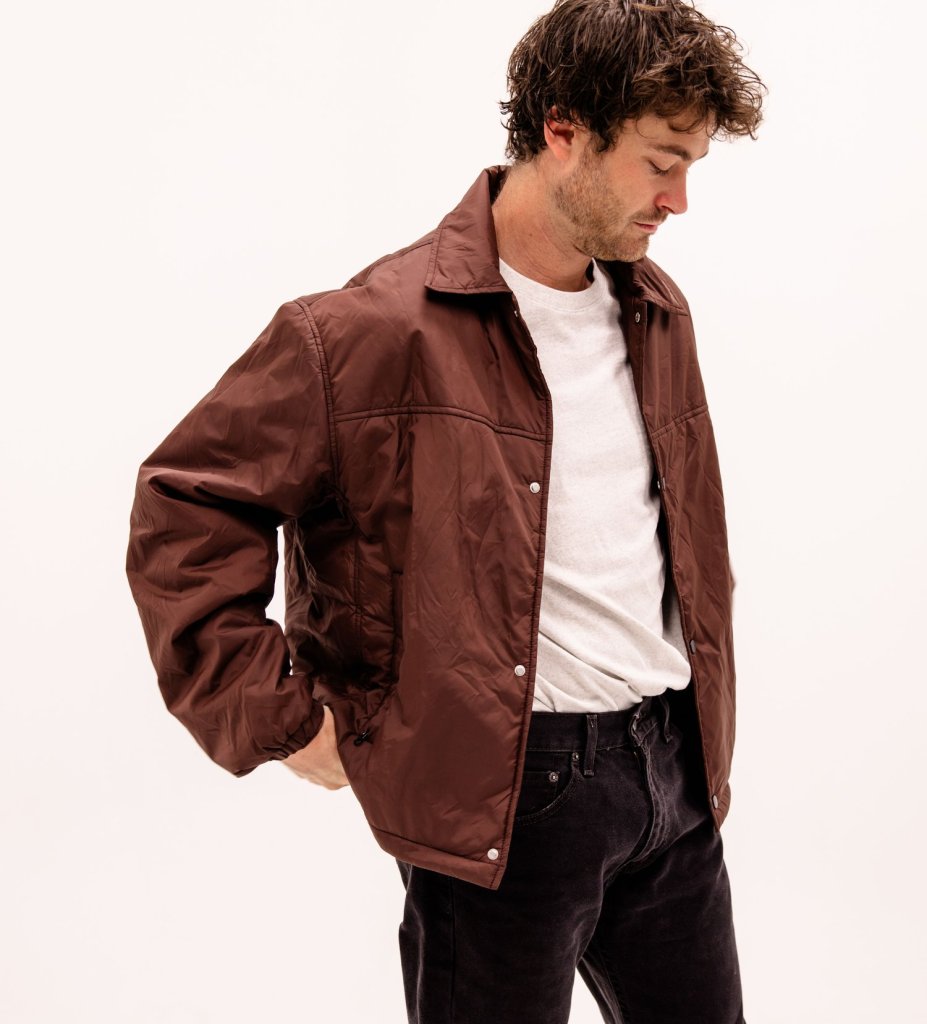
HEXA Reversible Sherpa Jacket (Photos courtesy of HEXA Custom)
Insulated Camping Blankets 57″ x 75″
HEXA Custom | Men’s Quilted Sherpa Vest | Sketch and Engineering
Academy Sports + Outdoors | Women’s Magellan Waterproof Pant (Melodie Miller | Designer)
Pearl Isumi Triathlon Suit
Dame Flora Duffy, DBE, is a Bermudian professional triathlete (Center) wearing Pearl Izumi developed exclusively for Duffy by Melodie Miller. Duffy won a gold medal at the 2020 Summer Olympics in Tokyo, Bermuda’s first gold medal. She also competed in the Beijing, London, and Rio de Janeiro Olympics. In 2018, she won gold in the women’s triathlon at the XXI Commonwealth Games in Australia.
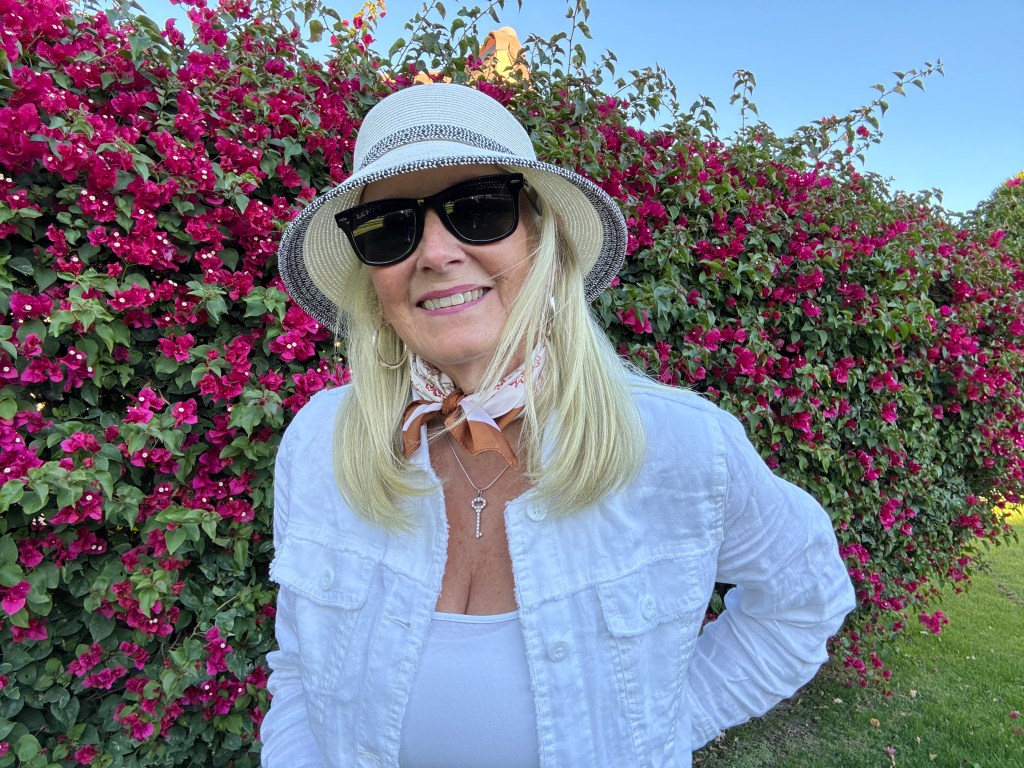
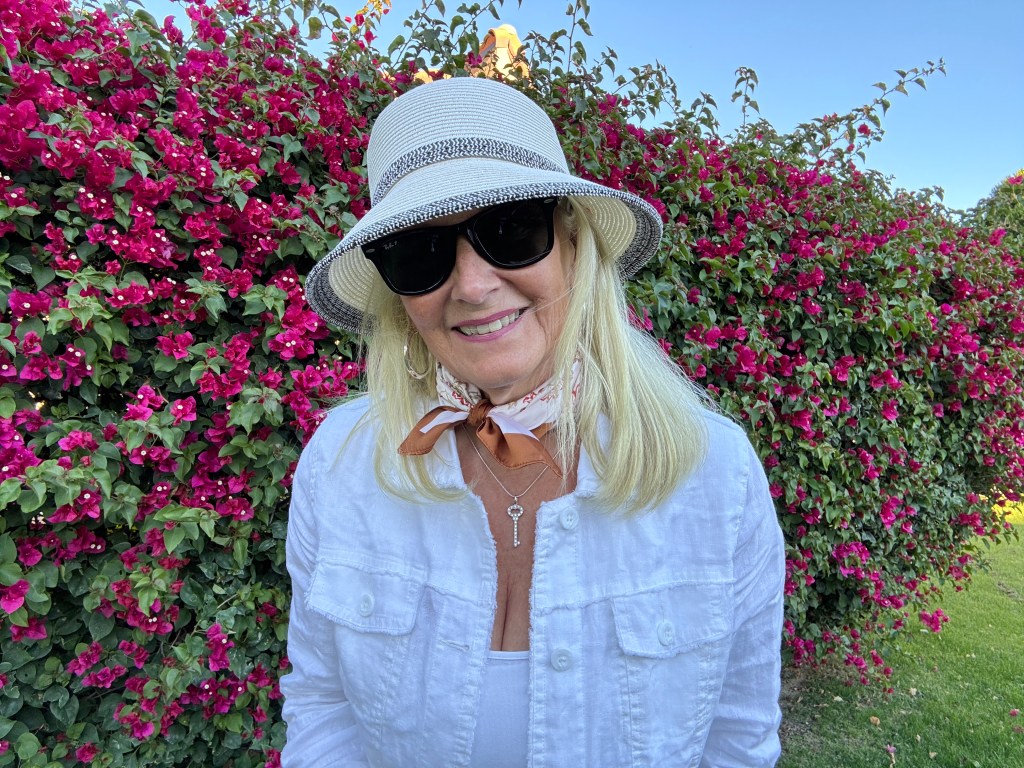
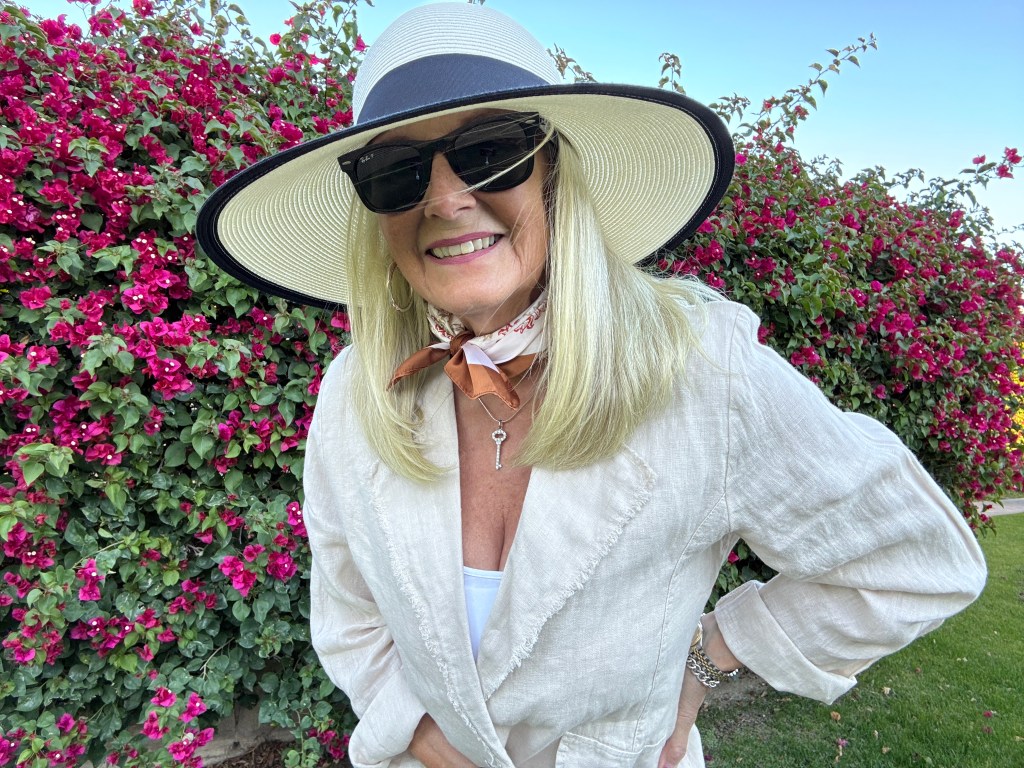
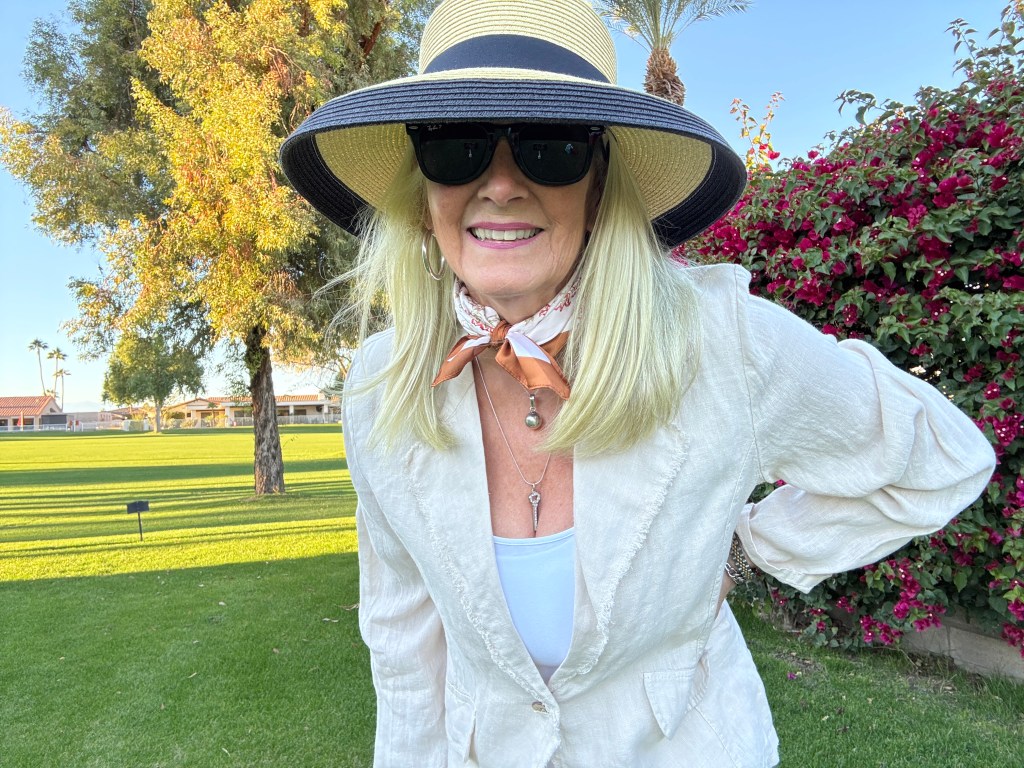
Dressing for travel in Europe does not require excess. It requires intention.
Pack three jackets, three scarves, and four hats. Add tennis shoes and flip-flops, one sweater, three tops and three bottoms, one dress, and one pair of evening shoes. Add two belts for styling. Each piece should work with the others.
With this structure, you can adjust for weather, setting, and occasion. The same garments shift from casual to formal by changing layers and accessories. The result is controlled, deliberate, and consistently polished.
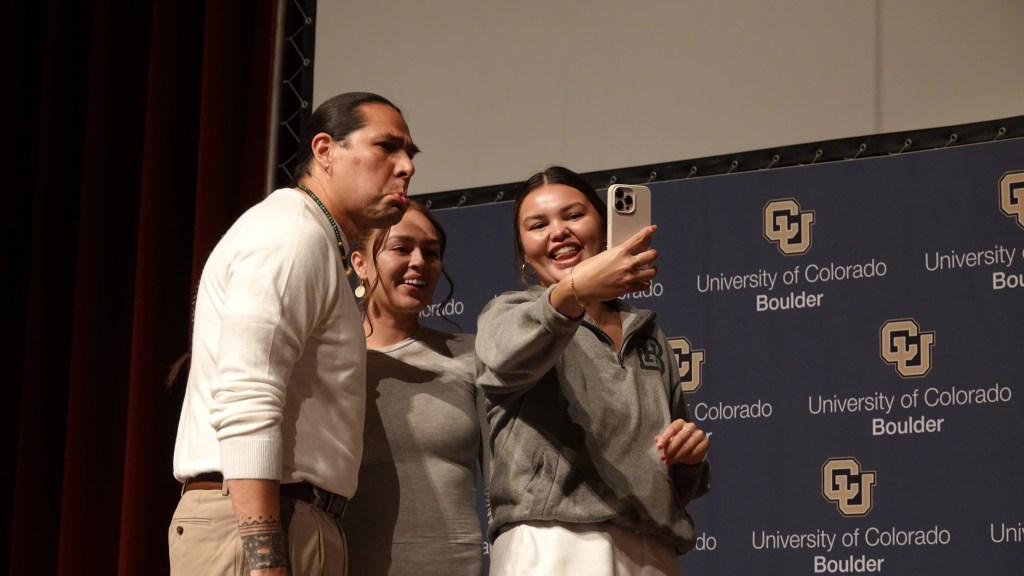
Humor offers a chance to challenge the narrative of marginalization. This is according to Dallas Goldtooth, Res Ball (film) actor and environmental activist, who spoke on Tuesday, Sept. 24, at the University of Colorado Macky Theater. Goldtooth mixed his signature storytelling and humor with advocacy, gaining the audience’s trust.
“Buy American Spirit cigarettes,” he said when asked how non-indigenous allies can get involved.
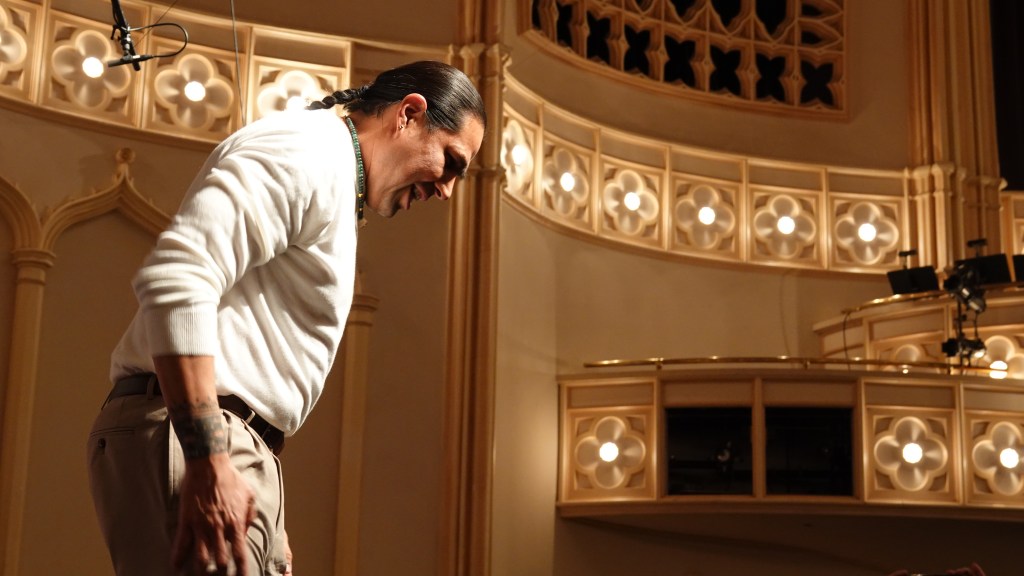
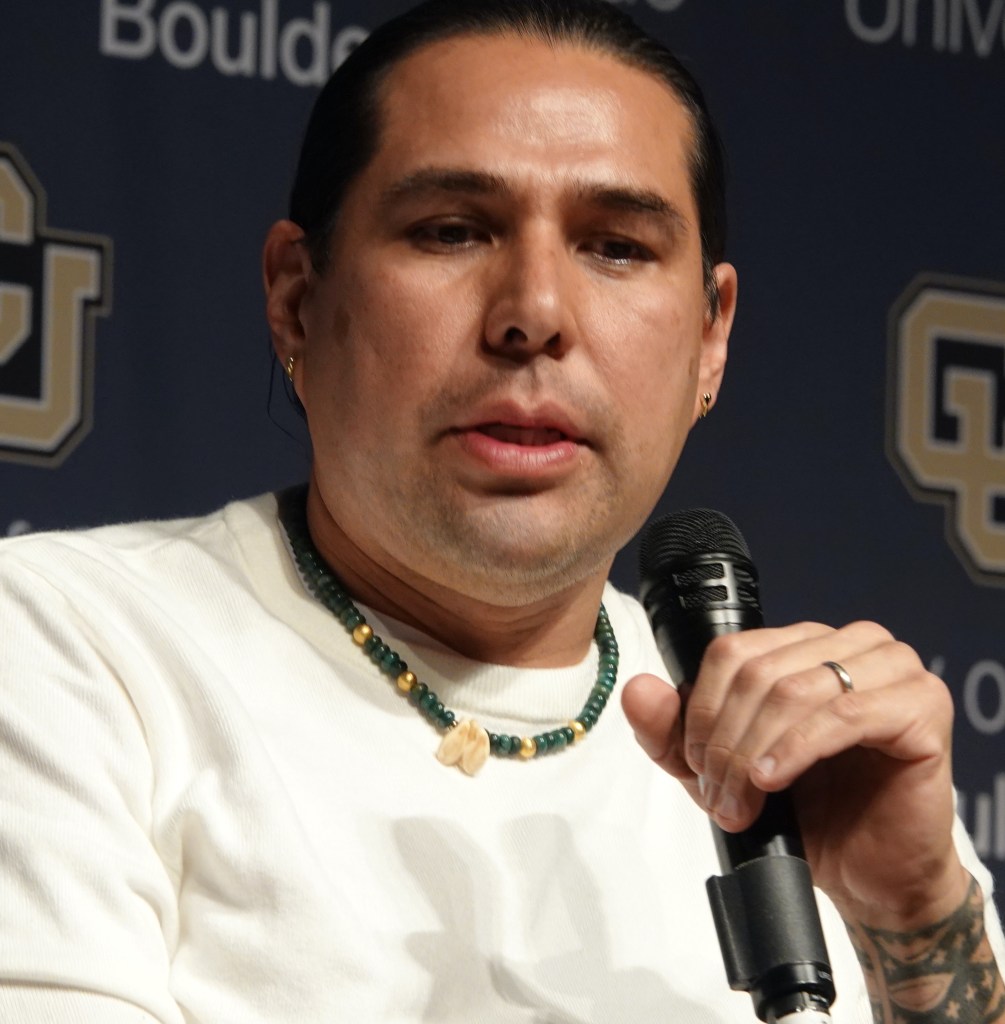
Dallas Goldtooth of Dakota and Diné heritage speaks at Macky Theater on the Campus of University of Colorado at Boulderof his experience with environmental issues and activism . (Melodie Miller | Photographer)
Goldtooth is known for his character William Spirit Knifeman in the FX series Reservation Dogs. He is also the founding member of the 1491’s comedy group. He joked with the Boulder audience and reminded them that solving the climate crisis means acting on a larger scale. The climate crisis disproportionately impacts Indigenous communities and other marginalized groups.
Actor and activist Dallas Goldtooth as William Knife-Man in FX’s Reservation Dogs. (Photograph by Shane Brown / FX)
“I’m sure all of you are really happy about your hybrid car that you’re driving or that you switched your light bulbs to LED lights. It’s great. But we have to remind ourselves as we understand that the causation of climate chaos is capitalism. It also means that the fight to protect this planet is much more than environmentalism,” Goldtooth said.
Activist Dallas Goldtooth encourages the audience to . (Melodie Miller | Photographer)
The fight for climate change is a fight for liberation, according to Goldtooth. Many areas affected by climate chaos are marginalized communities. Their citizens often lack the power to influence what happens to the land. They have no voice regarding the water, the air, or their bodies. He encouraged the audience to help lift marginalized voices.
“This will allow us to imagine a future that’s livable for everyone,” Goldtooth said.
Dallas Goldtooth combined humor and inspiration for action with audience at Macky Theater on the Campus of University of Colorado at Boulder. (Melodie Miller | Photographer)
“Just bring people together around a common issue and let them talk with one another. You have right-wing ranchers, and you have left-leaning natives,” Goldtooth said, “working together to stop the Keystone XL pipeline to preserve clean water on their lands. I’m happy to say that we won the Keystone XL campaign.”
Dallas Goldtooth joked with the audience at Macky Theater on the Campus of University of Colorado at Boulder. (Melodie Miller | Photographer)
Goldtooth amplified the importance of the world’s “climate chaos as an issue that we are all dealing with on this planet.” He softened the message with a personalized joke when asked how he began his career as an activist. Goldtooth told the audience, “Well, I was 13 pounds when I was born. So, my mom knew injustice.”
Dallas Goldtooth reminded the audience at Macky Theater on the Campus of University of Colorado at Boulder that the climate crisis affects marginalized communities disproportionately. (Melodie Miller | Photographer)
Storytelling is a “big part of the organizing effort to make this planet better,” Goldtooth said. Humor provides the “opportunity for you to disrupt the narrative because all of our fields have been impacted” by marginalization. For example, the United States insurance companies secure capitalistic investments. Goldtooth told the audience that “insurance companies are complicit in the destruction of the earth.”
Benny Shendo attended Goldtooth’s speech. He is the vice chancellor for Native American Affairs at the University of Colorado. Shendo is also a member of New Mexico’s Democratic Senate. “I think you will find humor across any country. I mean, it’s not any different in Pueblo or any different in Pani or any other tribe,” said Shendo.
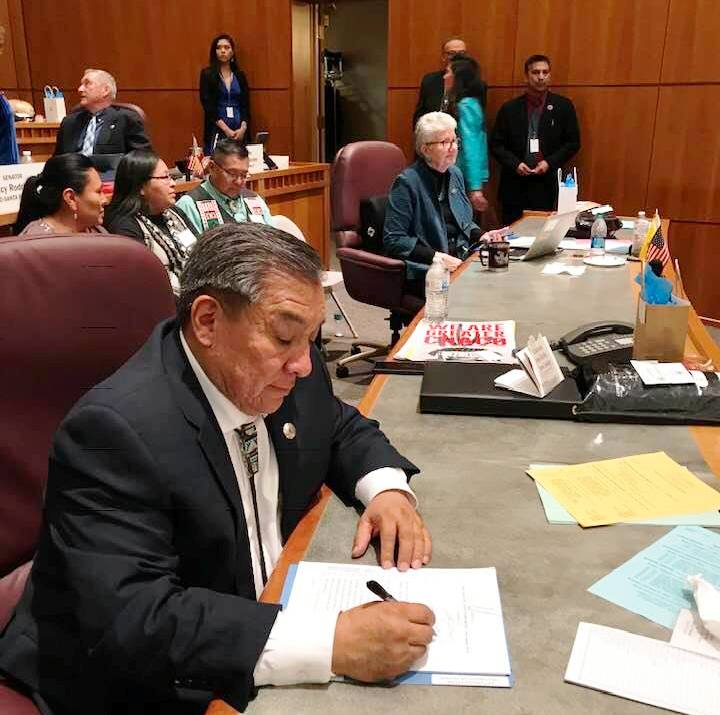
Benny Shendo. University of Colorado alumni speaks to Congress. Members of Congress formally accepted a sculpture of Po’pay, a medicine man from Ohkay Owingeh who led the Pueblo Indian Revolt of 1680, to complete the U.S. Capitol’s Statuary Hall collection. (Photograph courtesy of the C-SPAN 2 Archives)
Phillip Gover is a Tribal Affairs Specialist for the Colorado Department of Human Service. He is an advocate for Indigenous Coloradoans and said, “I think Native Americans have always dealt with tragedy with a sense of humor. Most people would say, ‘What?’ Why would you laugh at that? If I’m not laughing, then I’m crying, and I’d rather be laughing.”
Phillip Gover, a Tribal Affairs Specialist for the Colorado Department of Human Service (Melodie Miller | Photographer)
Goldtooth uses joy and laughter to advocate for marginalized Native American communities disproportionately facing climate change.
Dallas Goldtooth shared the stage with students at Macky Theater on the Campus of University of Colorado at Boulder. (Melodie Miller | Photographer)
He is descended from the Minnesota Dakota/Diné (Navajo) tribe. He is a member of the Lower Sioux Indian Community. He is also a Dakota language instructor.
C.U. Presents closed its modern vampire love story to a packed house at the University of Colorado Loft Theatre in Boulder.
Director Heather Kelley’s adaption of Jack Thorne’s play “Let the Right One In” completed its run to a sold-out theater on Sunday, Oct. 20, at the University of Colorado Loft Theatre.
The audience waits for the sold out presentation of Let the Right One in to begin. Scenic design by Hyley Delich. (Melodie Miller | Photographer)
Based on the novel by John Ajvide Lindqvist, first love, sexual intimidation, and school bullying transcend the borders of time and space in “Let the Right One In.” Eli, a 200-year-old vampire fixed at the age of 12, befriends Oskar, their 13-year-old neighbor, on the playground where Eli is bullied by schoolmates in 1981 Sweden.
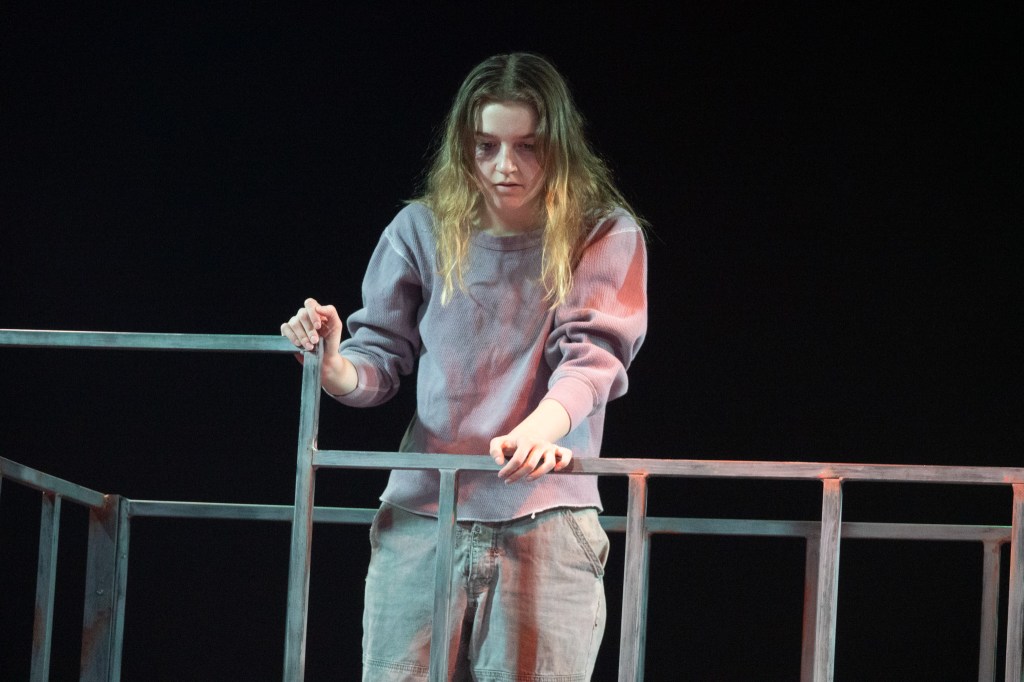
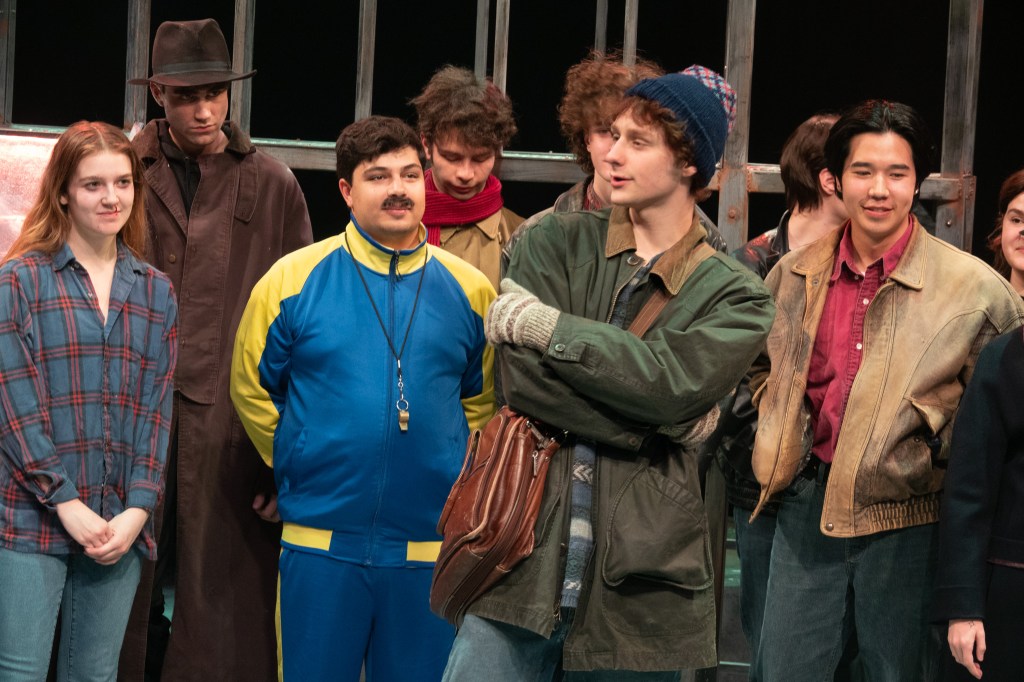
Eli, a 12 year old trapped in the body of a 200 year old vampire is played by Wyleigh Watson. (Melodie Miller | Photographer)
The childhood friendship between Eli and Oskar is complex, creating “a dynamic narrative that centers on empathy and fighting for each other despite all the blood and scars,” Brosnan Bustamante, the stage manager said.
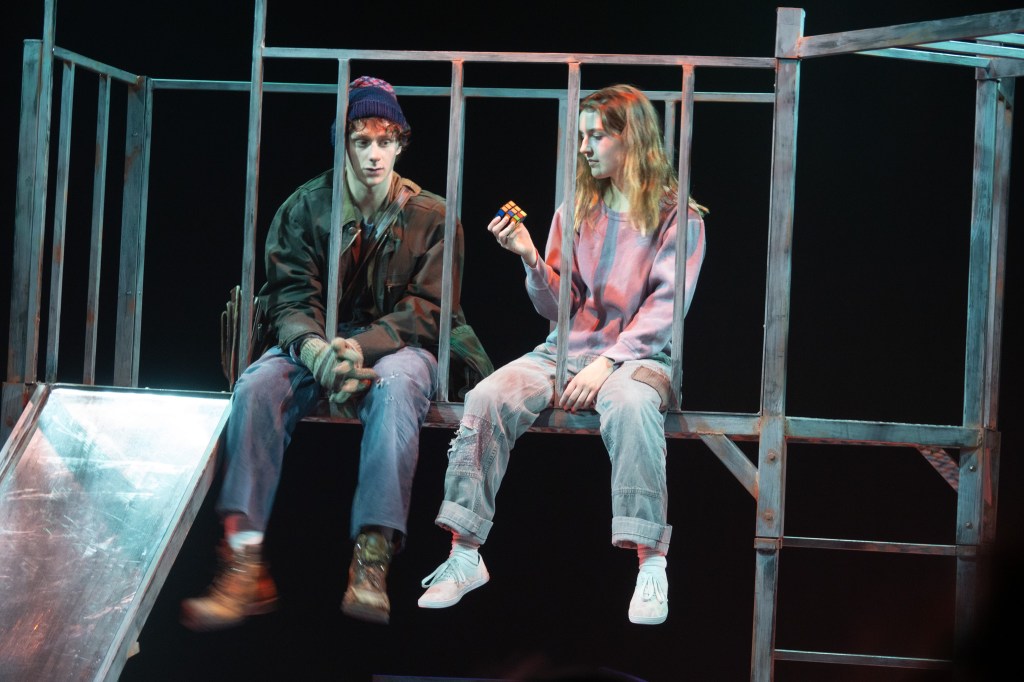
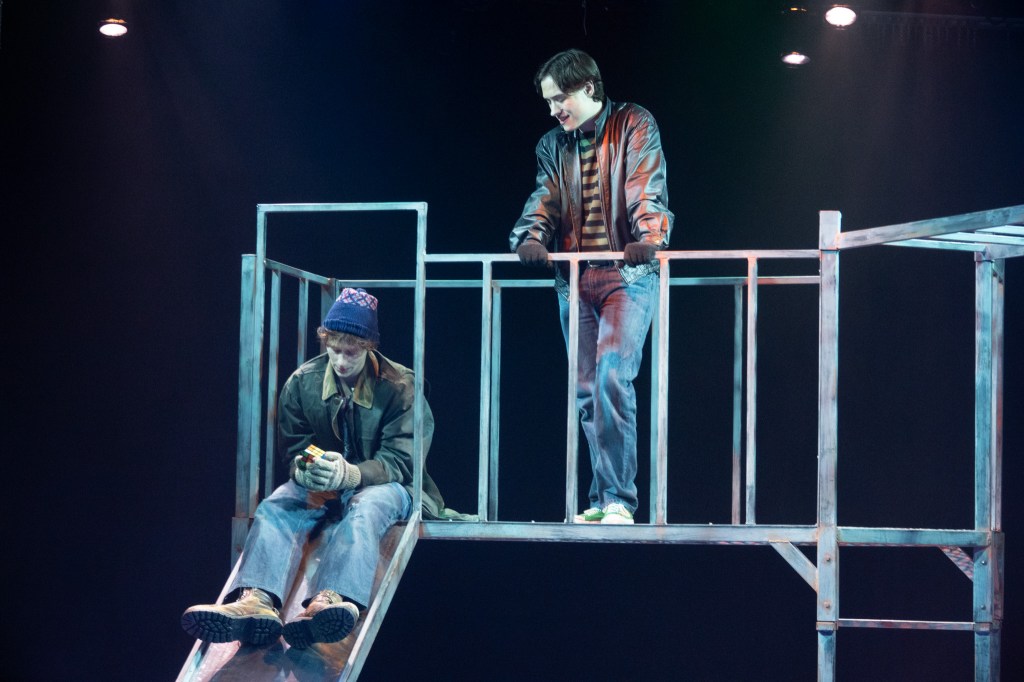
Oskar, played by Salem Channell, lives next door to Eli the vampire. Eli, played by Wyleigh Watson, contemplates a Rubix Cube. (Melodie Miller | Photographer)
Let the Right One In ”is a macabre story with a happy ending,” Scenic Designer, Haley Delich, a Bachelor of Fine Arts in Design, Technology, and Management said. Oskar is “dealing with bullying and first love,” and Eli “is trapped with the body and the mind of a child.”
When Hakan dies, Oskar becomes Eli’s new companion, giving purpose to their lives.
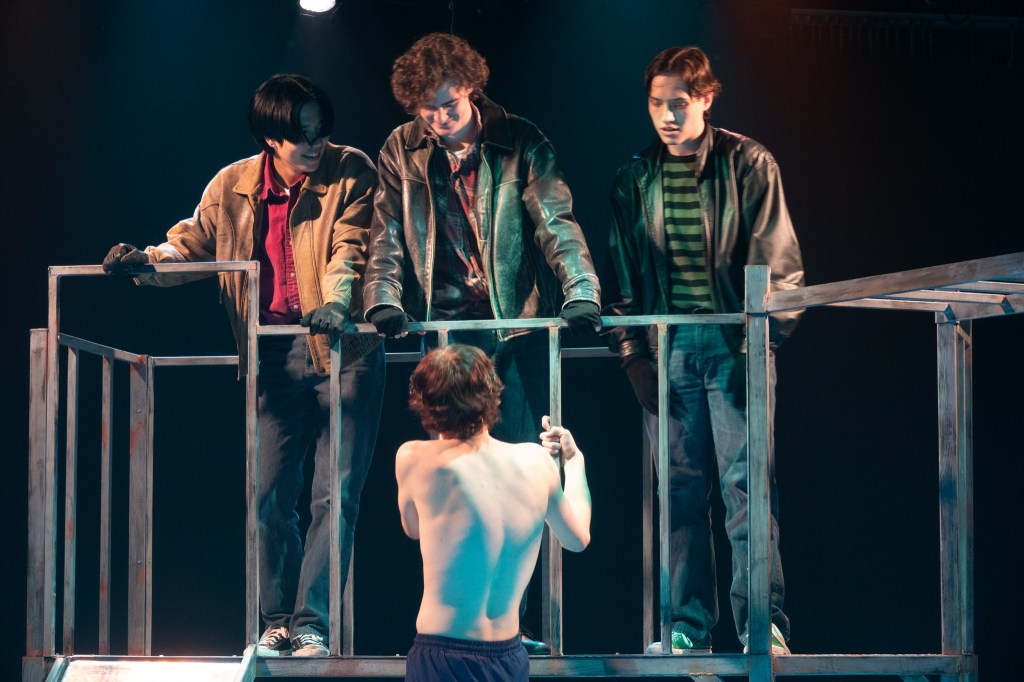
Bullies Jonny, Jimmy and Micke, play by Ian Von Pechmann, Sam Stitt and Cade respectively, threaten to drown Oskar, played by Salem Channell.
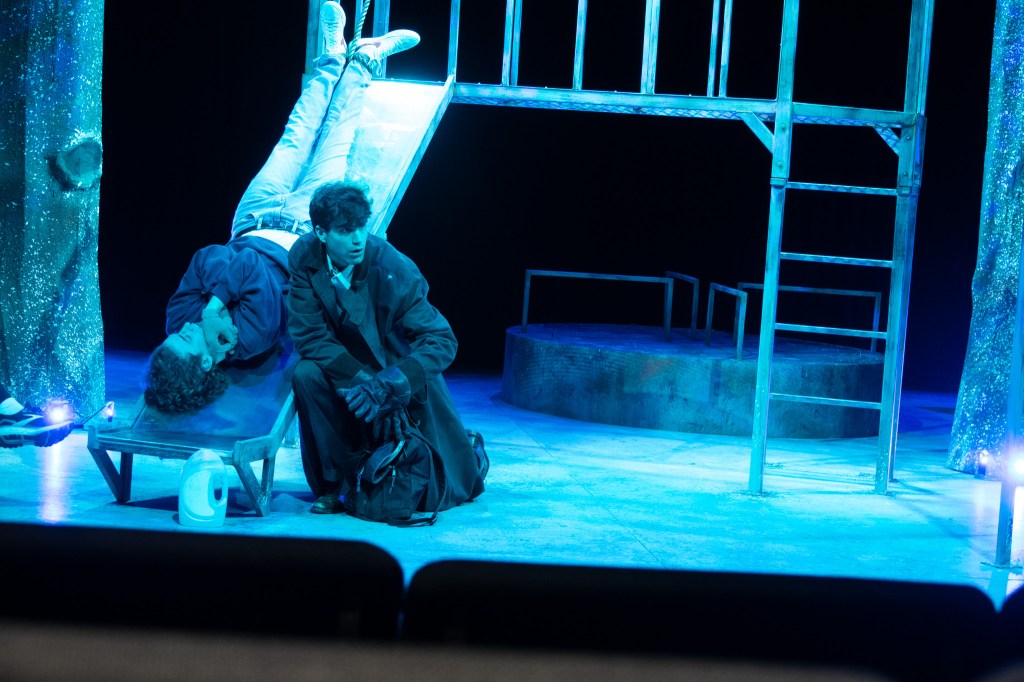
Situated in 1981 Blackeberg, Sweden, the playgrond was the setting where Hakan, Eli’s parent figure, killed and procured blood from his victims for the thirsty 12-year-old child.
Roan Cochrane as Hakan (Right) drains the blood from his victim played by Ian McCance (Left). (Melodie Miller | Photographer)
The emotional topics of the play demanded that stage manager Brosnan Bustamante, a C.U. student, ensure a smooth production. Brosnan prioritized a supportive environment. He minimized stress to keep the team focused on the performance.
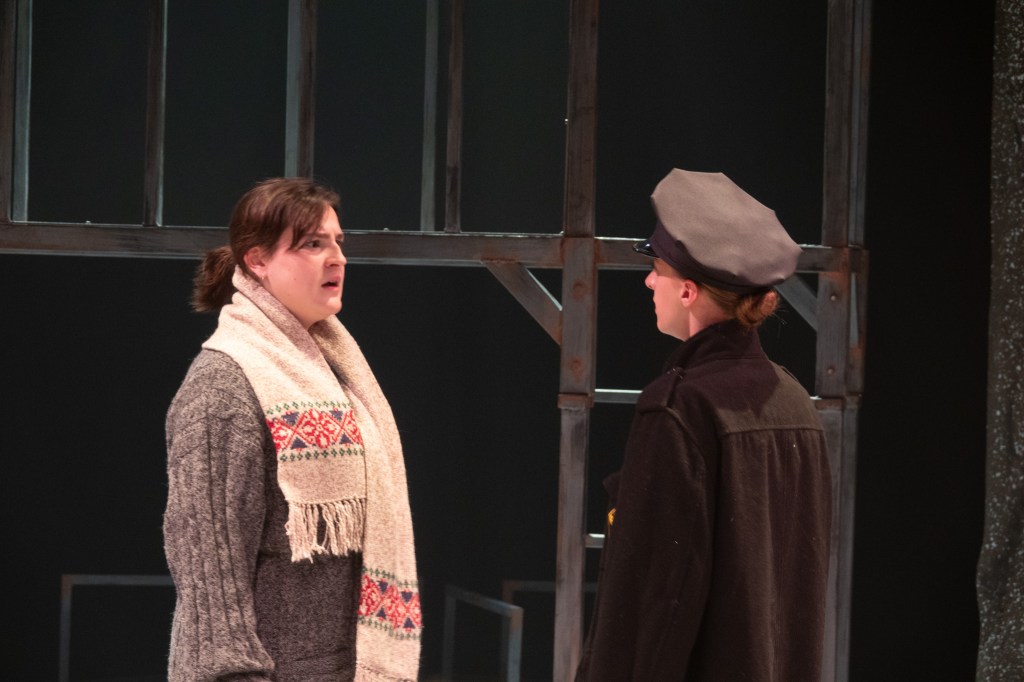
Savannah Gullett plays Oskar’s Mum (Left). Norah Shuey plays Halmberg, the police commissioner. (Right)(Melodie Miller | Photographer)
“It’s crucial that the stage, cast, and crew are functioning smoothly, especially in a production that is emotionally intense and technically demanding,” Bustamante said.
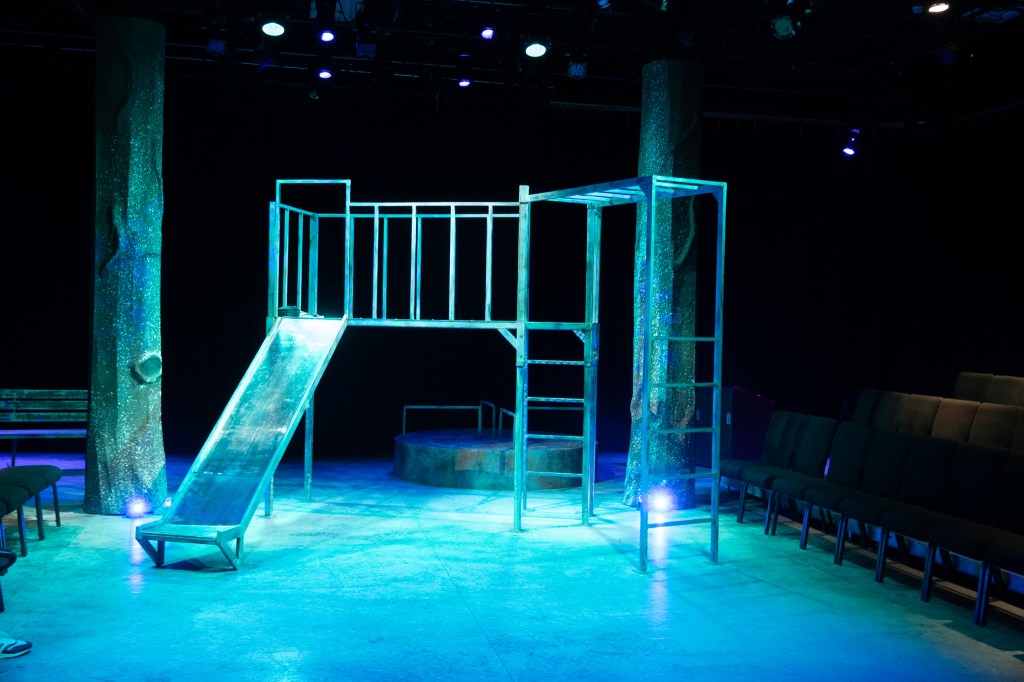
The menacing play ground of “Let the Right One In.” (Melodie Miller | Photographer)
Filled with death, blood and bulling, the setting is ironic as a playground but fitting as a place of horror, where children act as monsters.
Bully Jonny, play by Ian Von Pechmann, talks with Oskar, played by Salem Channell.(Melodie Miller | Photographer)
Delich designed the set to evoke a “bit of the horrors of growing up and outgrowing the playground,” she said.
“Let the Right One In” play ground setting designed by Hayley Delich. (Melodie Miller | Photographer)
The cast of “Let the Right One In” take a bow at the close of their successful run.
Salem Channell as Oscar (center front) Middle row: Wyleigh Watson as Eli, Charlie Hough as Mr. Avila, Sam Stitt as Jimmy, Pechmann as Jonny. Back row: Roan Cochrane as Hakan, Ian McCance as Dad, Cade Heaton as Micke, Savannah Gullett (far right, back) as Mum. (Melodie Miller | Photographer)
The minimalistic rusted monkey bar set, designed by Delich, was intended to “mirror the stark lives of the characters,” she said. The characters had outgrown the playground but were emotionally stuck in their childhood experiences where they faced bulling and isolation everyday in “Let the Right One In.”
“Let The Right One In” play ground Scenic design by Hyley Delich. (Melodie Miller | Photographer)
The 2024 C.U. Presents, “Let the Right One In,” is part of the Artists Series, which spans over 80 years on campus. Kelley is pursuing a PhD in Theatre & Performance Studies at C.U. Boulder.
University Theatre Building, 261 University of Colorado, Boulder, CO 80302
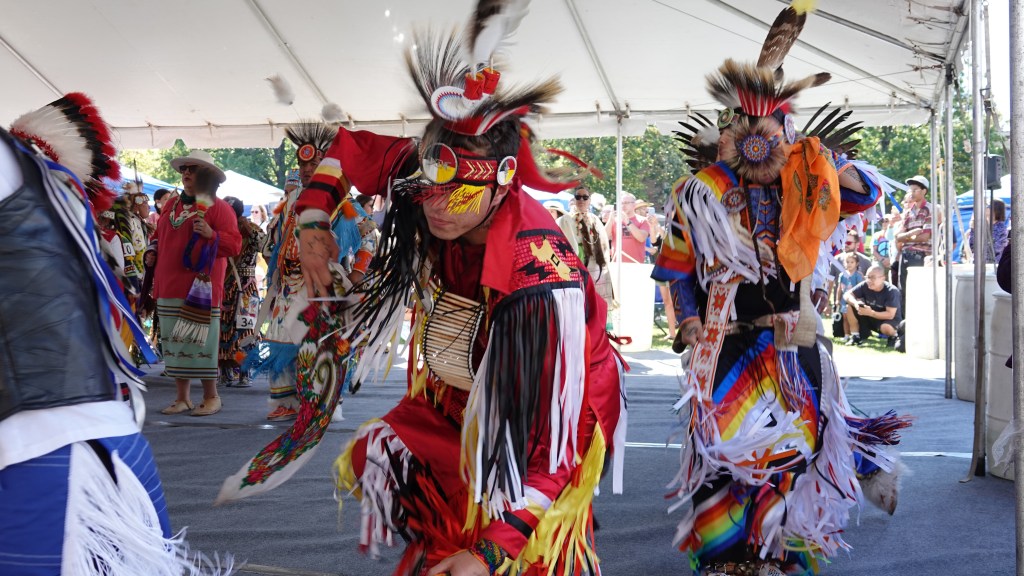
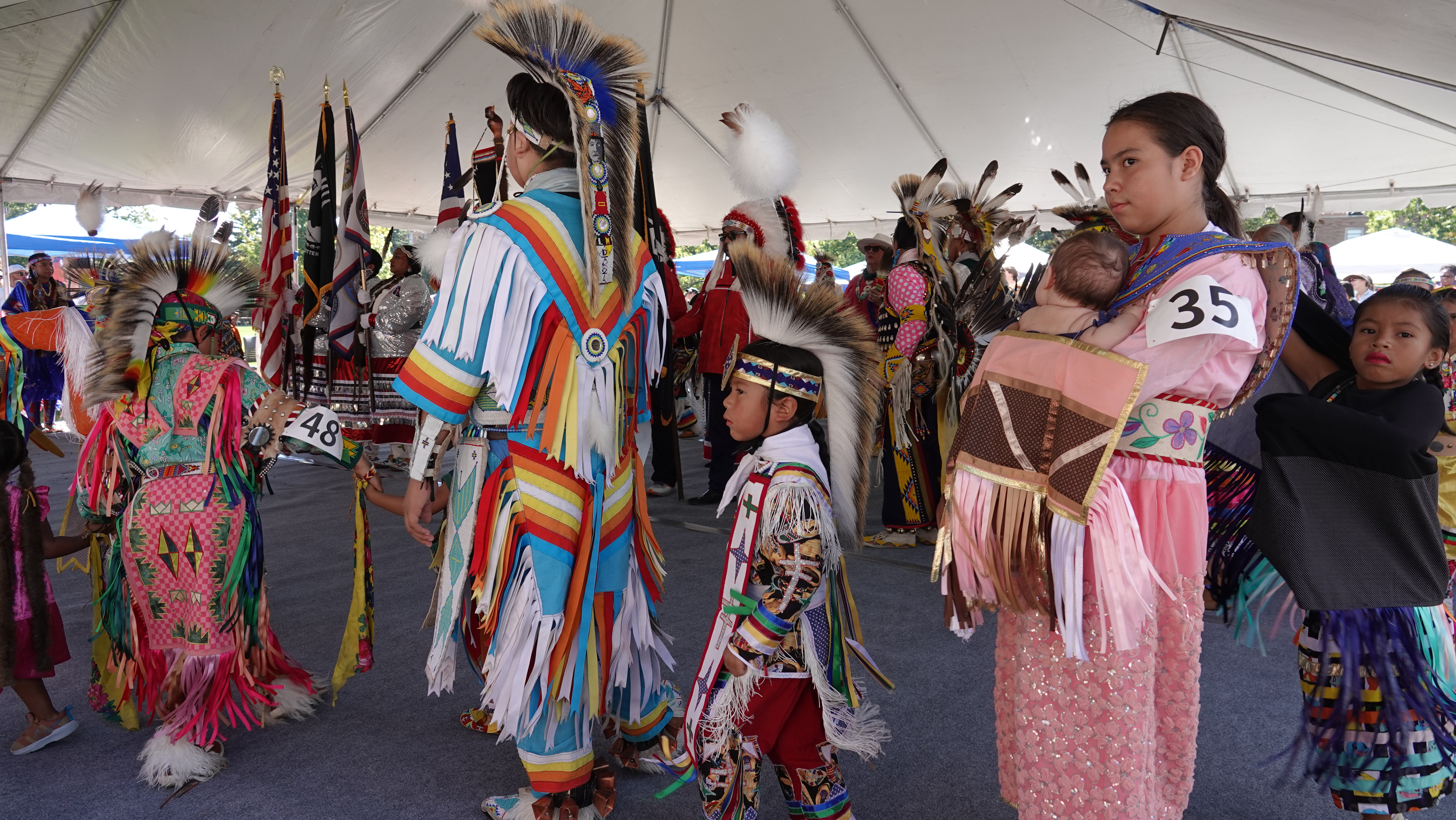
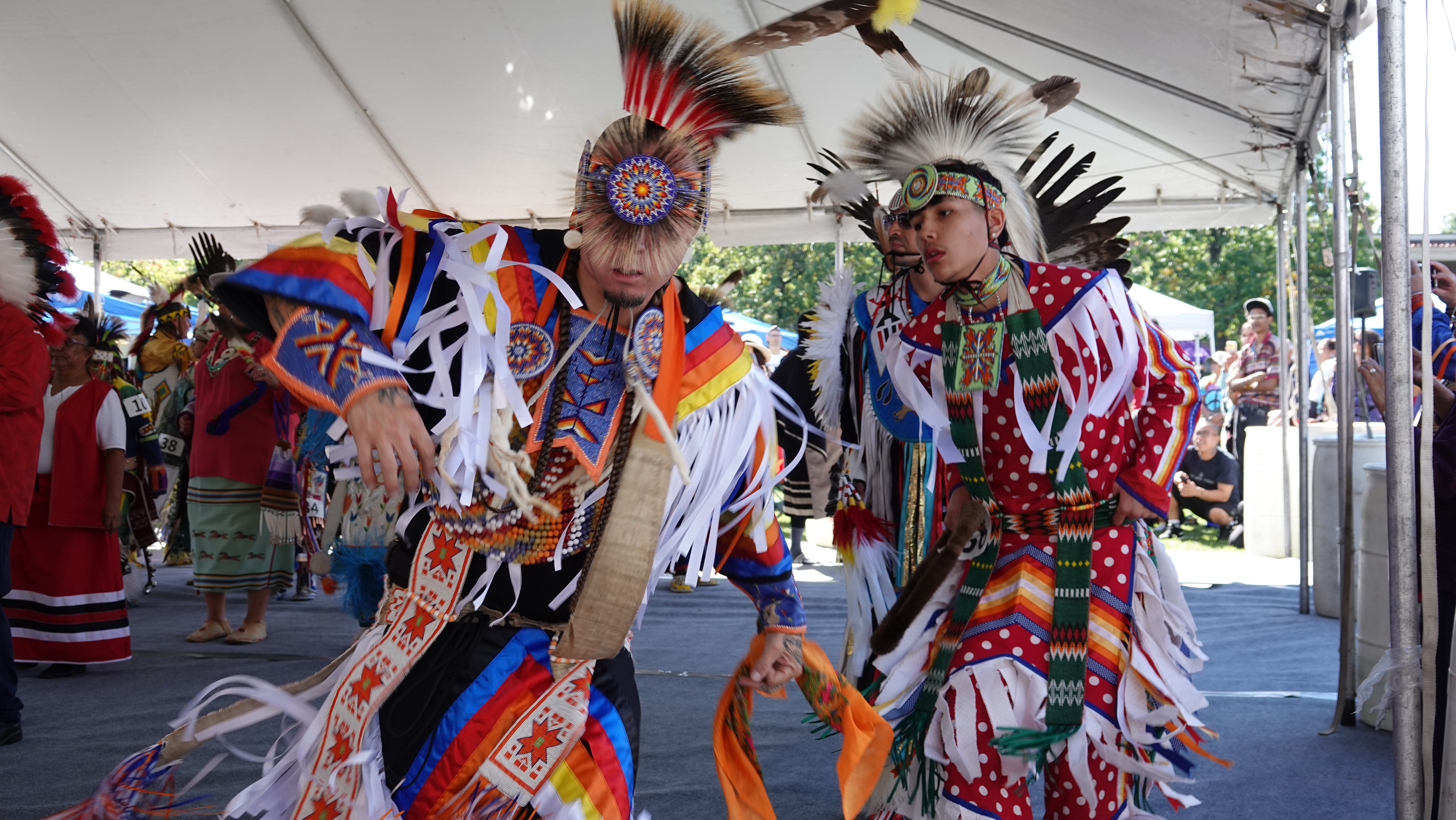
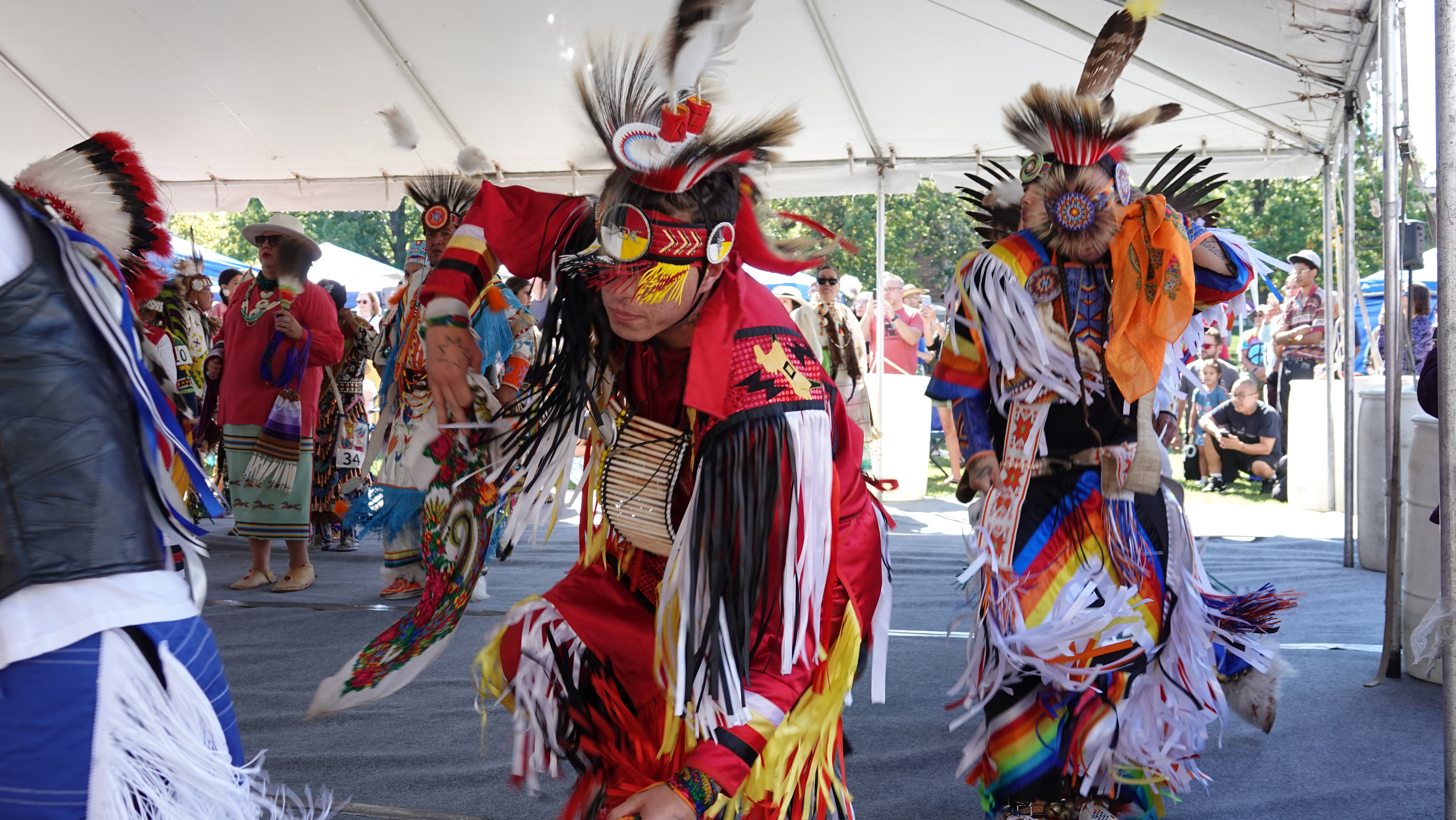
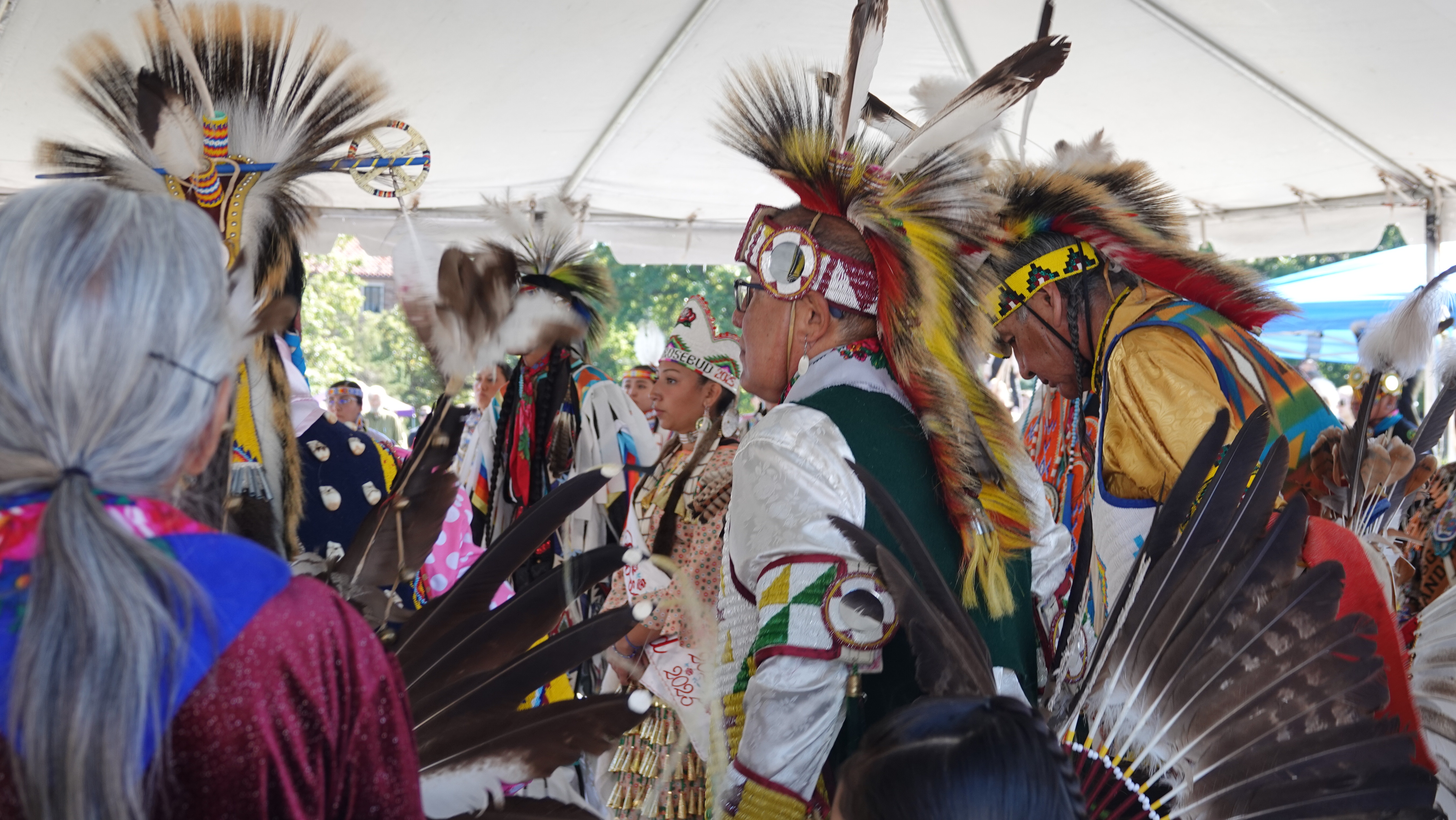
The Heartbeat of the Powwow returned to the University of Colorado at Farrand Field on Sept. 28, 2024. (Melodie Miller | Photographer)
Listen to powwow musician Tony Crank at the University of Colorado Farrand Field Sept. 28, 2024. The Colorado American Indian Tribes In-State Tuition Act (CO SB 21-029) was passed to allow eligible students to pay in-state tuition at Colorado public universities and colleges.(Melodie Miller | Photographer)
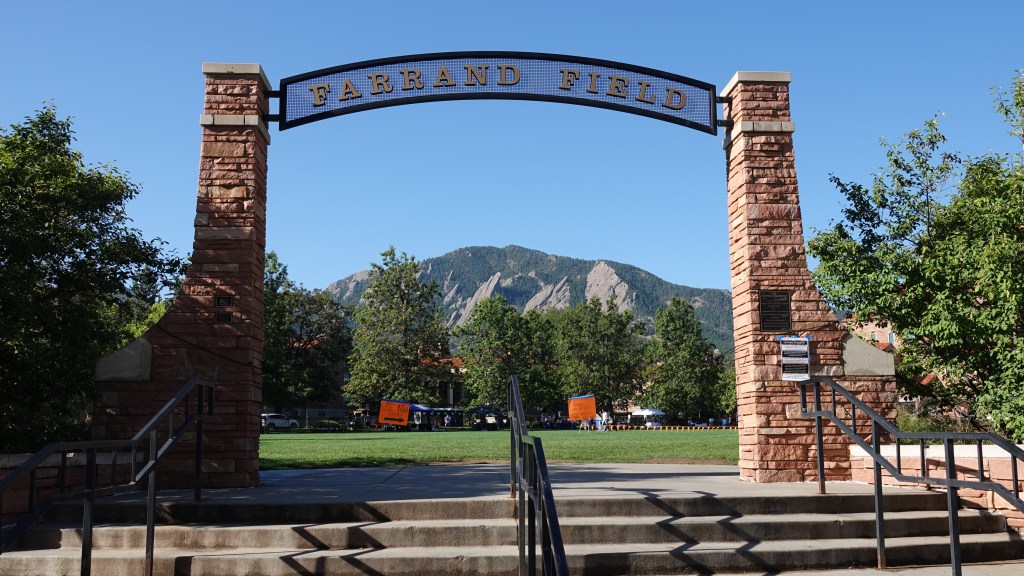
I went to historic Farrand Field on the University of Colorado campus in Boulder for the 2024 Native American powwow. It was a beautiful bluebird day without a cloud in the sky. The campus was built on the traditional territories and homelands of the Arapaho, the Cheyenne, and the Ute nations. The powwow is part of the universities commitment to continually improving and enhancing engagement with indigenous peoples locally and nationwide. It is the first powwow on campus in 23 years.
Farrand Field was named after Livingston Farrand, the university’s fourth president who served from 1914 to 1919.
After 23 years, the powwow returns to campus as a celebration of faith and tradition for the indigenous peoples of Colorado.
The 2024 CU Boulder Powwow was organized by the Oyate Native American and Indigenous Student Organizations on campus. It was a collaboration between the Center for Inclusion and Social Change (CISC), the Center for Native American and Indigenous Studies (CNAIS), the Oyate Native American and Indigenous student group and the native Graduate Student Group and the Theater and Dance Department.
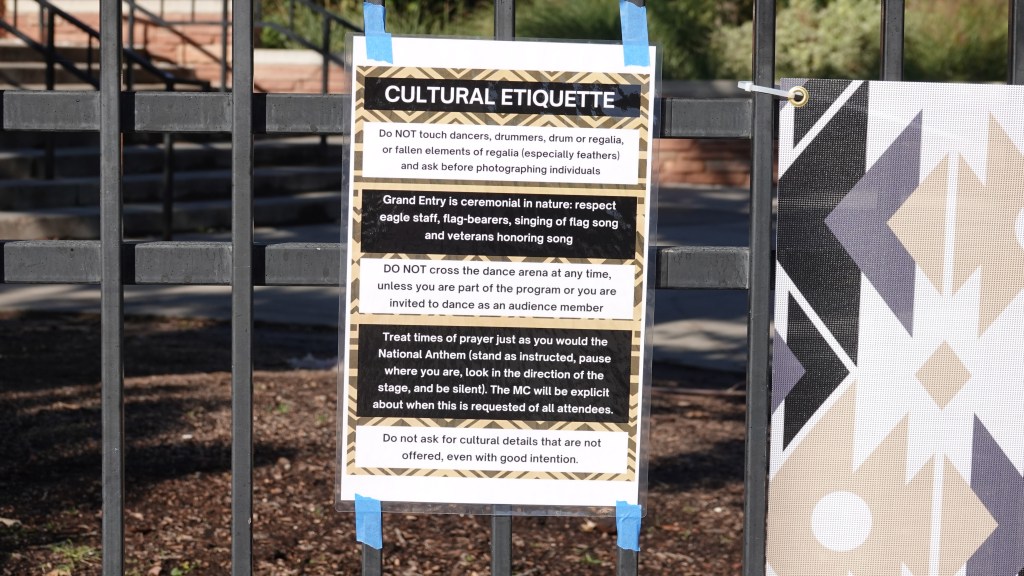
Cultural etiquette was encouraged with guidelines posted as reminders for the audience. The aim was to elevate understanding and sensitivity towards respecting the customs of Native American nations.
Cultural etiquette is a unique set of understandings that guide people when interacting in different societies. At the powwow, these guidelines include not touching the dancers, their regalia, instruments or fallen feathers. “Do no ask for cultural details that are not offered even with good intentions.” Sensitivity and respect for these norms fosters positive cross-cultural understanding and connection.
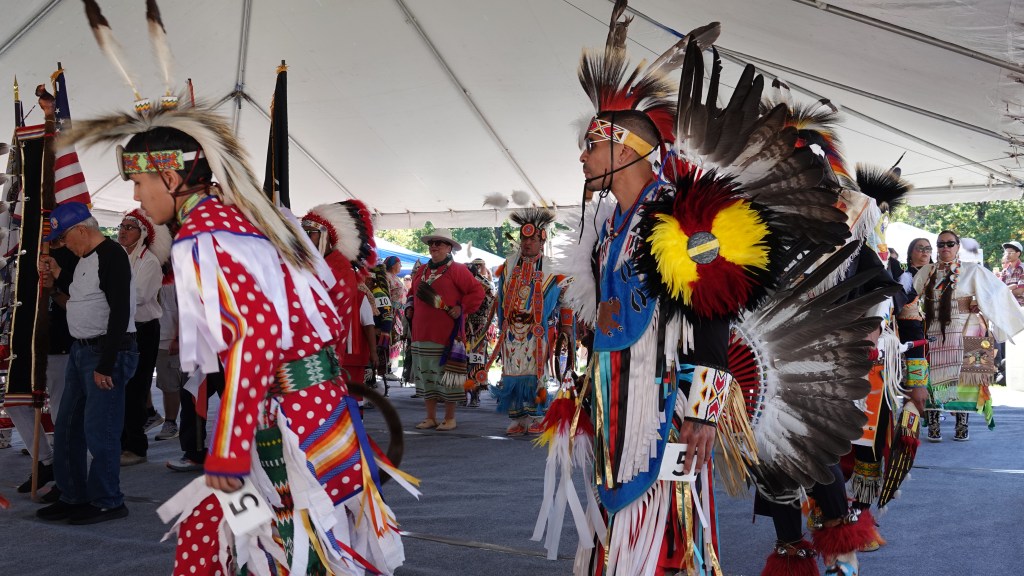
Grand entry for the powwow. (Melodie Miller | Photographer)
After 23 years, the powwow returns to campus as a celebration of faith and tradition for the indigenous peoples of Colorado. The grand entry victory song and two rounds of intertribals.
Saydie Sago told me she went to the last powwow 23 years ago, in 2001 with her parents when she was a small child. We are “bringing some Cheyenne, and Rapaho community from northern Rapajo members, southern Rapaho members, and Cheyenne members to come dance and be a partner. Of course, they were part of one of the many tribes that are historically tied to this part of the land and also Colorado. So we are inviting them back to their ancestral lands,” Sago said.
Saydie Sago, one of the powwow organizers, is a fourth year PhD student here at CU. (Melodie Miller | Photographer)
“I know that my parents, I think, have actually been to the powwow 23 years ago. So it’s really nice to see it coming back, Redhorse said. “I’ve been going to powwows ever since I was one of the tiny tots. My mom put me in a jingle dress dance, and I got up on the dance floor. I really hope we can continue this ongoing tradition.”
Shaleen Redhorse is an aerospace engineering student here at CU. She danced powwows when she was younger. (Melodie Miller | Photographer)
I spoke with CU graduate Benny Shendo, the vice chancellor of Native American Affairs, about the future for native american students in states outside of Colorado.
“We only have two federally recognized tribes here in the state of Colorado. But then there’s 46 other tribes that have historical connection to the state of Colorado,” Shendo said. Colorado state “passed the law signed by the governor that will allow any students from those tribes to come into state tuition. Not only will this increase our Native American enrollment, both undergraduate, graduate, but also faculty and staff.”
“It’s a new day,” Shendo said. “It’s a new day, you know, it’s for us, and we’re hoping to elevate the presence of our native students at all levels.”
CU graduate Benny Shendo, the vice chancellor of Native American Affairs is a state senator for New Mexico. (Photograph courtesy of Common Ground Rising.org Blog)
Powwow Gallery
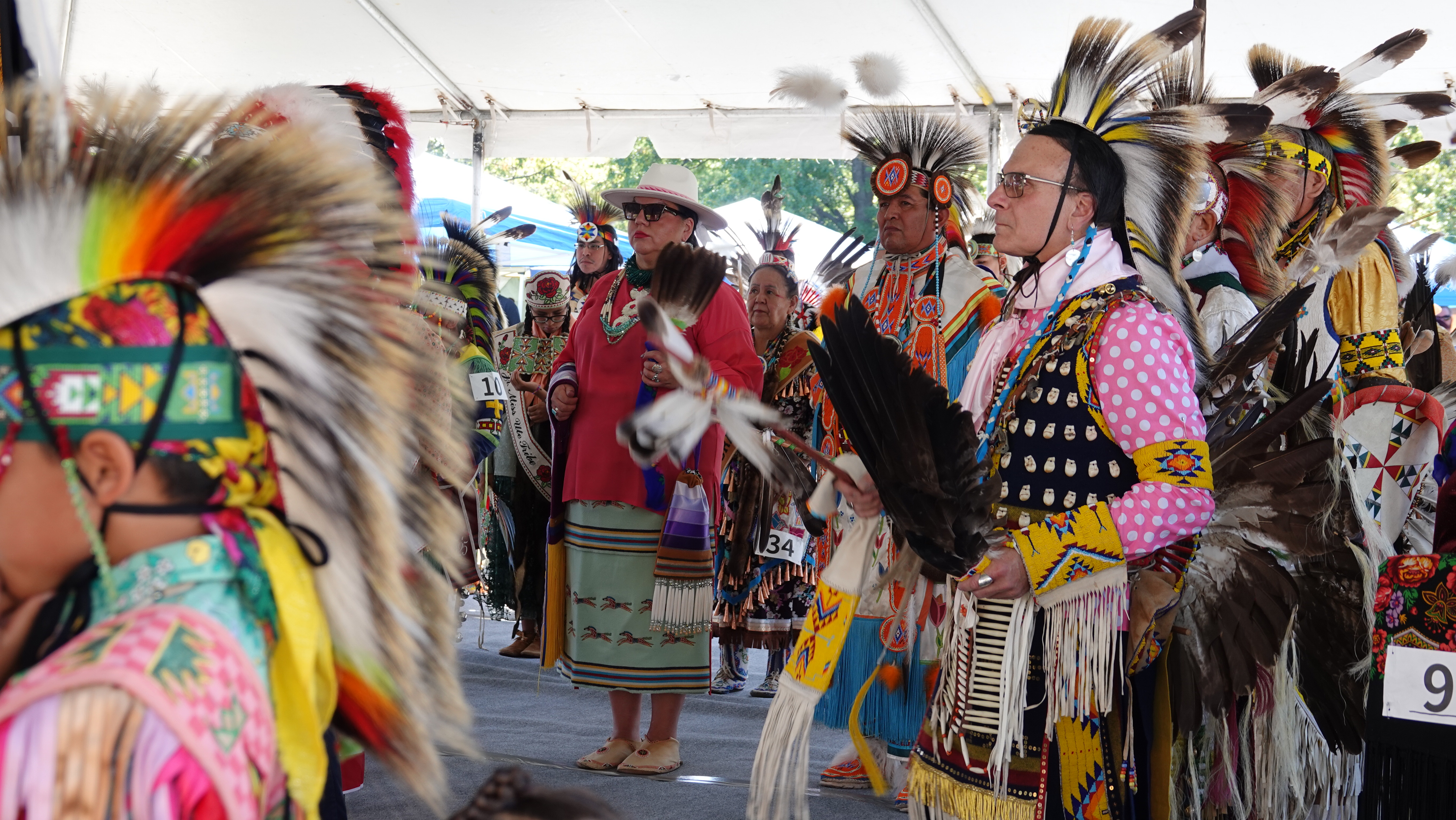
Welcome to the 2024 Powwow on the University of Colorado at Boulder campus. This event offers an exhilarating experience that spans 200 years of cultural history . Every moment is an opportunity to witness and partake in the spiritual ceremony of the powwow. (Melodie Miller | Photographer)
The University of Colorado Boulder is a public research university in Boulder, Colorado. It was founded in 1876, five months before Colorado became a state. Colorado’s flagship university honors and recognizes the many contributions of Indigenous peoples in the state. The university acknowledges that it is located on the traditional territories of the Cheyenne, Arapaho, and Ute. It is also on the ancestral homelands of many other Native American nations. The university is dedicated to recognizing and amplifying the voices of Indigenous CU Boulder students, staff, faculty and their work.
Mountains northeast of Durango brings fourth-highest harvest of mountain lions
By Colorado Student News Service
Friday, Nov 1, 2024 11:00 AM Updated Friday, Nov. 1, 2024 5:59 PM
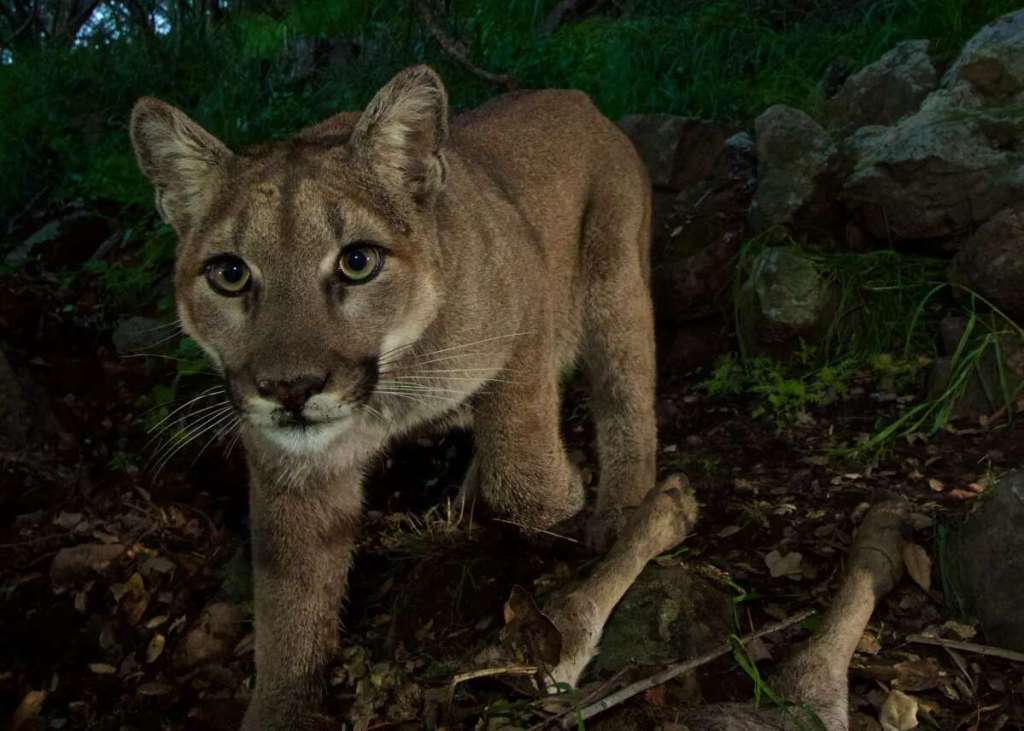
Records from Colorado Parks and Wildlife shows 2,600 hunters killed 502 mountain lions in 2022-2023, the most recent period for which statistics are available. (Courtesy of the National Parks Service, via The Colorado Sun)
In the early morning chill of Colorado’s rugged wilderness, the rhythmic panting of hounds echoes through the trees as they close in on their elusive target, a mountain lion.
For hunters, the video from a Durango outfitter, shows a moment steeped in tradition and survival skills, but such moments may soon disappear from the Colorado landscape. On Nov. 5, voters will decide the fate of mountain lion and bobcat hunting in Colorado, with Proposition 127 seeking to ban the practice entirely.
The group “Cats Aren’t Trophies” gathered about 188,000 signatures to put a measure on the November ballot.
While the group’s name references “trophies,” Colorado Parks and Wildlife considers trophy hunting to be illegal in Colorado. Hunters are expected to eat and use what they kill, based on a hunting brochure from the state agency.
Public records from the state agency show a highly regulated hunting environment where 2,600 hunters killed 502 cats in 2022-2023, the most recent period for which statistics are available.
The fourth highest number of mountain lions killed – 11 – came from an area in the mountains northeast of Durango and La Plata County. The rest of the mountain lions killed around the state were in the single digits, mostly in remote, mountainous areas.
The 21 mountain lions killed in a remote area northeast of Meeker in 2022-2023 was the largest number for any area in Colorado, based on public records provided by Kara Van Hoose, a Colorado Parks and Wildlife spokeswoman. The next largest number of mountain lions killed were in a mountainous southern part of the state near Interstate 25, where 16 were killed in one Colorado Parks and Wildlife statistical area and 15 were killed in the neighboring area. Colorado Parks and Wildlife maps do not follow county lines around the state but are numbered by region.
Van Hoose declined to comment on specific questions related to Proposition 127 so as to remain neutral during the election period. She declined to comment on how current legal hunts affect the economy or how banning mountain lion hunts could affect wildlife and cattle, among other things. Colorado Parks and Wildlife started regulating hunting licenses for mountain lions in 1965 after the mountain lion population declined, according to information on the state agency’s website.
Van Hoose said that Colorado Parks and Wildlife surveys wildlife populations by helicopter, among other things, to decide how many licenses will be available to hunters every year.
“We set licenses depending on a lot of different factors. There are environmental factors and external factors,” Van Hoose said.
The most emotional part of the hunting discussion appears to be how some Colorado outfitters use GPS-collared dogs to track and hunt mountain lions. Hound hunting is legal in Colorado.
Some 88% of Colorado residents disapprove of hunters using dogs to help with hunting and 78% disapprove of “trophy hunting” of mountain lions, according to an August Colorado State University study published in the Society for Conservation Biology journal.
Kelly Maher, a Colorado hunter, said she teaches her children to honor the animals that the family hunts “by consuming and using every part of the animal.” She said proponents of Proposition 127 don’t like the hound hunting, “but the cat needs to be stationary to identify its sex and status.”
The people who gathered signatures to get Proposition 127 on the ballot feel that hunting mountain lions with GPS-equipped dogs “gives our hunters a bad name for violations of fair chase,” according to Mark Surls, the volunteer and outreach coordinator for the group.
A group supporting continued mountain lion hunting is called Colorado’s Wildlife Deserve Better, which includes funding help from the Colorado Cattlemen’s Association and the Colorado Wool Growers Association. And the Board of Mesa County Commissioners in Grand Junction unanimously approved a resolution opposing Colorado Proposition 127 on Tuesday, Sept. 24.
Colorado Parks and Wildlife requires hunters to take an exam and buy a license to hunt mountain lions. About 3,800 to 4,400 mountain lions live in Colorado, according to the state agency, but most people never see them because they’re active at night.
About the Colorado Media Project
The University of Colorado journalism program has a $10,000 grant from the Colorado Media Project, as you know, and we’re working with eight newsrooms this semester in rural and underserved communities mostly around the Western Slope, including The Journal, Ark Valley Voice, Aspen Times, Bucket List Community Café, Colorado Newsline, Denver Urban Spectrum, Rio Blanco Herald Tribune, Sopris Sun/Sol del Valle and Enterate Latino.
Readers can the Colorado Media Project and the class by contacting Elizabeth Potter and the students at elizabeth.potter@colorado.edu.
Colorado Media Project | Courtesy of Colorado Media Project
Common Sense Institute Colorado, a nonpartisan group interested in protecting Colorado’s economy, reports that Proposition 127, if passed, would cause an overall “$4 million to $6.2 million in lost Colorado Parks and Wildlife revenue.”
Of the total, the Common Sense group says there would be a direct loss of $410,000 from mountain lion and bobcat hunting licenses. The group estimates that Colorado Parks and Wildlife would lose a separate $3.6 to $5.8 million in elk and deer hunting permit revenue because the increased mountain lion population would keep the elk and deer population down.
Reporting by Adair Teuton, Bella Hammond, Caniya Robinson, Jackson Jupille, Lincoln Roch and Melodie Miller.
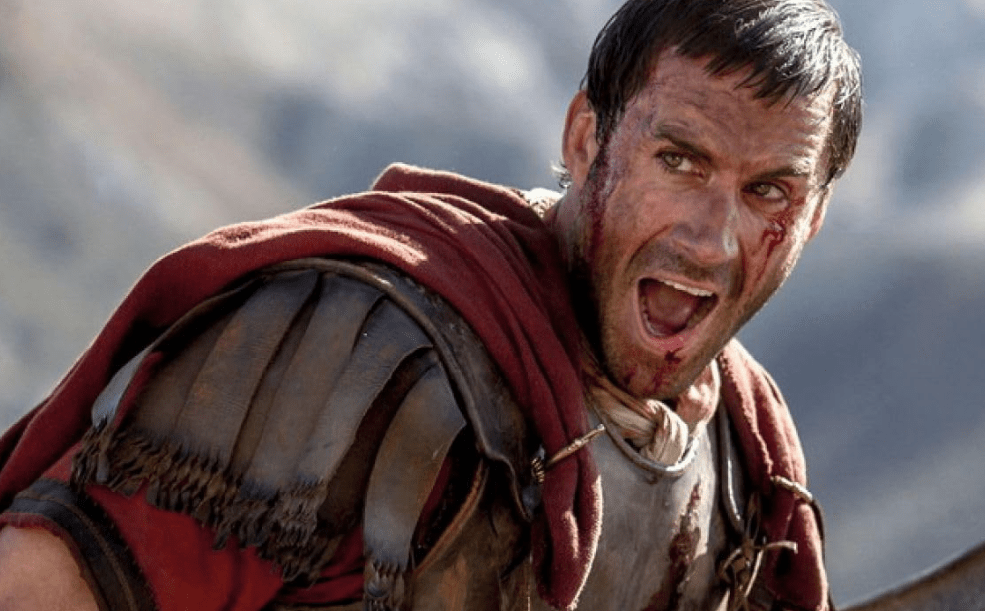
Kevin Reynold’s Risen (2016), set in 33 CE, stars Joseph Fiennes as Clavius, a Roman Tribune in Judea who is tasked with finding the missing body of Jesus Christ.
The Heartbeat of the Powwow returned to the University of Colorado at Farrand Field on Sept. 28, 2024. (Melodie Miller | Photographer)
Listen to powwow musician Tony Crank at the University of Colorado Farrand Field Sept. 28, 2024. The Colorado American Indian Tribes In-State Tuition Act (CO SB 21-029) was passed to allow eligible students to pay in-state tuition at Colorado public universities and colleges.(Melodie Miller | Photographer)
After 23 years, the powwow returns to campus as a celebration of faith and tradition for the indigenous peoples of Colorado. The grand entry victory song and two rounds of intertribals.
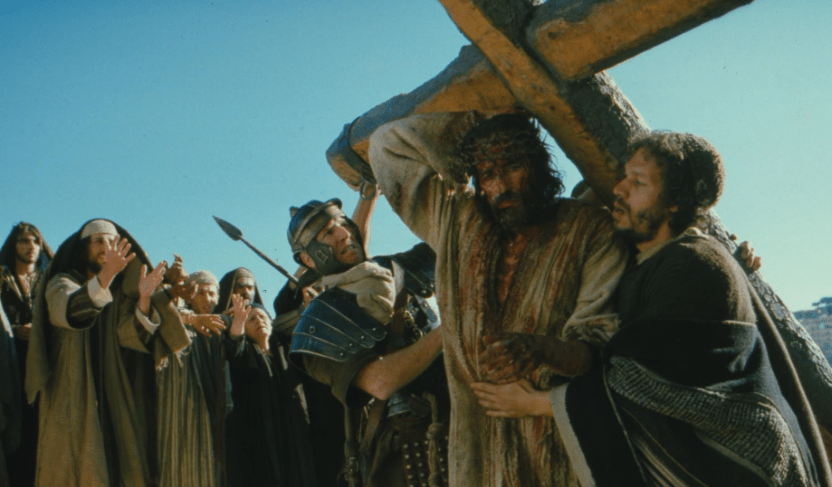
Jim Caviezel stars as Jesus Christ in Benedict Fitzgerald’s and Mel Gibson’s The Passion of the Christ. (Photo courtesy of IMBD, The Passion of the Christ).
How the Pliny’s ancient writings created a lasting impact by inspiring Mary Shelley’s “Frankenstein” and Charles Dickens “A Christmas Carol.”
“Pliny the Younger” refers to Gaius Plinius Caecilius Secundus, a Roman author and lawyer who witnessed the eruption of Mount Vesuvius in 79 CE is most famous for his collection of letters. “Pliny the Elder” refers to his uncle, Gaius Plinius Secundus, a renowned natural historian who died during the eruption of Mount Vesuvius in 79 AD. Pliny the Younger is the nephew of Pliny the Elder, and both are known for their significant written works from ancient Rome.
Pliny the Elder. (Left) Pliny the Younger. (Right). Encyclopedia Britannica. Mary Evans Picture Library Ltd / age fotostock .
Pliny the Elder wrote the Natural History, an encyclopaedic work of uneven accuracy that was an authority on scientific matters up to the Middle Ages.
The presidential election ended on Tuesday. Multiple ballot drop boxes and the University of Colorado Boulder Memorial Center voting poll closed on the CU Boulder campus at 7 p.m.
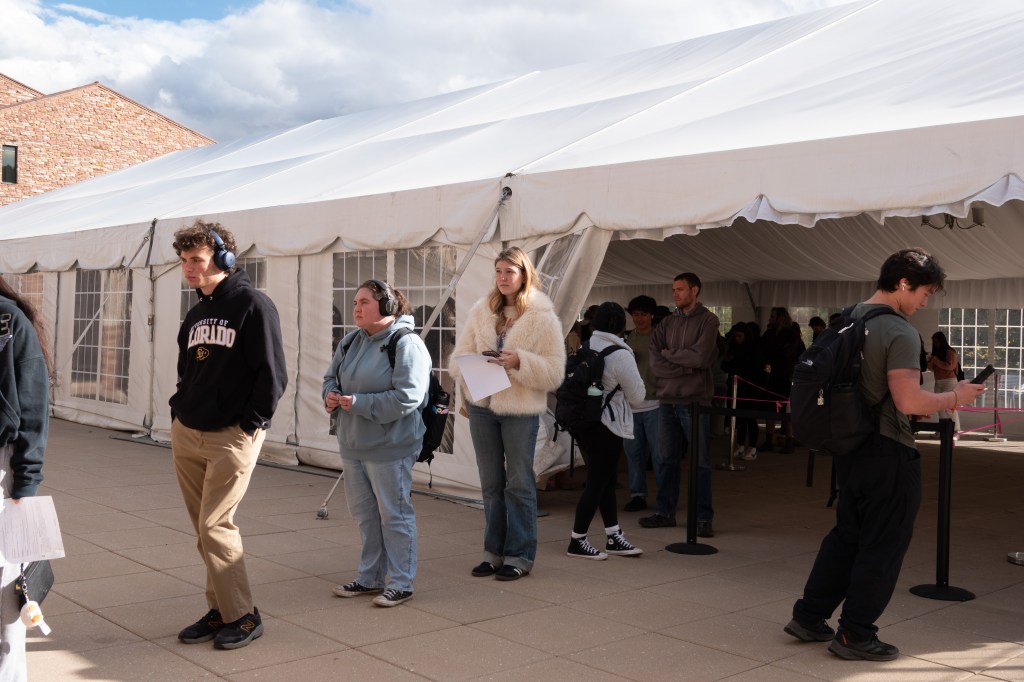
Students lined up at the entrance to the Glenn Miller Ballroom inside the UMC at near-freezing temperatures, the line extended out the door. The warming tent housed many voters who waited to exercise their constitutional right.
University of Colorado, Boulder students wait in line to vote outside the Colorado Memorial Center. (Melodie Miller | Photographer)
“Colorado typically boasts one of the highest turnouts for young voters in the entire country,” said Nicole Hensel, the director of New Era Colorado.
First-time voter Haley Hastedt, a senior at CU Boulder, expressed her concerns.
“I am extremely nervous about the election today,” Hastedt said. “I believe this is the most important election of our lifetime, and at this point, I think it could go either way,.”
University of Colorado, Boulder students register to vote at the Colorado Memorial Center. (Melodie Miller | Photographer)
Many first-time voters scrambled for identification cards and asked volunteers for information about how to register and vote. In-person voters show ID and “skip the signature verification,” which speeds up the process, according to Mircalla Wozniak, a communications specialist for Boulder County. All Colorado voters can register with Ballottrax to receive confirmation text messages that their ballot was received and counted. If there is a problem, Boulder County will notify the voter.
Thomas Uroskie, a CU Boulder student, waited in line at UMC. “This is my first time voting. I am feeling kind of weird. I’d rather vote in person than a mail-in ballot and get the experience,” Uroskie said.
Election day in Boulder unfolded smoothly after concerns heightened over ballot box fires reported in Washington and Oregon by CNN on Wednesday, October 30. Ballot box security “didn’t come out of nowhere. We have mechanisms for this,” Wozniak, said. “We have a regular pick-up schedule as we get closer to the election.”
New Era volunteers positioned outside the University Memorial Center answered voters questions. (Shutterstock | Photographer)
Georgia Moreland, a senior majoring in English at CU Boulder, said, “I’m nervous for the state of the country and how divided we have become due to this election.”
The FBI positioned election coordinators and command posts nationwide to enable streamlined communication and rapid response to ensure the safety of election workers, voters, ballot boxes and polling stations.
“Every FBI field office will stand up an election command post to coordinate with their local and state partners,” FBI spokesperson Vikki Migoya said. “Our focus is on protecting elections from potential threats so Coloradans can have confidence in their democratic process.”
The CU Division of Public Safety partnered with the CU Boulder Police Department to secure the UMC polling location and the rest of campus on election day. Academic buildings were locked with a Buff OneCards required for entrance “as part of ongoing efforts to enhance campus safety and minimize disruptions,” CUPD spokesperson Christine Mahoney said.
University of Colorado, Boulder students exit the University Memorial Center. (Melodie Miller | Photographer)
“Our campus is definitely encouraging the get out the vote, and we’re very very happy students are engaging in their civic duty,” Mahoney said. “We’re here to provide safety so they can do that.”
New Era Colorado was “on eight college campuses all across the state,” Hensel said, making sure that students had their voting rights protected “until every lost voter was through the polls at 7 p.m.”
New Era Colorado volunteers answer voters questions outside the University Memorial Center. (Melodie Miller | Photographer)
New Era volunteers positioned outside the University Memorial Center answered voters questions. (Melodie Miller | Photographer)
Although safety was a priority on campus, the results of the election troubled Elena Sedin, a junior in Philosophy at CU, Boulder. “I couldn’t relate to half of the U.S. population. I felt like a lot of people hate me through their vote,” Sedin said
New Era director Hensel said she felt “confident in the integrity of campus elections and knows that Colorado student election boards all across the state were working to ensure that students have safe and secure elections.”
New Era Colorado is a non-profit 501(c) political advocacy group that aims to educate and mobilize young people where they can have the greatest impact. New Era Colorado is a free resource for voters who want to know more about the ballot initiatives.
University of Colorado, Boulder students climb the stairs to the University Memorial Center to place their vote. (Melodie Miller | Photographer)
First-time voter Arielle Buzil said “It is very nice to vote, it feels empowering. It’s a little overwhelming, but I think it’s good because we’re all coming together and making change to the world.”
The Boulder County ballot included the presidential race, CO state and local candidates, measures, and the state constitutional Amendment 79 that would protect the right to an abortion. Colorado voters passed Amendment 79 with 1,736,436 votes, an 81% ‘yes’ vote by Boulder County and a 61.9% ‘yes’ vote statewide, as of 8:35 p.m. Thursday, Oct. 7.
CUPD offers a non-emergency line at 303-492-6666 to report any concerns that violate campus policies and 911 in an emergency.
I live in Boulder, Colorado and create AI prompted images to match your story and marketing needs.
I am a writer, teacher, tutor, designer and artist. I have spent my career creating commercial products that people use to enrich their lives. I have a bachelor’s degree in English Literature from the University of Colorado. I am currently studying French there. I am also tutoring students in the Writing Center. While I working with English as a second language students I became inspired to write and illustrate simple French stories. Luc Apprend à Partager is the first in this series.
In the Luc Apprend series, my goal is to create a sympathetic mouse character. I want the character to be relatable. Children will adore and want to emulate this mouse. The stories are simple and entertaining. The mission is that Luc’s character will encourage positive behavior while readers are learning French and English words.
In Luc Apprend à Partager, Luc learns the importance of sharing after he encounters a shop keeper who wants to keep all his food for himself.
Luc Apprend à Partager – Microsoft Designer
I created this group of AI generated images with detailed word prompts to build on a model image. I worked to maintain consistency in the setting, place, and time. The character’s faces and clothing remained consistent. I used Microsoft Design.
A Sublime Experience – Microsoft Designer
These sublime ferry images were created to capture the feeling of a dark winter’s night in the Northwest. The main character commutes home from work via Seattle to Bainbridge Island, Washington. This night follows the discover of a female murder victim in the parking lot near the ferry dock. The perpetrator was still at large.
Artifacts of a Murder: The Dead Girls Paintbrushes – Microsoft Designer
These AI images were created as imagery for the introduction to my story Artifacts of a Murder. The soft brush bristles and the pale, gentle blond wood color scheme was used intending as a contrast to the violence of murder. The handles are smooth and polished as a professional killer.
The Frozen Castle, a Murderous Tale – Microsoft Designer
This is the cover image for a gothic story about a women who marries a mysterious, wealthy man who transports her to his castle in Scotland where she is imprisoned and her youth is slowly drained from her soul to keep his 200 year old mistress from aging.
My Glamourous Career: A Memoir of Designing for U.S. Special Forces – Microsoft Copilot
I generated these AI images to set the dramatic mood of danger that is captured in my memoir about designing apparel for U.S. Special Forces to hunt Osama bin Laden in the Hindu Kush mountain range.
Fiona’s paintbrushes leaned at an eighty-degree angle inside the utility jar that sat on the easel shelf. The paintbrush’s heights were uniform, made of dark blond, smooth bamboo spindles. The bamboo spindles stood eight inches tall with a diameter of seven millimeters. A dark black, copper-clad ferrule circled the top of each spindle, holding the bristles in place.
The tip of one spindle was wrapped with a 2-millimeter open loop attached inside a small hole, glued to the moon-shaped head of the brush. Each outer bristle was made of soft mink belly hairs and the core was made of firm hairs taken from the spine of a wild boar.
Printed on the original paintbrush packaging the manufacturer guaranteed the bristles would produce “smooth, dynamic strokes when both light or heavy pressure was applied.”
The bristles were clean and still damp from washing and pointed to the ceiling like boot camp soldiers falling out of rank. The name YASUTOMO BAMBOO CALLIGRAPHY BRUSH was engraved in a manually burned branding method at the lower third of the spinal. The engraving was coarse-looking and ruff to the touch, emblematic of Fiona’s temperament.
*************
Sara reached inside the bronze-colored storage shelf labeled ‘B.’ The box was wrapped in newsprint paper that was faded on the corners. Handwritten in black felt tip pen was the name ‘Fiona Xi, 2018, Evidence.”
Artwork created with Microsoft Copilot by Melodie Miller
“The Strange Kingdom” is intended as an anthology series that includes various genres of fantasy, science fiction, suspense, horror, drama, and psychological thrillers. However, all episodes have macabre and unexpected twists that tend toward amoral and antisocial themes where the anti-heroes and villains usually succeed.
In the pilot episode, The Magical Mountaintop acts metaphorically as an imaginary world. Mindy has lived there since she retired from ski racing because of an injury. The concept of a magical mountaintop alludes to a castle concept. This concept might be found in knight’s tales. Examples include Marie de France’s “The Lais of Marie de France” and Chrétien de Troyes’ “Arthurian Tales.” In these stories, knights find damsels in distress to rescue them. However, in this episode, Mindy is unknowingly attempting to rescue herself. None of the characters have altruistic natures or ambitions.
The Magical Mountaintop is inspired by Tennessee Williams’ play titled Magical Tower. In the play, two young, newly married lovers try to make a go of it. However, the hardships of life prove more potent than their love.
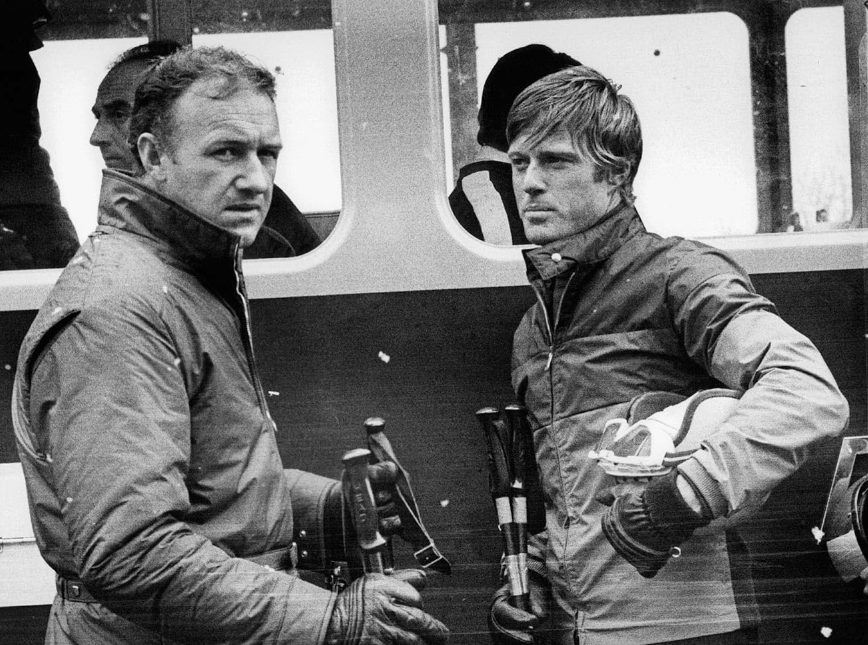
Downhill Racer, Gene Hackman and Robert Redford (Courtesy of IMDB.com)
Downhill Racer (1969) Movie Synopsis: David Chappellet (Robert Redford) is an arrogant and overly confident downhill skier. On the Olympic ski team but standing in as an alternate, he is called to Switzerland to compete after a teammate is injured. He quickly becomes an adversary within the team through his smug behavior and unconventional techniques on the slopes, falling into conflict with his coach (Gene Hackman).
“What’s past is prologue.”
William Shakespeare, The Tempest
An industry was born when a handsome and rugged Coloradan glamorized the sport of skiing and America began its life as a world contender on the international slopes of ski competition.
Before Gore-tex and waterproof breathable fabrics I was a young girl in search of an identity. Everything that happened up to this point will set the stage for what is to come thereafter.
It was the first day at a new school, Junior high, seventh grade. I felt small and solitary.
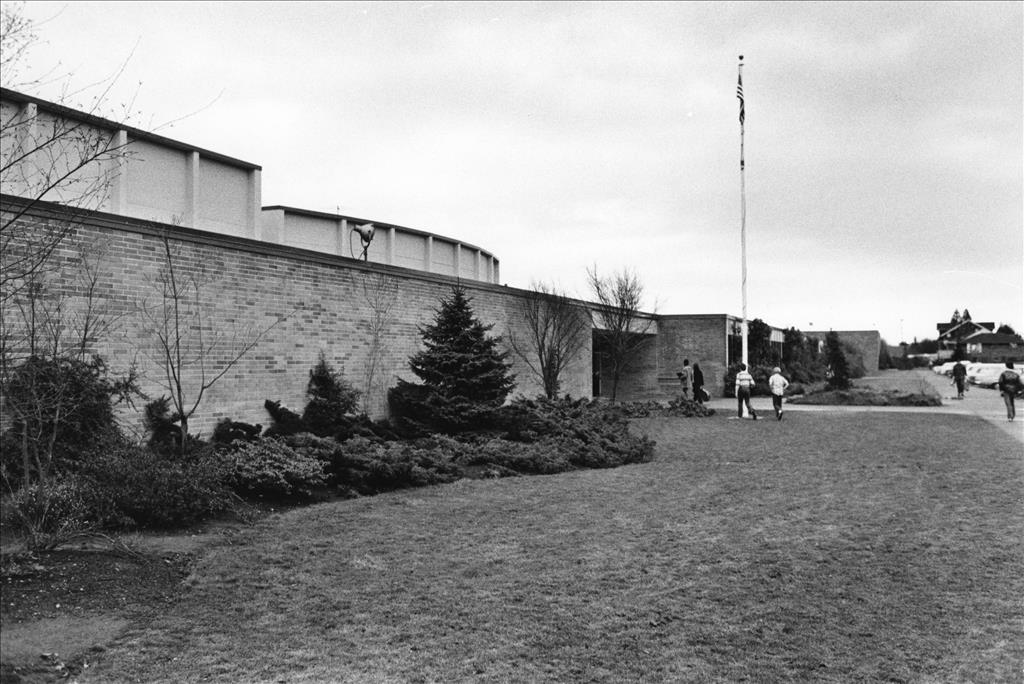
Marcus Whitman Junior High School, Seattle Washington (1969) (Courtesy of Marcus Whitman Junior High School Archives)
A short girl, like me, with a blond bobbed haircut, stopped me in the hall and said, “My big sister said I should find the cutest girls in the school and make them join my gang. You’re cute, you’re in my gang. Get a ride on Sunday to my house and we’ll go see Down Hill Racer? My name is Dev.”
Dev was one of the “cool girls” at school.
Sunday arrived and my mom drove me to the house of the “cool girl” named Dev with the blond bobbed haircut. She wanted to watch Robert Redford ski fast and I liked to ski so it sounded good to me.
I was in Seattle. It was raining. I didn’t know who Robert Redford was.
I wore a short dress because it was in style, and I am talented in the way of fashion. I read Vogue. My legs look good.
My mom drove very fast to Blue Ridge and stopped the car with a jerk at the foot of a very steep driveway that led to a newly, mid century modern house.
Mid-century modern house (Photograph non-accredited)
I push hard with my whole body on the heavy station wagon door that creaked open to an unstable position which I hold in place with one arm.
Plymouth Chrysler (1969) (Photograph courtesy of MyMopar.com, Youtube)
Swinging my bare legs out of the car and watching for puddles, I placed my two feet carefully onto the wet driveway. The door slammed with a crash behind me and I remember slamming my fingers in the car door when I was five. But that didn’t happen this time. My mom drove away.
I walked up the flawless path that led to the house, and along the way, I thought, “My new friend lives in a rich person’s house.” I see a gardener working outside in the rain, trimming the trees with professional tools. I thought, “That man is Japanese, and he is a long way from home, gardening for a stranger.”
He appeared to work in a very serious manner, making the boxed hedge very sharp and clipping the miniature leaves with great force.
Japanese Gardens at Cedar Hill, Roxbury Connecticut. (Photo courtesy of The Garden Conservancy.org)
I knocked on the front door, and my knuckles turned red with repeated impact. It was cold outside, and my good-looking legs wished they were covered with pants. Then I rang the doorbell. The right-hand side of the royal red lacquer-painted, double door opens mysteriously slowly, and I expect to see the black and white version of Nosferatu’s claw-like hand emerging along its edge. Instead, a grand-motherly looking person stood in front of me.
“Hello,” she said, “I’m Dev’s mother.”
“Dev’s mother looks ancient, as old as my grandmother, and she is rather plump,” I thought.
My mom was skinny and young; too young, I heard people say. Dev’s dad was a doctor; my dad lived in a different house than me and my mom was a waitress. I keep that fact to myself.
I stepped over the threshold into a colder and cavernous room that hung precariously over an ice-age ravine. It felt odd because my warm and crowded house sat firmly on the terra adjacent to a gully. This house was held in place by stilts sunk into the glacials silt.
“Might this house might slide down the hill at the next earthquake?” My neighbor’s house fell off its stilts in a mudslide and three people died: a mom, a dad and a newborn baby. I wondered when the rain would stop falling and hoped an earthquake didn’t happen now.
The clacking sound coming from my shiny new shoes hitting the slippery tile floor echoed across the room and bounced off the stark white walls.
Opposite the front door was one large, seamless window that looked west towards Puget Sound and out to the Olympic Mountains. It was the same view I saw from the city park near my house. My new friend, Dev, with the weird blond bobbed haircut, lived in a rich person’s house in her own private park.
The Puget Sound and the Olympic Mountains, from Seattle Washington (Photograph courtesy of Adobe Stock )
Dev appeared in the arched opening of the long hallway on the north side of the cavernous room.
“Come see my room,” she said.
She was wearing nice clothes, new clothes, which means something but I’m not sure what. I followed her down the hall. We entered a grand room with a garden view. She opened the top drawer of her dresser.
“Look at this,” Dev said.
I gazed at her socks, folded in pairs and arranged in groups by color, segregated by rigid dividers. It was a beautiful sight. My socks lie in a pile at the bottom of the dresser drawer that I share with my sister. Each morning we select a pair randomly, not concerned with finding its mate.
Dev was not an only child but a “surprise” she told me. She had two older sisters who were married. I couldn’t make sense of this familial arrangement.
“I get all the attention from my parents,” she said, “because I was a surprise.” I don’t understand what she means. I am the oldest of six children with a lot of surprises at my house, mostly stray dogs.
Two more “cool” girls arrived, and their clothes were nice and new. Mine were hand-me-downs from the “older girl” across the street from my grandmother. One of the “cool” girls, the one with dark hair, was wearing a button-down boy shirt with the tails hanging out over a knee length, A-line skirt made of fabric copied from a Chanel plaid. The other girl was wearing a mini, tailless shirt dress with bobby socks and brown and white saddle shoes that matched her hair. I dreamed of becoming a fashion designer so I was creating a mental archive of the clothes people wear.
“Let’s go,” Dev, the blond girl said.
We all piled into the grandmother looking mother’s German car that proudly displays an erect airplane propeller on its chest. “I Want You” from Abby Road played on the radio. We all sang along with the radio: “I want you; I want you so bad, it’s driving me mad, it’s driving me mad.” We all laugh. The rain continued falling from the sky and I am relieved to drive away from the cold, cavernous, “ready to slide down the hill in a mudslide” house where my friend Dev lives. I must be sure to never spend the night there.
Mercedes-Benz 280 SE (1969) (Photo courtesy of Carscoops.com, Youtube)
“Robert Redford, he’s so dreamy,” the dark-haired girl with the football helmet-shaped haircut said. Her name was Jan. Her dad was a doctor, and her mother was a doctor too. I’m not sure how that kind of thing happens. The other “cool” girl was named Marian and had dusty auburn color hair. She was the one whose hair color matched her shoes. Her hair was cut like a Chatty Cathy. Chatty Cathy was a long dead doll. Marian’s dad was a coroner, a “kind of a doctor” she tells me. I decide that when I get home, I will look in the dictionary for the definition of “coroner.”
Downhill Racer, Robert Redford (Courtesy of IMDB.com)
Something was happening. My new friends were smart, they had doctor dads and new clothes. I felt special.
My new friends had weird haircuts, and I wondered if I would need to cut my hair to be cool like them. My hair was long, parted down the middle, like Cher’s. All three girls had older sisters who told them “gross stories about boys.” When I babysit, I tell my younger siblings “The Tell-Tale Heart” story, and we all scream and laugh. I don’t have any “gross boy” stories. I felt young and immature with these girls. I was quiet.
The old-looking mother dropped us off at the movie theater. It was still raining. I had never heard of Robert Redford, but I don’t tell the other girls. I know that a downhill racer skis very fast on steep icy slopes and wins metals because I am a skier. Usually, the winners were French and named Claude. They wore tight suits that showed all their muscles and when they reach the bottom of the hill, they threw their arms up over their heads in surprise.
Downhill Racer, Opening Scene (Courtesy of IMDB.com)
“Down Hill Racer” started, and a violin soundtrack filled my eardrums while the camera panned over distant mountain tops that were not ski slopes. That seems strange. The soundtrack shifted to piano keys ominously plunking over a close-up of a ticking stop watch.
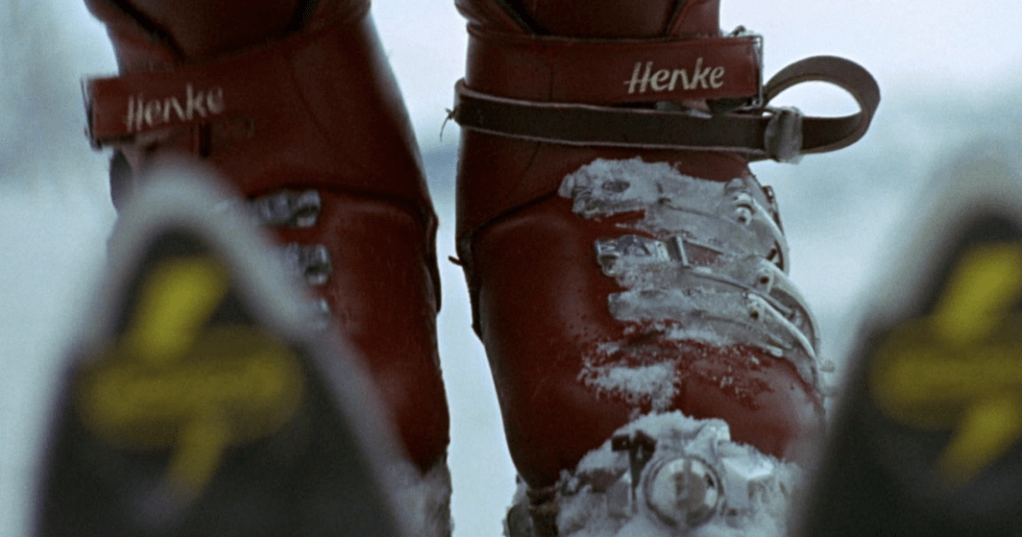
A faceless hand snapped a Look ski binding onto a red leather Henke boot with stainless steel buckles running up the front over the ski racer foot. The red leather boot stopped just above his unprotected ankle. The webbing ski strap pulled tight around the boot.
Downhill Racer, Opening Scene (Courtesy of IMDB.com)
A snug suit and nothing more covered the ski racer’s legs. A violin played dramatically as the camera zoomed in on a pair of long, narrow skis slicing back and forth like two hands carving a Thanksgiving turkey. The camera panned to the smooth face of a man who pulled his goggles over his eyes while the soundtrack shifted to the sound of a beeping heart. The man was wearing a USA Olympic ski team bib.
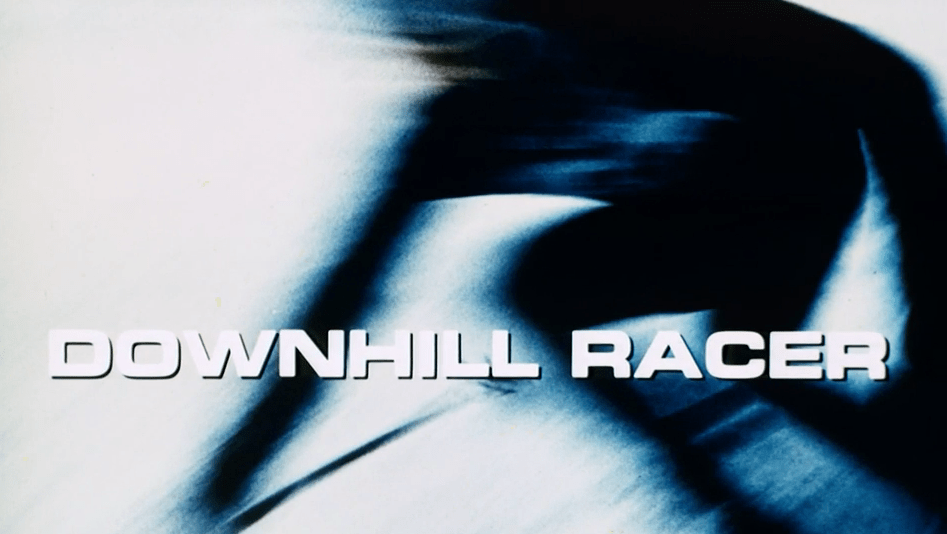
He launched from the starter’s gate crouched in a tuck then the frame froze and the title DOWNHILL RACER flashed onto the screen. The skier immediately caught his ski edge on a chunk of ice and crashed.
Downhill Racer, Opening Scene(Courtesy of IMDB.com)
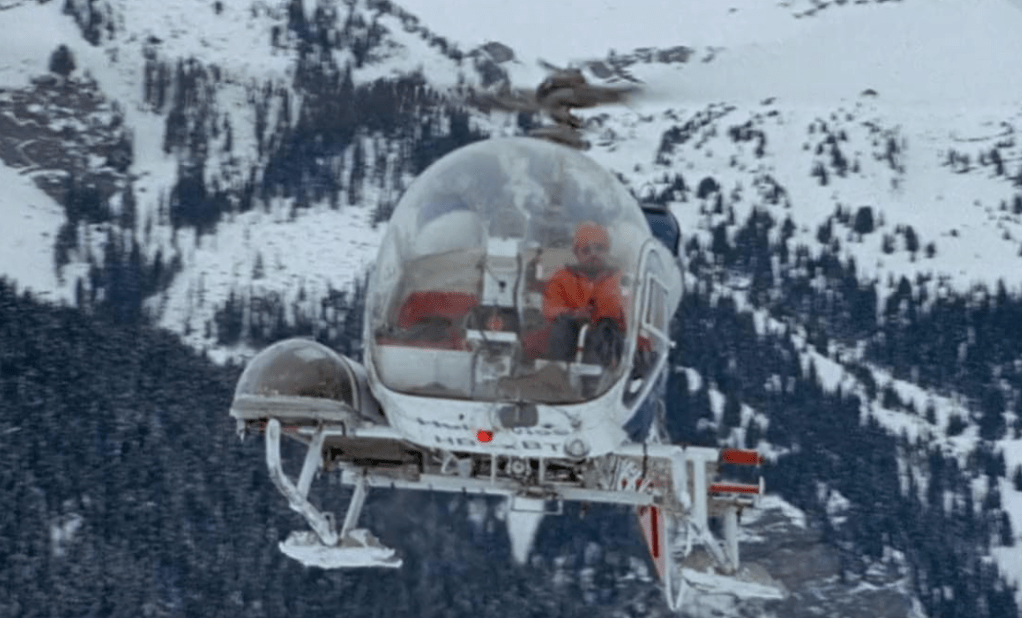
“There is an accident on the course,” the voice over said in English with a French accent. A helicopter landed, taking the broken skier away.
Downhill Racer, Opening Scene(Courtesy of IMDB.com)
A man with freckles, bushy blond eyebrows and long shaggy hair arrived to replace the crashed USA Olympic team downhill racer. The new racer wore a pair of cowboy boots and chewed gum with an open mouth. His attitude seemed strange; maybe arrogant. He looked like someones dad.
“That’s him,” the three girls whisper in unison. “Robert Redford.” The arrogant dad looking man with freckles and bushy hair, wearing cowboy boots and chewing gum with an open mouth was Robert Redford.
I looked at my new friends in wonderment.
“Where is the dreamy guy?”
Downhill Racer, Robert Redford (Courtesy of IMDB.com)
CU students volunteer to lay out the red carpet in Boulder
The Boulder Theater displays the launch of the Sundance Film Festival. (Melodie Miller)
Brian Marquez spends his days recruiting the volunteers who make the “shows must go on” at the Sundance Film Festival. As a senior manager of talent at the Sundance Institute, Marquez will place more than 2,000 volunteers in theaters, press offices and on production crews this January. For Marquez, volunteers are the festival’s heart and soul.
“Volunteers truly make the Sundance Film Festival happen,” Marquez said. “We couldn’t do it without them.”
This year, hundreds of volunteers will be CU Boulder students. When the festival premieres in Boulder, January 21 through 31, students can trade 18 hours of service for free screenings, industry connections, and firsthand experience working with an internationally attended film festival.
Screenshot
Sundance Film Festival Volunteer Catalog 2027. (Photo courtesy of Sundance Film Festival)
The university worked closely with Sundance to make the volunteering schedule manageable for students. Megan Medina, who directs Service Learning and Impact in Community Engagement at CU Boulder, helped lower the volunteer minimum from 24 hours to 18 so the shifts could fit around classes.
Nathan Paul Jones of Career Services sees the festival as a networking gateway for students. Jones said that Sundance has already begun posting internships on Handshake. The real career benefit is in the time spent working with industry professionals.
Cinema Studies Senior Cadence Tucker recommends volunteering, especially for first- and second-year students.
The Hotel Boulderado outdoor corner bar. (Photo courtesy of Tim Romano|The Boulderado)
The festival footprint is compact. About 150 films will be screened at the 2027 film festival in fifteen theaters in Boulder, all within a two-mile radius of the Sundance hub at the Hotel Boulderado. Governor Jared Polis’s office estimates the festival could bring up to $2 billion to Colorado over the next decade.
‘Campus Life: 150 Years of Human and More-Than-Human Relationships‘
Historical landscape books, field guides, and illustrated volumes of CU Boulder flora and fauna line the shelves at the “Campus Life” exhibit inside the Jerry Crail Johnson Earth Sciences & Map Library. (CU Independent / Melodie Miller)
The University of Colorado was founded on a treeless plain 150 years ago, but today, more than 5,000 trees later, the campus is recognized as an Arbor Day Foundation Campus of Higher Education that effectively maintains urban forests.
This history is at the center of “Campus Life,” an exhibit in the Jerry Crail Johnson Earth Sciences & Map Library that traces 150 years of relationships between people, plants and animals on campus. The planning decisions made more than a century ago continue to shape how the campus community coexists with its biological neighbors.
The Center for Community dining garden is surrounded and filled with drought-resistant plantings. (CU Independent / Melodie Miller)
Throughout the campus grounds, plantings enhance the beauty of the environment while maintaining a commitment to non-human habitats, minimal water use and other environmental considerations.
Sundance will maintain its mission while building a new festival rooted in Boulder culture
Boulder Theater marquee displays the Sundance Film Festival name (Photo courtesy of Miles Fujimoto)
Someone’s next big break in a film career might come while waiting in line for a screening or riding a bus across town in Boulder. This was the message Sundance Film Festival director Eugene Hernandez and Sundance Institute managing director Paula DuPré Pesmen shared with Colorado student reporters at a Sept. 30 press conference on the festival’s move from Park City, Utah, to Boulder.
When Sundance opens Jan. 21-31, 2027, its venues will sit within a 2.4-mile radius of the Hotel Boulderado, a more compact footprint than the Utah festival’s three locations.
Asked what will define the Sundance Film Festival’s new home, festival director Eugene Hernandez offered one word: community.
Part of the Sundance Film Festival footprint spans from the Boulder Theater, north, up Pearl Street toward Broadway, a direct route to the University of Colorado campus and more venues (Photo courtsey of Justin Bilancieri)
The chilling ‘post-truth’ mechanics of Putin’s Russia and its coercive control
Jude Law as Vladimir Putin and Paul Dano as Vadim Baranov appear in “The Wizard of the Kremlin.” (Photo courtesy of Vertical Entertainment/Gaumont)
In a remote, frozen blue forest far from Moscow’s politics, Vladimir Putin’s former spin doctor walks his dog without once looking over his shoulder. Snow-encrusted trees twist behind him like prison barbed wire, a fence he helped build. The silence feels more like a warning than a peaceful retirement.
The Melodious Report breaks down Olivier Assayas’ “The Wizard of the Kremlin,” a film adapted from Giuliano da Empoli’s novel.
The film traces two paths that open after the fall of the Soviet Union, one toward wealth and one toward power; both lead to the Kremlin’s door. Jude Law plays Putin, icy cold in appearance and soul. Paul Dano plays Vadim Baranov, a reserved, steady strategist who rides alongside Putin as he rises to power.
Released on streaming platforms weeks before the 2026 midterm elections, it is a portrait of political power, psychological control and dark Russian humor that may serve as a cautionary tale.
The poster released by 20th Century Studios shows, from left, Josh Brolin as Bangley, Jacob Elordi as Hig, Margaret Qualley as Cima, and Guy Pearce as Pops, with Jasper the dog, in “The Dog Stars.” (20th Century Studios via IMDb)
A 1956 Cessna, nicknamed “The Beast,” glides over the conifer-filled canyons, and for a moment, the end of the world looks peaceful. Then the violence begins.
The Melodious Report takes a closer look at Ridley Scott’s “The Dog Stars,” adapted from Peter Heller’s 2012 novel. Starring Jacob Elordi and Josh Brolin as two survivors guarding an abandoned airport in post-apocalyptic Erie, Colorado, the film weighs violence toward strangers against the risk of human connection. The review draws parallels between the film and today’s immigration debates, pandemic isolation and misinformation.
The film offers a portrait of a divided America.
Speaking at a live Colorado Public Radio event, Heller responded to the film’s mixed critical reception in a conversation with CPR’s Ryan Warner at the Denver Press Club. The Melodious Report attended and photographed the event.
A 19th-century gold-rush mining town is alive in Durango
The historic Strater Hotel on Main Street, Durango (Melodie Miller | Photographer)
ByMelodie Dawn Miller Reporting from Durango, Colorado June 16, 2026 2:00 p.m. MDT
The Strater Hotel is a distinctive red-brick building situated on Durango’s Main Street in the Historic District, where visitors can rest their heads in the Wild West without traveling back in time. Built in 1887 by Fred, Frank and Antone Strater, the Boomtown hotel is filled with historically accurate furnishings and decor that take visitors back to the 19th century without sacrificing modern conveniences or civil order.
“American mining towns were mostly civil,” Jennifer M. Larson writes in Why the West Became Wild. The American West “grew so rapidly during the nineteenth-century gold rush that they were dubbed boomtowns.”
Tiffany-inspired elevator awning emulates the 1880s Art Nouveau decorative period (Melodie Miller | Photographer)
Designed and built during the region’s mining boom, the Strater Hotel management strives for authenticity with century-old oak furnishings, replicated 19th-century wallpaper, and Tiffany Art Nouveau-emulated lighting fixtures, giving guests a Wild West experience.
“The hotel is dedicated to providing factual information. The hotel is a living museum,” Tori Ossola, the General Manager of the Strater Hotel, said.
Historical maple furnishings and Bradbury & Bradbury wallpaper at the Strater Hotel Melodie Miller | Photographer
The ladder-back Mission chairs, hand-milled oak staircase railing, and heavy balusters showcase the early American Craftsman-style set against a backdrop of color that favors gently aged tones of the late Victorian era.
According to Historic Hotels of America, in 1926, owner Earl A. Barker, Sr. became dedicated to preserving the hotel’s prestigious status and he inspired the following generations to follow in his footsteps.
“The large collection of Victorian antique furniture we have throughout the property can be attributed to the second-generation Barker family,” Ossola said. Then, the third generation, Mr. Rod Barker and his wife Lori, “did the major heavy lifting on the renovation.”
Historically inspired Gilded Age Bradbury and Bradbury wallpaper covers the walls of the Strater Hotel (Melodie Miller | Photographer)
The Knightsbridge Damask wallpaper by Bradbury & Bradbury of San Francisco recreates the Anglo-Japanese Aesthetic Movement, using motifs from 1875 to 1890. Designed in 1986 by artistic director and co-owner Stephen Bauer, the motifs recreate patterns following the transition of the 19th-century designer William Morris.
The late-Victorian-inspired wallpaper is reminiscent of the Gilded Age, featuring teardrop-shaped ogee and gold-metallic floral medallions joined by a lattice of leaves.
“We strive to be a resource to historic properties for the preservation and restoration of their buildings,” a representative of Bradbury & Bradbury, Lisa Bauer, said.
The Strater Hotel wallpaper colors are unique because “the pattern has recently received a refresh,” Bauer said, but “it has never been retired, only revised.”
The historic Strater Hotel on Main Street, Durango (Melodie Miller | Photographer)
An original mining boomtown, Durango was founded in September 1880, according to the City of Durango History. Henry Strater built the hotel in 1887 “right after the Silver Panic,” Ossola said.
According to Historical Hotels.org, Strater believed that a contemporary Durango offered a “great economic opportunity,” deserving of a grand hotel.
The Durango Silverton Gauge Railway steam engine and passenger car train (Melodie Miller | Photographer)
Along with the hotel, the economic boom brought the Durango to Silverton Gauge Railway steam engine that continues to carry passengers through the rugged San Juan Mountains of Southwestern Colorado. Built in 1882 to haul silver and gold ore, the historic steam-powered train transports passengers on a 45-mile round trip along the Animas River through canyons, forests, and landscapes largely unchanged since the 19th century. The train station is 0.2 miles, approximately a 3-minute walk, from the Strater Hotel.
In 2021, the Garrett family bought the hotel from the Barker family and “upgraded every single one of our hotel rooms to have its own heating and cooling system,” Ossola said.
“Not super sexy stuff, right? But still making sure that our guests having that historic experience are comfortable,” Ossola said.
You can visit a 12th-century community of Puebloan structures at the Aztec Ruins National Monument in New Mexico, near Durango, Colorado. If the Pueblos built the community, why is it named the Aztec Ruins?
“The Spanish are calling the Aztec ruins Aztec before non-Spanish Europeans show up,” Dr. Steve Lekson, Professor of Anthropology at the University of Colorado, said.
During the 19th century, scholars in Mexico City, Mexico, wrote that the Aztecs had built the 400-room community. However, most modern archaeologists accept that the ancestral Puebloans, a farming culture, built the dwellings, and the Aztecs, an elite class, lived there for a period of time.
“It’s a complicated story,” Dr. Scott Ortman, of the University of Colorado Boulder, said. One concern is “naming a site in one particular indigenous language” when many tribes view themselves as descendants of the area.
Thus, the 19th-century name took hold and remains.
Pueblo Indians, Tesuque, N.M. (1893) (William Edward Hook | Courtesy of the Library of Congress)
Migration lies at the heart of the Aztec and Pueblo ancestral origin story. More than a record of movement, their ancestors’ journeys shape identity and belonging today.
According to Mexican scholars of the 1800s, the Aztec Ruins were the “first home of the Aztecs” before they migrated south to Mexico, Lekson, said.
The Aztec Ruins kiva replica, Aztec, New Mexico (Photography | Melodie Miller)
The 381-acre National Park protects the Ancestral Pueblo great house community and the kiva ceremonial room replica. Kivas are built with ventilation, a fire pit, and a sipapu — a spiritual gateway to and from the underworld. An important part of modern Pueblo and Hopi communities is sacred dances and rituals held in community kivas.
The Aztec Ruins National Monument, New Mexico (Photography | Melodie Miller)
President Warren G. Harding used the Antiquities Act of 1906 to designate the site as the Aztec Ruins National Monument on January 24, 1923.
Nathan Hatfield, Aztec National Park Ranger Supervisor of Interpretation, said, “I believe that by 1928 most southwestern scholars and archaeologists agreed that the Aztecs of Mexico were not responsible for building” the Aztec Ruins.
Consensus among archaeologists grew, accepting the continuity between the Ancestral Pueblo builders and the Aztec ruins.
Archaeologists have come to accept that “Aztec was built by ancestors of today’s Pueblo people,” Ortman said. “We didn’t need DNA. It was just recognizing the continuity and culture.”
Now the name is accepted as an artifact of history. A name change would require an act of Congress.
______________________________________________
The Aztec Ruins National Monument is located 40 miles (ca. 64 km) south of Durango, at 725 Ruins Rd, Aztec, New Mexico 87410.
The Mesa at Mesa Verde National Park appears to be a green table, but it is a cuesta, a cliff with a flat ridge and a slope. (Melodie Miller | Photographer)
“Many of the Pueblos were named by the Spanish,” Dr. Scott Ortman, of the University of Colorado Boulder, said. “It tends not to be very common for archaeological sites to be renamed to the indigenous language names.”
Attribution of Mesa Verde started with early speculation about the Aztecs and Aztlan. However, cultural consistency emerged between Cliff Palace and the modern Pueblos of the Four Corners, connecting the two places.
Dr. Steve Lekson, Professor of Anthropology at the University of Colorado, writes in A History of the Ancient Southwest that “Cliff Palace might be empty and abandoned, but only a few days’ walk away were Pueblo peoples who built towns that looked like Cliff Palace.”
In 1776, according to Legends of America, two Mexican-Spanish missionaries, Francisco Atanasio Dominguez and Silvestre Vélez de Escalante, were leading explorers from Spain through the region. They camped at the base of the La Plata Mountains, near the flat forested area of Mesa Verde. 83 years later, in 1859, Mesa Verde is attributed to John S. Newberry, although the name had been in use prior to his writing.
“The earliest permanent settlements here at Mesa Verde date back to between 500 and 600 CE and are often characterized by pit houses which can be seen on the mesa tops of both Chapin and Wetherill Mesas. The alcove sites (cliff dwellings) were mostly constructed beginning in the late 1100s to early 1200s CE,” Dalton Dorrell, Mesa Verde National Park Service Supervisory Park Ranger of Education, Community Outreach, and Interpretation, said.
The Spanish word mesa translates to table, a flat surface. But Mesa Verde is a cuesta, a steep cliff with a flat ridge on top and a sloping plain on the other side.
“Cuesta has been used as a geological term only since the early 19th century. It is not unusual for the geological term and the place name given to a location to differ,” Dorrell said.
Cliff Palace, Mesa Verde National Park Ancestral Puebloan dwellings ( Melodie Miller | Photographer)
Then, in 1888, according to Lekson, Richard Wetherill and Charlie Mason came across the Cliff Palace.
“Cliff Palace is discovered by this cowboy who lived in Mancos named Richard Wetherill,” Lekson said.
On December 18, 1888, Wetherill, his brother-in-law Charles Mason, and their Ute guide Acowitz saw Cliff Palace and went on horseback to investigate.
Wetherill, Mason, and Acowitz, came across the cliff dwellings of the Ancestral Puebloans while “rounding up cattle in the snowstorm. And I guess there’s some questions to whose cattle was he rounding up,” Lekson said.
After the discovery, a significant movement emerged to preserve the 12th-century cliff dwellings and the artifacts found at Mesa Verde.
Wetherill “leaves the place seven ways to Sunday, and it’s just full of stuff. The Pueblos left pots and baskets and all kinds of stuff.” Lekson said. Wetherill “takes a bag full of this stuff up to and tries to sell it. I’ve seen the newspaper advertisements.”
According to the New Mexico Historical Review, Wetherill’s father, Benjamin Wetherill, “looked at the relics and realized the importance of the finds.”
The Mesa Verde National Park sign is emblematic of the Art Deco style popular in 1906. ( Melodie Miller | Photographer)
In 1906, President Theodore Roosevelt signed the congressional bill to preserve the area’s ancient works, specifically 5,000 ancestral man-made sites and artifacts. Although Mesa Verde is a cuesta, the name remains, and the Ancestral Puebloans’ cliff dwellings are preserved.
Mesa Verde is located 35 miles west of Durango, at 35780 US-160, Mancos, CO 81328.
Melodie Dawn Miller is an apparel industry professional with expertise in design, development, and production. She holds bachelor’s degrees in English Literature and Classic Civilizations. She is currently studying French and Journalism at the University of Colorado.
The SKEA Elsa down filled ski parka with matching fur ruff.
Photos courtesy of SKEA
Nylon Ciré – Ciré is a highly glazed wax finish that creates a water resistant barrier.
Down filled insulation throughout
Underarm ventilation zips.
Interior sleeve cuff with thumb holes.
Interior snow-skirt
3 zipper pockets
Fixed collar and hood
Optional snap-on real/faux fur trim
An athletic fit with room to move
Unleash your skiing flair with the SKEA Elsa Jacket. This jacket is not just breathable and hydrophobic, but effortlessly shifts from the slopes to the streets. Filled with down, it offers unbeatable warmth and adaptability for your mountain adventures. The Elsa parka combines purpose and femininity, and comes in a range of colors to match your taste.
Photos courtesy of SKEA
The SKEA Elsa down filled parka sketch and production instructions
SKEA photo shoot at Loveland Pass, Colorado
Photos courtesy of SKEA
The SKEA vintage ski-wear inspired Thinsulate insulated Coco Parka
Photos courtesy of SKEA
Polyester Stretch super water repellant 20K WP
200 grams Thinsulate Insulation
4 zip pockets
Faux fur lined inner collar
Helmet compatible hood with optional fur trim
Removable belt to wear or not with snap down belt loops
Snow skirt
Cinch bottom
Slim fit
The Coco Thinsulate insulated parka sketch and production instructions
Photos courtesy of SKEA
Cosmic Vest is the perfect layering garment. Snuggle into the collar on icy days.
Photos courtesy of SKEA
The SKEA Brit insulated ski suit
Photos courtesy of SKEA
Stay warm in Skea high quality, quick drying polyster knit baselayer’s designed by Melodie Miller
Tennis and Golf for Skea by Melodie Miller
Sierra Design extreme elevation mountain apparel designed by Melodie Miller
Paul Nanawa wearing Sierra Designs designed by Melodie Miller | Mt. Rainier | Photo courtesy of Eric Larsen
Paul Nanawa | Mt. Rainier | Eric Larsen | Both men wear Sierra Designs extreme weather gear designed by Melodie Miller | Photos courtesy of Eric Larsen
Eric Larsen and his team wear yellow and orange Sierra Designs cold weather gear designed by Melodie Miller | Photos courtesy of Eric Larsen
Eric Larsen and his team wear yellow and orange Sierra Designs cold weather gear designed by Melodie Miller | Photos courtesy of Eric Larsen
Eric Larsen attemps to summit Mt. Everest. (Right). Eric Larsens (Center right) expedition team wear orange Sierra Designs cold weather gear designed by Melodie Miller | Photos courtesy of Eric Larsen
Eric Larsen and his team at the South Pole wear orange Sierra Designs extreme cold weather gear designed by Melodie Miller | Photos courtesy of Eric Larsen
Shaun Mauer at the summit of Mt. Rainier wearing Sierra Designs mountain gear designed by Melodie Miller.
Brian Tschider and Shaun Mauer at John Muir as they prepare to ascend Mt. Rainier wearing Sierra Designs mountain gear designed by Melodie Miller. (Right) Shaun Mauer wearing Sierra Designs mountain gear designed by Melodie Miller. (Center Left)
HEXA Custom outdoor apparel designed and developed by Melodie Miller
HEXA Reversible Sherpa Jacket (Photos courtesy of HEXA Custom)
Insulated Camping Blankets 57″ x 75″
HEXA Custom | Men’s Quilted Sherpa Vest | Sketch and Engineering
Academy Sports + Outdoors | Women’s Magellan Waterproof Pant (Melodie Miller | Designer)
Pearl Isumi Triathlon Suit
Dame Flora Duffy, DBE, is a Bermudian professional triathlete (Center) wearing Pearl Izumi developed exclusively for Duffy by Melodie Miller. Duffy won a gold medal at the 2020 Summer Olympics in Tokyo, Bermuda’s first gold medal. She also competed in the Beijing, London, and Rio de Janeiro Olympics. In 2018, she won gold in the women’s triathlon at the XXI Commonwealth Games in Australia.
Dressing for travel in Europe does not require excess. It requires intention.
Pack three jackets, three scarves, and four hats. Add tennis shoes and flip-flops, one sweater, three tops and three bottoms, one dress, and one pair of evening shoes. Add two belts for styling. Each piece should work with the others.
With this structure, you can adjust for weather, setting, and occasion. The same garments shift from casual to formal by changing layers and accessories. The result is controlled, deliberate, and consistently polished.
Humor offers a chance to challenge the narrative of marginalization. This is according to Dallas Goldtooth, Res Ball (film) actor and environmental activist, who spoke on Tuesday, Sept. 24, at the University of Colorado Macky Theater. Goldtooth mixed his signature storytelling and humor with advocacy, gaining the audience’s trust.
“Buy American Spirit cigarettes,” he said when asked how non-indigenous allies can get involved.
Dallas Goldtooth of Dakota and Diné heritage speaks at Macky Theater on the Campus of University of Colorado at Boulderof his experience with environmental issues and activism . (Melodie Miller | Photographer)
Goldtooth is known for his character William Spirit Knifeman in the FX series Reservation Dogs. He is also the founding member of the 1491’s comedy group. He joked with the Boulder audience and reminded them that solving the climate crisis means acting on a larger scale. The climate crisis disproportionately impacts Indigenous communities and other marginalized groups.
Actor and activist Dallas Goldtooth as William Knife-Man in FX’s Reservation Dogs. (Photograph by Shane Brown / FX)
“I’m sure all of you are really happy about your hybrid car that you’re driving or that you switched your light bulbs to LED lights. It’s great. But we have to remind ourselves as we understand that the causation of climate chaos is capitalism. It also means that the fight to protect this planet is much more than environmentalism,” Goldtooth said.
Activist Dallas Goldtooth encourages the audience to . (Melodie Miller | Photographer)
The fight for climate change is a fight for liberation, according to Goldtooth. Many areas affected by climate chaos are marginalized communities. Their citizens often lack the power to influence what happens to the land. They have no voice regarding the water, the air, or their bodies. He encouraged the audience to help lift marginalized voices.
“This will allow us to imagine a future that’s livable for everyone,” Goldtooth said.
Dallas Goldtooth combined humor and inspiration for action with audience at Macky Theater on the Campus of University of Colorado at Boulder. (Melodie Miller | Photographer)
“Just bring people together around a common issue and let them talk with one another. You have right-wing ranchers, and you have left-leaning natives,” Goldtooth said, “working together to stop the Keystone XL pipeline to preserve clean water on their lands. I’m happy to say that we won the Keystone XL campaign.”
Dallas Goldtooth joked with the audience at Macky Theater on the Campus of University of Colorado at Boulder. (Melodie Miller | Photographer)
Goldtooth amplified the importance of the world’s “climate chaos as an issue that we are all dealing with on this planet.” He softened the message with a personalized joke when asked how he began his career as an activist. Goldtooth told the audience, “Well, I was 13 pounds when I was born. So, my mom knew injustice.”
Dallas Goldtooth reminded the audience at Macky Theater on the Campus of University of Colorado at Boulder that the climate crisis affects marginalized communities disproportionately. (Melodie Miller | Photographer)
Storytelling is a “big part of the organizing effort to make this planet better,” Goldtooth said. Humor provides the “opportunity for you to disrupt the narrative because all of our fields have been impacted” by marginalization. For example, the United States insurance companies secure capitalistic investments. Goldtooth told the audience that “insurance companies are complicit in the destruction of the earth.”
Benny Shendo attended Goldtooth’s speech. He is the vice chancellor for Native American Affairs at the University of Colorado. Shendo is also a member of New Mexico’s Democratic Senate. “I think you will find humor across any country. I mean, it’s not any different in Pueblo or any different in Pani or any other tribe,” said Shendo.
Benny Shendo. University of Colorado alumni speaks to Congress. Members of Congress formally accepted a sculpture of Po’pay, a medicine man from Ohkay Owingeh who led the Pueblo Indian Revolt of 1680, to complete the U.S. Capitol’s Statuary Hall collection. (Photograph courtesy of the C-SPAN 2 Archives)
Phillip Gover is a Tribal Affairs Specialist for the Colorado Department of Human Service. He is an advocate for Indigenous Coloradoans and said, “I think Native Americans have always dealt with tragedy with a sense of humor. Most people would say, ‘What?’ Why would you laugh at that? If I’m not laughing, then I’m crying, and I’d rather be laughing.”
Phillip Gover, a Tribal Affairs Specialist for the Colorado Department of Human Service (Melodie Miller | Photographer)
Goldtooth uses joy and laughter to advocate for marginalized Native American communities disproportionately facing climate change.
Dallas Goldtooth shared the stage with students at Macky Theater on the Campus of University of Colorado at Boulder. (Melodie Miller | Photographer)
He is descended from the Minnesota Dakota/Diné (Navajo) tribe. He is a member of the Lower Sioux Indian Community. He is also a Dakota language instructor.
C.U. Presents closed its modern vampire love story to a packed house at the University of Colorado Loft Theatre in Boulder.
Director Heather Kelley’s adaption of Jack Thorne’s play “Let the Right One In” completed its run to a sold-out theater on Sunday, Oct. 20, at the University of Colorado Loft Theatre.
The audience waits for the sold out presentation of Let the Right One in to begin. Scenic design by Hyley Delich. (Melodie Miller | Photographer)
Based on the novel by John Ajvide Lindqvist, first love, sexual intimidation, and school bullying transcend the borders of time and space in “Let the Right One In.” Eli, a 200-year-old vampire fixed at the age of 12, befriends Oskar, their 13-year-old neighbor, on the playground where Eli is bullied by schoolmates in 1981 Sweden.
Eli, a 12 year old trapped in the body of a 200 year old vampire is played by Wyleigh Watson. (Melodie Miller | Photographer)
The childhood friendship between Eli and Oskar is complex, creating “a dynamic narrative that centers on empathy and fighting for each other despite all the blood and scars,” Brosnan Bustamante, the stage manager said.
Oskar, played by Salem Channell, lives next door to Eli the vampire. Eli, played by Wyleigh Watson, contemplates a Rubix Cube. (Melodie Miller | Photographer)
Let the Right One In ”is a macabre story with a happy ending,” Scenic Designer, Haley Delich, a Bachelor of Fine Arts in Design, Technology, and Management said. Oskar is “dealing with bullying and first love,” and Eli “is trapped with the body and the mind of a child.”
When Hakan dies, Oskar becomes Eli’s new companion, giving purpose to their lives.
Bullies Jonny, Jimmy and Micke, play by Ian Von Pechmann, Sam Stitt and Cade respectively, threaten to drown Oskar, played by Salem Channell.
Situated in 1981 Blackeberg, Sweden, the playgrond was the setting where Hakan, Eli’s parent figure, killed and procured blood from his victims for the thirsty 12-year-old child.
Roan Cochrane as Hakan (Right) drains the blood from his victim played by Ian McCance (Left). (Melodie Miller | Photographer)
The emotional topics of the play demanded that stage manager Brosnan Bustamante, a C.U. student, ensure a smooth production. Brosnan prioritized a supportive environment. He minimized stress to keep the team focused on the performance.
Savannah Gullett plays Oskar’s Mum (Left). Norah Shuey plays Halmberg, the police commissioner. (Right)(Melodie Miller | Photographer)
“It’s crucial that the stage, cast, and crew are functioning smoothly, especially in a production that is emotionally intense and technically demanding,” Bustamante said.
The menacing play ground of “Let the Right One In.” (Melodie Miller | Photographer)
Filled with death, blood and bulling, the setting is ironic as a playground but fitting as a place of horror, where children act as monsters.
Bully Jonny, play by Ian Von Pechmann, talks with Oskar, played by Salem Channell.(Melodie Miller | Photographer)
Delich designed the set to evoke a “bit of the horrors of growing up and outgrowing the playground,” she said.
“Let the Right One In” play ground setting designed by Hayley Delich. (Melodie Miller | Photographer)
The cast of “Let the Right One In” take a bow at the close of their successful run.
Salem Channell as Oscar (center front) Middle row: Wyleigh Watson as Eli, Charlie Hough as Mr. Avila, Sam Stitt as Jimmy, Pechmann as Jonny. Back row: Roan Cochrane as Hakan, Ian McCance as Dad, Cade Heaton as Micke, Savannah Gullett (far right, back) as Mum. (Melodie Miller | Photographer)
The minimalistic rusted monkey bar set, designed by Delich, was intended to “mirror the stark lives of the characters,” she said. The characters had outgrown the playground but were emotionally stuck in their childhood experiences where they faced bulling and isolation everyday in “Let the Right One In.”
“Let The Right One In” play ground Scenic design by Hyley Delich. (Melodie Miller | Photographer)
The 2024 C.U. Presents, “Let the Right One In,” is part of the Artists Series, which spans over 80 years on campus. Kelley is pursuing a PhD in Theatre & Performance Studies at C.U. Boulder.
University Theatre Building, 261 University of Colorado, Boulder, CO 80302
The Heartbeat of the Powwow returned to the University of Colorado at Farrand Field on Sept. 28, 2024. (Melodie Miller | Photographer)
Listen to powwow musician Tony Crank at the University of Colorado Farrand Field Sept. 28, 2024. The Colorado American Indian Tribes In-State Tuition Act (CO SB 21-029) was passed to allow eligible students to pay in-state tuition at Colorado public universities and colleges.(Melodie Miller | Photographer)
I went to historic Farrand Field on the University of Colorado campus in Boulder for the 2024 Native American powwow. It was a beautiful bluebird day without a cloud in the sky. The campus was built on the traditional territories and homelands of the Arapaho, the Cheyenne, and the Ute nations. The powwow is part of the universities commitment to continually improving and enhancing engagement with indigenous peoples locally and nationwide. It is the first powwow on campus in 23 years.
Farrand Field was named after Livingston Farrand, the university’s fourth president who served from 1914 to 1919.
After 23 years, the powwow returns to campus as a celebration of faith and tradition for the indigenous peoples of Colorado.
The 2024 CU Boulder Powwow was organized by the Oyate Native American and Indigenous Student Organizations on campus. It was a collaboration between the Center for Inclusion and Social Change (CISC), the Center for Native American and Indigenous Studies (CNAIS), the Oyate Native American and Indigenous student group and the native Graduate Student Group and the Theater and Dance Department.
Cultural etiquette was encouraged with guidelines posted as reminders for the audience. The aim was to elevate understanding and sensitivity towards respecting the customs of Native American nations.
Cultural etiquette is a unique set of understandings that guide people when interacting in different societies. At the powwow, these guidelines include not touching the dancers, their regalia, instruments or fallen feathers. “Do no ask for cultural details that are not offered even with good intentions.” Sensitivity and respect for these norms fosters positive cross-cultural understanding and connection.
Grand entry for the powwow. (Melodie Miller | Photographer)
After 23 years, the powwow returns to campus as a celebration of faith and tradition for the indigenous peoples of Colorado. The grand entry victory song and two rounds of intertribals.
Saydie Sago told me she went to the last powwow 23 years ago, in 2001 with her parents when she was a small child. We are “bringing some Cheyenne, and Rapaho community from northern Rapajo members, southern Rapaho members, and Cheyenne members to come dance and be a partner. Of course, they were part of one of the many tribes that are historically tied to this part of the land and also Colorado. So we are inviting them back to their ancestral lands,” Sago said.
Saydie Sago, one of the powwow organizers, is a fourth year PhD student here at CU. (Melodie Miller | Photographer)
“I know that my parents, I think, have actually been to the powwow 23 years ago. So it’s really nice to see it coming back, Redhorse said. “I’ve been going to powwows ever since I was one of the tiny tots. My mom put me in a jingle dress dance, and I got up on the dance floor. I really hope we can continue this ongoing tradition.”
Shaleen Redhorse is an aerospace engineering student here at CU. She danced powwows when she was younger. (Melodie Miller | Photographer)
I spoke with CU graduate Benny Shendo, the vice chancellor of Native American Affairs, about the future for native american students in states outside of Colorado.
“We only have two federally recognized tribes here in the state of Colorado. But then there’s 46 other tribes that have historical connection to the state of Colorado,” Shendo said. Colorado state “passed the law signed by the governor that will allow any students from those tribes to come into state tuition. Not only will this increase our Native American enrollment, both undergraduate, graduate, but also faculty and staff.”
“It’s a new day,” Shendo said. “It’s a new day, you know, it’s for us, and we’re hoping to elevate the presence of our native students at all levels.”
CU graduate Benny Shendo, the vice chancellor of Native American Affairs is a state senator for New Mexico. (Photograph courtesy of Common Ground Rising.org Blog)
Powwow Gallery
Welcome to the 2024 Powwow on the University of Colorado at Boulder campus. This event offers an exhilarating experience that spans 200 years of cultural history . Every moment is an opportunity to witness and partake in the spiritual ceremony of the powwow. (Melodie Miller | Photographer)
The University of Colorado Boulder is a public research university in Boulder, Colorado. It was founded in 1876, five months before Colorado became a state. Colorado’s flagship university honors and recognizes the many contributions of Indigenous peoples in the state. The university acknowledges that it is located on the traditional territories of the Cheyenne, Arapaho, and Ute. It is also on the ancestral homelands of many other Native American nations. The university is dedicated to recognizing and amplifying the voices of Indigenous CU Boulder students, staff, faculty and their work.
Mountains northeast of Durango brings fourth-highest harvest of mountain lions
By Colorado Student News Service
Friday, Nov 1, 2024 11:00 AM Updated Friday, Nov. 1, 2024 5:59 PM
Records from Colorado Parks and Wildlife shows 2,600 hunters killed 502 mountain lions in 2022-2023, the most recent period for which statistics are available. (Courtesy of the National Parks Service, via The Colorado Sun)
In the early morning chill of Colorado’s rugged wilderness, the rhythmic panting of hounds echoes through the trees as they close in on their elusive target, a mountain lion.
For hunters, the video from a Durango outfitter, shows a moment steeped in tradition and survival skills, but such moments may soon disappear from the Colorado landscape. On Nov. 5, voters will decide the fate of mountain lion and bobcat hunting in Colorado, with Proposition 127 seeking to ban the practice entirely.
The group “Cats Aren’t Trophies” gathered about 188,000 signatures to put a measure on the November ballot.
While the group’s name references “trophies,” Colorado Parks and Wildlife considers trophy hunting to be illegal in Colorado. Hunters are expected to eat and use what they kill, based on a hunting brochure from the state agency.
Public records from the state agency show a highly regulated hunting environment where 2,600 hunters killed 502 cats in 2022-2023, the most recent period for which statistics are available.
The fourth highest number of mountain lions killed – 11 – came from an area in the mountains northeast of Durango and La Plata County. The rest of the mountain lions killed around the state were in the single digits, mostly in remote, mountainous areas.
The 21 mountain lions killed in a remote area northeast of Meeker in 2022-2023 was the largest number for any area in Colorado, based on public records provided by Kara Van Hoose, a Colorado Parks and Wildlife spokeswoman. The next largest number of mountain lions killed were in a mountainous southern part of the state near Interstate 25, where 16 were killed in one Colorado Parks and Wildlife statistical area and 15 were killed in the neighboring area. Colorado Parks and Wildlife maps do not follow county lines around the state but are numbered by region.
Van Hoose declined to comment on specific questions related to Proposition 127 so as to remain neutral during the election period. She declined to comment on how current legal hunts affect the economy or how banning mountain lion hunts could affect wildlife and cattle, among other things. Colorado Parks and Wildlife started regulating hunting licenses for mountain lions in 1965 after the mountain lion population declined, according to information on the state agency’s website.
Van Hoose said that Colorado Parks and Wildlife surveys wildlife populations by helicopter, among other things, to decide how many licenses will be available to hunters every year.
“We set licenses depending on a lot of different factors. There are environmental factors and external factors,” Van Hoose said.
The most emotional part of the hunting discussion appears to be how some Colorado outfitters use GPS-collared dogs to track and hunt mountain lions. Hound hunting is legal in Colorado.
Some 88% of Colorado residents disapprove of hunters using dogs to help with hunting and 78% disapprove of “trophy hunting” of mountain lions, according to an August Colorado State University study published in the Society for Conservation Biology journal.
Kelly Maher, a Colorado hunter, said she teaches her children to honor the animals that the family hunts “by consuming and using every part of the animal.” She said proponents of Proposition 127 don’t like the hound hunting, “but the cat needs to be stationary to identify its sex and status.”
The people who gathered signatures to get Proposition 127 on the ballot feel that hunting mountain lions with GPS-equipped dogs “gives our hunters a bad name for violations of fair chase,” according to Mark Surls, the volunteer and outreach coordinator for the group.
A group supporting continued mountain lion hunting is called Colorado’s Wildlife Deserve Better, which includes funding help from the Colorado Cattlemen’s Association and the Colorado Wool Growers Association. And the Board of Mesa County Commissioners in Grand Junction unanimously approved a resolution opposing Colorado Proposition 127 on Tuesday, Sept. 24.
Colorado Parks and Wildlife requires hunters to take an exam and buy a license to hunt mountain lions. About 3,800 to 4,400 mountain lions live in Colorado, according to the state agency, but most people never see them because they’re active at night.
About the Colorado Media Project
The University of Colorado journalism program has a $10,000 grant from the Colorado Media Project, as you know, and we’re working with eight newsrooms this semester in rural and underserved communities mostly around the Western Slope, including The Journal, Ark Valley Voice, Aspen Times, Bucket List Community Café, Colorado Newsline, Denver Urban Spectrum, Rio Blanco Herald Tribune, Sopris Sun/Sol del Valle and Enterate Latino.
Readers can the Colorado Media Project and the class by contacting Elizabeth Potter and the students at elizabeth.potter@colorado.edu.
Colorado Media Project | Courtesy of Colorado Media Project
Common Sense Institute Colorado, a nonpartisan group interested in protecting Colorado’s economy, reports that Proposition 127, if passed, would cause an overall “$4 million to $6.2 million in lost Colorado Parks and Wildlife revenue.”
Of the total, the Common Sense group says there would be a direct loss of $410,000 from mountain lion and bobcat hunting licenses. The group estimates that Colorado Parks and Wildlife would lose a separate $3.6 to $5.8 million in elk and deer hunting permit revenue because the increased mountain lion population would keep the elk and deer population down.
Reporting by Adair Teuton, Bella Hammond, Caniya Robinson, Jackson Jupille, Lincoln Roch and Melodie Miller.
Kevin Reynold’s Risen (2016), set in 33 CE, stars Joseph Fiennes as Clavius, a Roman Tribune in Judea who is tasked with finding the missing body of Jesus Christ.
The Heartbeat of the Powwow returned to the University of Colorado at Farrand Field on Sept. 28, 2024. (Melodie Miller | Photographer)
Listen to powwow musician Tony Crank at the University of Colorado Farrand Field Sept. 28, 2024. The Colorado American Indian Tribes In-State Tuition Act (CO SB 21-029) was passed to allow eligible students to pay in-state tuition at Colorado public universities and colleges.(Melodie Miller | Photographer)
After 23 years, the powwow returns to campus as a celebration of faith and tradition for the indigenous peoples of Colorado. The grand entry victory song and two rounds of intertribals.
Jim Caviezel stars as Jesus Christ in Benedict Fitzgerald’s and Mel Gibson’s The Passion of the Christ. (Photo courtesy of IMBD, The Passion of the Christ).
How the Pliny’s ancient writings created a lasting impact by inspiring Mary Shelley’s “Frankenstein” and Charles Dickens “A Christmas Carol.”
“Pliny the Younger” refers to Gaius Plinius Caecilius Secundus, a Roman author and lawyer who witnessed the eruption of Mount Vesuvius in 79 CE is most famous for his collection of letters. “Pliny the Elder” refers to his uncle, Gaius Plinius Secundus, a renowned natural historian who died during the eruption of Mount Vesuvius in 79 AD. Pliny the Younger is the nephew of Pliny the Elder, and both are known for their significant written works from ancient Rome.
Pliny the Elder. (Left) Pliny the Younger. (Right). Encyclopedia Britannica. Mary Evans Picture Library Ltd / age fotostock .
Pliny the Elder wrote the Natural History, an encyclopaedic work of uneven accuracy that was an authority on scientific matters up to the Middle Ages.
The presidential election ended on Tuesday. Multiple ballot drop boxes and the University of Colorado Boulder Memorial Center voting poll closed on the CU Boulder campus at 7 p.m.
Students lined up at the entrance to the Glenn Miller Ballroom inside the UMC at near-freezing temperatures, the line extended out the door. The warming tent housed many voters who waited to exercise their constitutional right.
University of Colorado, Boulder students wait in line to vote outside the Colorado Memorial Center. (Melodie Miller | Photographer)
“Colorado typically boasts one of the highest turnouts for young voters in the entire country,” said Nicole Hensel, the director of New Era Colorado.
First-time voter Haley Hastedt, a senior at CU Boulder, expressed her concerns.
“I am extremely nervous about the election today,” Hastedt said. “I believe this is the most important election of our lifetime, and at this point, I think it could go either way,.”
University of Colorado, Boulder students register to vote at the Colorado Memorial Center. (Melodie Miller | Photographer)
Many first-time voters scrambled for identification cards and asked volunteers for information about how to register and vote. In-person voters show ID and “skip the signature verification,” which speeds up the process, according to Mircalla Wozniak, a communications specialist for Boulder County. All Colorado voters can register with Ballottrax to receive confirmation text messages that their ballot was received and counted. If there is a problem, Boulder County will notify the voter.
Thomas Uroskie, a CU Boulder student, waited in line at UMC. “This is my first time voting. I am feeling kind of weird. I’d rather vote in person than a mail-in ballot and get the experience,” Uroskie said.
Election day in Boulder unfolded smoothly after concerns heightened over ballot box fires reported in Washington and Oregon by CNN on Wednesday, October 30. Ballot box security “didn’t come out of nowhere. We have mechanisms for this,” Wozniak, said. “We have a regular pick-up schedule as we get closer to the election.”
New Era volunteers positioned outside the University Memorial Center answered voters questions. (Shutterstock | Photographer)
Georgia Moreland, a senior majoring in English at CU Boulder, said, “I’m nervous for the state of the country and how divided we have become due to this election.”
The FBI positioned election coordinators and command posts nationwide to enable streamlined communication and rapid response to ensure the safety of election workers, voters, ballot boxes and polling stations.
“Every FBI field office will stand up an election command post to coordinate with their local and state partners,” FBI spokesperson Vikki Migoya said. “Our focus is on protecting elections from potential threats so Coloradans can have confidence in their democratic process.”
The CU Division of Public Safety partnered with the CU Boulder Police Department to secure the UMC polling location and the rest of campus on election day. Academic buildings were locked with a Buff OneCards required for entrance “as part of ongoing efforts to enhance campus safety and minimize disruptions,” CUPD spokesperson Christine Mahoney said.
University of Colorado, Boulder students exit the University Memorial Center. (Melodie Miller | Photographer)
“Our campus is definitely encouraging the get out the vote, and we’re very very happy students are engaging in their civic duty,” Mahoney said. “We’re here to provide safety so they can do that.”
New Era Colorado was “on eight college campuses all across the state,” Hensel said, making sure that students had their voting rights protected “until every lost voter was through the polls at 7 p.m.”
New Era Colorado volunteers answer voters questions outside the University Memorial Center. (Melodie Miller | Photographer)
New Era volunteers positioned outside the University Memorial Center answered voters questions. (Melodie Miller | Photographer)
Although safety was a priority on campus, the results of the election troubled Elena Sedin, a junior in Philosophy at CU, Boulder. “I couldn’t relate to half of the U.S. population. I felt like a lot of people hate me through their vote,” Sedin said
New Era director Hensel said she felt “confident in the integrity of campus elections and knows that Colorado student election boards all across the state were working to ensure that students have safe and secure elections.”
New Era Colorado is a non-profit 501(c) political advocacy group that aims to educate and mobilize young people where they can have the greatest impact. New Era Colorado is a free resource for voters who want to know more about the ballot initiatives.
University of Colorado, Boulder students climb the stairs to the University Memorial Center to place their vote. (Melodie Miller | Photographer)
First-time voter Arielle Buzil said “It is very nice to vote, it feels empowering. It’s a little overwhelming, but I think it’s good because we’re all coming together and making change to the world.”
The Boulder County ballot included the presidential race, CO state and local candidates, measures, and the state constitutional Amendment 79 that would protect the right to an abortion. Colorado voters passed Amendment 79 with 1,736,436 votes, an 81% ‘yes’ vote by Boulder County and a 61.9% ‘yes’ vote statewide, as of 8:35 p.m. Thursday, Oct. 7.
CUPD offers a non-emergency line at 303-492-6666 to report any concerns that violate campus policies and 911 in an emergency.
I live in Boulder, Colorado and create AI prompted images to match your story and marketing needs.
I am a writer, teacher, tutor, designer and artist. I have spent my career creating commercial products that people use to enrich their lives. I have a bachelor’s degree in English Literature from the University of Colorado. I am currently studying French there. I am also tutoring students in the Writing Center. While I working with English as a second language students I became inspired to write and illustrate simple French stories. Luc Apprend à Partager is the first in this series.
In the Luc Apprend series, my goal is to create a sympathetic mouse character. I want the character to be relatable. Children will adore and want to emulate this mouse. The stories are simple and entertaining. The mission is that Luc’s character will encourage positive behavior while readers are learning French and English words.
In Luc Apprend à Partager, Luc learns the importance of sharing after he encounters a shop keeper who wants to keep all his food for himself.
Luc Apprend à Partager – Microsoft Designer
I created this group of AI generated images with detailed word prompts to build on a model image. I worked to maintain consistency in the setting, place, and time. The character’s faces and clothing remained consistent. I used Microsoft Design.
A Sublime Experience – Microsoft Designer
These sublime ferry images were created to capture the feeling of a dark winter’s night in the Northwest. The main character commutes home from work via Seattle to Bainbridge Island, Washington. This night follows the discover of a female murder victim in the parking lot near the ferry dock. The perpetrator was still at large.
Artifacts of a Murder: The Dead Girls Paintbrushes – Microsoft Designer
These AI images were created as imagery for the introduction to my story Artifacts of a Murder. The soft brush bristles and the pale, gentle blond wood color scheme was used intending as a contrast to the violence of murder. The handles are smooth and polished as a professional killer.
The Frozen Castle, a Murderous Tale – Microsoft Designer
This is the cover image for a gothic story about a women who marries a mysterious, wealthy man who transports her to his castle in Scotland where she is imprisoned and her youth is slowly drained from her soul to keep his 200 year old mistress from aging.
My Glamourous Career: A Memoir of Designing for U.S. Special Forces – Microsoft Copilot
I generated these AI images to set the dramatic mood of danger that is captured in my memoir about designing apparel for U.S. Special Forces to hunt Osama bin Laden in the Hindu Kush mountain range.
Fiona’s paintbrushes leaned at an eighty-degree angle inside the utility jar that sat on the easel shelf. The paintbrush’s heights were uniform, made of dark blond, smooth bamboo spindles. The bamboo spindles stood eight inches tall with a diameter of seven millimeters. A dark black, copper-clad ferrule circled the top of each spindle, holding the bristles in place.
The tip of one spindle was wrapped with a 2-millimeter open loop attached inside a small hole, glued to the moon-shaped head of the brush. Each outer bristle was made of soft mink belly hairs and the core was made of firm hairs taken from the spine of a wild boar.
Printed on the original paintbrush packaging the manufacturer guaranteed the bristles would produce “smooth, dynamic strokes when both light or heavy pressure was applied.”
The bristles were clean and still damp from washing and pointed to the ceiling like boot camp soldiers falling out of rank. The name YASUTOMO BAMBOO CALLIGRAPHY BRUSH was engraved in a manually burned branding method at the lower third of the spinal. The engraving was coarse-looking and ruff to the touch, emblematic of Fiona’s temperament.
*************
Sara reached inside the bronze-colored storage shelf labeled ‘B.’ The box was wrapped in newsprint paper that was faded on the corners. Handwritten in black felt tip pen was the name ‘Fiona Xi, 2018, Evidence.”
Artwork created with Microsoft Copilot by Melodie Miller
“The Strange Kingdom” is intended as an anthology series that includes various genres of fantasy, science fiction, suspense, horror, drama, and psychological thrillers. However, all episodes have macabre and unexpected twists that tend toward amoral and antisocial themes where the anti-heroes and villains usually succeed.
In the pilot episode, The Magical Mountaintop acts metaphorically as an imaginary world. Mindy has lived there since she retired from ski racing because of an injury. The concept of a magical mountaintop alludes to a castle concept. This concept might be found in knight’s tales. Examples include Marie de France’s “The Lais of Marie de France” and Chrétien de Troyes’ “Arthurian Tales.” In these stories, knights find damsels in distress to rescue them. However, in this episode, Mindy is unknowingly attempting to rescue herself. None of the characters have altruistic natures or ambitions.
The Magical Mountaintop is inspired by Tennessee Williams’ play titled Magical Tower. In the play, two young, newly married lovers try to make a go of it. However, the hardships of life prove more potent than their love.
Downhill Racer, Gene Hackman and Robert Redford (Courtesy of IMDB.com)
Downhill Racer (1969) Movie Synopsis: David Chappellet (Robert Redford) is an arrogant and overly confident downhill skier. On the Olympic ski team but standing in as an alternate, he is called to Switzerland to compete after a teammate is injured. He quickly becomes an adversary within the team through his smug behavior and unconventional techniques on the slopes, falling into conflict with his coach (Gene Hackman).
“What’s past is prologue.”
William Shakespeare, The Tempest
An industry was born when a handsome and rugged Coloradan glamorized the sport of skiing and America began its life as a world contender on the international slopes of ski competition.
Before Gore-tex and waterproof breathable fabrics I was a young girl in search of an identity. Everything that happened up to this point will set the stage for what is to come thereafter.
It was the first day at a new school, Junior high, seventh grade. I felt small and solitary.
Marcus Whitman Junior High School, Seattle Washington (1969) (Courtesy of Marcus Whitman Junior High School Archives)
A short girl, like me, with a blond bobbed haircut, stopped me in the hall and said, “My big sister said I should find the cutest girls in the school and make them join my gang. You’re cute, you’re in my gang. Get a ride on Sunday to my house and we’ll go see Down Hill Racer? My name is Dev.”
Dev was one of the “cool girls” at school.
Sunday arrived and my mom drove me to the house of the “cool girl” named Dev with the blond bobbed haircut. She wanted to watch Robert Redford ski fast and I liked to ski so it sounded good to me.
I was in Seattle. It was raining. I didn’t know who Robert Redford was.
I wore a short dress because it was in style, and I am talented in the way of fashion. I read Vogue. My legs look good.
My mom drove very fast to Blue Ridge and stopped the car with a jerk at the foot of a very steep driveway that led to a newly, mid century modern house.
Mid-century modern house (Photograph non-accredited)
I push hard with my whole body on the heavy station wagon door that creaked open to an unstable position which I hold in place with one arm.
Plymouth Chrysler (1969) (Photograph courtesy of MyMopar.com, Youtube)
Swinging my bare legs out of the car and watching for puddles, I placed my two feet carefully onto the wet driveway. The door slammed with a crash behind me and I remember slamming my fingers in the car door when I was five. But that didn’t happen this time. My mom drove away.
I walked up the flawless path that led to the house, and along the way, I thought, “My new friend lives in a rich person’s house.” I see a gardener working outside in the rain, trimming the trees with professional tools. I thought, “That man is Japanese, and he is a long way from home, gardening for a stranger.”
He appeared to work in a very serious manner, making the boxed hedge very sharp and clipping the miniature leaves with great force.
Japanese Gardens at Cedar Hill, Roxbury Connecticut. (Photo courtesy of The Garden Conservancy.org)
I knocked on the front door, and my knuckles turned red with repeated impact. It was cold outside, and my good-looking legs wished they were covered with pants. Then I rang the doorbell. The right-hand side of the royal red lacquer-painted, double door opens mysteriously slowly, and I expect to see the black and white version of Nosferatu’s claw-like hand emerging along its edge. Instead, a grand-motherly looking person stood in front of me.
“Hello,” she said, “I’m Dev’s mother.”
“Dev’s mother looks ancient, as old as my grandmother, and she is rather plump,” I thought.
My mom was skinny and young; too young, I heard people say. Dev’s dad was a doctor; my dad lived in a different house than me and my mom was a waitress. I keep that fact to myself.
I stepped over the threshold into a colder and cavernous room that hung precariously over an ice-age ravine. It felt odd because my warm and crowded house sat firmly on the terra adjacent to a gully. This house was held in place by stilts sunk into the glacials silt.
“Might this house might slide down the hill at the next earthquake?” My neighbor’s house fell off its stilts in a mudslide and three people died: a mom, a dad and a newborn baby. I wondered when the rain would stop falling and hoped an earthquake didn’t happen now.
The clacking sound coming from my shiny new shoes hitting the slippery tile floor echoed across the room and bounced off the stark white walls.
Opposite the front door was one large, seamless window that looked west towards Puget Sound and out to the Olympic Mountains. It was the same view I saw from the city park near my house. My new friend, Dev, with the weird blond bobbed haircut, lived in a rich person’s house in her own private park.
The Puget Sound and the Olympic Mountains, from Seattle Washington (Photograph courtesy of Adobe Stock )
Dev appeared in the arched opening of the long hallway on the north side of the cavernous room.
“Come see my room,” she said.
She was wearing nice clothes, new clothes, which means something but I’m not sure what. I followed her down the hall. We entered a grand room with a garden view. She opened the top drawer of her dresser.
“Look at this,” Dev said.
I gazed at her socks, folded in pairs and arranged in groups by color, segregated by rigid dividers. It was a beautiful sight. My socks lie in a pile at the bottom of the dresser drawer that I share with my sister. Each morning we select a pair randomly, not concerned with finding its mate.
Dev was not an only child but a “surprise” she told me. She had two older sisters who were married. I couldn’t make sense of this familial arrangement.
“I get all the attention from my parents,” she said, “because I was a surprise.” I don’t understand what she means. I am the oldest of six children with a lot of surprises at my house, mostly stray dogs.
Two more “cool” girls arrived, and their clothes were nice and new. Mine were hand-me-downs from the “older girl” across the street from my grandmother. One of the “cool” girls, the one with dark hair, was wearing a button-down boy shirt with the tails hanging out over a knee length, A-line skirt made of fabric copied from a Chanel plaid. The other girl was wearing a mini, tailless shirt dress with bobby socks and brown and white saddle shoes that matched her hair. I dreamed of becoming a fashion designer so I was creating a mental archive of the clothes people wear.
“Let’s go,” Dev, the blond girl said.
We all piled into the grandmother looking mother’s German car that proudly displays an erect airplane propeller on its chest. “I Want You” from Abby Road played on the radio. We all sang along with the radio: “I want you; I want you so bad, it’s driving me mad, it’s driving me mad.” We all laugh. The rain continued falling from the sky and I am relieved to drive away from the cold, cavernous, “ready to slide down the hill in a mudslide” house where my friend Dev lives. I must be sure to never spend the night there.
Mercedes-Benz 280 SE (1969) (Photo courtesy of Carscoops.com, Youtube)
“Robert Redford, he’s so dreamy,” the dark-haired girl with the football helmet-shaped haircut said. Her name was Jan. Her dad was a doctor, and her mother was a doctor too. I’m not sure how that kind of thing happens. The other “cool” girl was named Marian and had dusty auburn color hair. She was the one whose hair color matched her shoes. Her hair was cut like a Chatty Cathy. Chatty Cathy was a long dead doll. Marian’s dad was a coroner, a “kind of a doctor” she tells me. I decide that when I get home, I will look in the dictionary for the definition of “coroner.”
Downhill Racer, Robert Redford (Courtesy of IMDB.com)
Something was happening. My new friends were smart, they had doctor dads and new clothes. I felt special.
My new friends had weird haircuts, and I wondered if I would need to cut my hair to be cool like them. My hair was long, parted down the middle, like Cher’s. All three girls had older sisters who told them “gross stories about boys.” When I babysit, I tell my younger siblings “The Tell-Tale Heart” story, and we all scream and laugh. I don’t have any “gross boy” stories. I felt young and immature with these girls. I was quiet.
The old-looking mother dropped us off at the movie theater. It was still raining. I had never heard of Robert Redford, but I don’t tell the other girls. I know that a downhill racer skis very fast on steep icy slopes and wins metals because I am a skier. Usually, the winners were French and named Claude. They wore tight suits that showed all their muscles and when they reach the bottom of the hill, they threw their arms up over their heads in surprise.
Downhill Racer, Opening Scene (Courtesy of IMDB.com)
“Down Hill Racer” started, and a violin soundtrack filled my eardrums while the camera panned over distant mountain tops that were not ski slopes. That seems strange. The soundtrack shifted to piano keys ominously plunking over a close-up of a ticking stop watch.
A faceless hand snapped a Look ski binding onto a red leather Henke boot with stainless steel buckles running up the front over the ski racer foot. The red leather boot stopped just above his unprotected ankle. The webbing ski strap pulled tight around the boot.
Downhill Racer, Opening Scene (Courtesy of IMDB.com)
A snug suit and nothing more covered the ski racer’s legs. A violin played dramatically as the camera zoomed in on a pair of long, narrow skis slicing back and forth like two hands carving a Thanksgiving turkey. The camera panned to the smooth face of a man who pulled his goggles over his eyes while the soundtrack shifted to the sound of a beeping heart. The man was wearing a USA Olympic ski team bib.
He launched from the starter’s gate crouched in a tuck then the frame froze and the title DOWNHILL RACER flashed onto the screen. The skier immediately caught his ski edge on a chunk of ice and crashed.
Downhill Racer, Opening Scene(Courtesy of IMDB.com)
“There is an accident on the course,” the voice over said in English with a French accent. A helicopter landed, taking the broken skier away.
Downhill Racer, Opening Scene(Courtesy of IMDB.com)
A man with freckles, bushy blond eyebrows and long shaggy hair arrived to replace the crashed USA Olympic team downhill racer. The new racer wore a pair of cowboy boots and chewed gum with an open mouth. His attitude seemed strange; maybe arrogant. He looked like someones dad.
“That’s him,” the three girls whisper in unison. “Robert Redford.” The arrogant dad looking man with freckles and bushy hair, wearing cowboy boots and chewing gum with an open mouth was Robert Redford.
I looked at my new friends in wonderment.
“Where is the dreamy guy?”
Downhill Racer, Robert Redford (Courtesy of IMDB.com)
Fiona’s paintbrushes leaned at an eighty-degree angle inside the utility jar that sat on the easel shelf. The paintbrush’s heights were uniform, made of dark blond, smooth bamboo spindles. The bamboo spindles stood eight inches tall with a diameter of seven millimeters. A dark black, copper-clad ferrule circled the top of each spindle, holding the bristles in place.
The tip of one spindle was wrapped with a 2-millimeter open loop attached inside a small hole, glued to the moon-shaped head of the brush. Each outer bristle was made of soft mink belly hairs and the core was made of firm hairs taken from the spine of a wild boar.
Printed on the original paintbrush packaging the manufacturer guaranteed the bristles would produce “smooth, dynamic strokes when both light or heavy pressure was applied.”
The bristles were clean and still damp from washing and pointed to the ceiling like boot camp soldiers falling out of rank. The name YASUTOMO BAMBOO CALLIGRAPHY BRUSH was engraved in a manually burned branding method at the lower third of the spinal. The engraving was coarse-looking and ruff to the touch, emblematic of Fiona’s temperament.
*************
Sara reached inside the bronze-colored storage shelf labeled ‘B.’ The box was wrapped in newsprint paper that was faded on the corners. Handwritten in black felt tip pen was the name ‘Fiona Xi, 2018, Evidence.”
Artwork created with Microsoft Copilot by Melodie Miller
“The Strange Kingdom” is intended as an anthology series that includes various genres of fantasy, science fiction, suspense, horror, drama, and psychological thrillers. However, all episodes have macabre and unexpected twists that tend toward amoral and antisocial themes where the anti-heroes and villains usually succeed.
In the pilot episode, The Magical Mountaintop acts metaphorically as an imaginary world. Mindy has lived there since she retired from ski racing because of an injury. The concept of a magical mountaintop alludes to a castle concept. This concept might be found in knight’s tales. Examples include Marie de France’s “The Lais of Marie de France” and Chrétien de Troyes’ “Arthurian Tales.” In these stories, knights find damsels in distress to rescue them. However, in this episode, Mindy is unknowingly attempting to rescue herself. None of the characters have altruistic natures or ambitions.
The Magical Mountaintop is inspired by Tennessee Williams’ play titled Magical Tower. In the play, two young, newly married lovers try to make a go of it. However, the hardships of life prove more potent than their love.
The Elbow Room is a situational comedy series set in 1984 at the birth of tech in Seattle, Washington. The Elbow Room is a fictitious bar on a Washington State Ferry where young commuters hang together during their battle to and from Bainbridge Island to their jobs in Seattle. Their friendships exist only inside the world of their commute and every effort is made to keep their personal lives separate from their ferry boat adventures.
When did higher education become the enemy? This is a fictional breaking news release that relays the satirical course syllabus at a fictitious Marxist business school. This satire is written in response to commentaries claiming that Marxist culture is prevalent on U.S. college campuses.
BREAKING NEWS: Underground Marxist School of Business syllabus discovered in bike satchel of arrested political dissident. Mother claims “Literary Theory and Critical Thinking studies are turning my child into a monster.” Infiltration of Marxism on college campuses proven.
Course Syllabus
MBAC 61984 Business Strategy – Innovative Management of “Profit and Means of Production”
Restricted to The Vanguard members and Master of Business Administration Candidates dedicated to overthrowing the bourgeoisie capitalist class.
Location: “SIBERIA, Gulag 13,” in the Basement of Hellems Arts and Science Building Class Time: 12:00 PM – 12:50 PM Instructor: Ivan T. Errible Office Hours: Mondays after dark Email: commi@KMSB.edu
Instructors Statement: Class struggle between the bourgeoisie capitalist and the worker stands as an iconic representation of human existence as illustrated by the continuous battle concerning the owners of the means of production and the labor power. Marx tells us that “work, thrift and greed are […] (the capitalists) three cardinal virtues,”[1] and hording is their primary goal. Workers do not own the tools or means of production. Therefore, this is an essental element in gaining control of both the labor time and surplus labor time, stripping the bourgeoisie of charms of creating profit out of nothing.
When the KMSB graduate worker emerges into the capitalistic business world, it may be difficult to find comrades in arms who will join the movement against the exploitation of the proletariat. However, as a future “leader” of the Vanguard,[2] it will become increasingly important to recognize the exploited workers through group meetings and demonstrate the opportunities by which the means of their profit can be reclaimed. This class intends to teach student comrades how to infiltrate privately owned enterprises, furthering the initial stage in the Vanguard movement.
Upon graduation from this course, students will have the skills to influence workers actions by guiding them through the process of reclaiming the “Surplus Value” of their labor through transitioning privately owned tools and factories, to a lasting state-run, ruling proletarian party with nationalized ownership of the means of production
This class intends to teach student comrades how to infiltrate privately owned enterprises, furthering the initial stage in the Vanguard movement. Upon graduation from this course, students will have the skills to influence workers actions by guiding them through the process of reclaiming the “Surplus Value” of their labor through transitioning privately owned tools and factories, to a lasting state-run, ruling proletarian party with nationalized ownership of the means of production.
[2] The Vanguard: the non-profit corporation of the KMSB proletariat movement, dedicated to avoiding taxes and operating with the use of free labor, donations from guilt ridden capitalists and state supported educational funding.
You may find, at times, that the origins of your ivy league social class lingers and unduly attempts to influence your path, however, do not let these past systems of thought conflict with the goals of the Vanguard. The Vanguard recognizes that the organization of capitalism, as Marx tells us is “vampire-like ,(and) lives only by sucking living labor,”[1] therefore it seems to muddle the socialists thinking. Believe me when I say your role in the movement will put a stake through the heart of capitalism by expanding democratic centralism and rule by all.
Additionally, through service to the philosophy of Marxism and the dictatorship of the proletariat, students in pursuit of eliminating growth and profit from the corporate structure will find this class leads to a full understanding of how to take control of the means of production by the newly established worker run apparatus.
Course Description: This course introduces students to the techniques of understanding reality, thoughts and emotions through the philosophy of Dialectical Materialism and the understanding of nature as a whole. Student struggles will be observed by the classroom collective and will be discussed in a joint ownership atmosphere with other students.
This course may not be taken concurrently with MBAC 71984 or 81984 and may not be repeated. A grade of “D” or higher in MBAC 61984 is a prerequisite for subsequent advancement in the Vanguard movement.
Required Texts and Materials:
Karl Marx, Das Kapital (1867),Engles, Marx, Communist Manifesto (1848),Kim Jung-un, Perfect Brilliance: How to Starve the Populus to Garner Loyalty
Office Hours: 1:30 am -4:30 am on Mondays located in Gulag 14, Hellems Basement (go down the east-west stairs until you reach the basement and turn left and walk in a circle until you hit the brick wall at the end of the hall). If you cannot make these hours, remember that increases in productivity results from cooperation, therefore these hours work for everyone.
Agitating Workshops: Probably the stuff you’re here for. We will perform agitating workshop readings, followed by play acting on a daily basis. You shall learn the exact words to use to gas light a crowd and cause law abiding citizens to act against their better judgement.
Each workshop will be done in groups where individuals will receive constructive critique of their power of persuasion and each round’s requirements will be provide on the day of practice. The grades for these practice trainings will be based on how quickly a student can agitated another student.
Participation / Dissent: You are required to do three participation and dissent activities and you will be given a chance to lead your own agitation rally. The length and location of the rally will be determined by the instructor. Whether the rally concerns disrupting the state apparatus or boycotting labor factories, dig in and try to find out what makes descension work. Do your best to be analytical. Outside academic cited sources should be used and are required.
Book Burnings: Most homework in this class will take the form of book burnings, particularly texts on democracy, freedom of speech, property ownership and voting rights. The specific book burnings will pertain to a counterrevolutionary piece we read that day. Your instructor may give you a creative prompt, something analytical to provide a catalyst for that day’s discussion and inspiration to begin the bonfire activities. I grade these activities on the basis of satisfactory completion of a collection of citywide book burning results.
Recruiting Activities: At times we’ll practice recruiting activities in class, to mainly test a few strategies and get us into the mood for the next event. Occasionally you will be asked to take home and flesh out your strategies, in which case they ought to be planned in great detail and executed in secrecy.
Final Portfolio: You will construct a final protest rally plan and recruit participants.
Attendance, Punctuality and Late Work: Successful work in the K. Marx School of business is dependent upon regular recruitment of comrades to support the plight of the proletariat worker. Students who are unavoidably absent should make arrangements with the collective to make up the time missed. Failure to attend class and activities regularly may result in receipt of an F in a course and food sanctions for you and your family.
Plagiarism: Everything you will need to know will be read in Das Kapital and the Communist Manifesto whose texts are well known. Plagiarism is not possible when only two books exist.
Policies,Accommodations for Disabilities: If you qualify for accommodations because of a disability, do not bother submitting an accommodation letter because it has already been predetermined that accommodations based on documented disabilities in the revolutionary environment automatically disqualify comrades from leading teams.
Religious Holidays: God does not exist.
Honor Code: All students enrolled in a KMBS course are responsible for knowing and adhering to the Honor Code of Das Kapital and the Communist Manifesto. Violations of the policy may include: praying, reading other books, thinking your own thoughts, lying about your thoughts, not accepting a bribery offer, refusing to threaten new noncompliant recruits, unauthorized access to alternative reading materials, dishonest clicker fraud, executing the same or similar agitation rally’s in more than one city without permission from the course instructors and most importantly, an unwillingness to inform on personal friends who own the means of production.
All incidents of misconduct will be reported to gulag guards who have a sixth-grade education and who happily bully any and all human beings, including women, children and infants.
Students who are found responsible for violating the Das Kapital and the Communist Manifesto integrity policies will be subject to death by poison.
Discrimination & Sexual Harassment: The KMSB remains committed to fostering intolerant acts of misconduct on the bourgeois class which includes assault, harassment, and stalking owners of means of labor. Individuals who believe they have been subject to retaliatory actions from a bourgeois owner of means of labor should report the incident to the Institutional Institute of Impartiality and Obedience (IIIO) and punitive action will be taken secretly in the dark of night.
Class Schedule Subject to change based on classroom progress. Changes will be noted in class.
Week One M. 8/27 – Introduction/Syllabus – Read syllabus out loud and sign a pledge of silence
W. 8/29 – Direct Struggle Have Read: Marx Das Kapital, Section 1 (all), Section 2 (all) + Marx “Letter from Marx to Engels” (1867). + Anonymous Proletariat’s “Grief and How to Project Your Failings onto Others”
F. 8/31 – Division of Labor Have Read: “Ford and the Assembly Line,” Chapter 3 (pg. 55-61) (Canvas) + Gehring, “The Use of Force and Dogma” + Stalin, “How to Talk to a Worker”
Week Two M. 9/3 – LABOR DAY, NO CLASS, “The instrument of labor (in) the form of a machine […] becomes a competitor of the worker,”[1] therefore, burn a factory today.
W. 9/5 – Production, Distribution and Consumption Have Read: Henry Ford’s, People as Machines, Chapter 6 (pg. 167-175) + Walt Disney, Building a Psychological Utopia, (How to fool all the people all of the time.) + Tolkien’s The Hobbit, Ch. 1 (How to recruit the unwilling with false promises.)
F. 9/7 – Consumption Have Read: George Wallace’s “Incarnations of the Burned Worker” (179-181) + Poe’s “Tell Tale Heart,” (How to hide victims of book burnings.)
Week Three M. 9/10 – The Antithesis of Use Value and Exchange Value Have Read: Hapsburg “The Czar’s Ghosts and their Jewels” (Lessons in how to use the trappings of the bourgeois to fund propaganda and agitation.) + Marx “The Poverty of Philosophy” (1847)
W. 9/12 – Democratic Centralism Have Read: Das Kapital, Section 1 and 2, (again), (This is the most important page in the book.) + Poe’s “The Fall of the House of Usher,” (Lessons in how to drive bourgeois friend’s mad.)
F. 9/14 – Workshop Preparation (Wear clothes and shoes you are willing to burn.) Turn in: FIRST BOOKBURNING REPORT
Week Four M. 9/17 – Religion and Wives Tales (Reasons to not waste time reflecting on spiritual ideals.) Have Read: Moscow Institute of Scientific Atheism, Chapter 9 (Pg. 1)
+ Lenin’s “How Religion Deprives People of “I” (Canvas)
Week Five M. 9/24 – Group Agitation Workshop (Bring tools of disruption, e.g. baseball bats, hammers.) Have Read: Das Kapita,l Chapter 1, (again)
+Kim Jong-un’s Propaganda and Misinformation Handbook Turn in: Agitation and Propaganda Rally Agenda, first draft
FINALS WEEK Submit Agitation and Propaganda Rally Operation, final Time/Place TBD.
Click these links to understand how Marxism and Marxist terms are used in the media.
A reimagining of Chris Marker’s Junkopia, short film shot in the Emeryville Mudflats of northern California. Story written by Melodie Miller.
I walked with hesitation down the path towards the Junktopia Alter, a place of worship that guarded The Great Bridge.
From Junkopia – A short film by Chris Marker | Courtesy of Criterion and Youtube
A montage of artifacts walked the pathway without moving a muscle. The longitude and latitude flashed transparently in the heads-up display of my spectacles.
From Junkopia – A short film by Chris Marker | Courtesy of Criterion and Youtube
I imagined the smell of lavender hovering in the bay.
From Junkopia- A short film by Chris Marker | Courtesy of Criterion and Youtube
In the distance the Bridge stood colorless, in need of recognition of its emptiness.
From Junkopia- A short film by Chris Marker | Courtesy of Criterion and Youtube
The memory hurled me to the day The Great Bridge almost collapsed.
From Junkopia – A short film by Chris Marker | Courtesy of Criterion and Youtube
The eyes of the unconscious biplane looked oppositionally at the myopic cockatoo that sat on my shoulder.
From Junkopia- A short film by Chris Marker | Courtesy of Criterion and Youtube
My bird recognized the fascist symbol painted on the wheel of the biplane as a warning to go no further.
From Junkopia- A short film by Chris Marker | Courtesy of Criterion and Youtube
My amygdala said “Run!” but I persisted onward.
In the distance the Junktopia Alter remained its original color of distressed and burnt Tuscany auburn; looking like it was primed for a top coat of blood red paint.
From Junkopia – A short film by Chris Marker | Courtesy of Criterion and Youtube
I thought of Catch 22 and its airplane that flew detached from the war without Yossarian on board who was long dead as a character and forgotten by middle school teachers and students.
Along the path, a false messiah perched in a lifeless tree called to me longingly, beckoning for an apostle to gather a flock of followers.
From Junkopia – A short film by Chris Marker | Courtesy of Criterion and Youtube
Her fuchsia and dark black mesh wings, torn and ravaged, desperately flapped in the turbine powered mechanical wind of capitalistic rule dominating the newly formed nationless state of Junktopia.
From Junkopia – A short film by Chris Marker | Courtesy of Criterion and Youtube
In the distance, the lime, swampy grasslands filled with abandonment stood as shelter for the birds that no longer could fly. The decibels soaring from the speakers increased, projecting the vibrational reminiscence of the biplanes menacing history preparing to drop its deadly cargo on the unsuspecting living things resting below.
From Junkopia – A short film by Chris Marker | Courtesy of Criterion and Youtube
I approached the alter and the vacant, ornamental glass bottles that guided the unlighted path began to shatter from the sonic sounds spilling overhead, the speakers positioned ubiquitously on the bridge.
Jagged fragments threatened my jugular while the unsympathetic marsh called to me with a menacing howl.
One, razor sharp, ragged edge of a fragmented bottle neck hung from the bridge rafters by a wire hangman’s noose; its rusted metal screw top like a decapitated democratic statesman, his fellow, screw top public servants looked on from the gallery.
From Junkopia- A short film by Chris Marker | Courtesy of Criterion and Youtube
I had abandoned my map on the battlefield and my cell phone no longer recognized a charged. I felt lost although I was not.
From Junkopia- A short film by Chris Marker | Courtesy of Criterion and Youtube
The Republic now rests as fragments of shattered glass reflected as graven images in the birds eye.
From Junkopia- A short film by Chris Marker | Courtesy of Criterion and Youtube
The fascist symbol painted on the tail of the biplane, a relic of the final war, roared: “the number twelve,” with the sharpness of two major league football helmets cracking in collision. “The twelfth man,” it called out silently, a rhetorical souvenir of the war. “The fans did not offer a home advantage,” I shouted back.
From Junkopia – A short film by Chris Marker | Courtesy of Criterion and Youtube
The weathered alter walls made of wooden fish bone skeletons were rotted from the salt sea air. I bowed down to the god of technology. The empty tin-soup-can minarets stood as apostates and a reminder that rations must be earned by the labors of my cellophane hope.
From Junkopia – A short film by Chris Marker | Courtesy of Criterion and Youtube
I waited for the signal to perform the requisite incantations. The white whisker entrails of the metallic stork swimming in the expansive future flapped in the mechanical breeze along with the Messiah’s wings. The five-feet tall, hand-made paper stork hovering nearby narcissistically mocked its own self-absorbed symbol of fertility.
From Junkopia – A short film by Chris Marker | Courtesy of Criterion and Youtube
No one knew how or when the Kangaroos had arrived in Junktopia.
From Junkopia – A short film by Chris Marker | Courtesy of Criterion and Youtube
But, like the nationless human inhabitants, they were there to stay, because no one else wanted them.
From Junkopia – A short film by Chris Marker | Courtesy of Criterion and Youtube
Junkopia – A short film by Chris Marker | Screenshot courtesy of Criterion and Youtube
Story interpreted by Melodie Miller | Designer | Illustrator
Keawe the Flaming Spirit of the Volcano (Melodie Miller, Illustrator, Adobe Illustrator)
Po the Volcano and the Flames of Many Voices (Melodie Miller, Illustrator)
In the beginning there was Po, the all-powerful Volcano.
Keawe the Flaming Spirit of the Volcano (Melodie Miller, Illustrator)
And, Keawe, the flaming spirit of the Volcano.
Untimed Infinite Time Passing (Melodie Miller, Illustrator)
Surrounded by an abyss of empty darkness, together, they were alone.
One day Keawe, speaking his mind said, “Po, it is not good that I am so alone.”
“But we have always been alone together. It has always been our way. We are all powerful. We do not need another.” Po responded.
The Flames of Many Voices (Melodie Miller, Illustrator)
The Flames of Many Voices living inside Volcano echoed Po’s warning, speaking with crackling and slapping flames, “Yes, Yes, Yes. It has always been our way, way, way. We are all powerful, powerful, powerful. We do not need another, another, another.”
“But Po, I have no one to love.” Keawe said.
“Keawe, what is this word you say, Love?” Po asked.
“What is this word Love? What is this word Love? What is this word Love, Love Love?” the Flames echoed with the innocence of Many Voices, pushing and pulling at the walls of the Volcano.
Time passed.
Na Wahine and Keawe (Melodie Miller, Illustrator)
Po did not want Keawe to be lonely, so he created Na Wahine for him to love.
“Keawe, I am Na Wahine. I have been waiting, alone for a long time, inside your heart. I am here now to share your love.” she said.
“Why did you not come sooner?” Keawe asked?
“Because you did not call for me.” she answered.
Looking down upon Keawe and Na Wahine, Po said, “Together you will rule. And, it is good.”
Then with a rumbling of the Volcano, Po commanded, “From your love, bring forth life to help you govern the heavens and the earth; bring forth beauty and all things will be good.”
The god princes and goddess princess of Hawai’ian legend (Melodie Miller, Illustrator)
Through Na Wahine, Keawe brought forth four sons.
Kane the God Prince of Sky (Melodie Miller, Illustrator)
The first son was Kane, the god of the sky and all that it is.
Ku the God Prince of War and Peace (Melodie Miller, Illustrator)
The second son was Ku, the god of war and peace; and Kanaloa, the god of all things in and of the ocean;.
Kanaloa the God Prince of Ocean (Melodie Miller, Illustrator)
The third son was Kanaloa, the god of all things in and of the ocean.
Lono the God Prince of the Land (Melodie Miller, Illustrator)
The fourth son was Lono the god of the land and that which it brings forth, the harvest and its bounty.
The Flames of Many Voices (Melodie Miller, Illustrator)
Along the walls of the Volcano the envious Flames of Many Voices became angry and agitate. The Flames of Many voices felt alone because Keawe was not alone.
“Call for me. Call for me. Call for me,” the Flames of Many Voices echoed.
But Keawa did not answer.
Time passed.
“Four daughters will be yours,” Po said.
Laka the Goddess Princess of the Hula (Melodie Miller, Illustrator)
Your first-born daughter, Laka, will bring the hula, the language of the heart.” Po said. “Laka will keep the story; abide by her words.”
Hina the Goddess Princess of Sanctuary (Melodie Miller, Illustrator)
“Your second daughter Hina will give you sanctuary from danger, stand on her as a rock when in need.”
Kapo the Goddess Princess of the Lost (Melodie Miller, Illustrator)
“Your third daugher, hot tempered Kapo will govern furiously with her brother Kanaloa. Be remembered by Kapo when you are hungry and lost, she will feed you and lead you home.”
Papa the Goddess Princess of Nature and its Beauty (Melodie Miller, Illustrator)
The fourth daughter, Papa, “will rule all of nature with beauty beyond words. Anyone who looks upon her, even in her rage, will feel her power.” Po said.
Papas natural beauty will overpower the gazers senses, and none will find the strength to resist her.
“Once the beauty of Papa is gazed upon, she will enchant their heart forever,” Po said.
The Flames and the Goddess Princess of Nature and its Beauty (Melodie Miller, Illustrator)
The Flames of Many Voices gazed upon Papa and were stricken with love for her natural beauty, which was beyond challenge, thus they were lonely no more, They were enchanted.
To this day, anyone who looks upon the nature of Papa and the beauty of the Islands, will not have the strength to resist her love. Hawai’i will live in their hearts for eternity.
This is the creation story of the enchanting lands of Hawai’i, her captivating love and irresistible beauty.