Luc Learns to Share

by Melodie Miller © 2024
Le titre de mon histoire est Luc Apprend à Partager. Cette histoire est une lecture pour débutante français. Je suis débutant dans l’apprentissage du français.
The title of my story is “Luc Learns to Share.” This story is beginning French reading. I am a beginner in learning French.
Luc est le personnage principal du histoire. Il a dix ans. Il est un souris grise et brun.
Luc is the main character of the story. He is 10 years old. He is a grey and brown mouse.

The image of Luc is generated by Microsoft Copilot (Melodie Miller / AI Prompt Engineer)
La région de mon histoire est la Suisse, dans la ville de Berne.
The region of my story is Switzerland, in the town of Berne.

The image of Luc’s village is generated by Microsoft Copilot (Melodie Miller / AI Prompt Engineer)
La famille de Luc est très grande.
The family of Luc is very big.

The image of Luc’s family is generated by Microsoft Copilot (Melodie Miller / AI Prompt Engineer)
Le père de Luc est professeur. Le père de Luc lui a appris à partager.
The father of Luc is a professor. The father of Luc taught him to share.

The image of Luc’s father is generated by Microsoft Copilot (Melodie Miller / AI Prompt Engineer)
La mère de Luc est professeur. La mère de Luc lui a appris à partager..
The mother of Luc is a professor. The mother of Luc taught him to share.

The image of Luc’s mother is generated by Microsoft Copilot (Melodie Miller / AI Prompt Engineer)
Et son village aime partager avec tout le monde.
And his village likes to share with everyone.
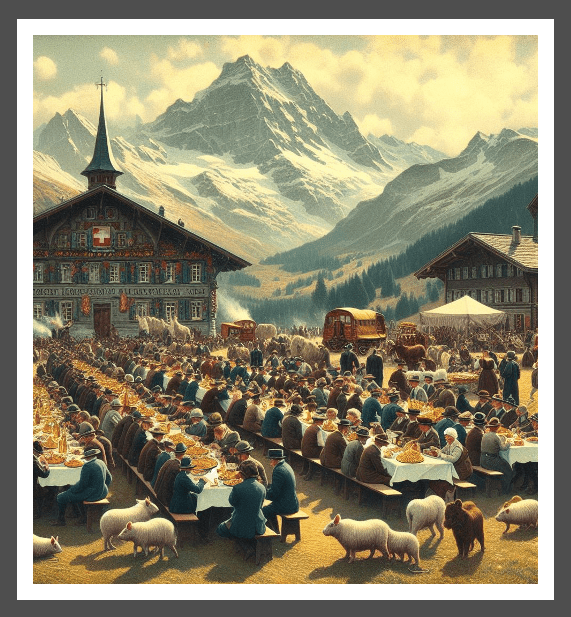
The image of Luc’s village is generated by Microsoft Copilot (Melodie Miller / AI Prompt Engineer)
Mais, Luc n’aimait pas partager. Alors, Luc est allé dans la grande ville.
But, Luc did not like to share. So, Luc went to the big city.

The image of Luc in the big city is generated by Microsoft Copilot (Melodie Miller / AI Prompt Engineer)
Sa famille était triste.
His family was sad.
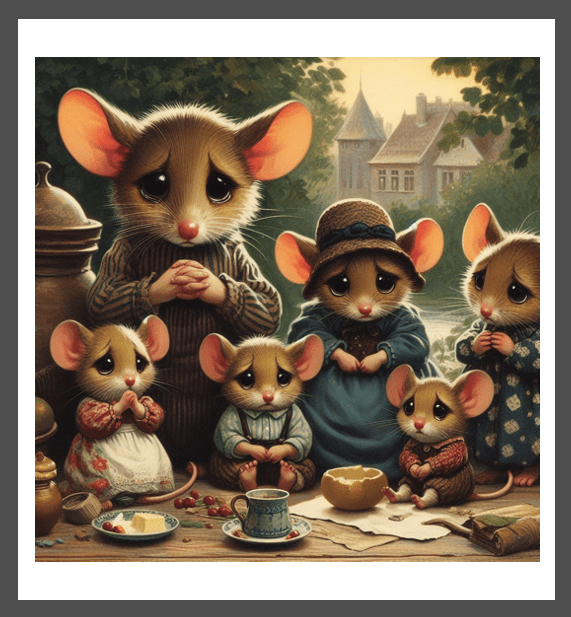
The image of Luc’s family is generated by Microsoft Copilot (Melodie Miller / AI Prompt Engineer)
Mais, Luc est heureux. Il rêve de ne pas partager sa nourriture.
But, Luc is happy. He dreams of not sharing his food.

The image of Luc is generated by Microsoft Copilot (Melodie Miller / AI Prompt Engineer)
Il rêve de manger tout le fromage seul.
He dreams of eating all the cheese alone.

The image of Luc is generated by Microsoft Copilot (Melodie Miller / AI Prompt Engineer)
Il pense qu’il y a beaucoup de nourriture dans la grande ville.
He thinks that there is a lot of food in the big city.

The image of Luc’s imagination of food in the big city is generated by Microsoft Copilot (Melodie Miller / AI Prompt Engineer)
Mais, quand Luc est allé au magasin pour trouver de la nourriture, un homme l’a chassé. L’homme n’aimait pas avec Luc.
But, when Luc goes to the store to find food, the man chases him. The man did not like to share with Luc.
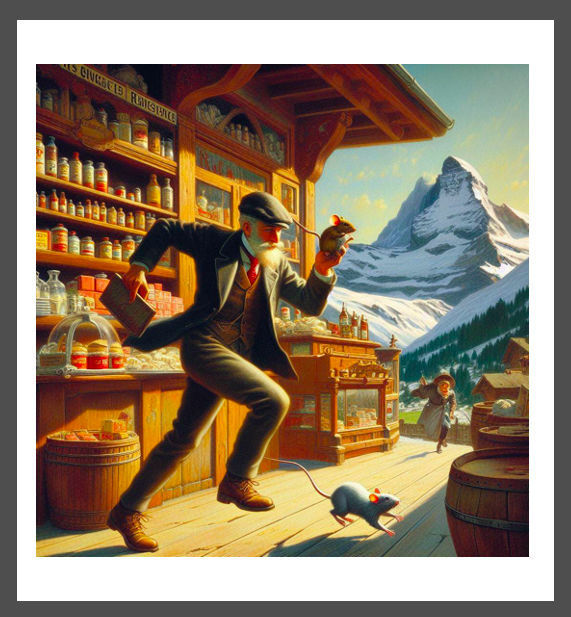
The image of Luc and the store keeper is generated by Microsoft Copilot (Melodie Miller / AI Prompt Engineer)
L’homme dit “Pas de souris autorisée.”
The man says “No mice allowed.”

The image of Luck and the “No Micse Alowed” is generated by Microsoft Copilot (Melodie Miller / AI Prompt Engineer)
Luc a appris qu’il doit partager pour avoir des amis.
Luc learns that he must share to have friends.

The image of a sad Luc is generated by Microsoft Copilot (Melodie Miller / AI Prompt Engineer)
Luc a appris à aimer partager parce que qu’il adore ses amis.
Luc learns that he likes to share because he loves his friends.

The image of Luc is generated by Microsoft Copilot (Melodie Miller / AI Prompt Engineer)
-
Annecy, France, the Venice of the Alps, has a rich and complex history
Annecy, pronounced ahn-SEE by the French, lies on the northern tip of Lake Annecy, 35 kilometers (22 mi) south of Geneva, Switzerland.
Once, under the House of Savoy, Annecy was in the County of Genevois and belonged to the Dukes of Savoy, a branch of the Genevois-Nemours family who ruled from 1514 to 1659.
For centuries, Annecy sat at the crossroads of competing powers, religions and borders, changing hands many times, settling only in 1860 as part of France.
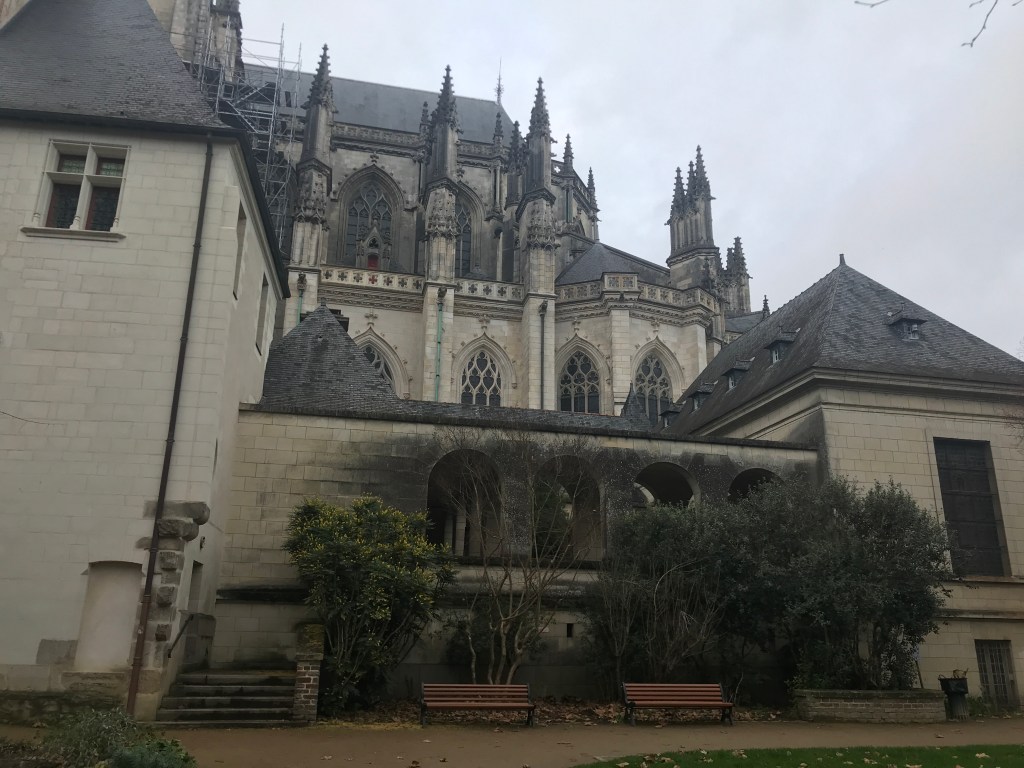
Old Town Annecy, with canals, the Palais de l’Isle, and the Château d’Annecy, retains the House of Savoy’s ambiance.
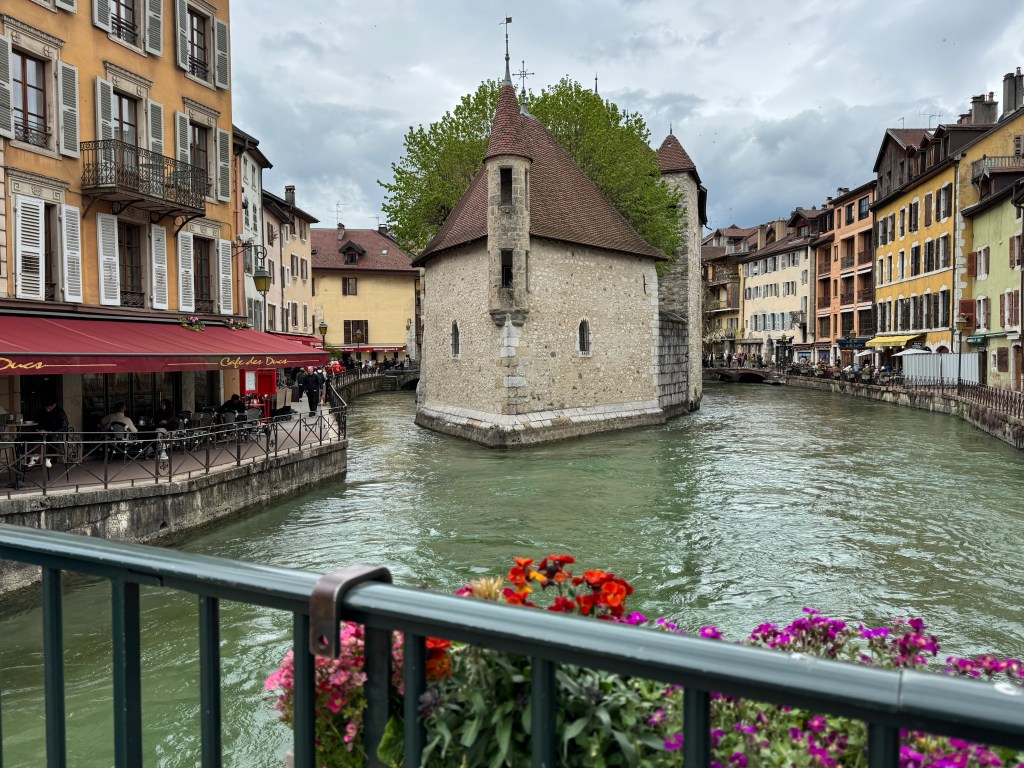
Palais de l’Isle in the Old Town of Annecy, France (Photograph by Melodie Miller)
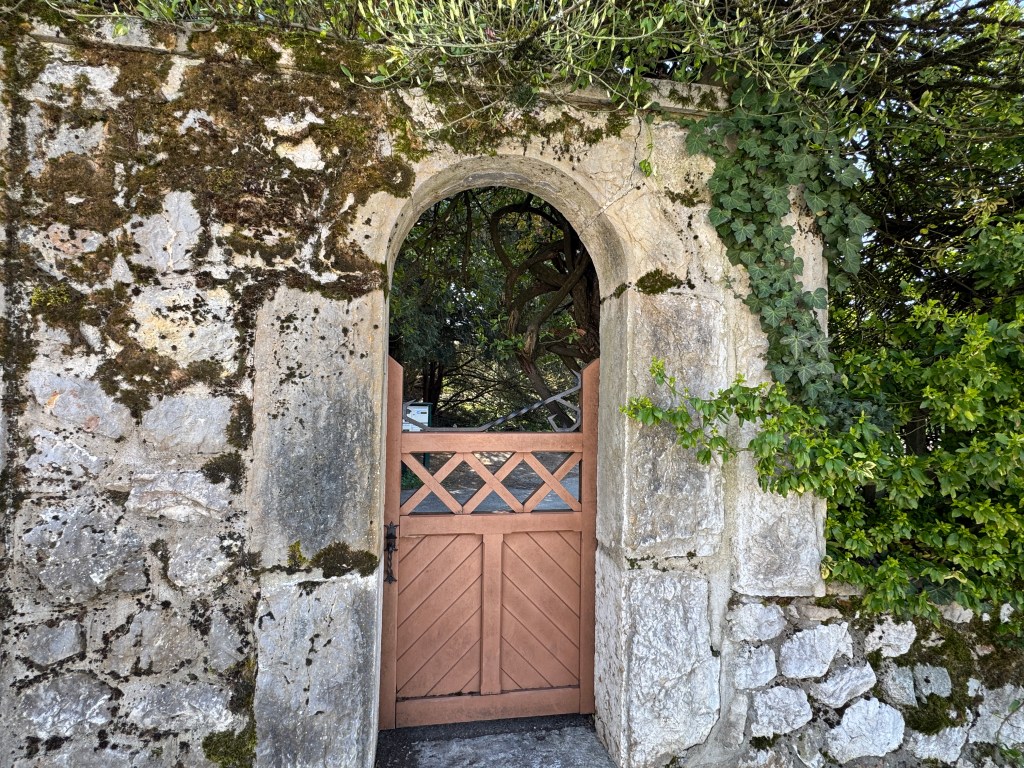
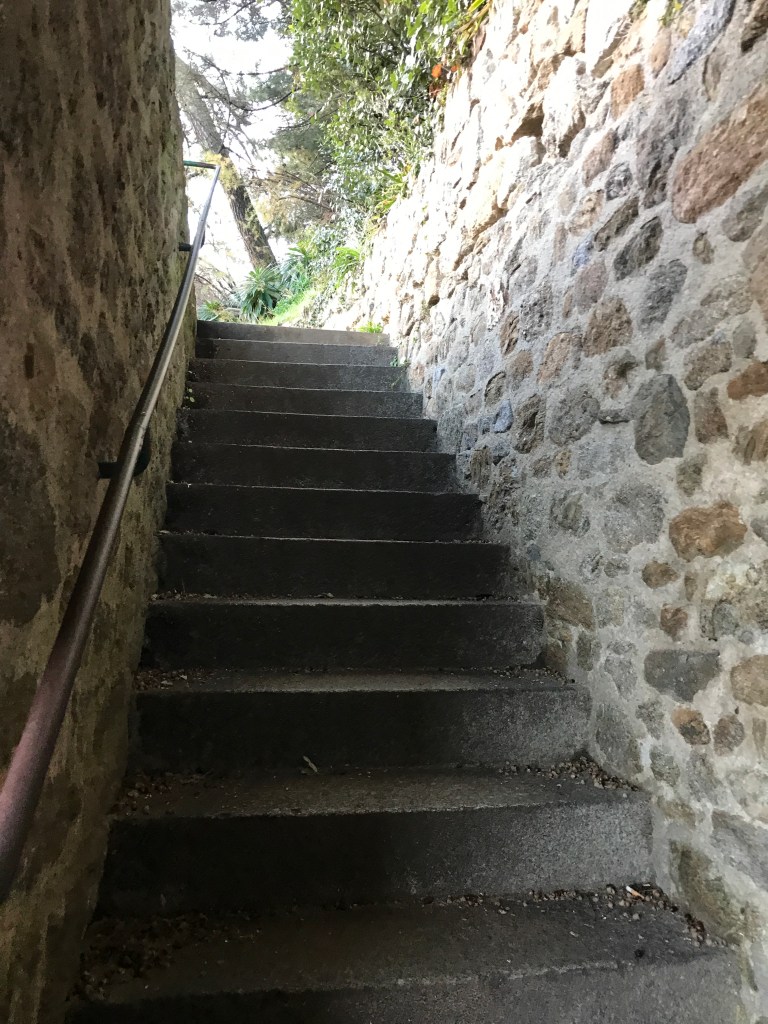
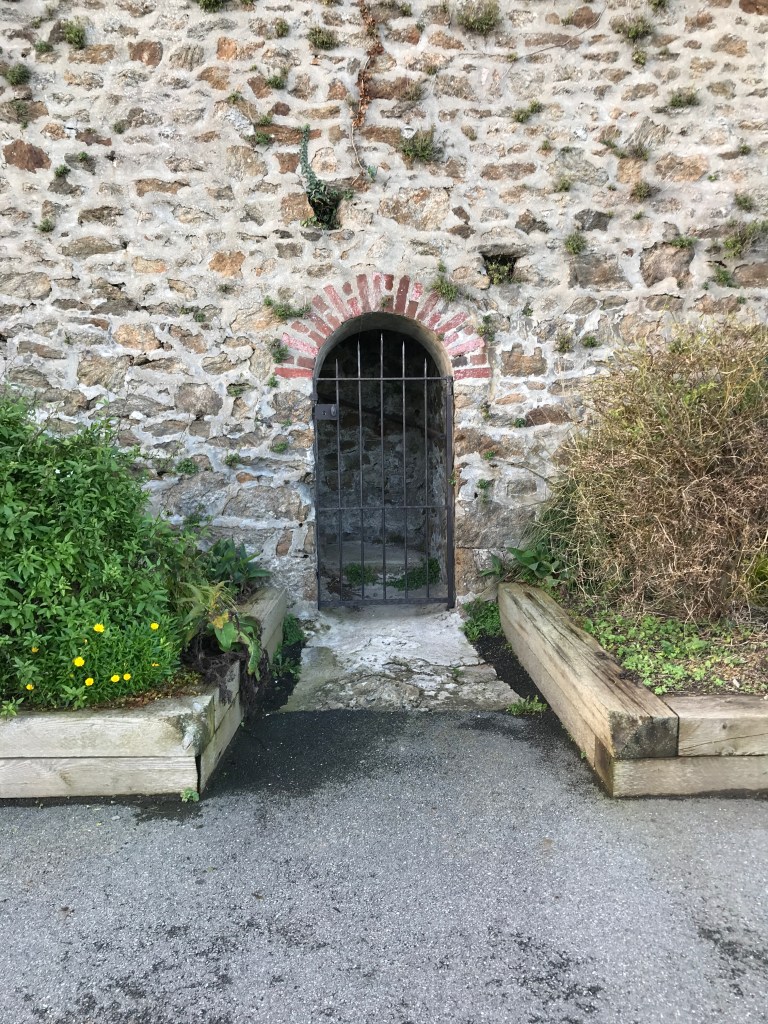
In Annecy, France, a charming small wooden gate with a classical Roman arch is the entrance to a hidden French garden. (Photograph by Melodie Miller)
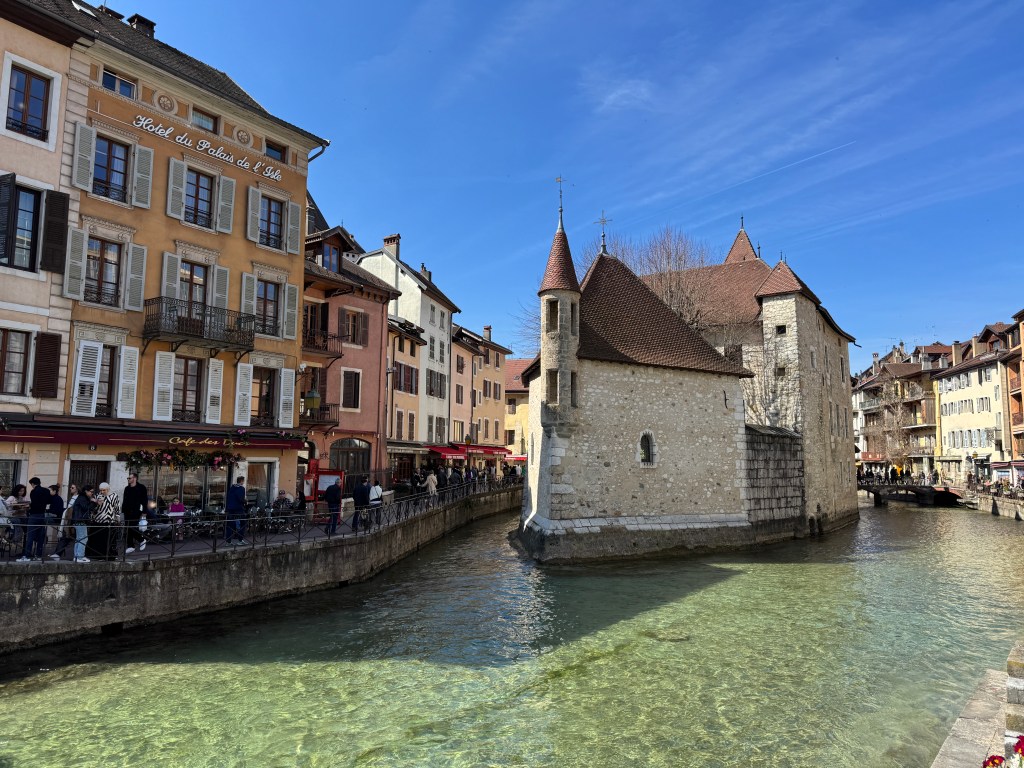
The Palais de l’Isle, a 12th-century, medieval fortified stronghold prison in 1325 and the mint of the Counts of Geneva, is now a museum in the Thiou River in Annecy, France. (Photograph by Melodie Miller)
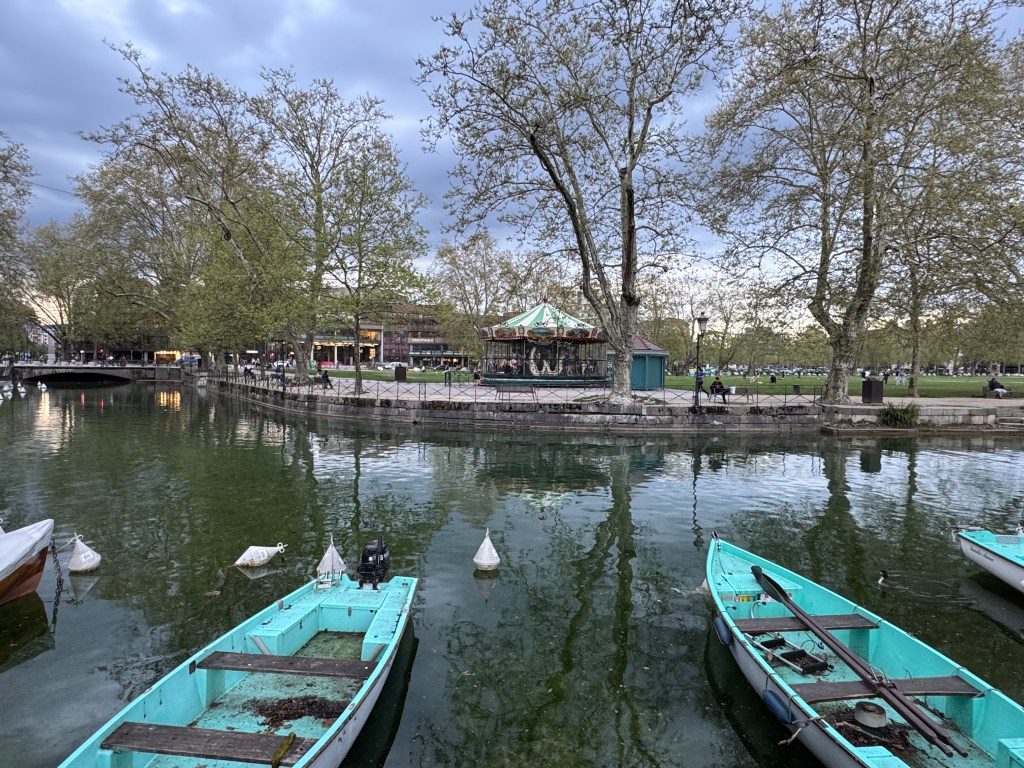
Canal du Vassé, a calm waterway that links to Lake Annecy. The Jardins de l’Europe and Ponts des Amours are visible in the background. (Photograph by Melodie Miller)

Actors at the Carnaval Vénitien d’Annecy wear ornate Venetian masks and costumes, standing in front of Lake Annecy. (Photograph by Melodie Miller)
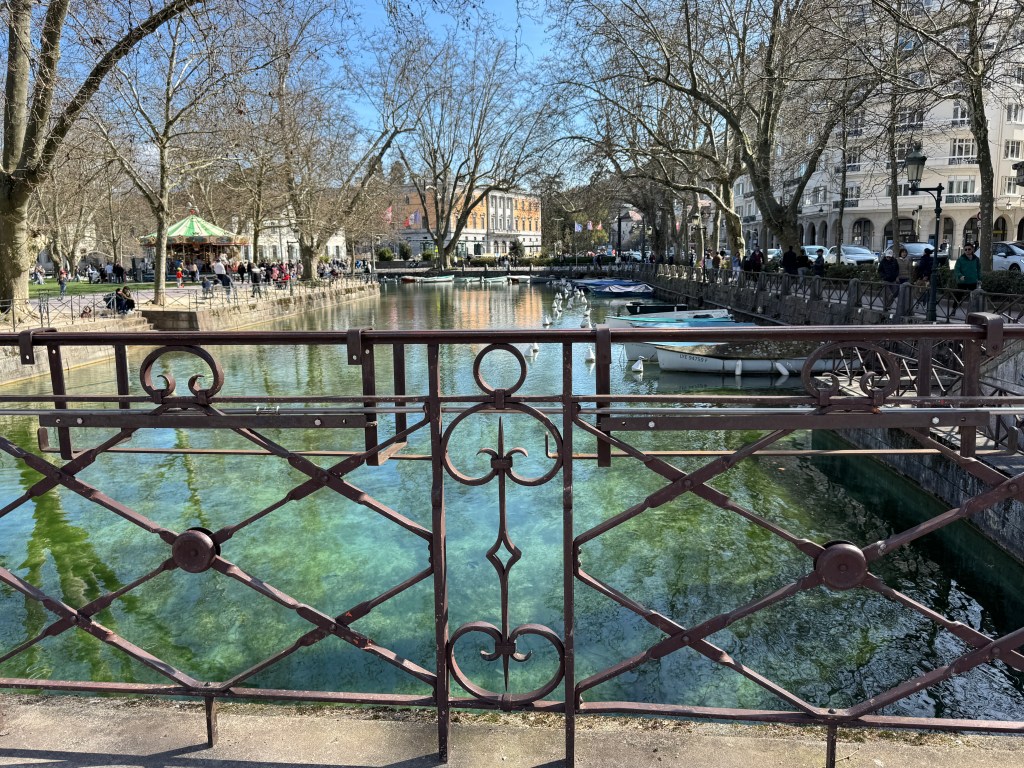
Pont Albert Lebrun, Annecy, France (Photograph by Melodie Miller)

Lake Annecy in Haute-Savoie, France, looking south toward the peaks of the Bornes Massif. (Photograph by Melodie Miller)
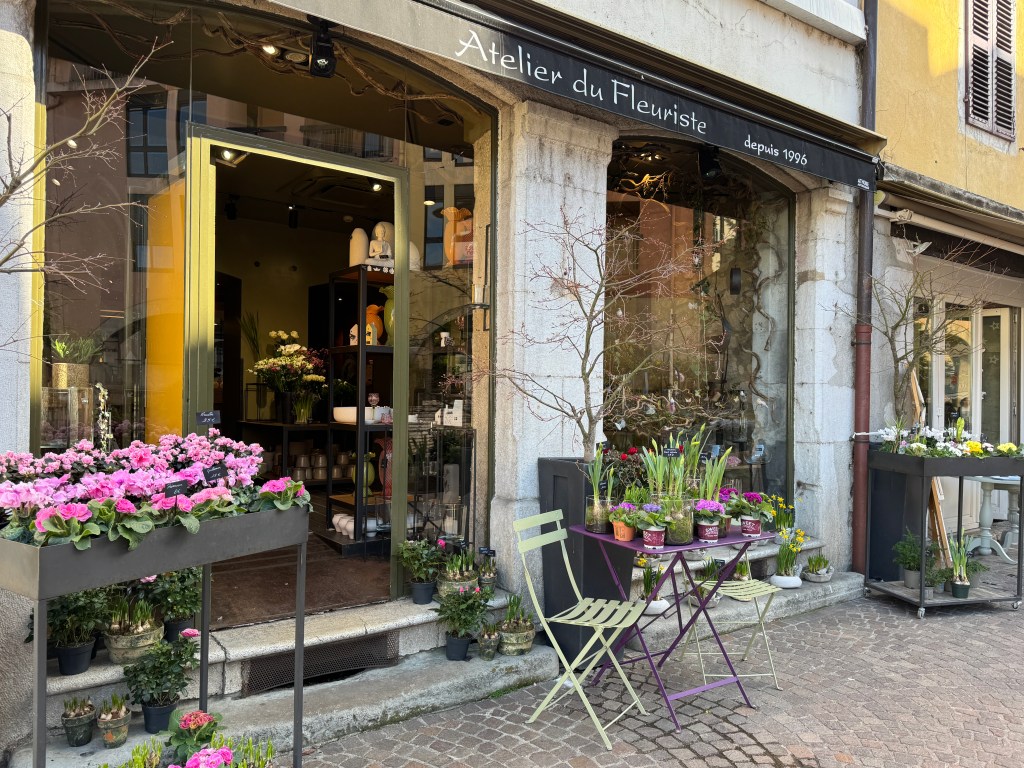
L’Atelier du Fleuriste, Annecy, France (Photograph by Melodie Miller)

Annecy, France, at the Sunday farmer’s market. (Photograph by Melodie Miller)
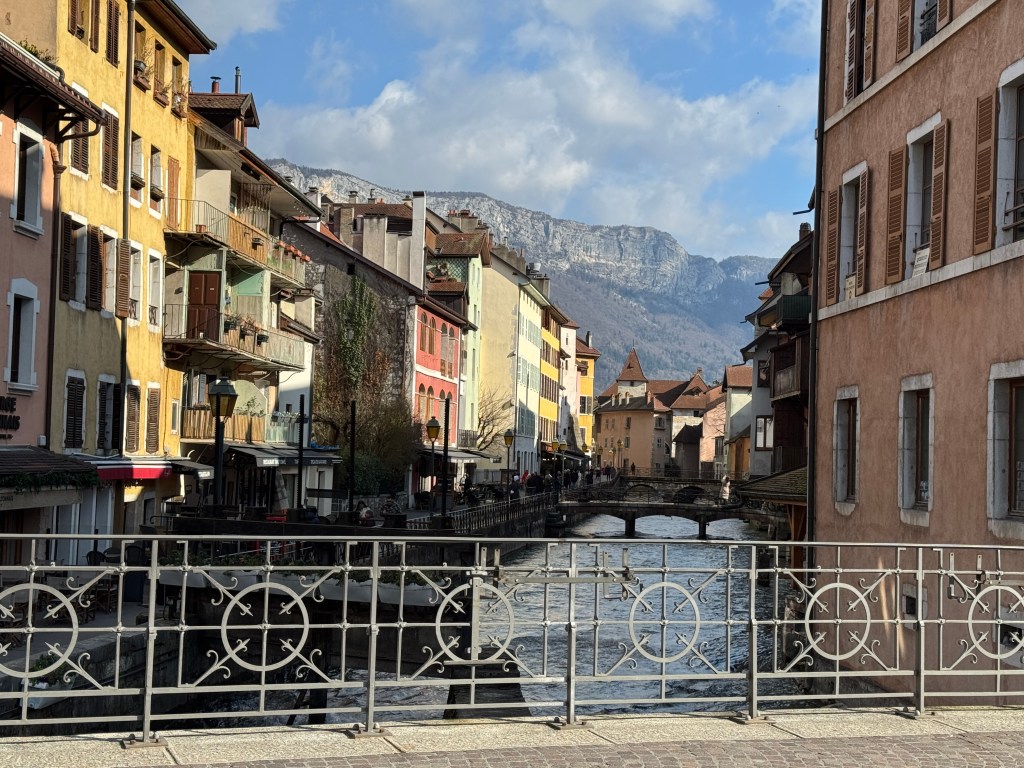
Historical Old Town of Annecy, France. (Photograph by Melodie Miller)

Orange Taxacco at the Annecy, France, farmer’s market.(Photograph by Melodie Miller)
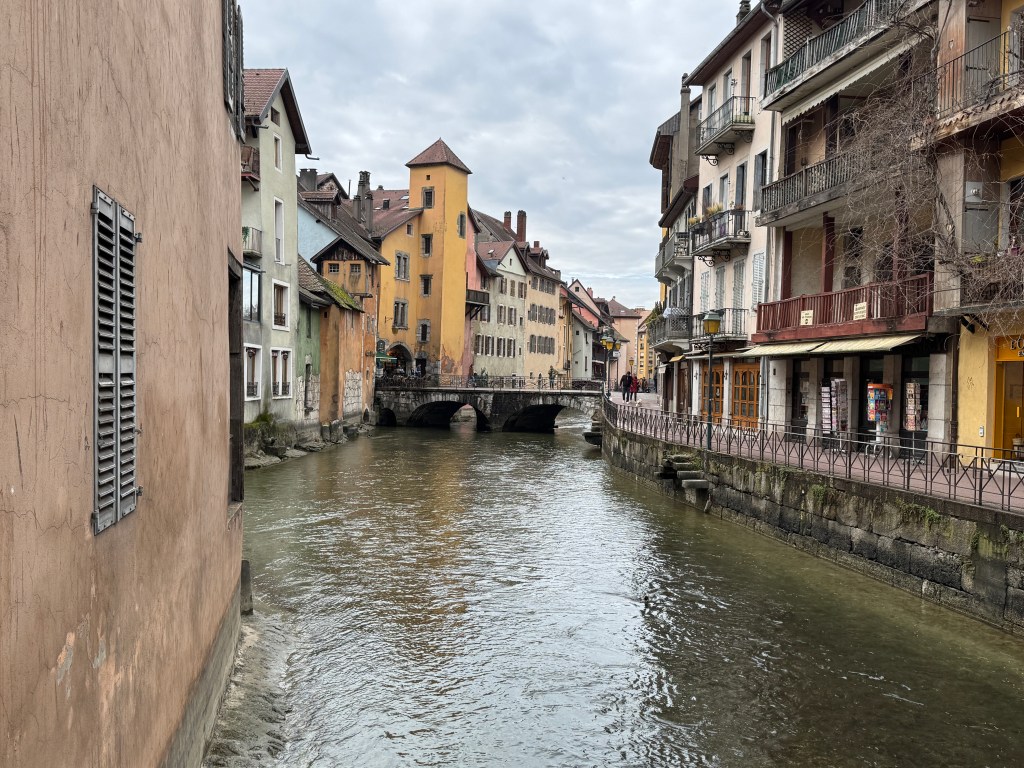
Thiou River and canal area in the historical Old Town of Annecy, France. (Melodie Miller)

In Annecy, France, the farmers’ market is full of delectable eats. (Photograph by Melodie Miller)
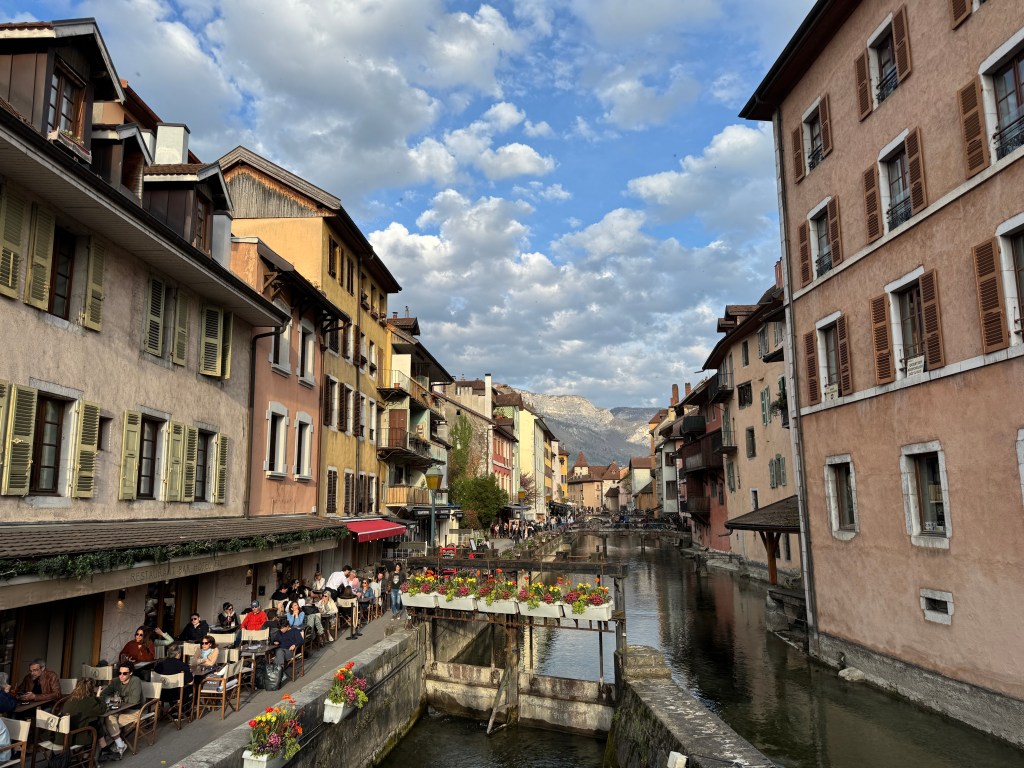
Annecy’s Old Town, France, is lined with gastronomic delights. (Photograph by Melodie Miller)
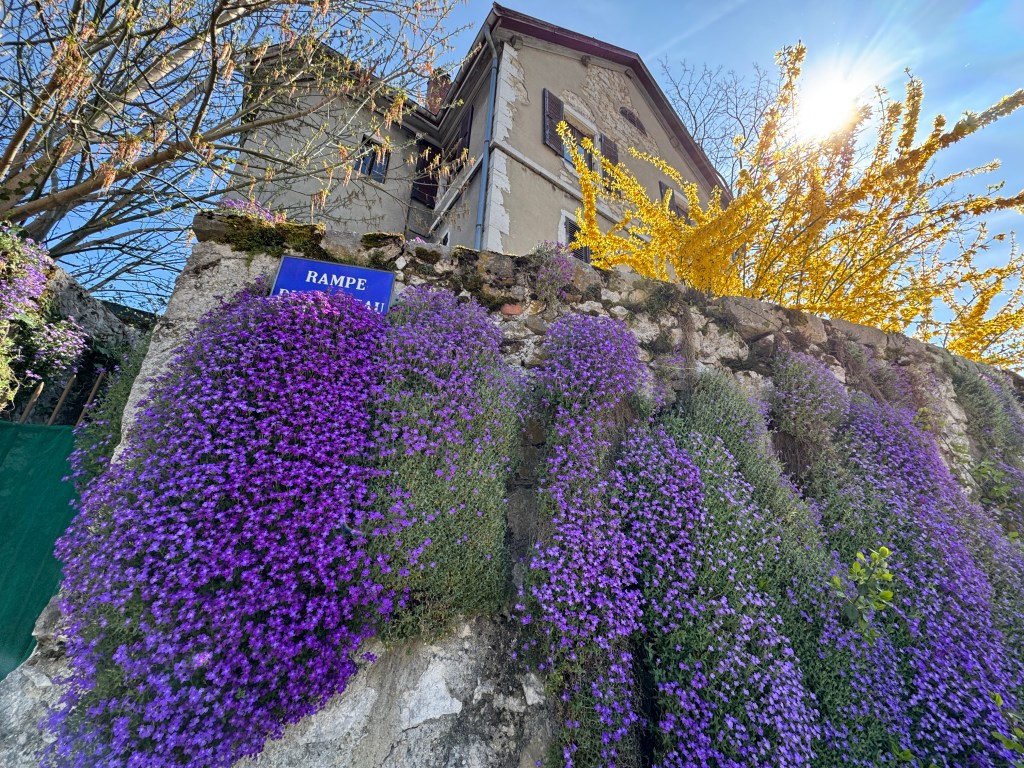
Purple rock cress cascades from the stone wall below the Château d’Annecy. (Photograph by Melodie Miller)
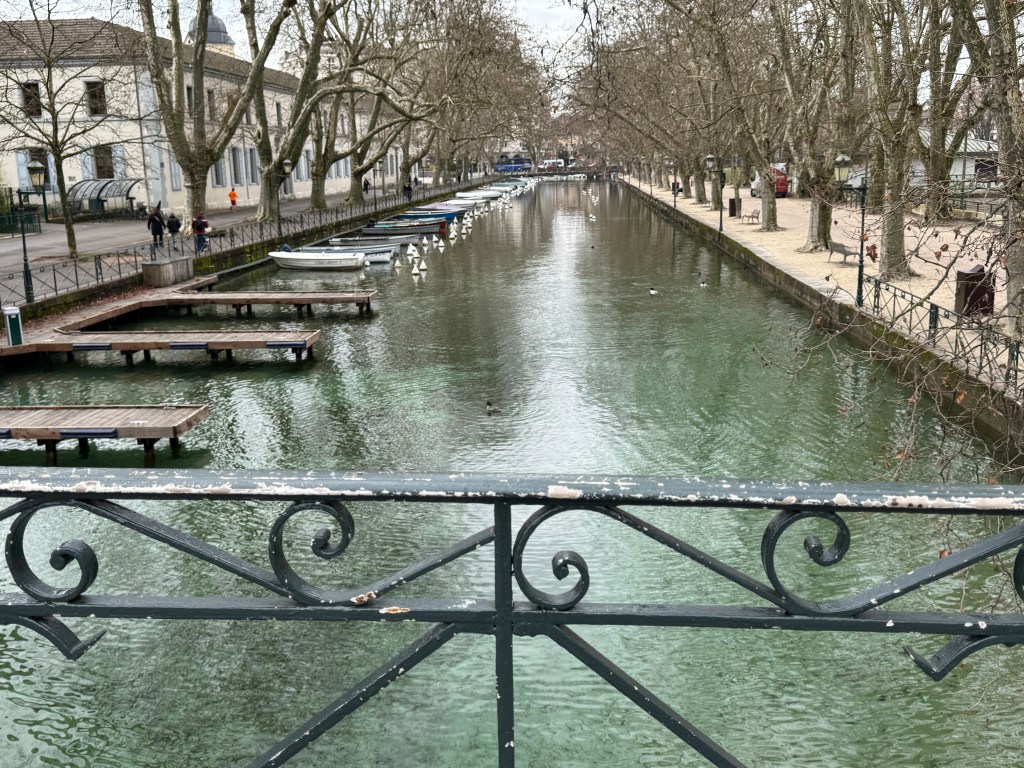
The tree-lined waterway of the Canal de Vasse looking down toward the Pont des Amours in Annecy, France. (Photograph by Melodie Miller)
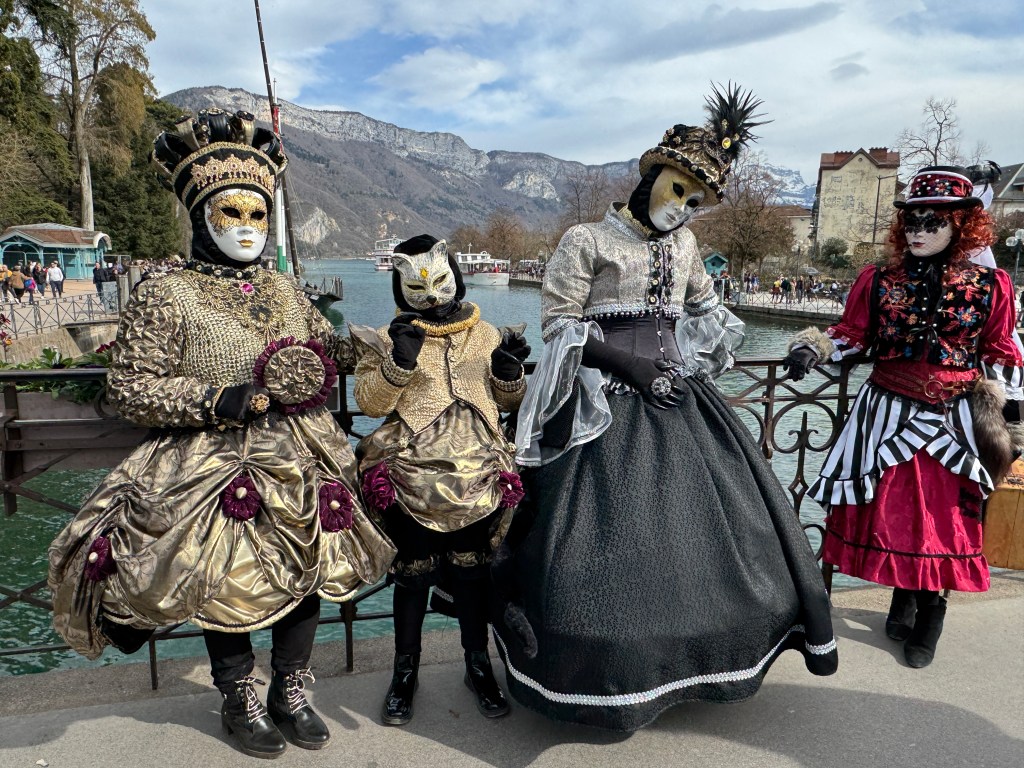
Actors at the Carnaval Vénitien d’Annecy wear ornate Venetian masks and costumes, standing in front of Lake Annecy. (Photograph by Melodie Miller)
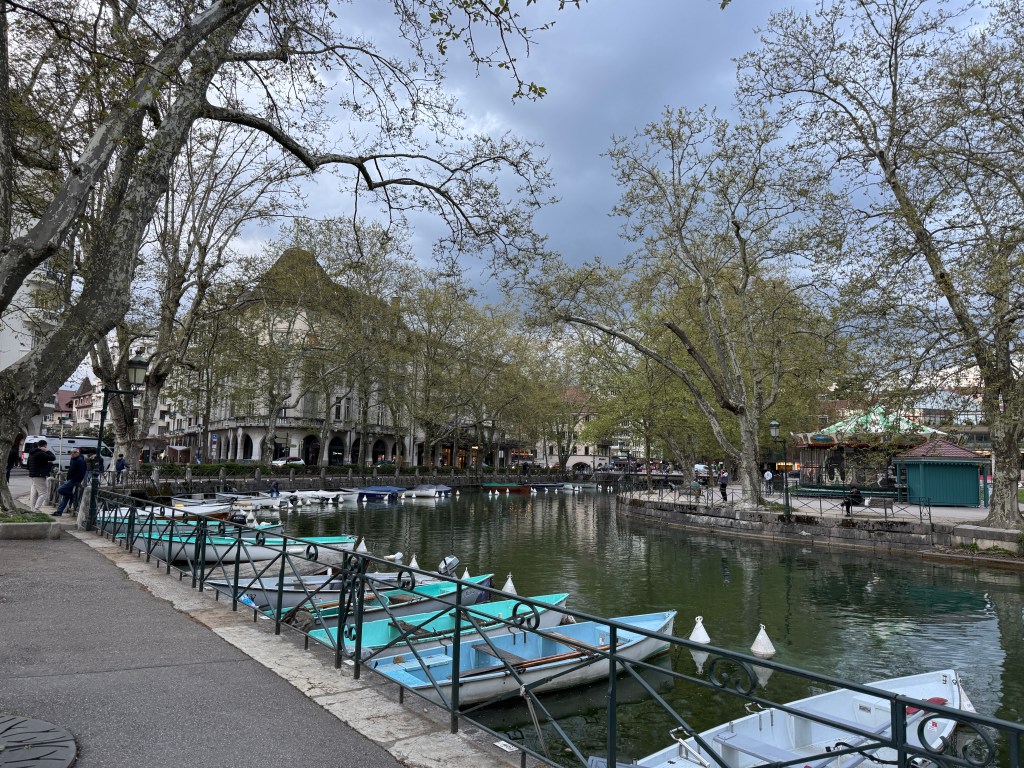
Canal du Vassé, a calm waterway that links to Lake Annecy. The Jardins de l’Europe and Ponts des Amours are visible in the background. (Photograph by Melodie Miller)
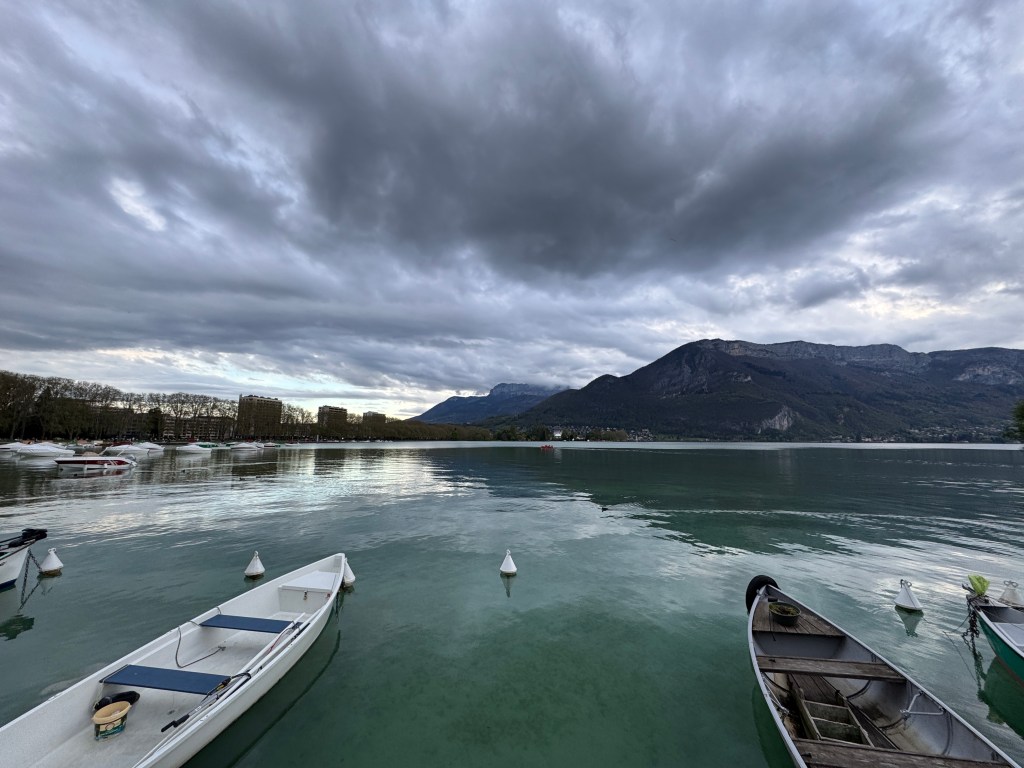
Lake Annecy looking to the south. (Photograph by Melodie Miller)
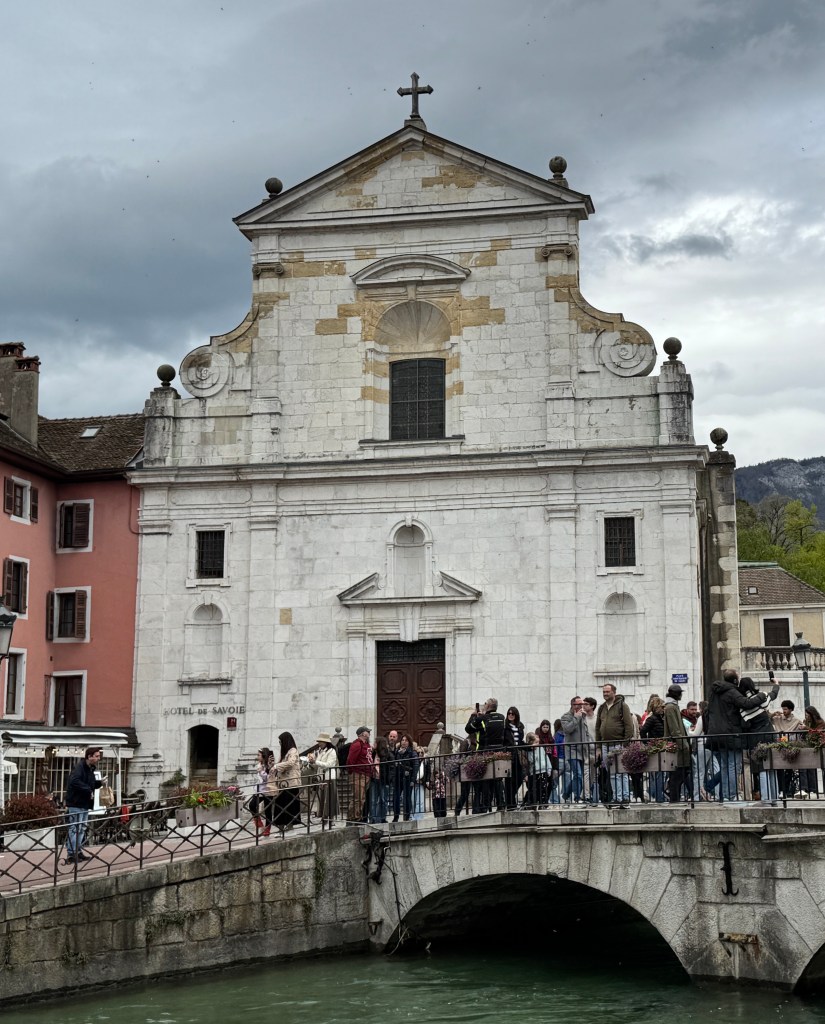
Just 43 km (25 miles) from Annecy, Geneva became a strong hold of the Protestant movement. Rejecting the movement’s austerity, Saint François de Sales, a Roman Baroque-inspired Catholic church on the Thiou canal in Old Town Annecy, France, was built in 1642.
Saint François de Sales exemplifies Counter-Reformation architecture that followed the Council of Trent (1545 to 1563), a response to the growth of Protestantism. Reformation called for more visible, emotionally engaging worship and sermons with a focus on clear sightlines to the altar. The hope was to bring people back to the Catholic church. (Photograph by Melodie Miller)

Annecy, France, farmers market on a Sunday morning. (Melodie Miller)

Enjoying a glass of Patrick Font Apricot Nectar at the L’Impérial Palace, on Lake Annecy, France. (Melodie Miller)

Île des Cygne (Swan Island), Annecy, France (Melodie Miller)
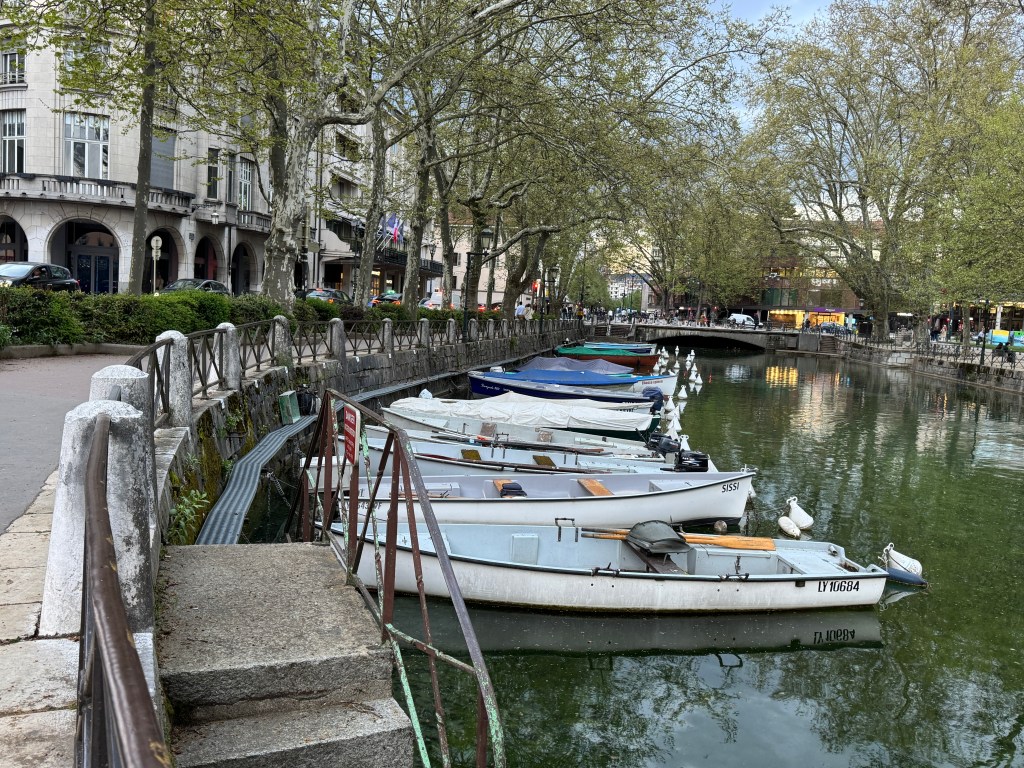
Lake Annecy boat canal, Annecy, France (Melodie Miller)
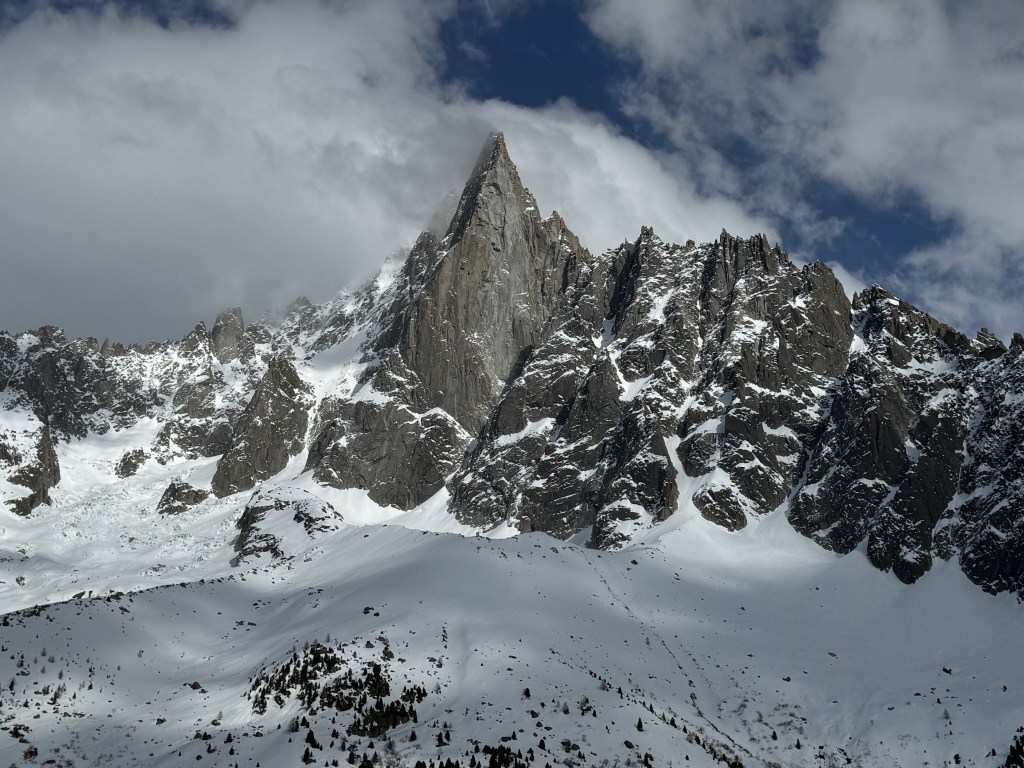
The mountain Aiguille du Dru in the Mont Blanc massif of the French Alps. (Melodie Miller)

Annecy, France, farmers’ market heirloom tomatoes. (Melodie Miller)

La Tavern de Pontverre, Lovagny, France (Melodie Miller)
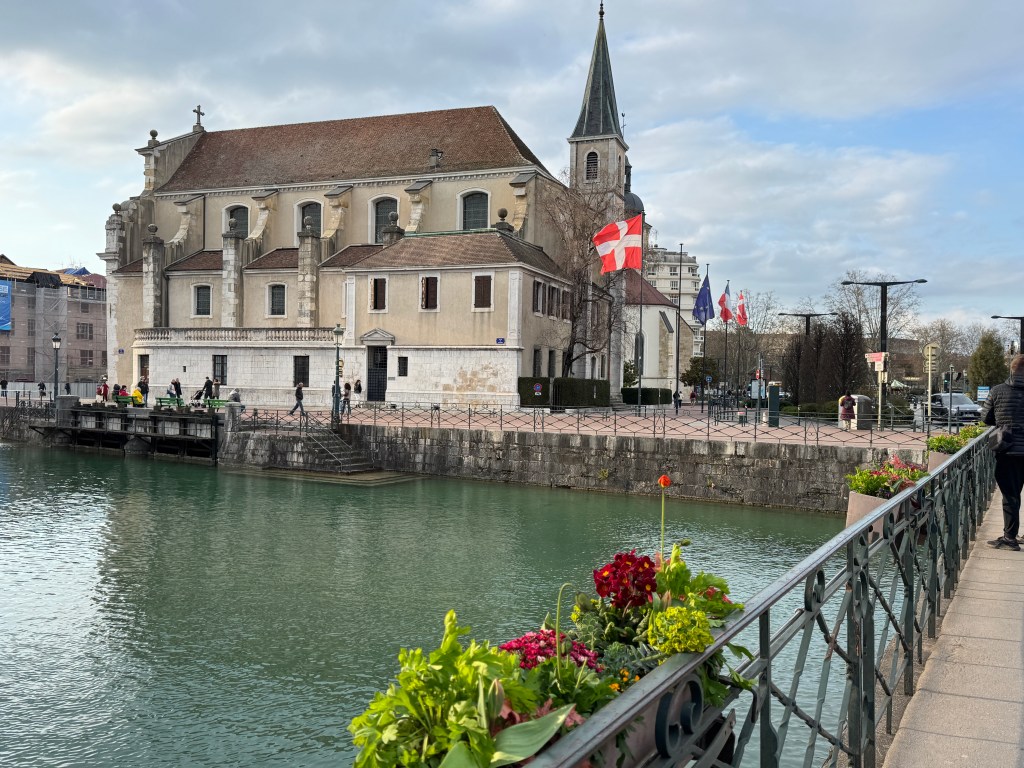
Église Saint-François de Sales, a Baroque-style Catholic church dating to 1642 in Annecy, France. (Melodie Miller)
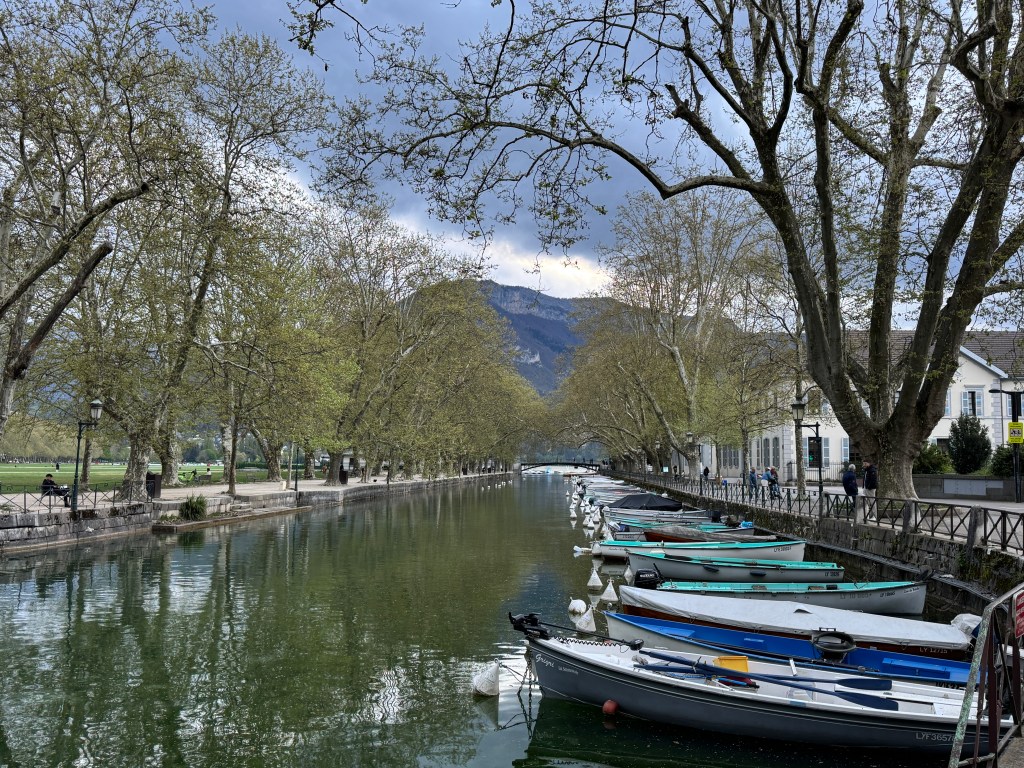
Lake Annecy boat canal, Annecy, France (Melodie Miller)
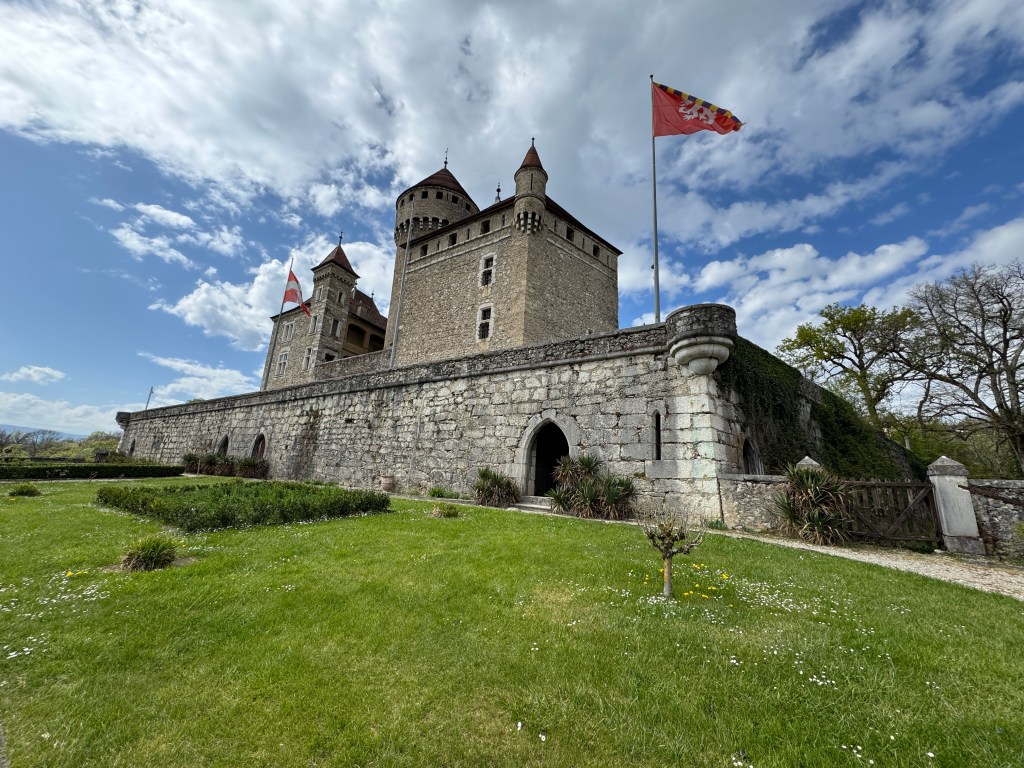
Château de Montrottier, Annecy France, (Melodie Miller)
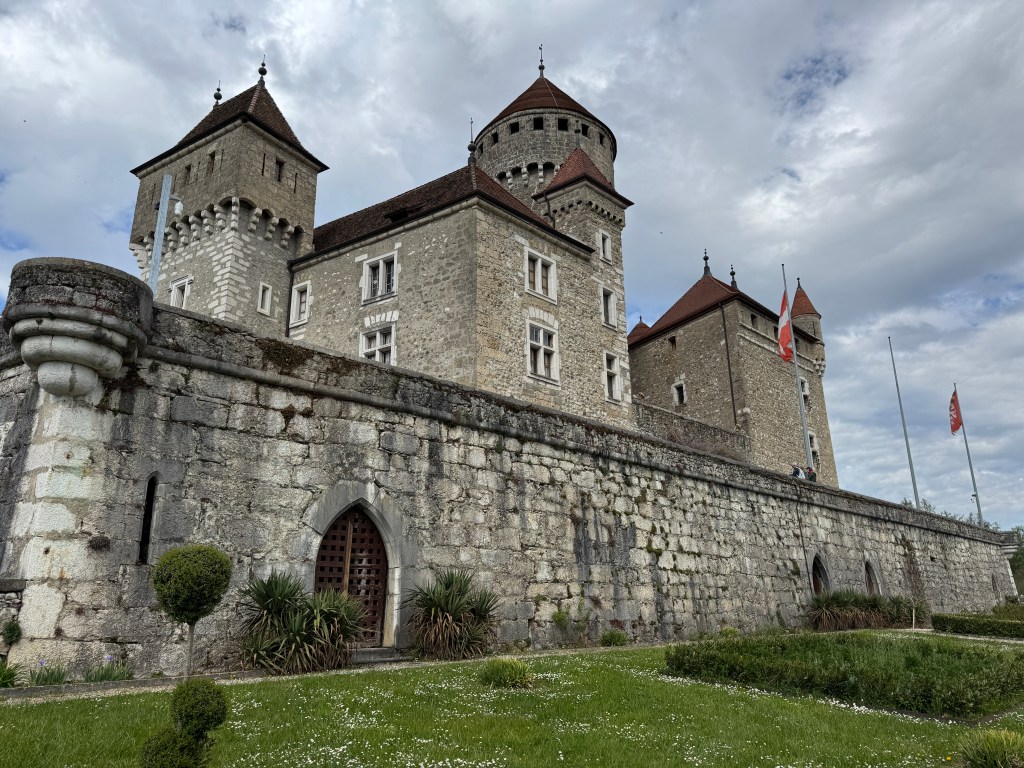
Château de Montrottier, Annecy, France (Melodie Miller)
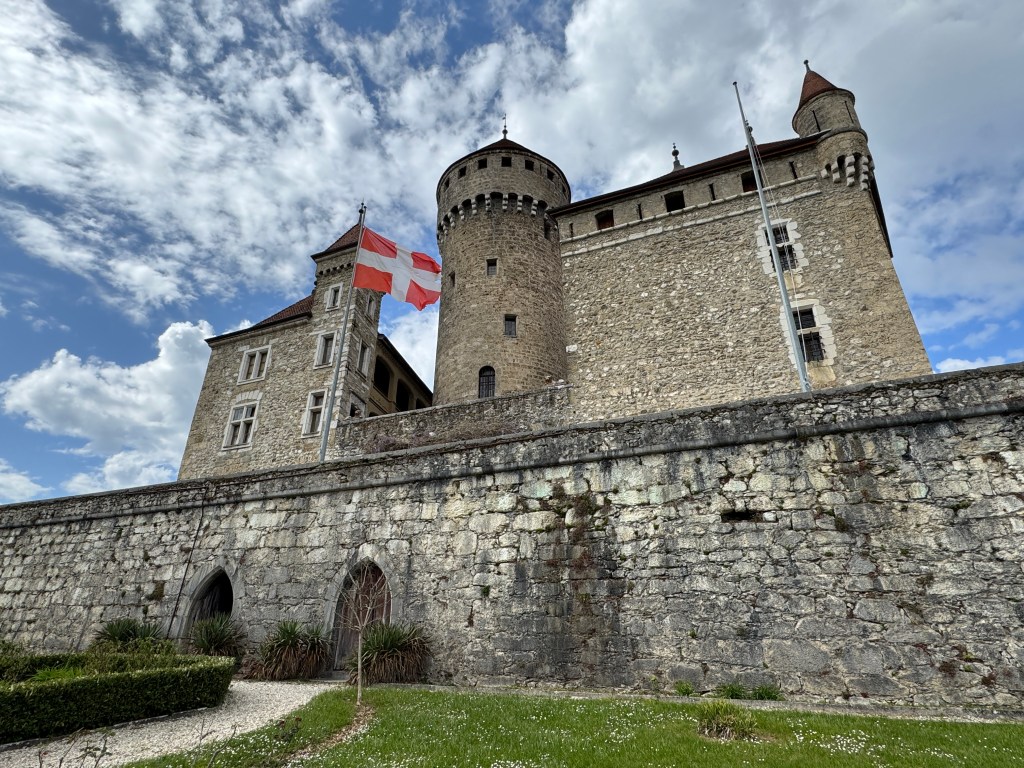
Château de Montrottier, Annecy, France (Melodie Miller)
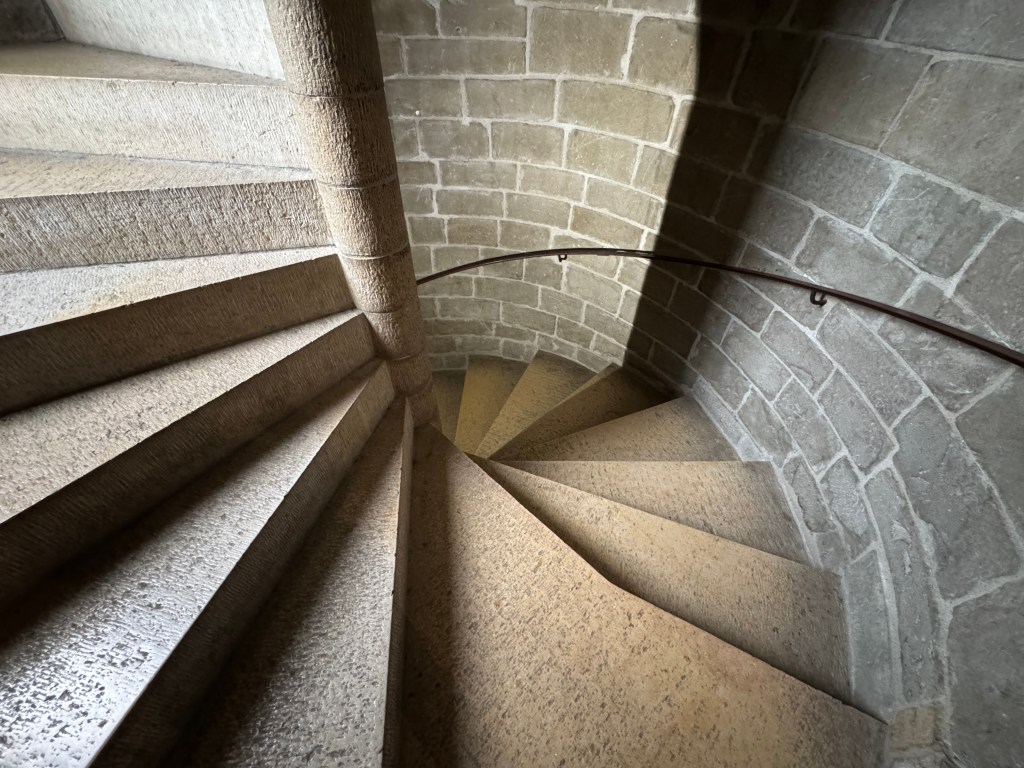
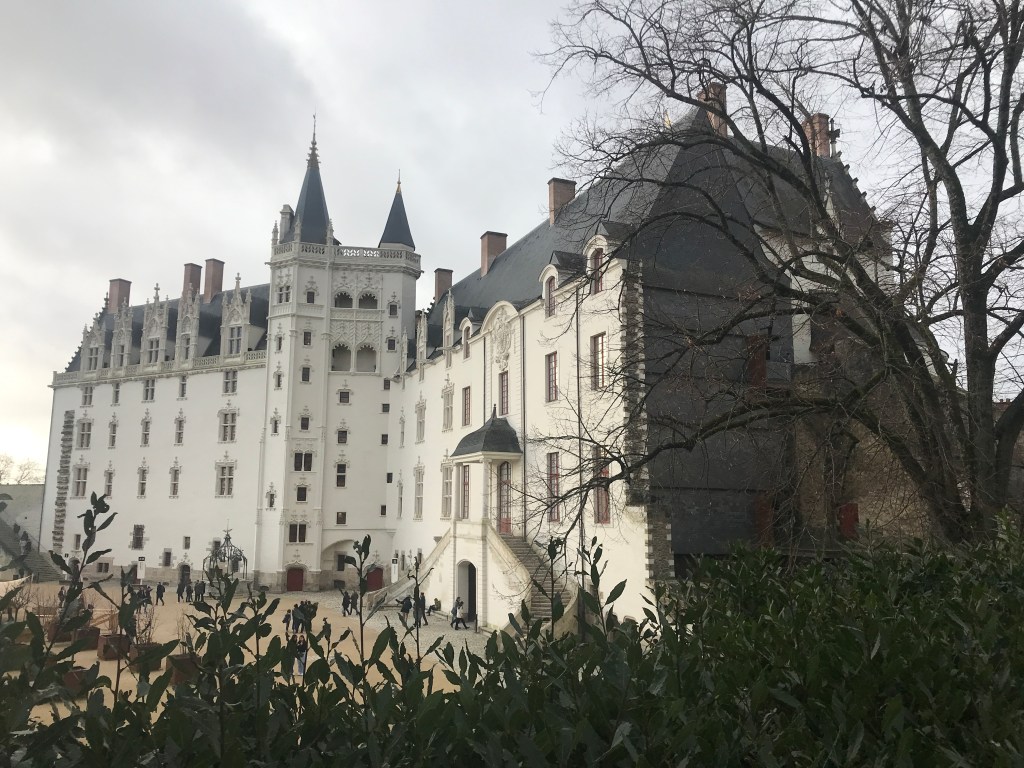
Château d’Annecy, Annecy, France (Melodie Miller)
-
“Let the Right One In”
C.U. Presents closed its modern vampire love story to a packed house at the University of Colorado Loft Theatre in Boulder.
Director Heather Kelley’s adaptation of Jack Thorne’s play “Let the Right One In” closed to a sold-out audience on Sunday, Oct. 20, at the University of Colorado Loft Theatre.

“Let the Right One In” playground scenic design by Hyley Delich, illuminated with blue light. (Melodie Miller | Photographer)
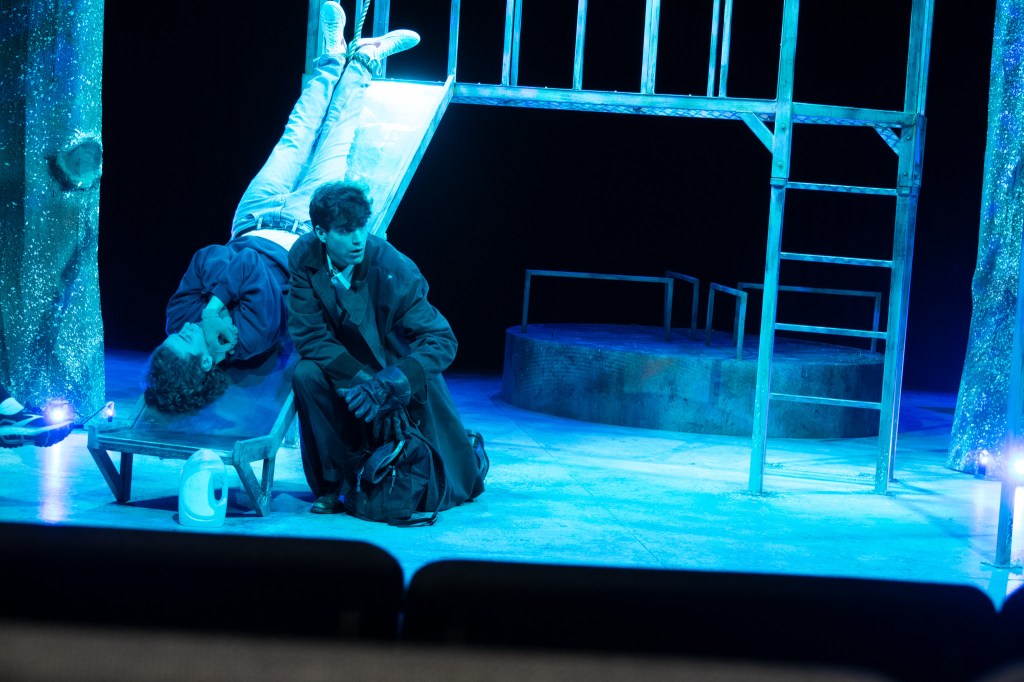
Roan Cochrane as Hakan (Right) drains the blood from his victim played by Ian McCance (Left). (Melodie Miller | Photographer)
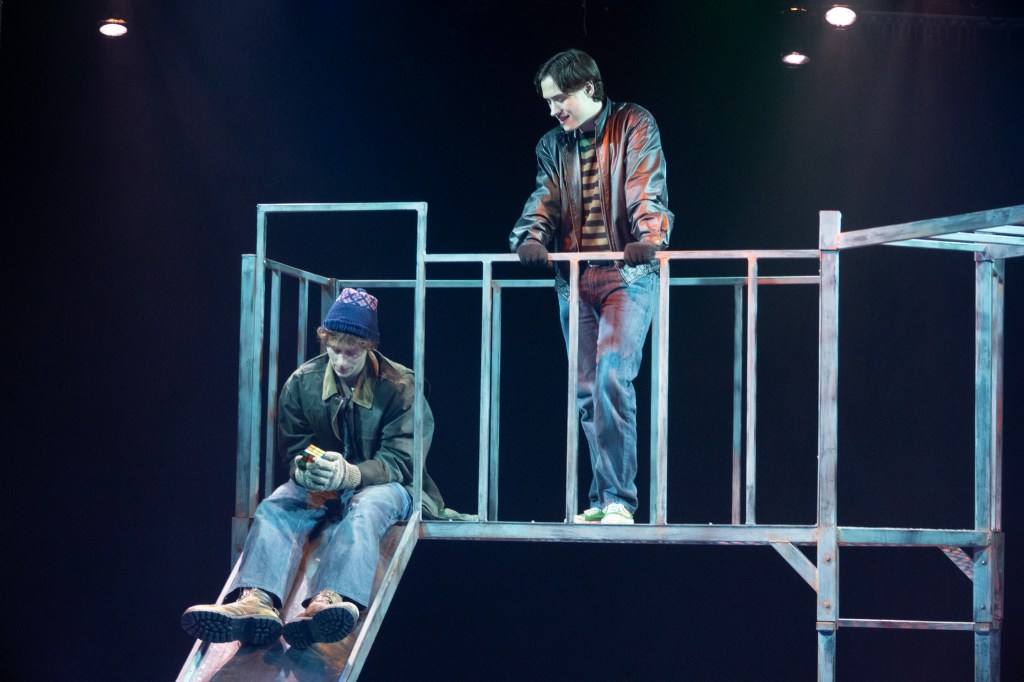
Bully Jonny, played by Ian Von Pechmann, talks with Oskar, played by Salem Channell. (Melodie Miller | Photographer)

“Let the Right One In” playground setting designed by Hayley Delich is illuminated with pink light. (Melodie Miller | Photographer)

The menacing playground of “Let the Right One In” stands empty.(Melodie Miller | Photographer)
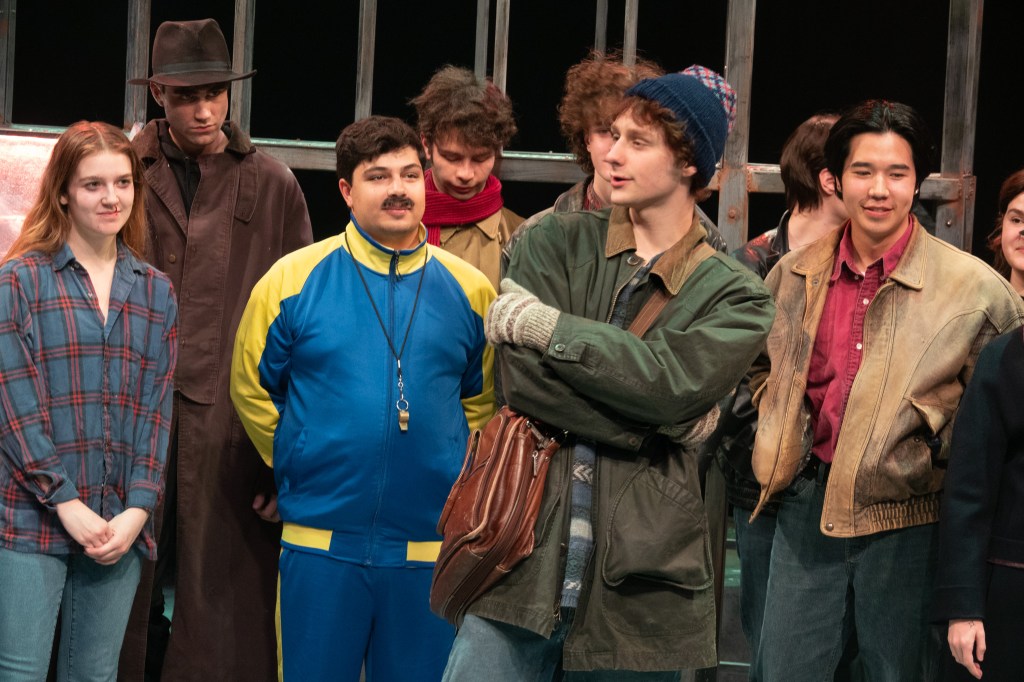
Salem Channell as Oscar (center front); Middle row: Wyleigh Watson as Eli, Charlie Hough as Mr. Avila, Sam Stitt as Jimmy, Pechmann as Jonny. Back row: Roan Cochrane as Hakan, Ian McCance as Dad, Cade Heaton as Micke, Savannah Gullett (far right, back) as Mum. (Melodie Miller | Photographer)
-
2026 Denver Film Festival honors John Leguizamo
John Leguizamo’s career reflects the independent spirit the award celebrates.
by Melodie Miller | November 11, 2026
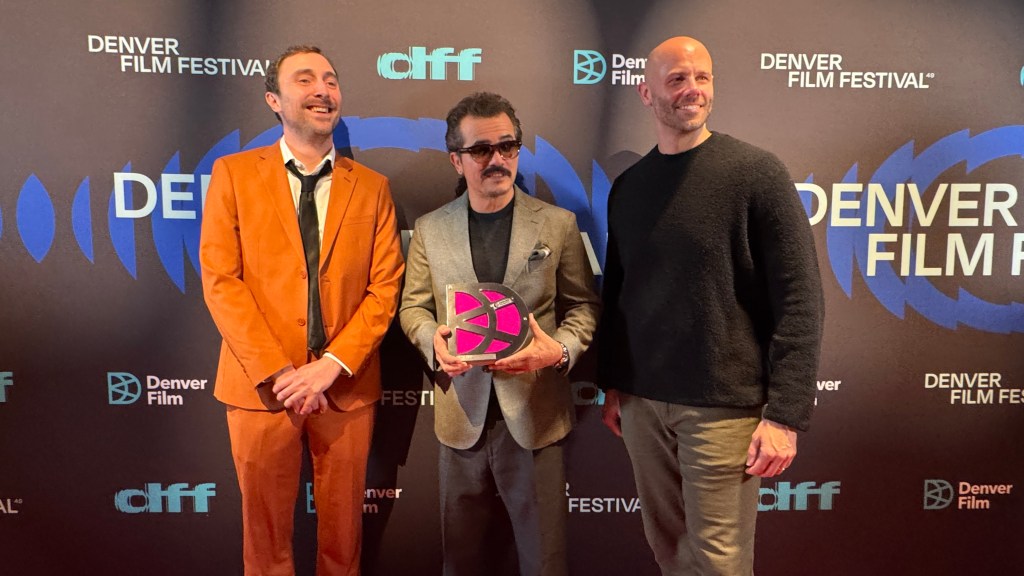
From left, Denver Film Artistic Director Matthew Campbell, John Leguizamo and Denver Film CEO Kevin Smith pose with the John Cassavetes Award at the Sturm Infinity Theater at the Denver Museum of Nature & Science. (Melodie Miller | CU Independent)
John Leguizamo attended the red carpet in Denver at the Sturm Infinity Theater at the Denver Museum of Nature & Science to accept the 49th Denver Film Festival’s highest honor, the John Cassavetes Award, before introducing Christopher Nolan’s “The Odyssey” to the audience.

John Leguizamo plays Eumaeus, an old and blind swineherd loyal to Odysseus in Christopher Nolan’s “The Odyssey.” (Courtesy of Universal Pictures)
In the film, Leguizamo plays Eumaeus, a serious, pragmatic figure in Western literature. However, on the red carpet, Leguizamo is delightful, sharing anecdotes about making “The Odyssey” with Christopher Nolan and Matt Damon.
Read the full story by Melodie Miller at the CU Independent and get the inside scoop.
-
2026 Denver Film Festival honors John Leguizamo
John Leguizamo’s career reflects the independent spirit the award celebrates.
by Melodie Miller
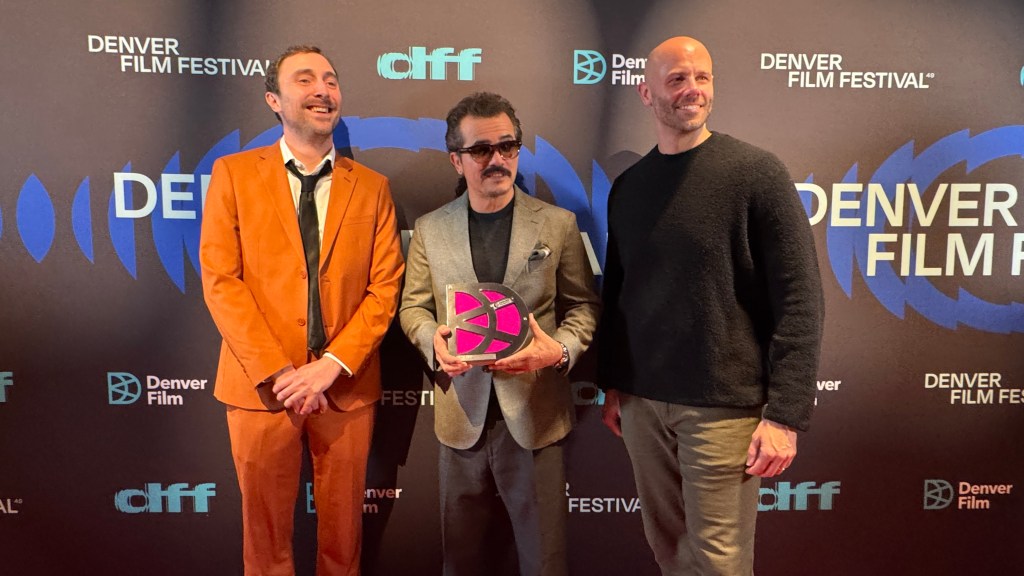
From left, Denver Film Artistic Director Matthew Campbell, John Leguizamo and Denver Film CEO Kevin Smith pose with the John Cassavetes Award at the Sturm Infinity Theater at the Denver Museum of Nature & Science. (Melodie Miller | CU Independent)
The 49th Denver Film Festival presented John Leguizamo with its highest honor, the John Cassavetes Award on Oct. 30. The award recognizes artists who show the independent spirit of the man often called the father of American independent film.
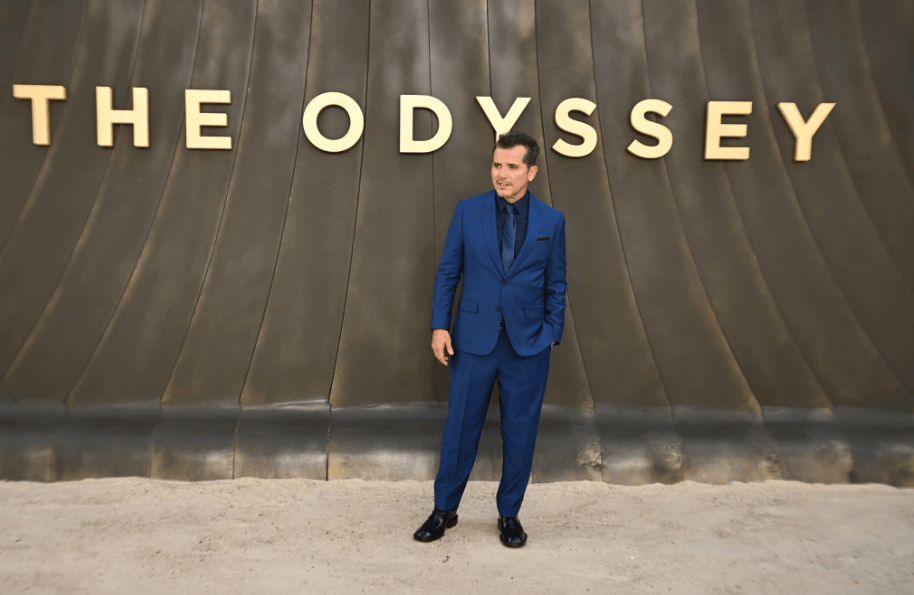
John Leguizamo, who plays Eumaeus in Christopher Nolan’s “The Odyssey,” poses at the world premiere on July 6 at the Odeon Lux Leicester Square in London, England. (Courtesy of Universal Pictures)
Before the ceremony’s screening of Christopher Nolan’s “The Odyssey,” John Leguizamo talked about playing Eumaeus, the old and blind swineherd he calls “the most loyal character in Western literature.”

John Leguizamo plays Eumaeus, an old and blind swineherd loyal to Odysseus in Christopher Nolan’s “The Odyssey.” (Courtesy of Universal Pictures)
Leguizamo accepted the 2026 Cassavetes Award, calling his role as Eumaeus in “The Odyssey” the most vulnerable role of his career.
Read the full story at the CUIndependent.
-
“Beetlejuice:” Never trust the living or the mischievous dead
Thirty-eight years later, “Beetlejuice” reminds audiences that not all ghosts are bad.
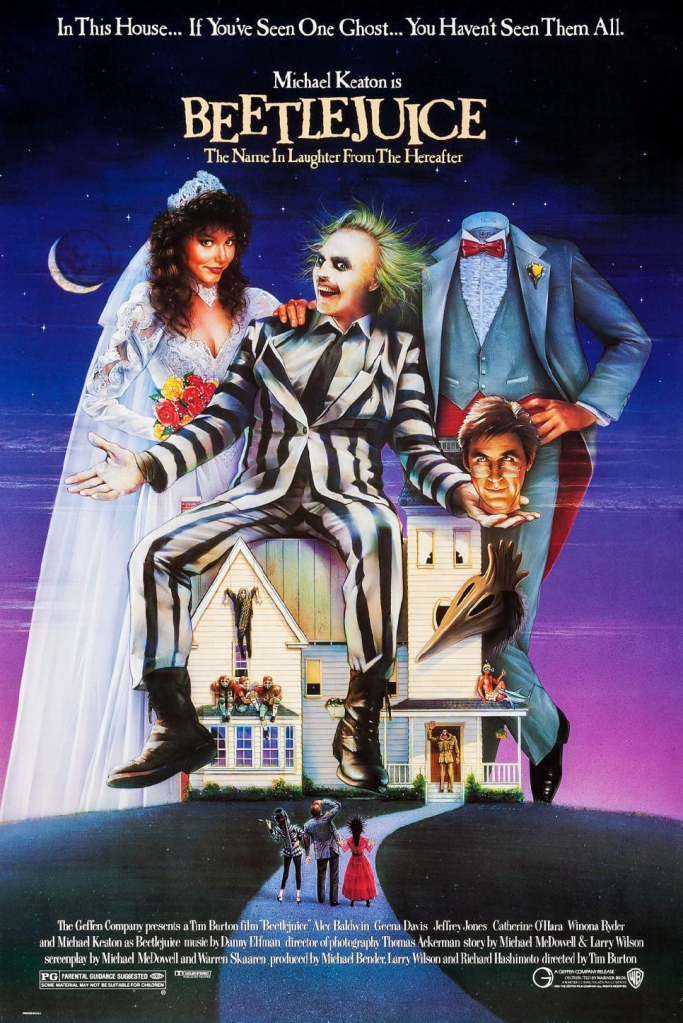
Geena Davis (left) as Barbara Maitland, Michael Keaton as Beetlejuice and Alec Baldwin as Adam Maitland are outside their quaint farmhouse in the fictitious town of Winter River, Connecticut. (Courtesy of Warner Bros.)
Then came the end of the harvest and the dark nights. Bonfires were lit, costumes donned and treats set out, a custom of offering hospitality to entities and ancestors who lived beyond the veil in the Netherworld. This was Samhain, a 2nd-century CE Gaelic ritual practiced in ancient northern Europe before winter’s threat began. It was a celebration that shaped Halloween and historical ghost stories.
This Halloween, as we remember Tim Burton’s “Beetlejuice” (1988), thirty-eight years after it first haunted theaters, the most trustworthy characters in Winter River, Connecticut, are still the dead.
The Melodious Report visits Burton’s classic, where the satire has grown sharper and the title character’s humor has not aged well.
Read the full review to find out why “Beetlejuice” earns a Melodious Thumbs Up, with a caveat.
-
Anthony Ippolito embodies Sylvester Stallone in “I Play Rocky”
Screenwriter Peter Gamble joins the 49th Denver Film Festival to present the dream that became history.
by Melodie Miller | November 2, 2026

Anthony Ippolito, as Sylvester Stallone, celebrates during a training run through Philadelphia in a scene from “I Play Rocky.” (Courtesy of Amazon MGM Studios, Baha Productions and Fireside Films)
The studio executives wanted the “Rocky” script, but not the unknown actor who wrote it, Sylvester Stallone. They wanted a star. They didn’t realize they were looking at one.
“I Play Rocky,” directed by Peter Farrelly and written by Peter Gamble, stars Anthony Ippolito as Stallone, who gives an award-worthy performance as Gamble’s words jump off the page.
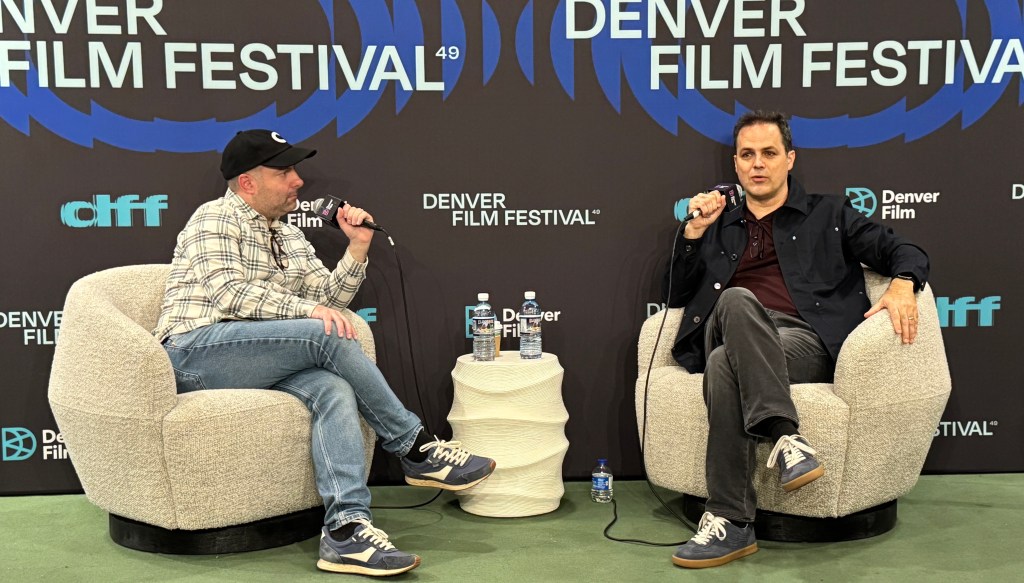
Chris Rosen of The Ankler interviews Peter Gamble at the Tattered Cover in Denver. (Melodie Miller / CU Independent)
Melodie Miller spoke with Gamble on the 49th Denver Film Festival red carpet and at the Tattered Cover in Denver about his journey of turning a dream into reality.
Read the full story by Melodie Miller in the CU Independent.
-
“Welcome to the Fishbowl” Unleashes Chaos in Colorado
An epic farce that invites a temporary suspension of disbelief — a fun place to be.
by Melodie Miller | October 28, 2026

Jeremy Swift, left, plays Storm Grandquist, a narcissistic writer escorted by Elizabeth Ford, played by Natalie Gold, to the Big Literary Award celebration in Telluride. (Courtesy of By And Large Medialabs)
Director Sheryl Glubok’s road trip comedy, “Welcome to the Fishbowl,” screened at the 49th Denver Film Festival on Oct. 23 at MCA Denver Holiday Theater as one of the festival’s Colorado Spotlight series.
Filmed and set in Colorado, the screwball comedy uses the landscape as a backdrop for a chaotic comedy of remarriage that includes stolen cars, a jailbreak, and second chances.
Melodie Miller sat down with director Glubok and cast members Jeremy Swift, known for “Ted Lasso,” Natalie Gold, known for “Succession,” and Marin Hinkle, known for “The Marvelous Mrs. Maisel,” to discuss the making of the film.
Read the full story by Melodie Miller in the CU Independent.
-
“Centered: Joe Lieberman” shows that the center is not an empty space
Joe Lieberman, a politician who built his career putting country before party
by Melodie Miller | October 20, 2026

Senator Joe Lieberman, who represented Connecticut in the U.S. Senate for 24 years, waves to a crowd. (Courtesy of “Centered: Joe Lieberman”)
Screen Time with Melodie Miller is a review column that looks beyond the trailer and connects audiences to movie perspectives.
What does it look like when a politician puts country over party? Packed with vignettes of wins, losses, and reinvention, the 2024 film “Centered: Joe Lieberman” by award-winning writer and director Jonathan Gruber follows the Connecticut senator’s 24-year Senate career of wins, losses, and reinvention.
From the Yale students who helped elect him to the Connecticut state senate, including a young volunteer named Bill Clinton, to his run as an independent after his party abandoned him.
The film is a portrait of a man whose center was rooted in independence, integrity, and initiative.
“Don’t make a decision based on what you saw in TikTok,” Gruber said.
Read the full story by Melodie Miller in CU Independent Student News.
-
“Digger” feeds us realities we would rather not eat
A critique of power, its destructive excess, and those who cling to its bounty

Tom Cruise plays Curtis as Digger Rockwell in “Digger,” holding the ten-cent shovel his wildcatter grandfather used to build the family’s enormous wealth. (Courtesy of Warner Bros. Pictures)
Spoiler Alert: This review discusses the film’s ending.Screen Time with Melodie Miller, a review column that looks beyond the trailer and connects audiences to movie perspectives.
In Alejandro G. Iñárritu’s “Digger,” Tom Cruise trades stunts for self-reckoning. Cruise plays Curtis, a community theater actor who plays Digger, an oil baron who saves no one but himself. Iñárritu stages an apocalyptic play, “Fossil Fools,” within the surreal world of the film.
Screen Time gives the film a Melodious Thumbs Up. Cruise and Riz Ahmed earn praise for their performances as men opposed in their ideals but yoked and compromised by lies.
If you are looking for truths without chases, read the full story at the CU Independent. Decide whether the film earns the Melodious Thumbs Up.
-
Boulder takes its climate fight to the nation’s highest court
by Melodie Miller | October 13, 2026

The Supreme Court Building’s west pediment tympanum is a triangular recessed section filled with allegorical marble sculptures by artist Robert I. Aitken. The figures represent Liberty Enthroned, flanked by Order and Authority, along with prominent historical and legal figures. The architrave, the horizontal lintel directly beneath the sculpture, is carved with the motto “Equal Justice Under Law.” (Image Courtesy of the Associated Press)
The U.S. Supreme Court opened its new term on October 5 with an oral argument in a closely watched climate case brought by the city and county of Boulder, Colorado, against Suncor Energy (U.S.A.) Inc. and ExxonMobil. Boulder seeks to recover a share of costs it has incurred and will incur in responding to damage it attributes to climate change. Boulder alleges the oil companies knew fossil fuels contributed to climate change and concealed their knowledge.
The oil companies’ attorneys, backed by the U.S. Department of Justice, argued that interstate and international emissions are a federal matter that state law cannot reach. Boulder’s attorney, Kevin Russell, argued that the case concerns deceptive marketing, not emissions and that states have long provided remedies for injuries within their borders.
Three justices’ questions signaled doubt about whether the court has jurisdiction. If the court rules it has jurisdiction, it will decide whether the Clean Air Act and the Constitution can block Boulder’s state-law claims. If not, the case will return to the Colorado courts and proceed toward trial.
Read the full story by Melodie Miller at the CU Independent.
-
Lights, cameras, Sundance Film Festival
CU students volunteer to lay out the red carpet in Boulder
by Melodie Miller | October 6, 2026

The Boulder Theater displays the launch of the Sundance Film Festival. (Melodie Miller)
Brian Marquez spends his days recruiting the volunteers who make the “shows must go on” at the Sundance Film Festival. As a senior manager of talent at the Sundance Institute, Marquez will place more than 2,000 volunteers in theaters, press offices and on production crews this January. For Marquez, volunteers are the festival’s heart and soul.
“Volunteers truly make the Sundance Film Festival happen,” Marquez said. “We couldn’t do it without them.”
This year, hundreds of volunteers will be CU Boulder students. When the festival premieres in Boulder, January 21 through 31, students can trade 18 hours of service for free screenings, industry connections, and firsthand experience working with an internationally attended film festival.
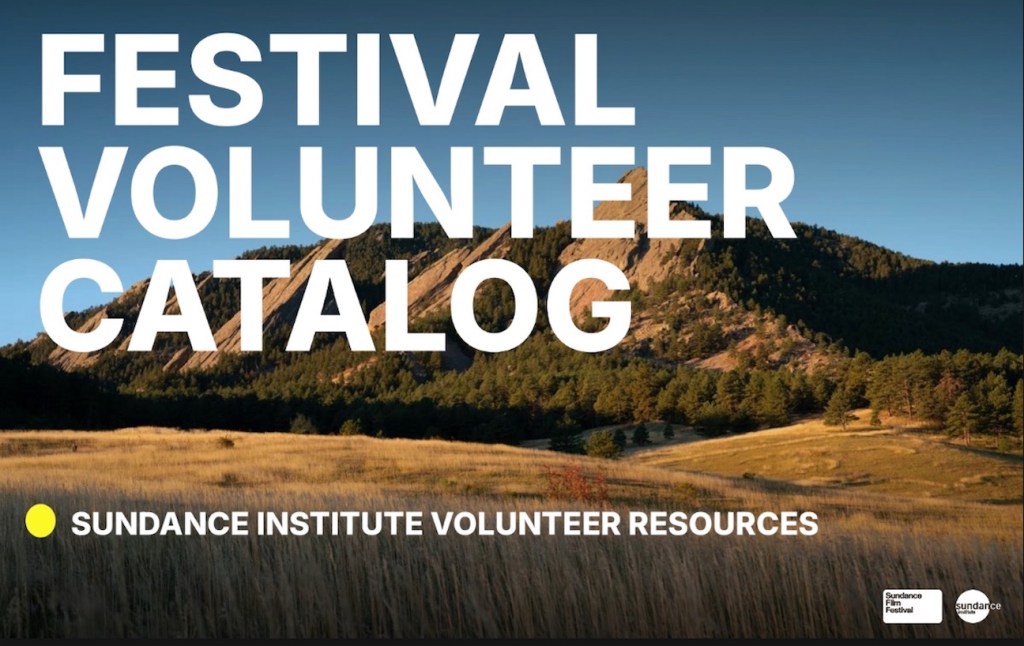
Screenshot Sundance Film Festival Volunteer Catalog 2027. (Photo courtesy of Sundance Film Festival)
The university worked closely with Sundance to make the volunteering schedule manageable for students. Megan Medina, who directs Service Learning and Impact in Community Engagement at CU Boulder, helped lower the volunteer minimum from 24 hours to 18 so the shifts could fit around classes.
Nathan Paul Jones of Career Services sees the festival as a networking gateway for students. Jones said that Sundance has already begun posting internships on Handshake. The real career benefit is in the time spent working with industry professionals.
Cinema Studies Senior Cadence Tucker recommends volunteering, especially for first- and second-year students.
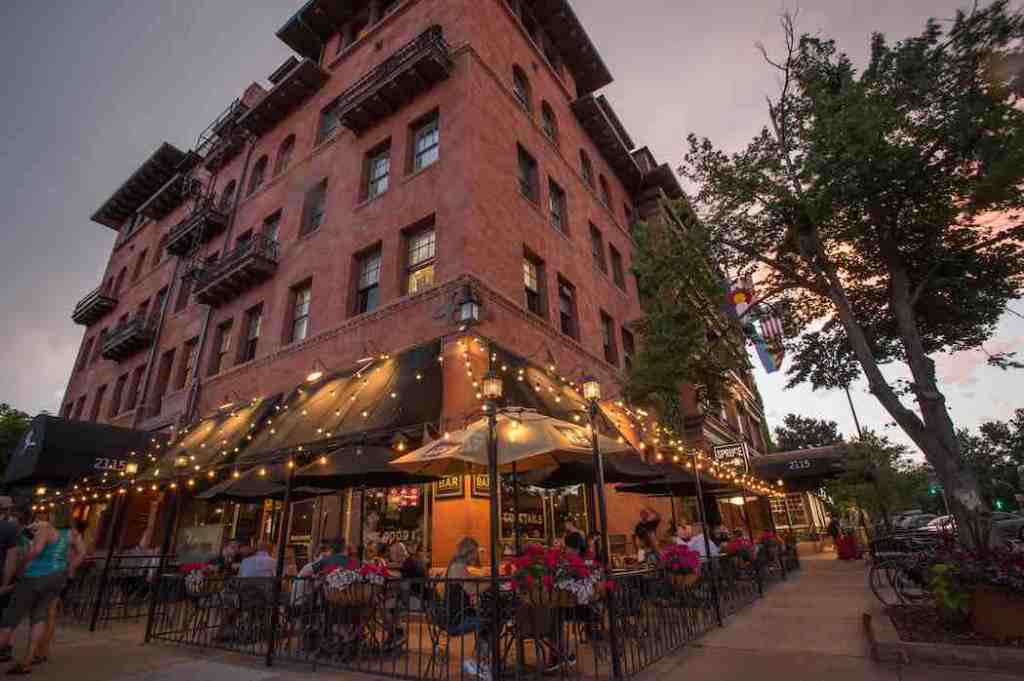
The Hotel Boulderado outdoor corner bar. (Photo courtesy of Tim Romano|The Boulderado)
The festival footprint is compact. About 150 films will be screened at the 2027 film festival in fifteen theaters in Boulder, all within a two-mile radius of the Sundance hub at the Hotel Boulderado. Governor Jared Polis’s office estimates the festival could bring up to $2 billion to Colorado over the next decade.
Read the full story by Melodie Miller at the CU Independent.
-
‘Campus Life’ exhibit highlights CU Boulder’s evolving nature
‘Campus Life: 150 Years of Human and More-Than-Human Relationships‘
by Melodie Miller | September 9, 2026
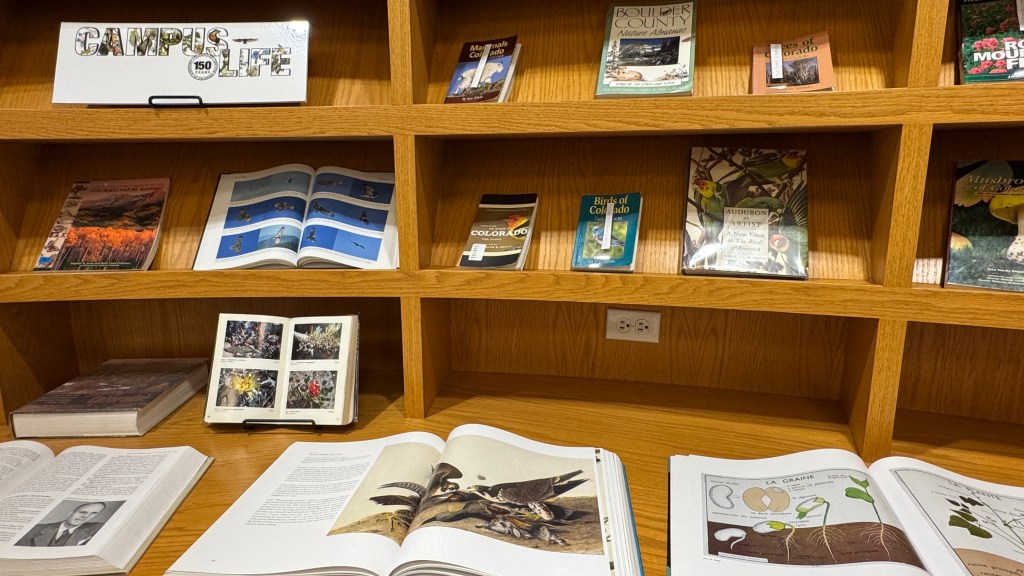
Historical landscape books, field guides, and illustrated volumes of CU Boulder flora and fauna line the shelves at the “Campus Life” exhibit inside the Jerry Crail Johnson Earth Sciences & Map Library. (CU Independent / Melodie Miller)
The University of Colorado was founded on a treeless plain 150 years ago, but today, more than 5,000 trees later, the campus is recognized as an Arbor Day Foundation Campus of Higher Education that effectively maintains urban forests.
This history is at the center of “Campus Life,” an exhibit in the Jerry Crail Johnson Earth Sciences & Map Library that traces 150 years of relationships between people, plants and animals on campus. The planning decisions made more than a century ago continue to shape how the campus community coexists with its biological neighbors.
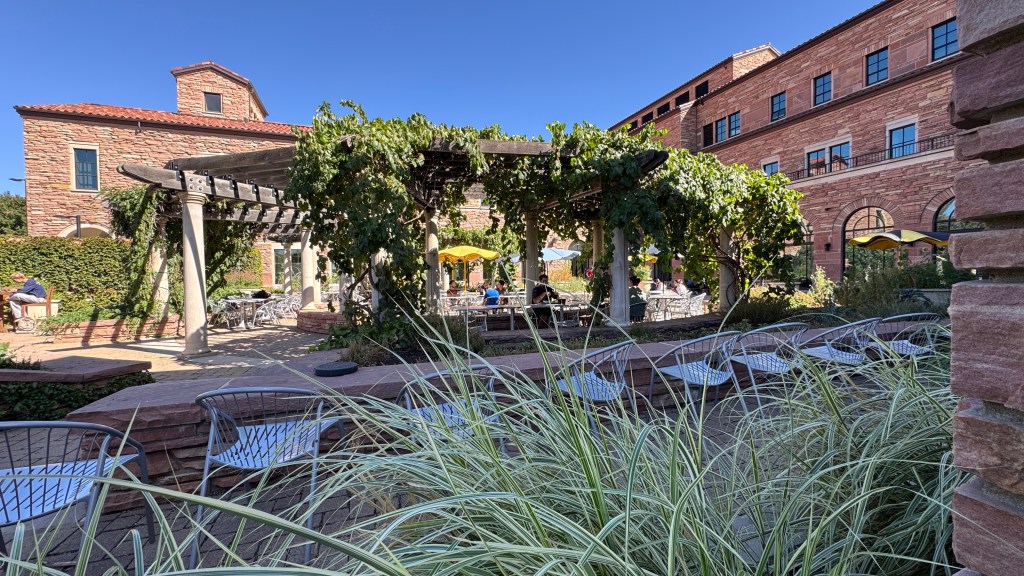
The Center for Community dining garden is surrounded and filled with drought-resistant plantings. (CU Independent / Melodie Miller)
Throughout the campus grounds, plantings enhance the beauty of the environment while maintaining a commitment to non-human habitats, minimal water use and other environmental considerations.
Read the full story at the CU Independent.
-
Sundance Film Festival Leaders Say Community Will Define Boulder Event
Sundance will maintain its mission while building a new festival rooted in Boulder culture
by Melodie Miller & Addisson Pribble | October 5, 2026

Boulder Theater marquee displays the Sundance Film Festival name (Photo courtesy of Miles Fujimoto)
Someone’s next big break in a film career might come while waiting in line for a screening or riding a bus across town in Boulder. This was the message Sundance Film Festival director Eugene Hernandez and Sundance Institute managing director Paula DuPré Pesmen shared with Colorado student reporters at a Sept. 30 press conference on the festival’s move from Park City, Utah, to Boulder.
When Sundance opens Jan. 21-31, 2027, its venues will sit within a 2.4-mile radius of the Hotel Boulderado, a more compact footprint than the Utah festival’s three locations.
Asked what will define the Sundance Film Festival’s new home, festival director Eugene Hernandez offered one word: community.
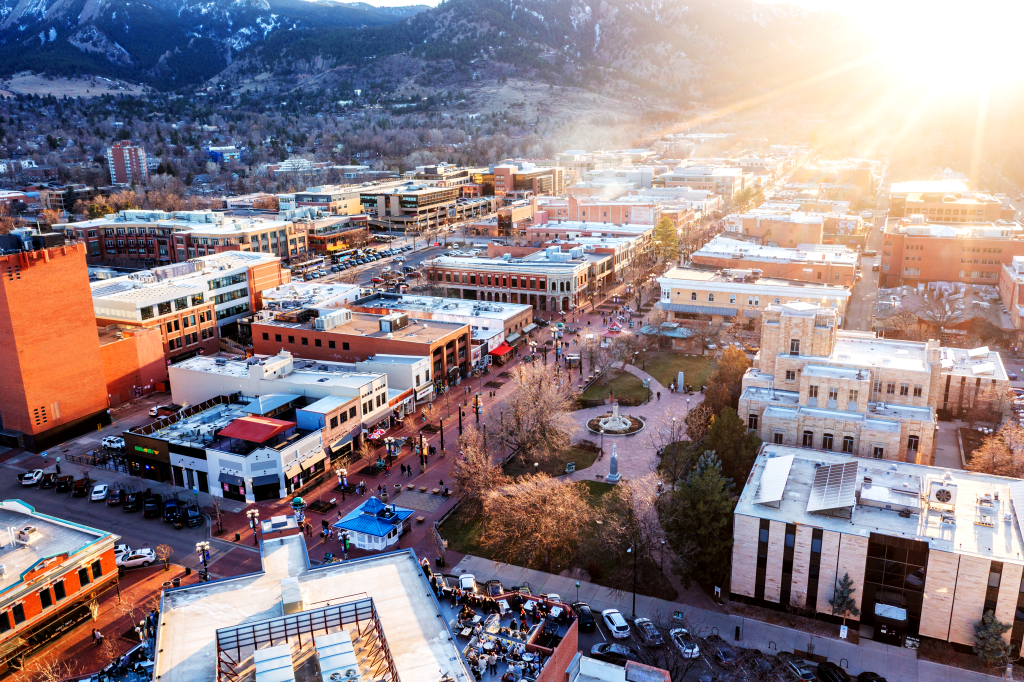
Part of the Sundance Film Festival footprint spans from the Boulder Theater, north, up Pearl Street toward Broadway, a direct route to the University of Colorado campus and more venues (Photo courtsey of Justin Bilancieri)
Melodie Miller attended the press conference by Zoom and co-wrote the story. Read the full story at the CU Independent.
-
‘The Wizard of the Kremlin’: a cautionary tale
The chilling ‘post-truth’ mechanics of Putin’s Russia and its coercive control
by Melodie Miller | October 5, 2026

Jude Law as Vladimir Putin and Paul Dano as Vadim Baranov appear in “The Wizard of the Kremlin.” (Photo courtesy of Vertical Entertainment/Gaumont)
Screen Time with Melodie Miller, a review column that looks beyond the trailer and connects audiences to movie perspectives.
In a remote, frozen blue forest far from Moscow’s politics, Vladimir Putin’s former spin doctor walks his dog without once looking over his shoulder. Snow-encrusted trees twist behind him like prison barbed wire, a fence he helped build. The silence feels more like a warning than a peaceful retirement.
The Melodious Report breaks down Olivier Assayas’ “The Wizard of the Kremlin,” a film adapted from Giuliano da Empoli’s novel.
The film traces two paths that open after the fall of the Soviet Union, one toward wealth and one toward power; both lead to the Kremlin’s door. Jude Law plays Putin, icy cold in appearance and soul. Paul Dano plays Vadim Baranov, a reserved, steady strategist who rides alongside Putin as he rises to power.
Released on streaming platforms weeks before the 2026 midterm elections, it is a portrait of political power, psychological control and dark Russian humor that may serve as a cautionary tale.
See if “The Wizard of the Kremlin” earns a Melodious Thumbs Up.
Read the full story by Melodie Miller at the CU Independent.
-
‘The Dog Stars’: A mirror to a divided America

The poster released by 20th Century Studios shows, from left, Josh Brolin as Bangley, Jacob Elordi as Hig, Margaret Qualley as Cima, and Guy Pearce as Pops, with Jasper the dog, in “The Dog Stars.” (20th Century Studios via IMDb)
Screen Time with Melodie Miller, a review column that looks beyond the trailer and connects audiences to movie perspectives.
A 1956 Cessna, nicknamed “The Beast,” glides over the conifer-filled canyons, and for a moment, the end of the world looks peaceful. Then the violence begins.
The Melodious Report takes a closer look at Ridley Scott’s “The Dog Stars,” adapted from Peter Heller’s 2012 novel. Starring Jacob Elordi and Josh Brolin as two survivors guarding an abandoned airport in post-apocalyptic Erie, Colorado, the film weighs violence toward strangers against the risk of human connection. The review draws parallels between the film and today’s immigration debates, pandemic isolation and misinformation.
The film offers a portrait of a divided America.
Speaking at a live Colorado Public Radio event, Heller responded to the film’s mixed critical reception in a conversation with CPR’s Ryan Warner at the Denver Press Club. The Melodious Report attended and photographed the event.
Read the full story by Melodie Miller at the CU Independent.
-
Keeping the Wild West Alive at the Strater Hotel in Boomtown Durango, Colorado
A 19th-century gold-rush mining town is alive in Durango.
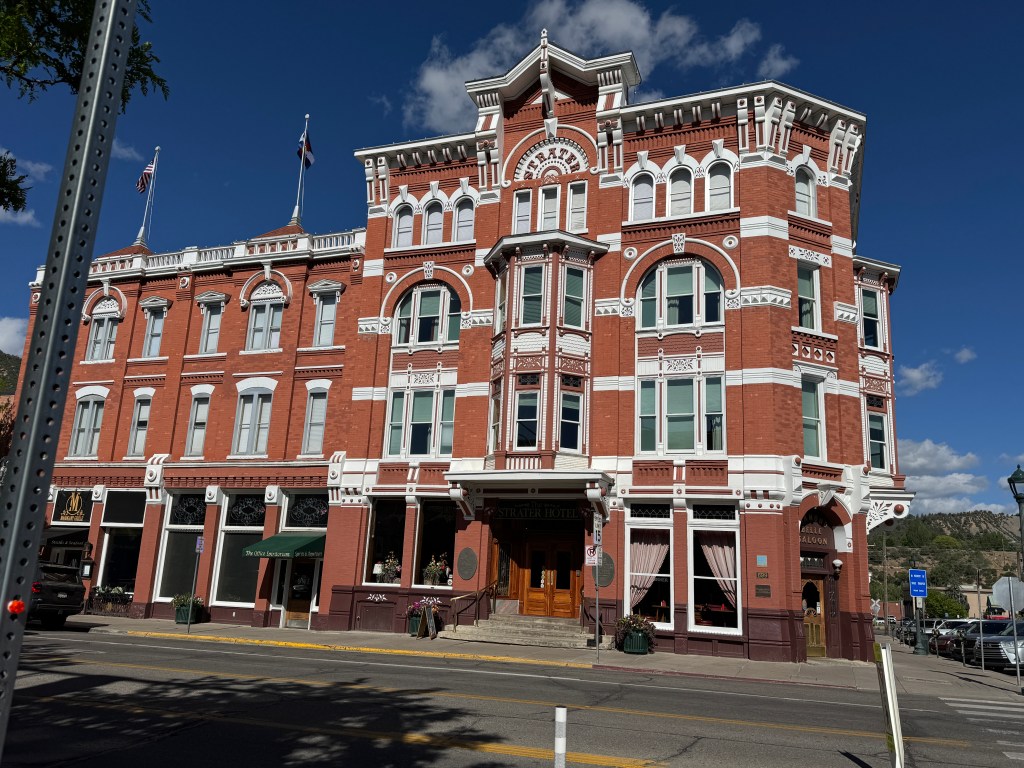
The historic Strater Hotel on Main Street, Durango (Photograph by Melodie Miller)
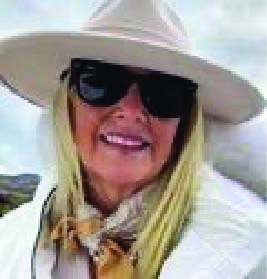
By Melodie Dawn Miller Reporting from Durango, Colorado June 16, 2026 2:00 p.m. MDT
The Strater Hotel is a distinctive red-brick building situated on Durango’s Main Street in the Historic District, where visitors can rest their heads in the Wild West without traveling back in time. Built in 1887 by Fred, Frank and Antone Strater, the Boomtown hotel is filled with historically accurate furnishings and decor that take visitors back to the 19th century without sacrificing modern conveniences or civil order.
“American mining towns were mostly civil,” Jennifer M. Larson writes in Why the West Became Wild. The American West “grew so rapidly during the nineteenth-century gold rush that they were dubbed boomtowns.”

Tiffany-inspired elevator awning emulates the 1880s Art Nouveau decorative period. (Photograph by Melodie Miller)
Designed and built during the region’s mining boom, the Strater Hotel management strives for authenticity with century-old oak furnishings, replicated 19th-century wallpaper, and Tiffany Art Nouveau-emulated lighting fixtures, giving guests a Wild West experience.
“The hotel is dedicated to providing factual information. The hotel is a living museum,” Tori Ossola, the General Manager of the Strater Hotel, said.
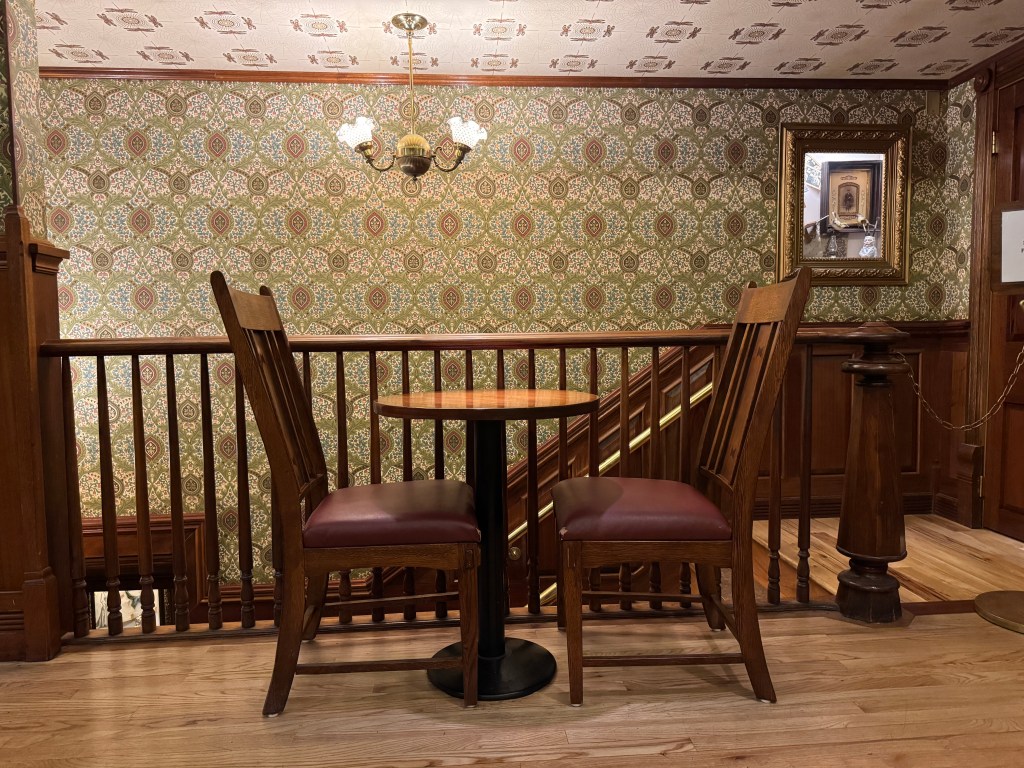
Historical maple furnishings and Bradbury & Bradbury wallpaper at the Strater Hotel (Photograph by Melodie Miller)
The ladder-back Mission chairs, hand-milled oak staircase railing, and heavy balusters showcase the early American Craftsman-style set against a backdrop of color that favors gently aged tones of the late Victorian era.
According to Historic Hotels of America, in 1926, owner Earl A. Barker, Sr. became dedicated to preserving the hotel’s prestigious status and he inspired the following generations to follow in his footsteps.
“The large collection of Victorian antique furniture we have throughout the property can be attributed to the second-generation Barker family,” Ossola said. Then, the third generation, Mr. Rod Barker and his wife Lori, “did the major heavy lifting on the renovation.”

Historically inspired Gilded Age Bradbury and Bradbury wallpaper covers the walls of the Strater Hotel (Photograph by Melodie Miller)
The Knightsbridge Damask wallpaper by Bradbury & Bradbury of San Francisco recreates the Anglo-Japanese Aesthetic Movement, using motifs from 1875 to 1890. Designed in 1986 by artistic director and co-owner Stephen Bauer, the motifs recreate patterns following the transition of the 19th-century designer William Morris.
The late-Victorian-inspired wallpaper is reminiscent of the Gilded Age, featuring teardrop-shaped ogee and gold-metallic floral medallions joined by a lattice of leaves.
“We strive to be a resource to historic properties for the preservation and restoration of their buildings,” a representative of Bradbury & Bradbury, Lisa Bauer, said.
The Strater Hotel wallpaper colors are unique because “the pattern has recently received a refresh,” Bauer said, but “it has never been retired, only revised.”

The historic Strater Hotel on Main Street, Durango (Photograph by Melodie Miller)
An original mining boomtown, Durango was founded in September 1880, according to the City of Durango History. Henry Strater built the hotel in 1887 “right after the Silver Panic,” Ossola said.
According to Historical Hotels.org, Strater believed a contemporary Durango offered a “great economic opportunity” worthy of a grand hotel.
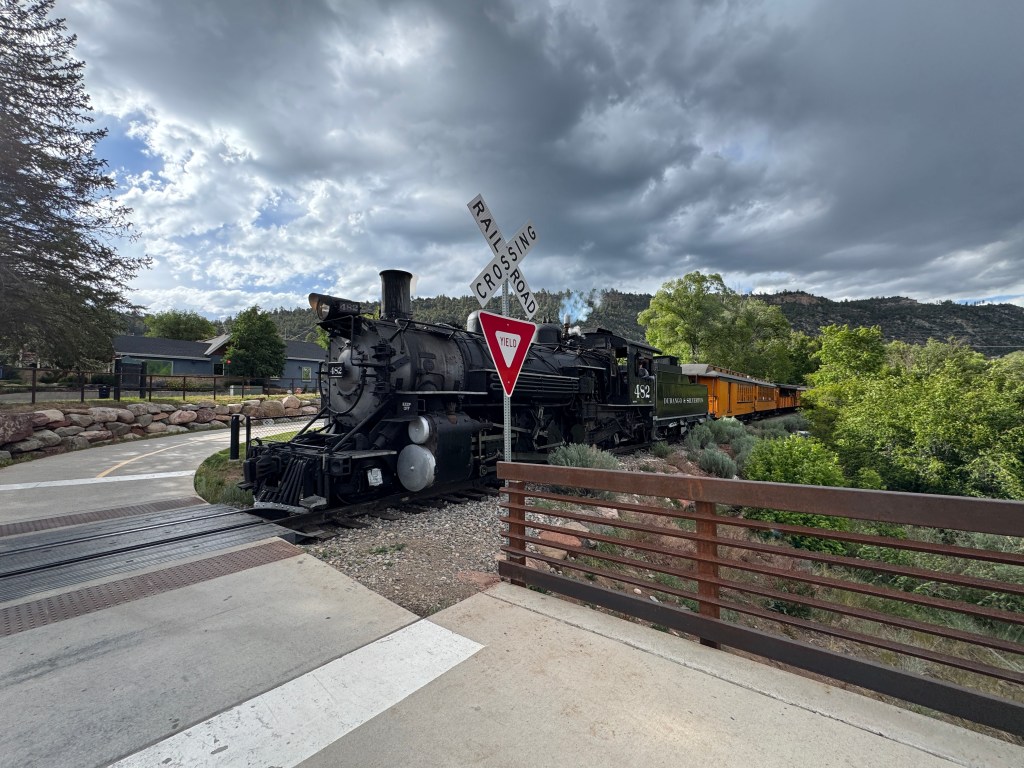
The Durango Silverton Gauge Railway steam engine and passenger car train (Photograph by Melodie Miller)
Along with the hotel, the economic boom brought the Durango to Silverton Gauge Railway steam engine that continues to carry passengers through the rugged San Juan Mountains of Southwestern Colorado. Built in 1882 to haul silver and gold ore, the historic steam-powered train transports passengers on a 45-mile round trip along the Animas River through canyons, forests, and landscapes largely unchanged since the 19th century. The train station is 0.2 miles, approximately a 3-minute walk, from the Strater Hotel.
In 2021, the Garrett family bought the hotel from the Barker family and “upgraded every single one of our hotel rooms to have its own heating and cooling system,” Ossola said.
“Not super sexy stuff, right? But still making sure that our guests having that historic experience are comfortable,” Ossola said.
____________________________________________
The Strater Hotel is listed on the National Register of Historic Places and the Historic Hotels of America.
699 Main Avenue, Durango, CO 81301 — www.strater.com — 800.247.4431
____________________________________________
Contact
Melodie Dawn Miller
- melodie.miller@colorado.edu
- www.melodiemiller.com
Melodie Dawn Miller is an apparel industry professional with expertise in design, development, and production.
She holds bachelor’s degrees in English Literature and Classic Civilizations.
She is currently studying History and Journalism at the University of Colorado.
-
The Puebloans built the Aztec Ruins in New Mexico
A Testament to Upper-Class Living in Ancient Times
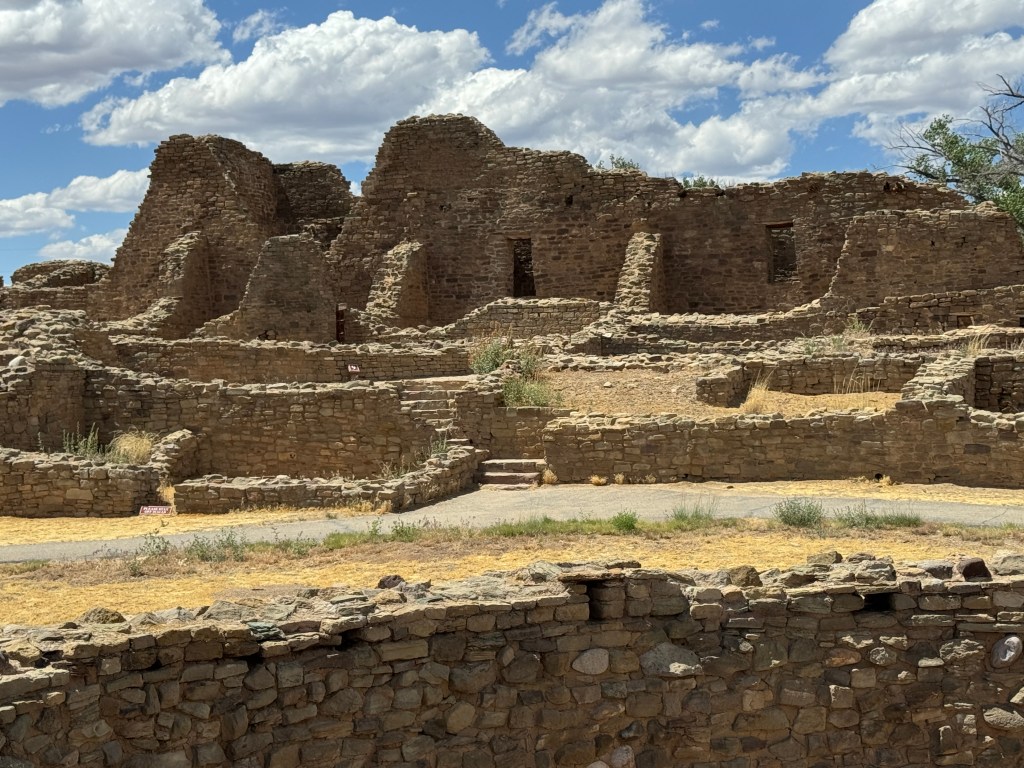
The Aztec Ruins, New Mexico (Photography | Melodie Miller)
Reporting from Aztec, New Mexico
June 1, 2026 Updated June 11, 2026, 3:14 MDT
Did you know that…
You can visit a 12th-century community of Puebloan structures at the Aztec Ruins National Monument in New Mexico, near Durango, Colorado. If the Pueblos built the community, why is it named the Aztec Ruins?
“The Spanish are calling the Aztec ruins Aztec before non-Spanish Europeans show up,” Dr. Steve Lekson, Professor of Anthropology at the University of Colorado, said.
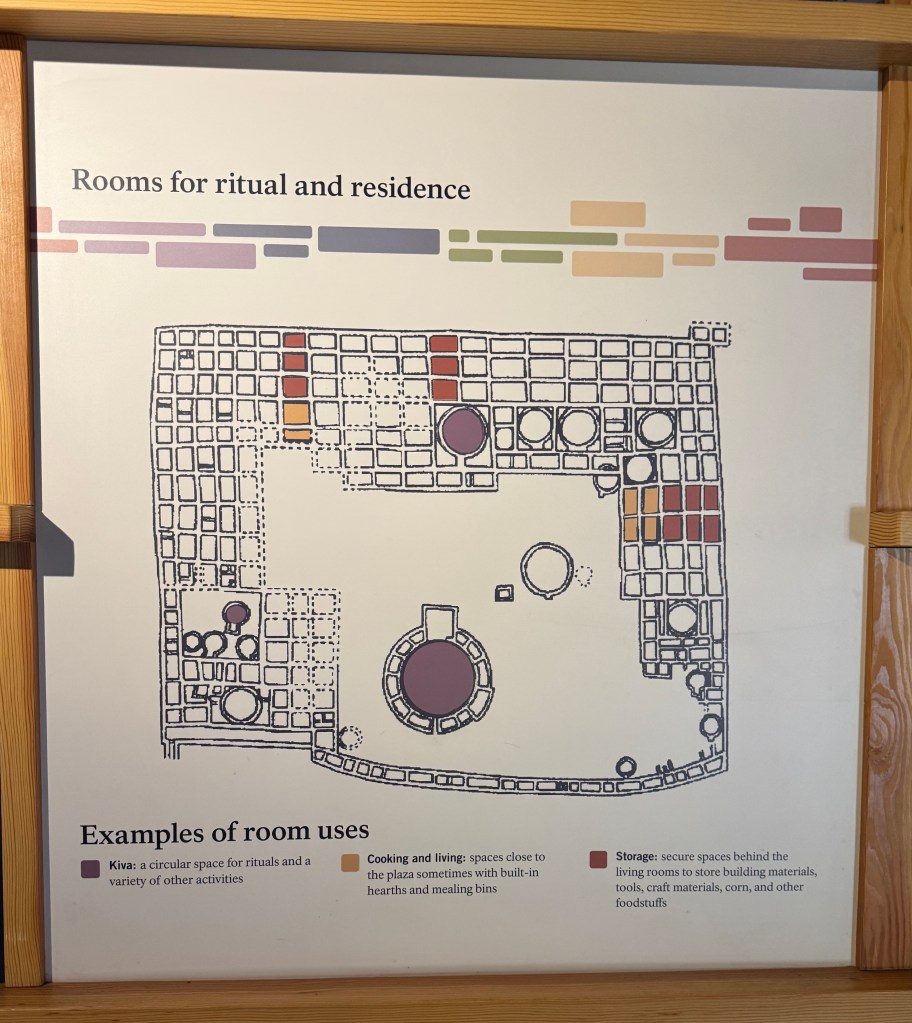
During the 19th century, scholars in Mexico City, Mexico, wrote that the Aztecs had built the 400-room community. However, most modern archaeologists accept that the ancestral Puebloans, a farming culture, built the dwellings, and the Aztecs, an elite class, lived there for a period of time.
“It’s a complicated story,” Dr. Scott Ortman, of the University of Colorado Boulder, said. One concern is “naming a site in one particular indigenous language” when many tribes view themselves as descendants of the area.
Thus, the 19th-century name took hold and remains.
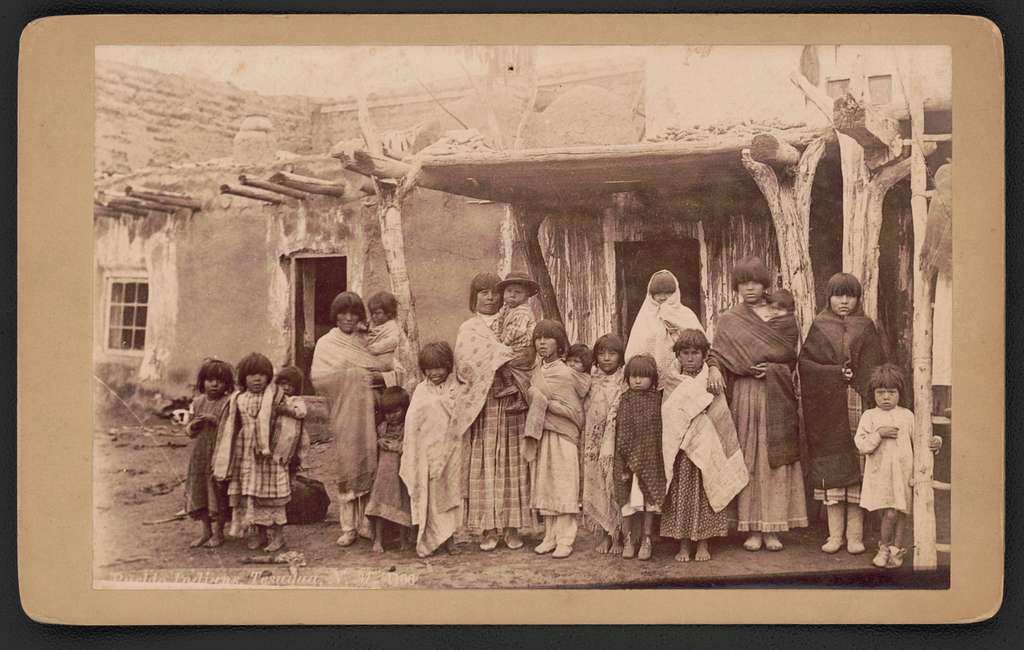
Pueblo Indians, Tesuque, N.M. (1893) (William Edward Hook | Courtesy of the Library of Congress)
Migration lies at the heart of the Aztec and Pueblo ancestral origin story. More than a record of movement, their ancestors’ journeys shape identity and belonging today.
According to Mexican scholars of the 1800s, the Aztec Ruins were the “first home of the Aztecs” before they migrated south to Mexico, Lekson, said.
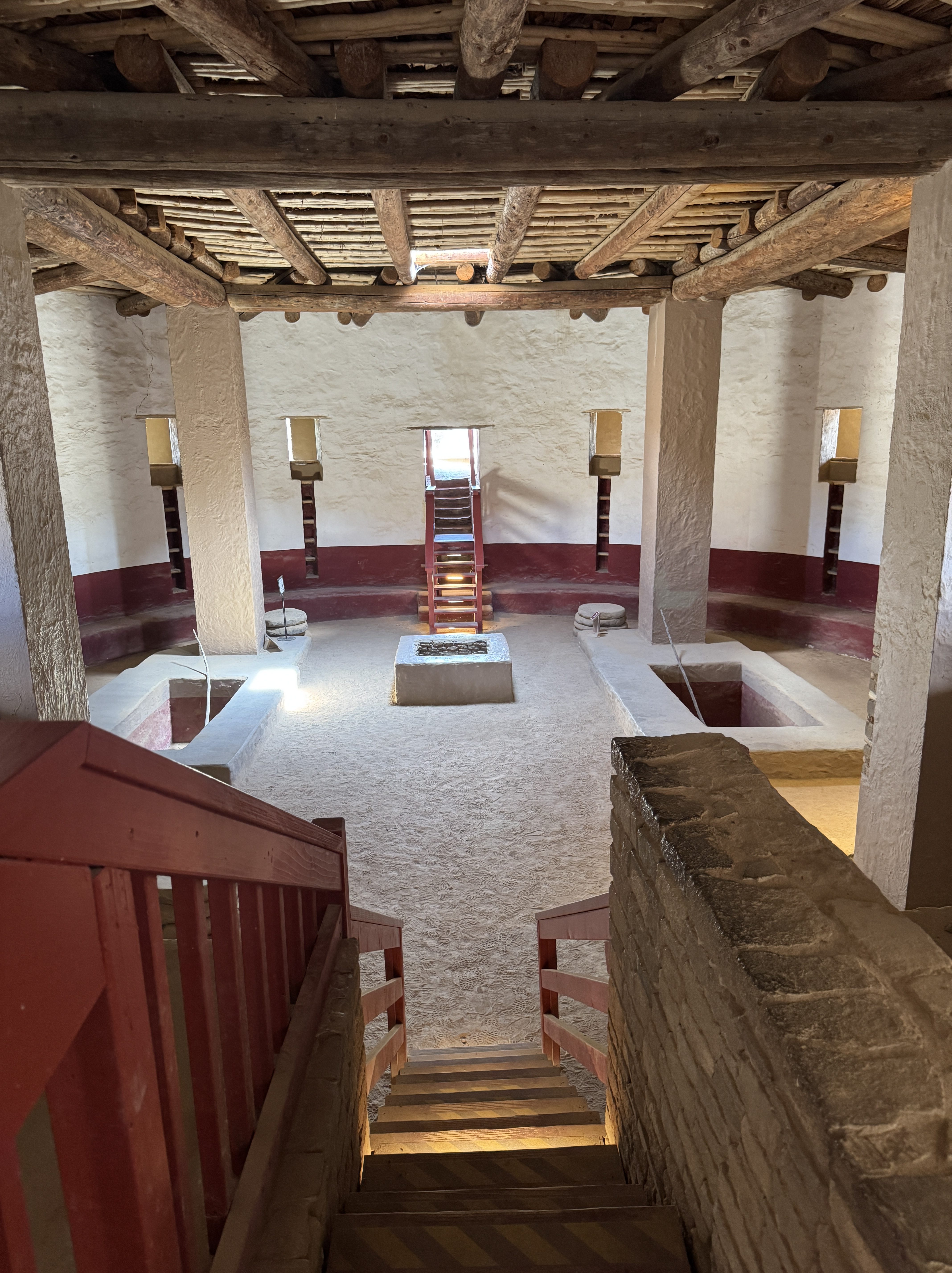
The Aztec Ruins kiva replica, Aztec, New Mexico (Photography | Melodie Miller)
The 381-acre National Park protects the Ancestral Pueblo great house community and the kiva ceremonial room replica. Kivas are built with ventilation, a fire pit, and a sipapu — a spiritual gateway to and from the underworld. An important part of modern Pueblo and Hopi communities is sacred dances and rituals held in community kivas.
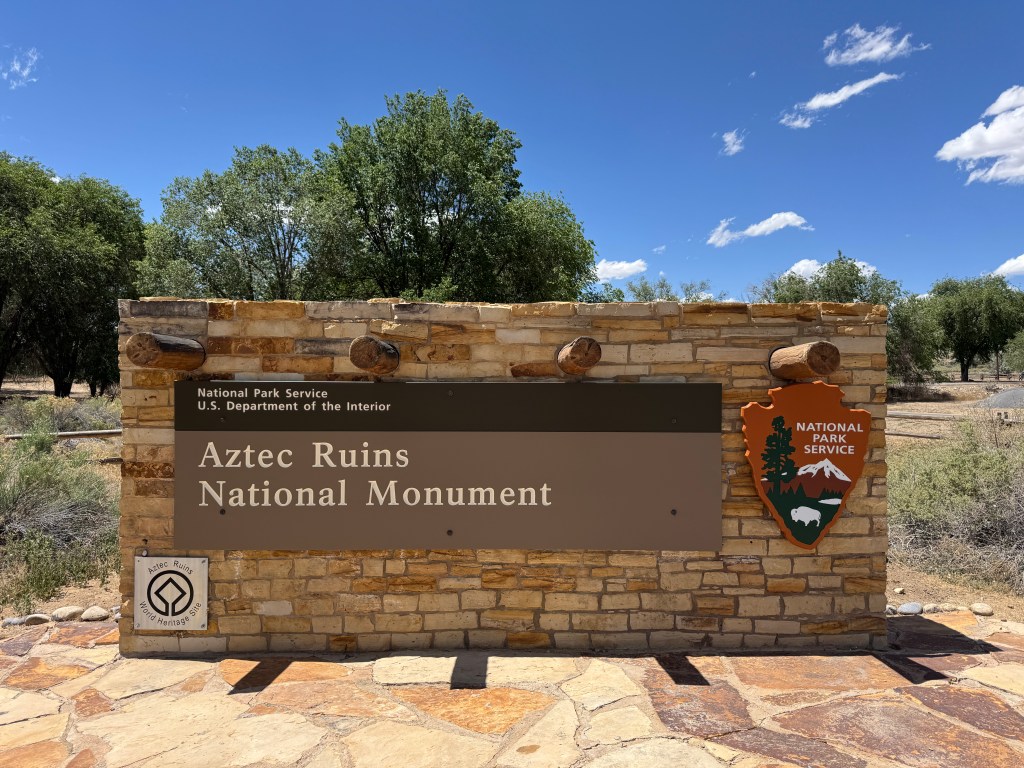
The Aztec Ruins National Monument, New Mexico (Photography | Melodie Miller)
President Warren G. Harding used the Antiquities Act of 1906 to designate the site as the Aztec Ruins National Monument on January 24, 1923.
Nathan Hatfield, Aztec National Park Ranger Supervisor of Interpretation, said, “I believe that by 1928 most southwestern scholars and archaeologists agreed that the Aztecs of Mexico were not responsible for building” the Aztec Ruins.
Consensus among archaeologists grew, accepting the continuity between the Ancestral Pueblo builders and the Aztec ruins.
Archaeologists have come to accept that “Aztec was built by ancestors of today’s Pueblo people,” Ortman said. “We didn’t need DNA. It was just recognizing the continuity and culture.”
Now the name is accepted as an artifact of history. A name change would require an act of Congress.
______________________________________________
The Aztec Ruins National Monument is located 40 miles (ca. 64 km) south of Durango, at 725 Ruins Rd, Aztec, New Mexico 87410.
Aztec Ruins National Monument Website
_______________________________________________________
Contact
Melodie Dawn Miller
- melodie.miller@colorado.edu
- http://www.melodiemiller.com
Melodie Dawn Miller is an apparel industry professional with expertise in design, development, and production.
She holds bachelor’s degrees in English Literature and Classic Civilizations.
She is currently studying History and Journalism at the University of Colorado.
-
A Table, A Palace, A Park
The Many Lives of Mesa Verde
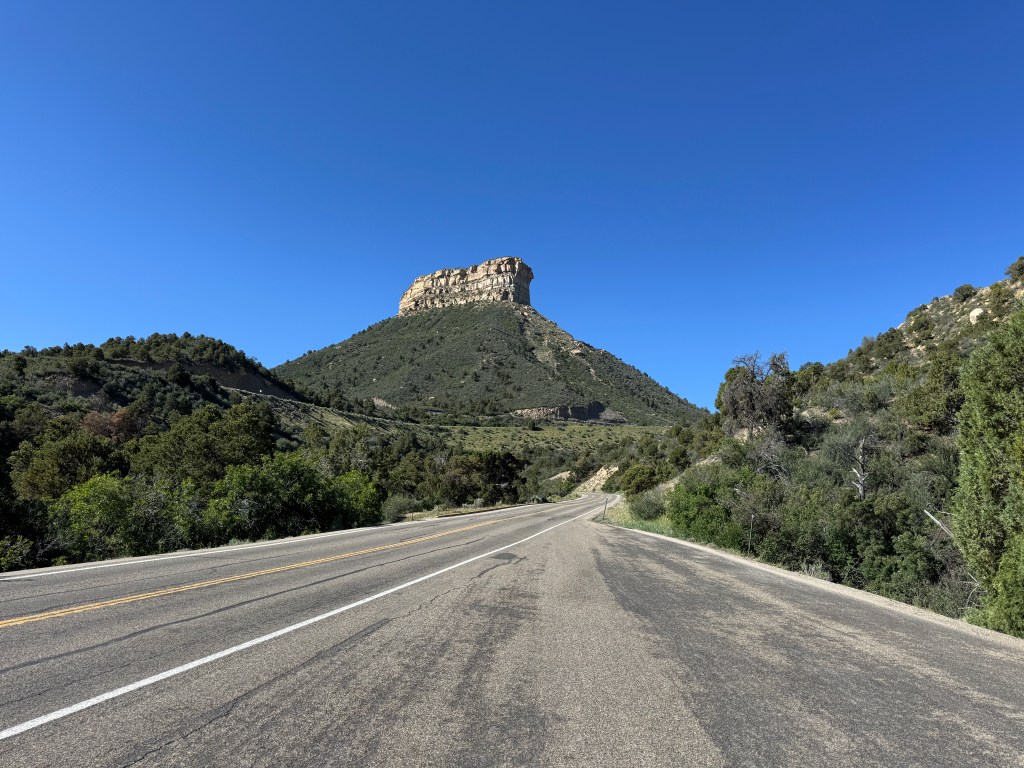
The Mesa at Mesa Verde National Park appears to be a green table, but it is a cuesta, a cliff with a flat ridge and a slope. (Melodie Miller | Photographer)
Reporting from Mesa Verde, Colorado
June 11, 2026 2:48 p.m. MDT, Updated June 23, 2926 4:24 p.m.
____________________________________________
Did you know…
The Mesa Verde in the national park, just 38 miles west of Durango, is not actually a mesa.
And, although the home of the Cliff Palace dwellings bears a Spanish name, they were built by the Ancestral Puebloan peoples.
“Many of the Pueblos were named by the Spanish,” Dr. Scott Ortman, of the University of Colorado Boulder, said. “It tends not to be very common for archaeological sites to be renamed to the indigenous language names.”
Attribution of Mesa Verde started with early speculation about the Aztecs and Aztlan. However, cultural consistency emerged between Cliff Palace and the modern Pueblos of the Four Corners, connecting the two places.
Dr. Steve Lekson, Professor of Anthropology at the University of Colorado, writes in A History of the Ancient Southwest that “Cliff Palace might be empty and abandoned, but only a few days’ walk away were Pueblo peoples who built towns that looked like Cliff Palace.”
In 1776, according to Legends of America, two Mexican-Spanish missionaries, Francisco Atanasio Dominguez and Silvestre Vélez de Escalante, were leading explorers from Spain through the region. They camped at the base of the La Plata Mountains, near the flat forested area of Mesa Verde. 83 years later, in 1859, Mesa Verde is attributed to John S. Newberry, although the name had been in use prior to his writing.
“The earliest permanent settlements here at Mesa Verde date back to between 500 and 600 CE and are often characterized by pit houses which can be seen on the mesa tops of both Chapin and Wetherill Mesas. The alcove sites (cliff dwellings) were mostly constructed beginning in the late 1100s to early 1200s CE,” Dalton Dorrell, Mesa Verde National Park Service Supervisory Park Ranger of Education, Community Outreach, and Interpretation, said.
The Spanish word mesa translates to table, a flat surface. But Mesa Verde is a cuesta, a steep cliff with a flat ridge on top and a sloping plain on the other side.
“Cuesta has been used as a geological term only since the early 19th century. It is not unusual for the geological term and the place name given to a location to differ,” Dorrell said.
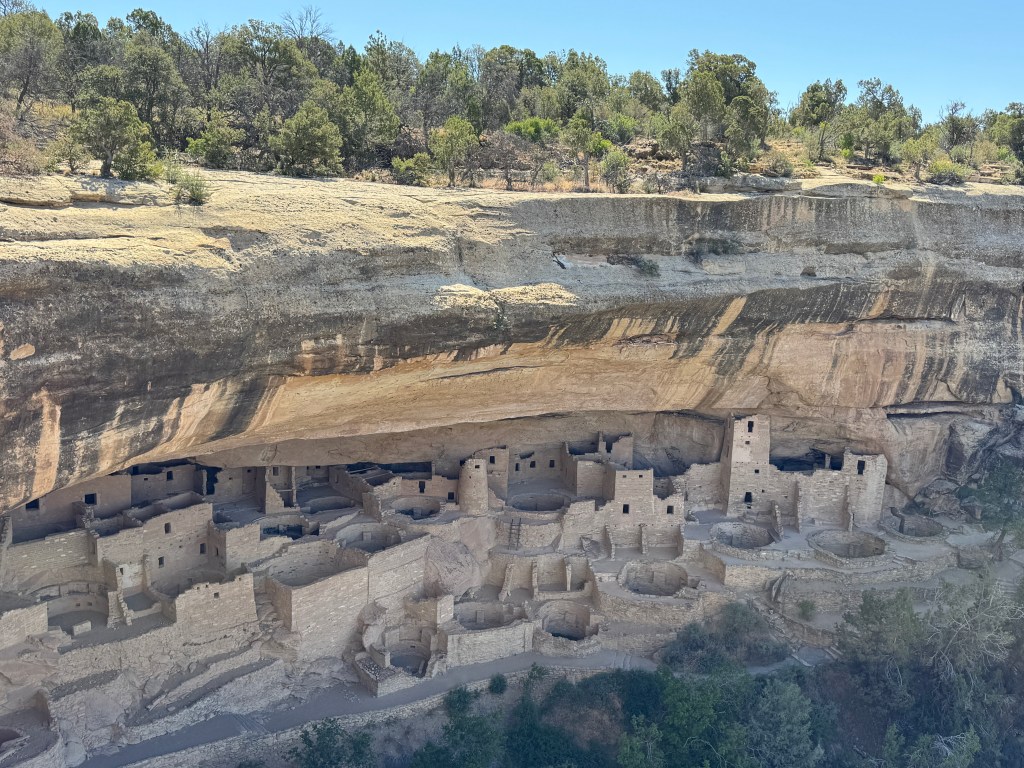
Cliff Palace, Mesa Verde National Park Ancestral Puebloan dwellings ( Melodie Miller | Photographer)
Then, in 1888, according to Lekson, Richard Wetherill and Charlie Mason came across the Cliff Palace.
“Cliff Palace is discovered by this cowboy who lived in Mancos named Richard Wetherill,” Lekson said.
On December 18, 1888, Wetherill, his brother-in-law Charles Mason, and their Ute guide Acowitz saw Cliff Palace and went on horseback to investigate.
Wetherill, Mason, and Acowitz, came across the cliff dwellings of the Ancestral Puebloans while “rounding up cattle in the snowstorm. And I guess there’s some questions to whose cattle was he rounding up,” Lekson said.
After the discovery, a significant movement emerged to preserve the 12th-century cliff dwellings and the artifacts found at Mesa Verde.
Wetherill “leaves the place seven ways to Sunday, and it’s just full of stuff. The Pueblos left pots and baskets and all kinds of stuff.” Lekson said. Wetherill “takes a bag full of this stuff up to and tries to sell it. I’ve seen the newspaper advertisements.”
According to the New Mexico Historical Review, Wetherill’s father, Benjamin Wetherill, “looked at the relics and realized the importance of the finds.”
Wetherill writes a letter to the Smithsonian requesting that it take over funding to protect the ruins and artifacts. Over time, interest in protecting the ruins grows.
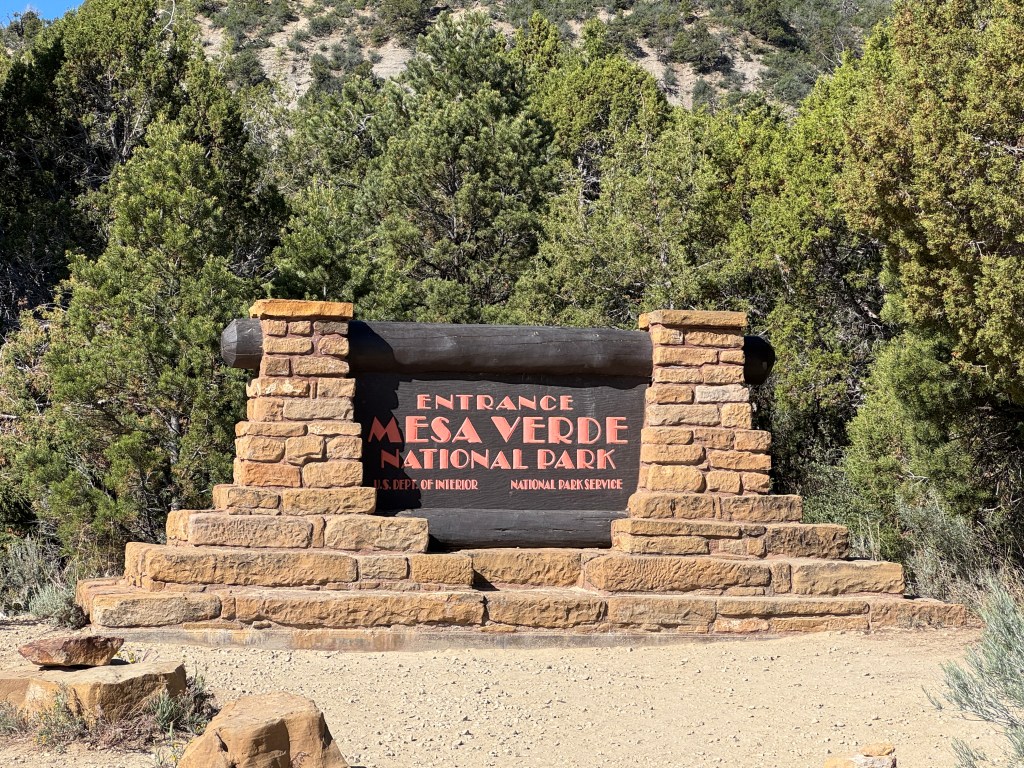
The Mesa Verde National Park sign is emblematic of the Art Deco style popular in 1906. ( Melodie Miller | Photographer)
In 1906, President Theodore Roosevelt signed the congressional bill to preserve the area’s ancient works, specifically 5,000 ancestral man-made sites and artifacts. Although Mesa Verde is a cuesta, the name remains, and the Ancestral Puebloans’ cliff dwellings are preserved.
Mesa Verde is located 35 miles west of Durango, at 35780 US-160, Mancos, CO 81328.
Melodie Dawn Miller
- melodie.miller@gmail.com
Melodie Dawn Miller is an apparel industry professional with expertise in design, development, and production. She holds bachelor’s degrees in English Literature and Classic Civilizations. She is currently studying French and Journalism at the University of Colorado.
-
Research and Technical Applications – Apparel Design by Melodie Miller

Photos courtesy of SKEA
SKEA Skiwear
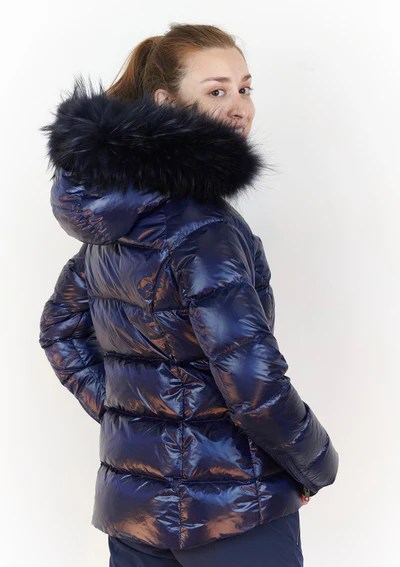
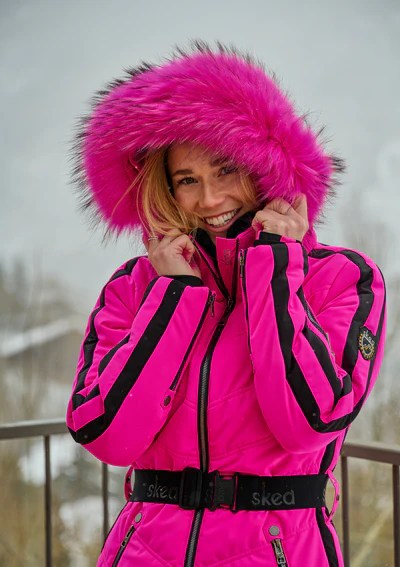
The SKEA Elsa down filled ski parka with matching fur ruff.
Photos courtesy of SKEA
- Nylon Ciré – Ciré is a highly glazed wax finish that creates a water resistant barrier.
- Down filled insulation throughout
- Underarm ventilation zips.
- Interior sleeve cuff with thumb holes.
- Interior snow-skirt
- 3 zipper pockets
- Fixed collar and hood
- Optional snap-on real/faux fur trim
- An athletic fit with room to move

Unleash your skiing flair with the SKEA Elsa Jacket. This jacket is not just breathable and hydrophobic, but effortlessly shifts from the slopes to the streets. Filled with down, it offers unbeatable warmth and adaptability for your mountain adventures. The Elsa parka combines purpose and femininity, and comes in a range of colors to match your taste.
Photos courtesy of SKEA
The SKEA Elsa down filled parka sketch and production instructions

SKEA photo shoot at Loveland Pass, Colorado
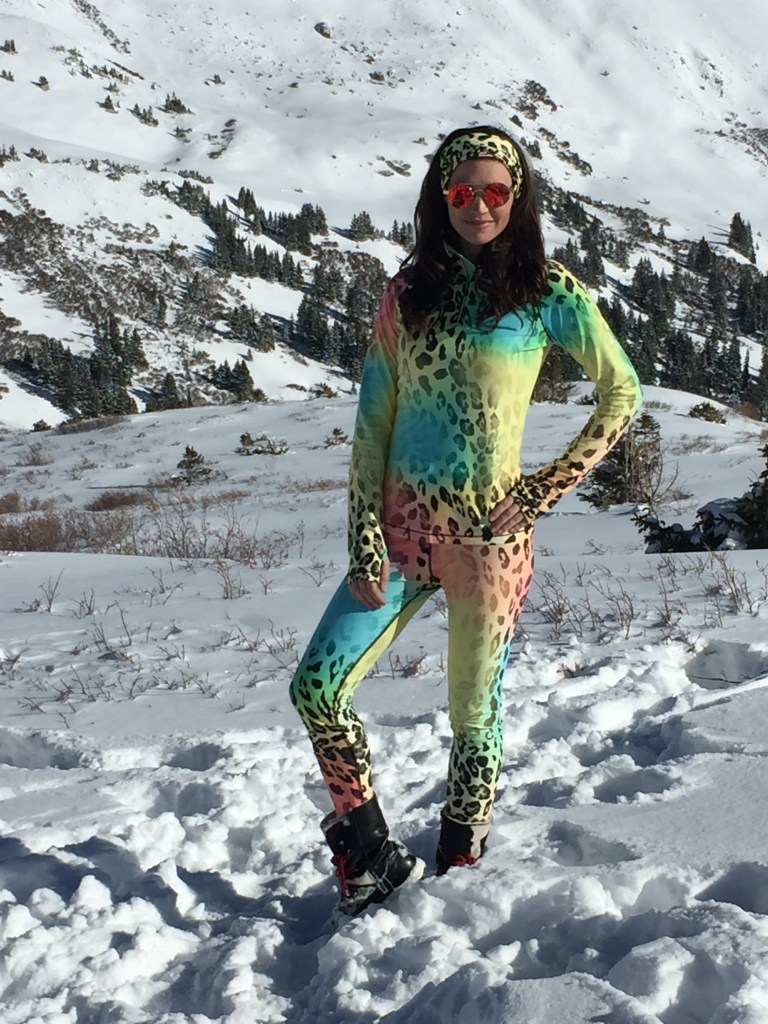


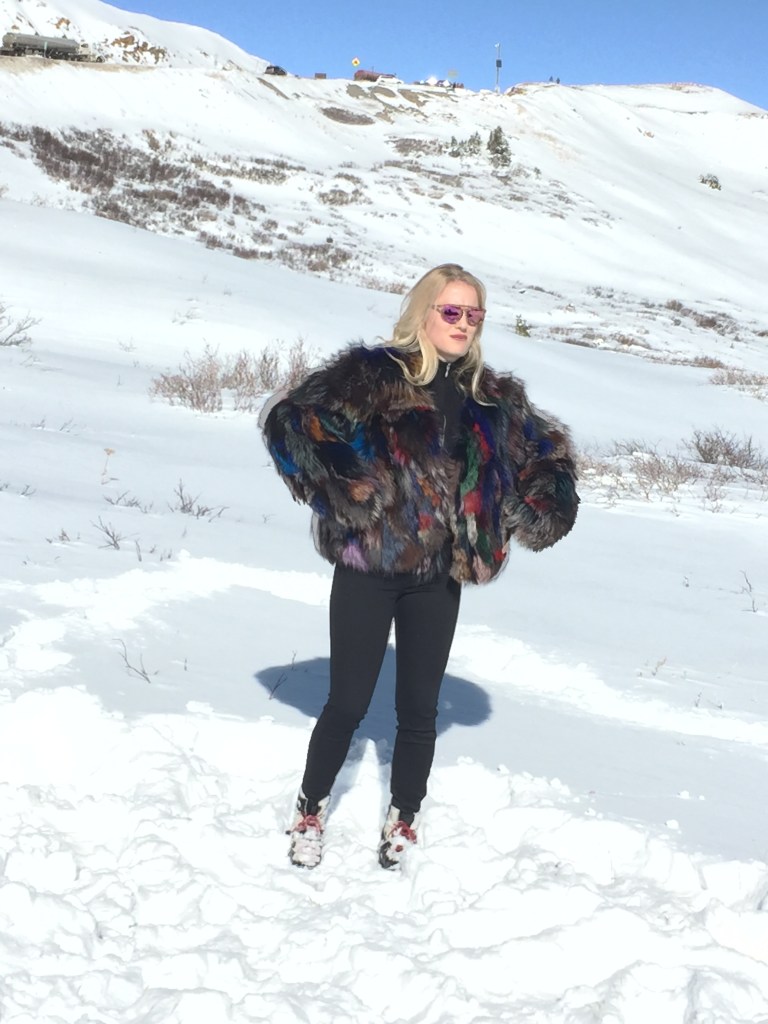

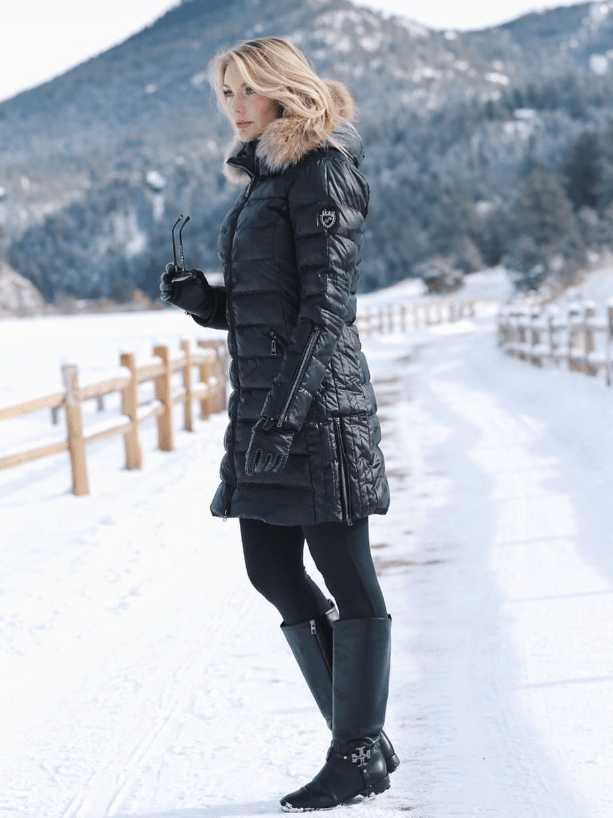










Photos courtesy of SKEA
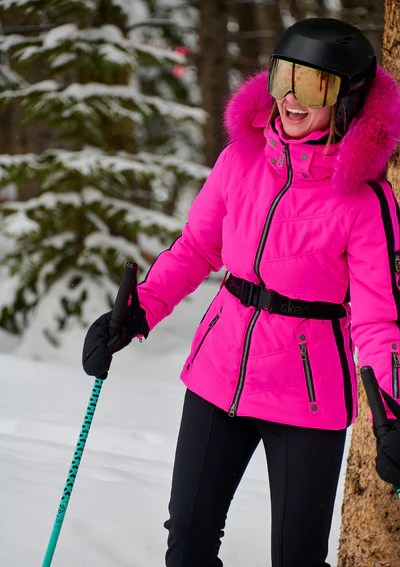
The SKEA vintage ski-wear inspired Thinsulate insulated Coco Parka
Photos courtesy of SKEA
- Polyester Stretch super water repellant 20K WP
- 200 grams Thinsulate Insulation
- 4 zip pockets
- Faux fur lined inner collar
- Helmet compatible hood with optional fur trim
- Removable belt to wear or not with snap down belt loops
- Snow skirt
- Cinch bottom
- Slim fit
The Coco Thinsulate insulated parka sketch and production instructions


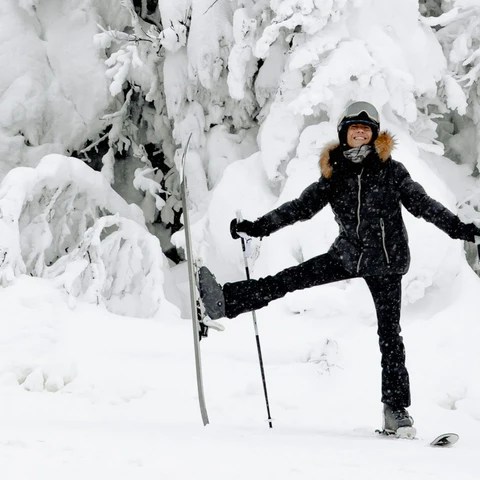

Photos courtesy of SKEA
Cosmic Vest is the perfect layering garment. Snuggle into the collar on icy days.

Photos courtesy of SKEA
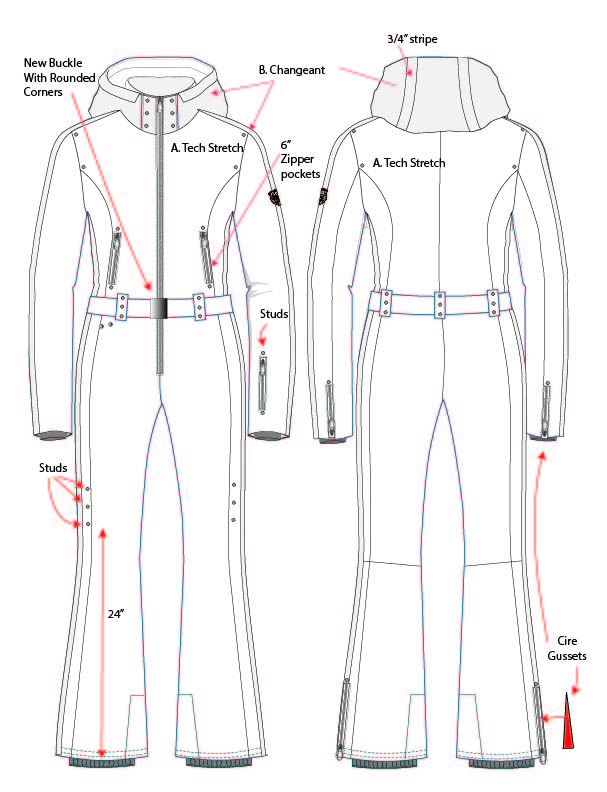
The SKEA Brit insulated ski suit

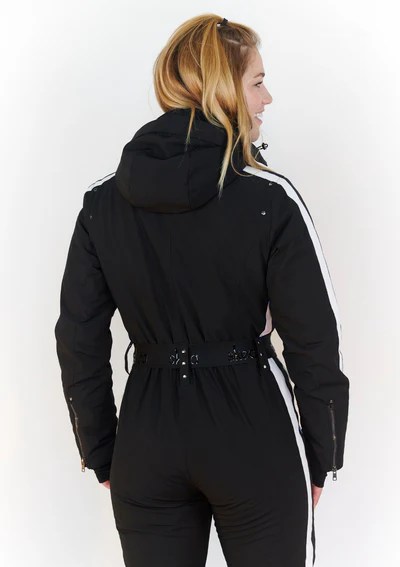
Photos courtesy of SKEA

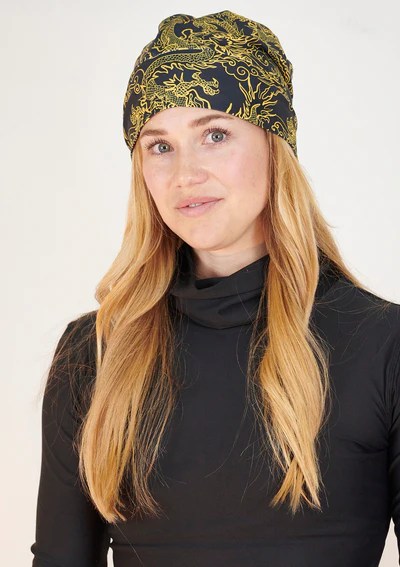
Stay warm in Skea high quality, quick drying polyster knit baselayer’s designed by Melodie Miller






Tennis and Golf for Skea by Melodie Miller






Sierra Design extreme elevation mountain apparel designed by Melodie Miller

Paul Nanawa wearing Sierra Designs designed by Melodie Miller | Mt. Rainier | Photo courtesy of Eric Larsen


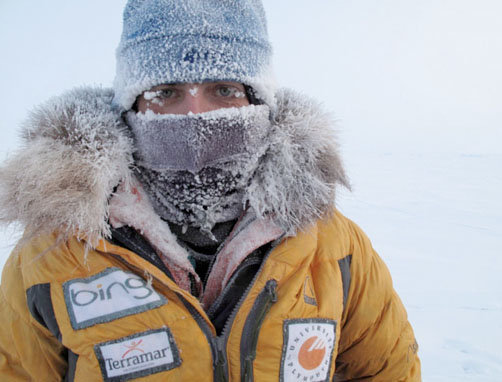
Paul Nanawa | Mt. Rainier | Eric Larsen | Both men wear Sierra Designs extreme weather gear designed by Melodie Miller | Photos courtesy of Eric Larsen
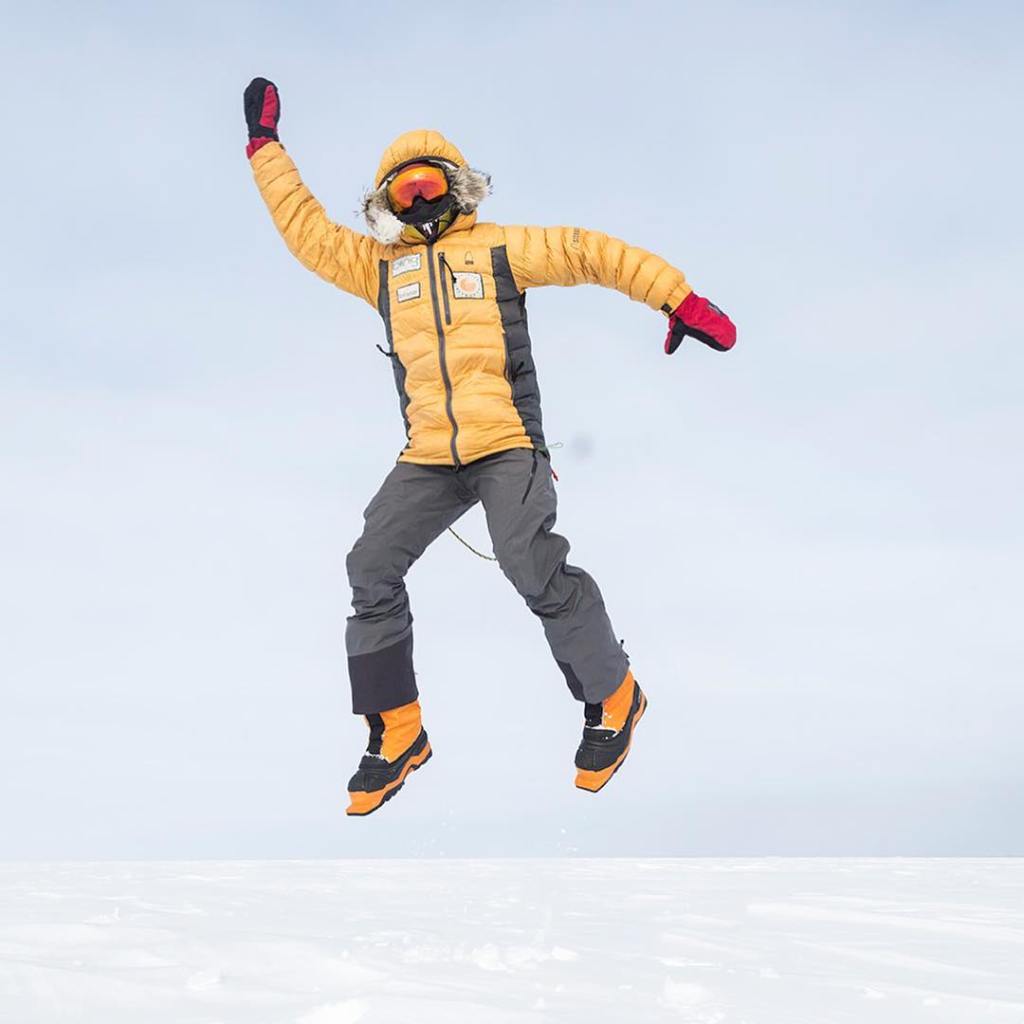
Eric Larsen and his team wear yellow and orange Sierra Designs cold weather gear designed by Melodie Miller | Photos courtesy of Eric Larsen



Eric Larsen and his team wear yellow and orange Sierra Designs cold weather gear designed by Melodie Miller | Photos courtesy of Eric Larsen


Eric Larsen attemps to summit Mt. Everest. (Right). Eric Larsens (Center right) expedition team wear orange Sierra Designs cold weather gear designed by Melodie Miller | Photos courtesy of Eric Larsen
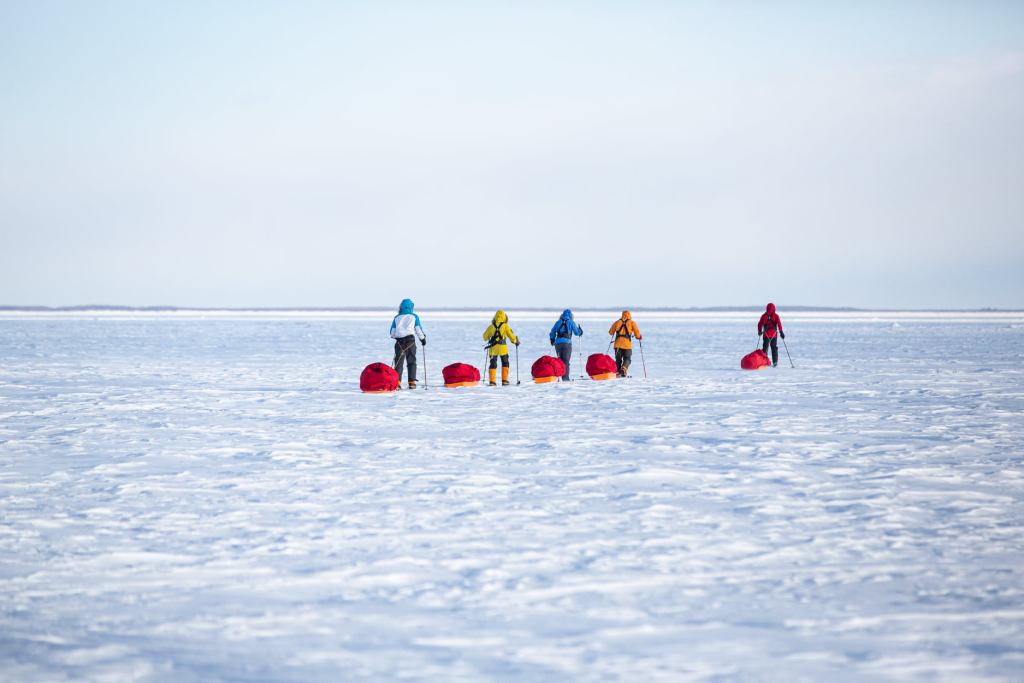
Eric Larsen and his team at the South Pole wear orange Sierra Designs extreme cold weather gear designed by Melodie Miller | Photos courtesy of Eric Larsen

Shaun Mauer at the summit of Mt. Rainier wearing Sierra Designs mountain gear designed by Melodie Miller.

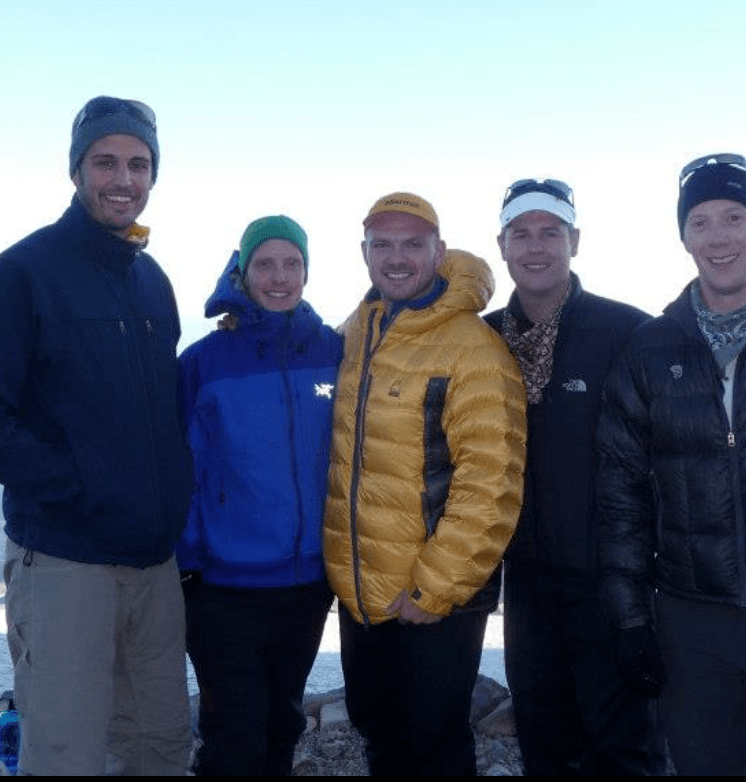
Brian Tschider and Shaun Mauer at John Muir as they prepare to ascend Mt. Rainier wearing Sierra Designs mountain gear designed by Melodie Miller. (Right) Shaun Mauer wearing Sierra Designs mountain gear designed by Melodie Miller. (Center Left)
HEXA Custom outdoor apparel designed and developed by Melodie Miller





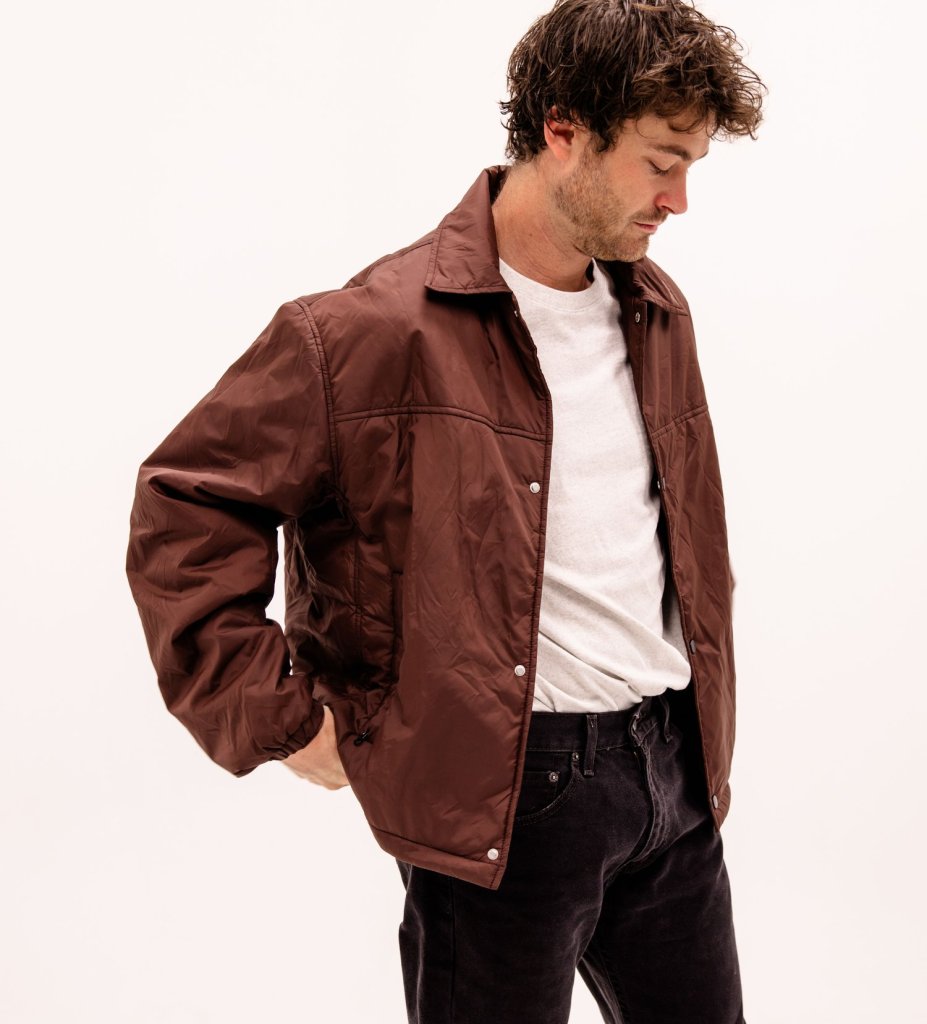


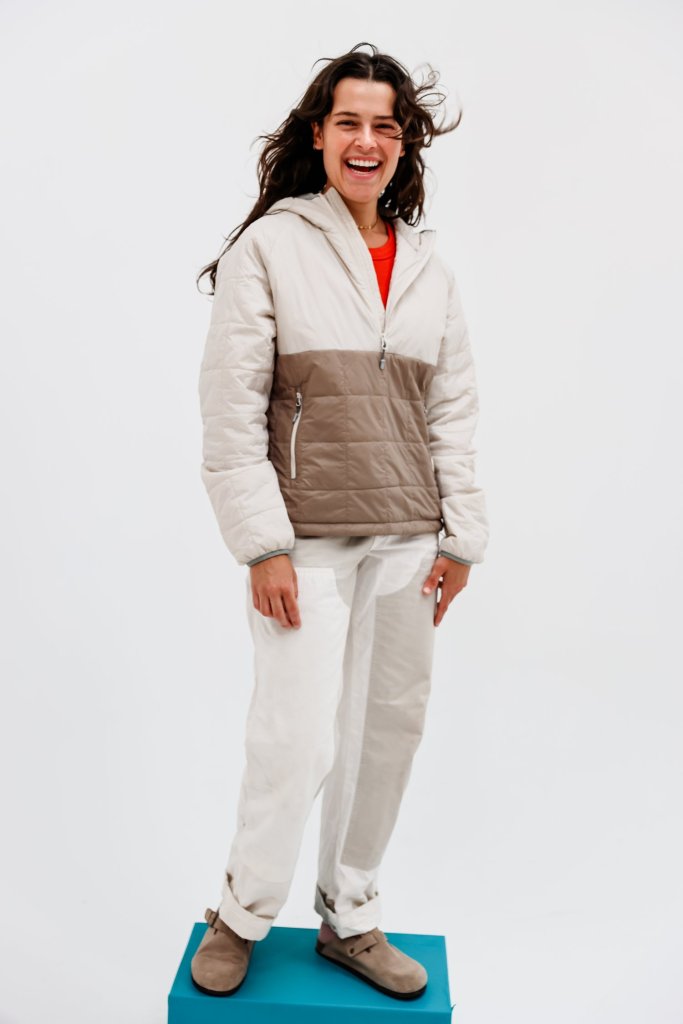

HEXA Reversible Sherpa Jacket (Photos courtesy of HEXA Custom)
Insulated Camping Blankets 57″ x 75″

HEXA Custom | Men’s Quilted Sherpa Vest | Sketch and Engineering
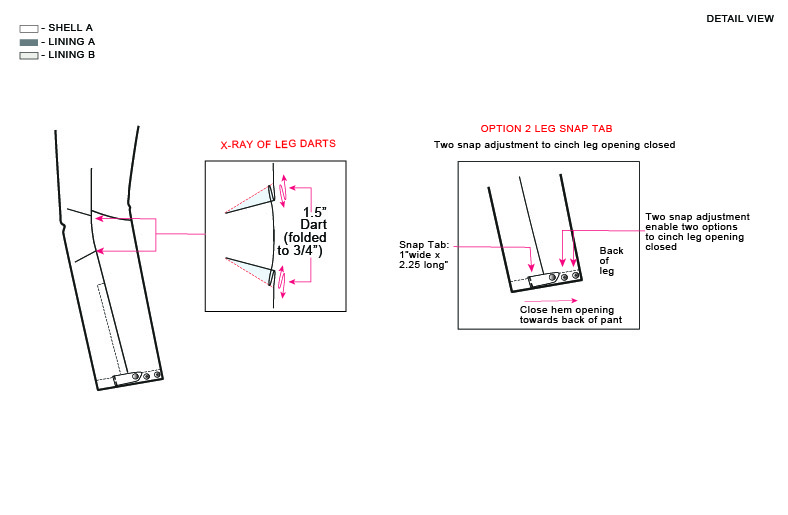
HEXA Custom | Women’s Standard Jacket | Sketch and Engineering
HEXA Custom | Men’s Standard Jacket | Sketch and Engineering
HEXA Custom | Men’s and Women’s Reversible Sherpa Vest | Sketch and Engineering

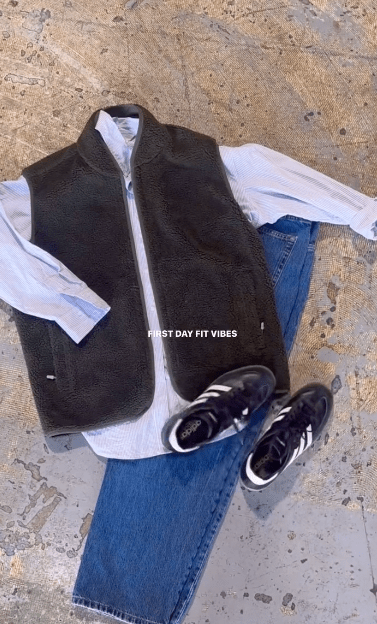

Academy Sports + Outdoors outdoor apparel designed by Melodie Miller


Academy Sports + Outdoors | Men’s Magellan Waterproof Jacket (Melodie Miller | Designer)
Academy Sports + Outdoors | Women’s Magellan Waterproof Pant (Melodie Miller | Designer)
Pearl Isumi Triathlon Suit

Dame Flora Duffy, DBE, is a Bermudian professional triathlete (Center) wearing Pearl Izumi developed exclusively for Duffy by Melodie Miller. Duffy won a gold medal at the 2020 Summer Olympics in Tokyo, Bermuda’s first gold medal. She also competed in the Beijing, London, and Rio de Janeiro Olympics. In 2018, she won gold in the women’s triathlon at the XXI Commonwealth Games in Australia.
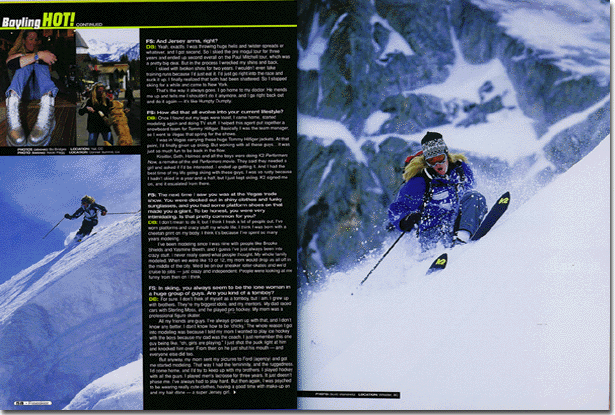
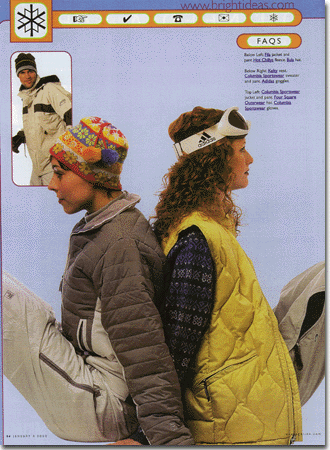
Magazine Covers of designs by Melodie Miller









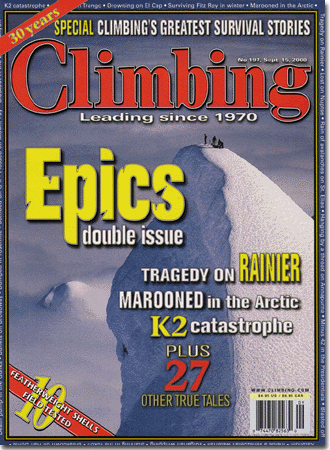



-
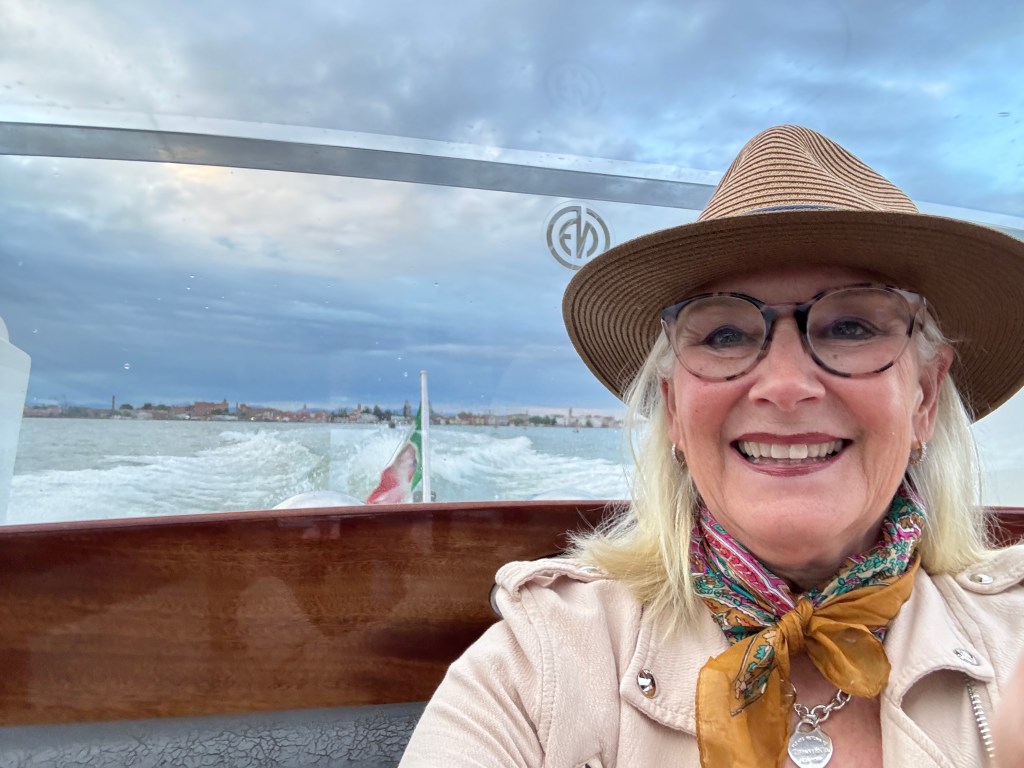
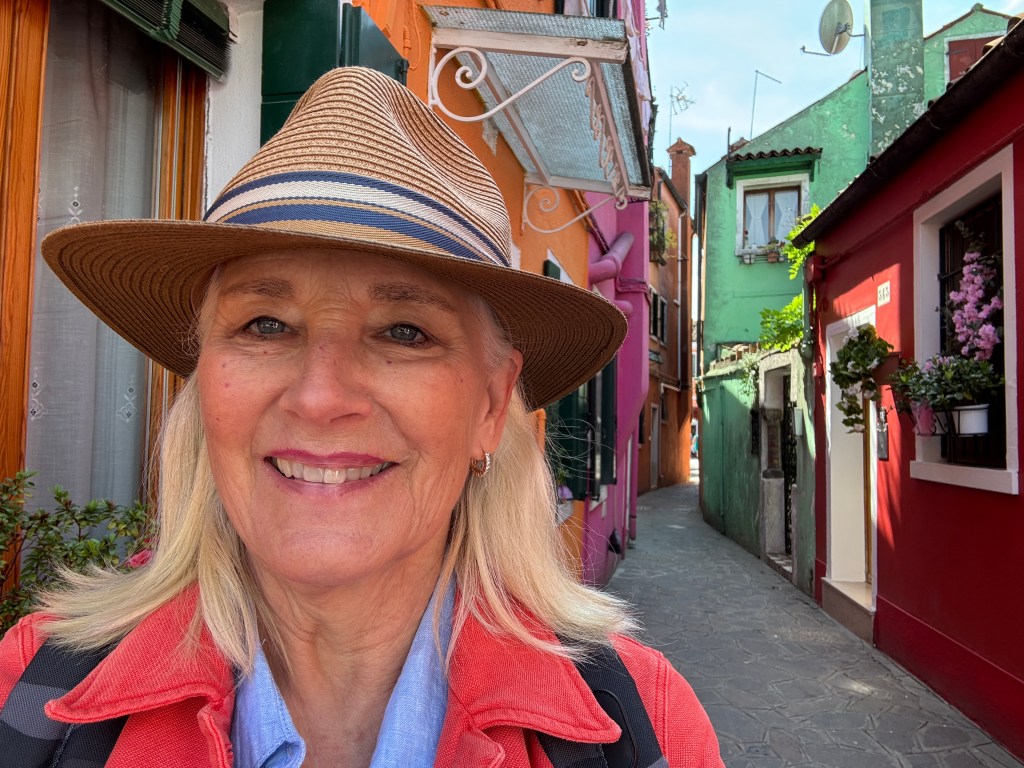
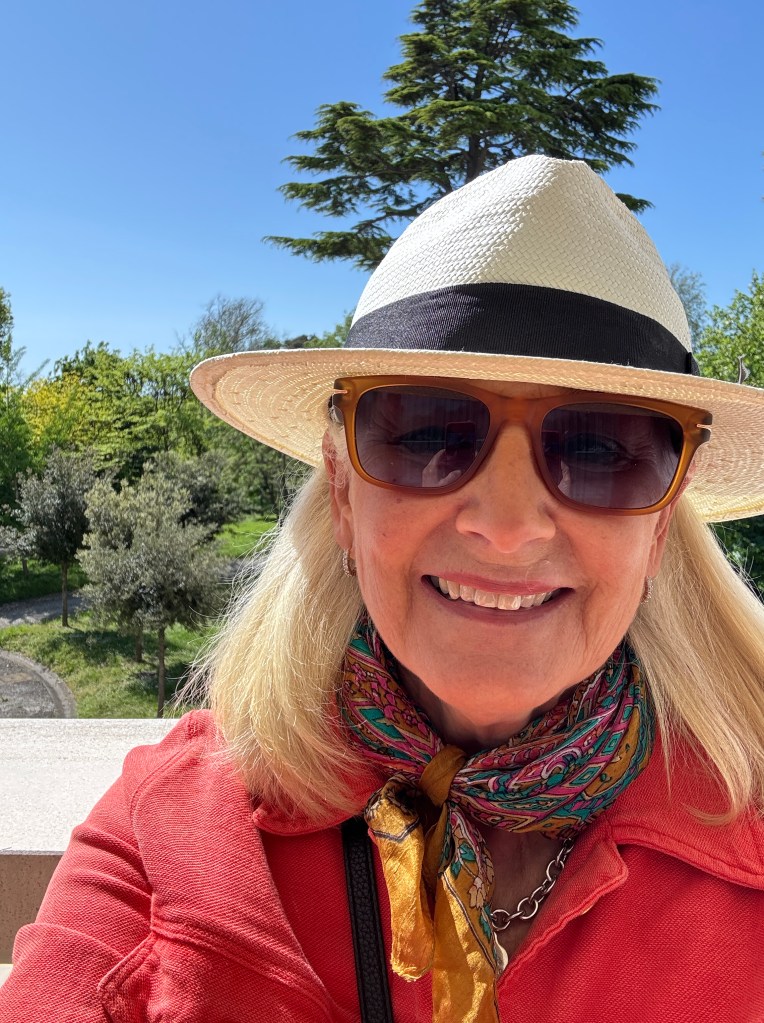
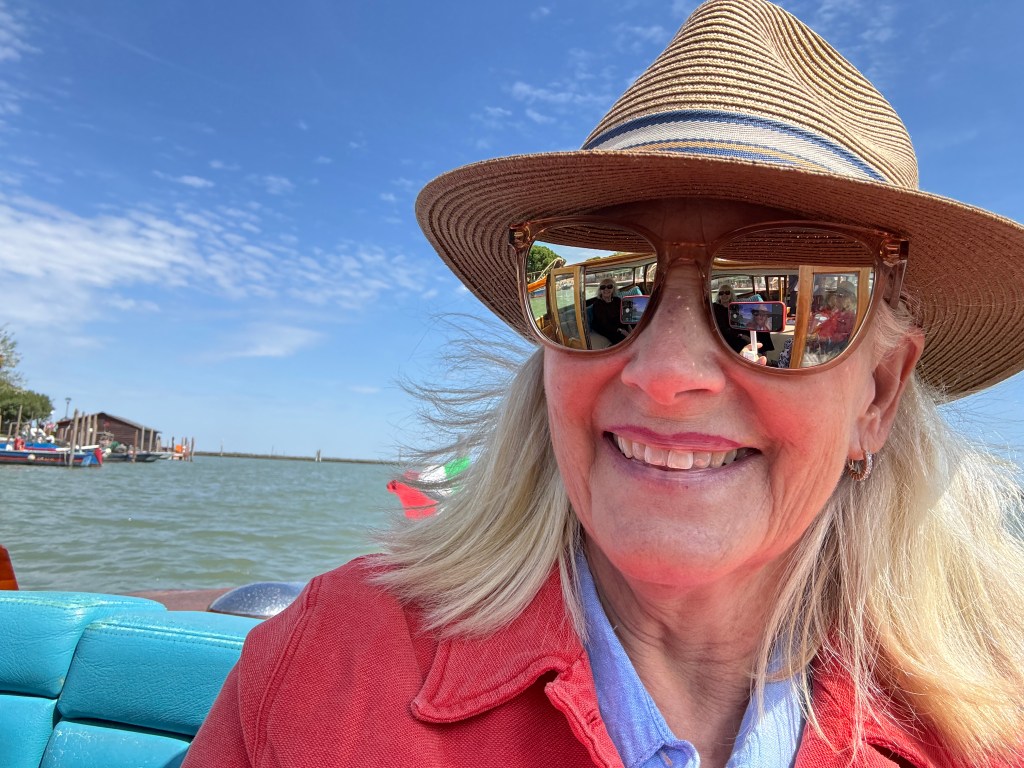
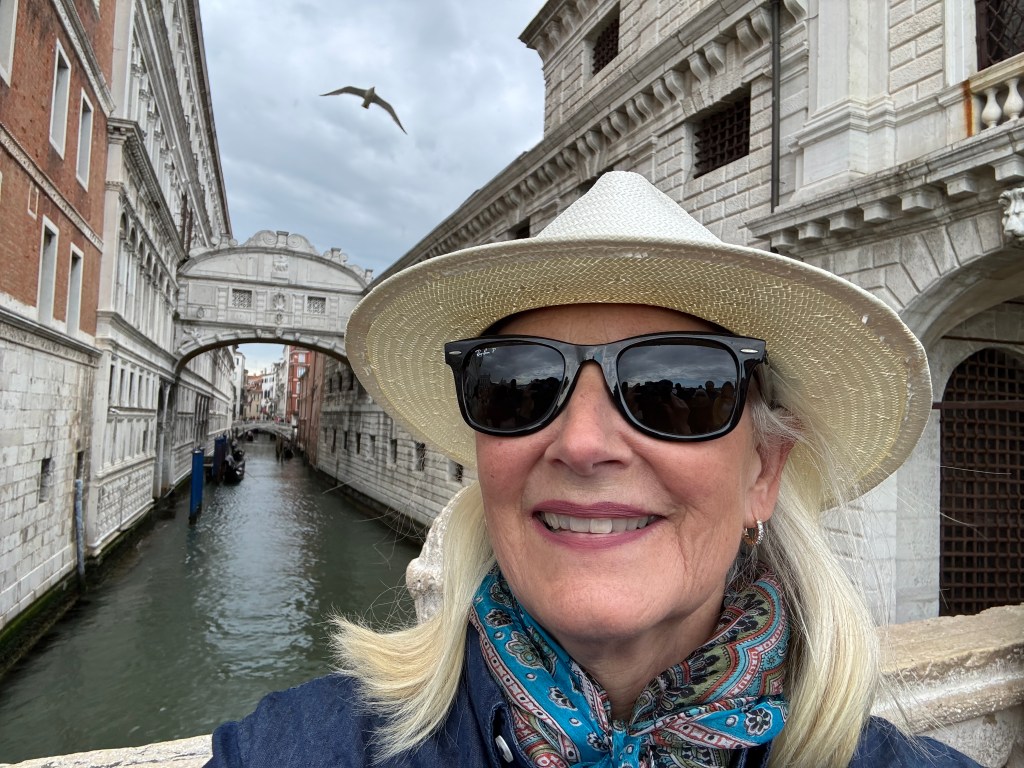
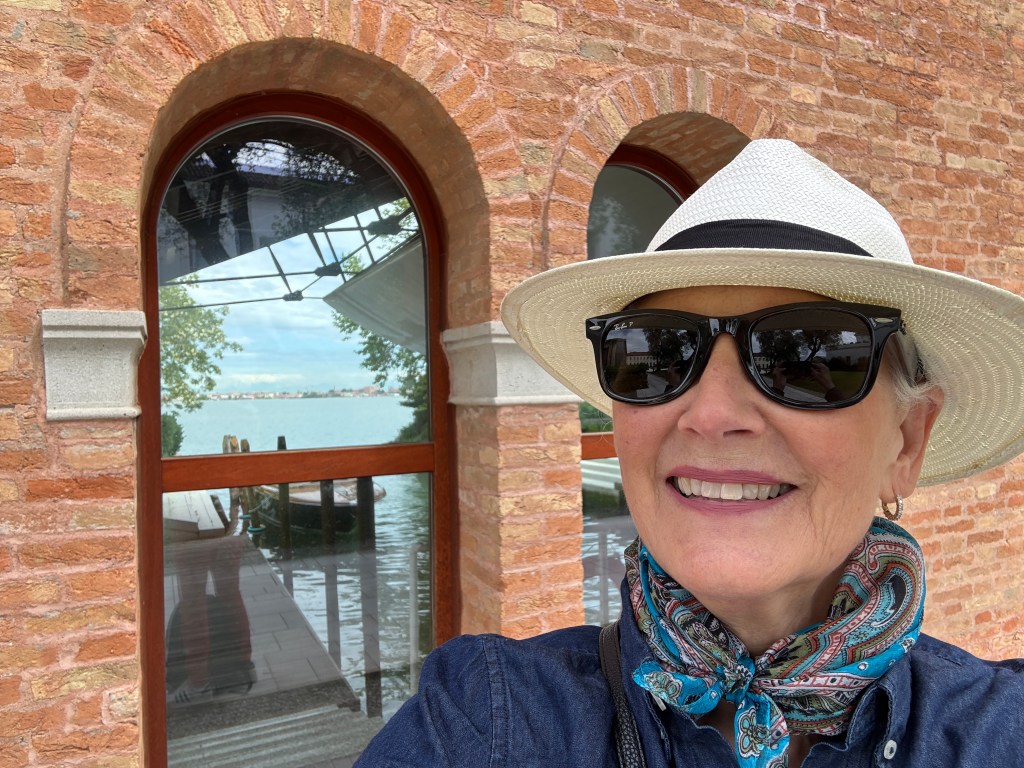
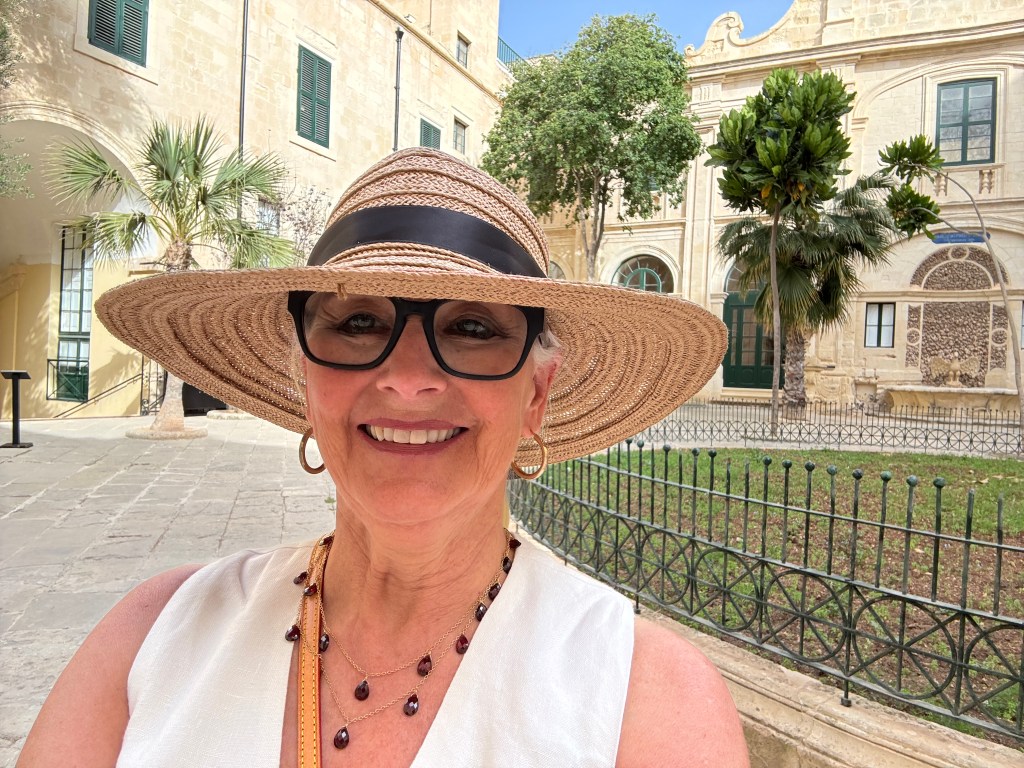
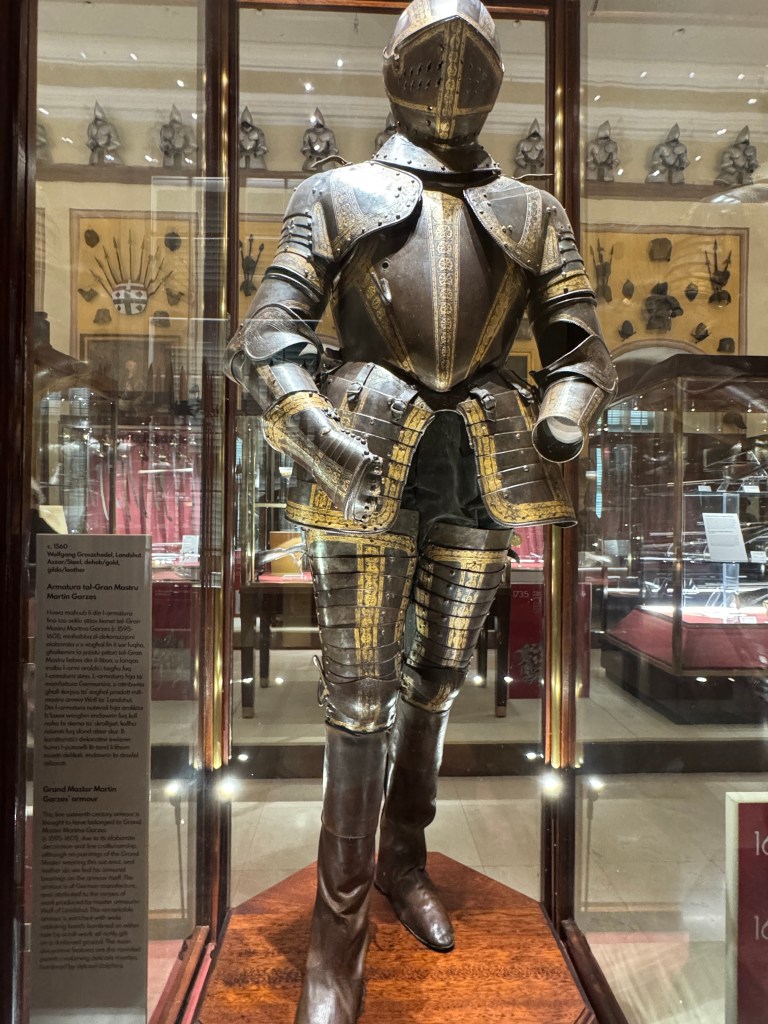
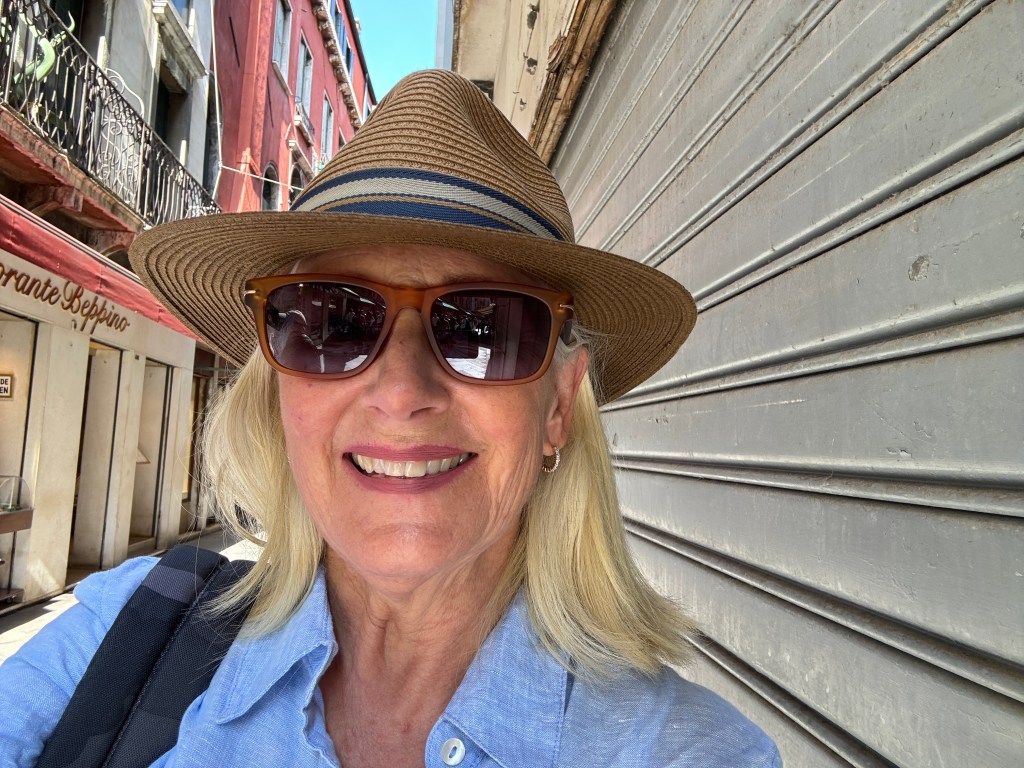
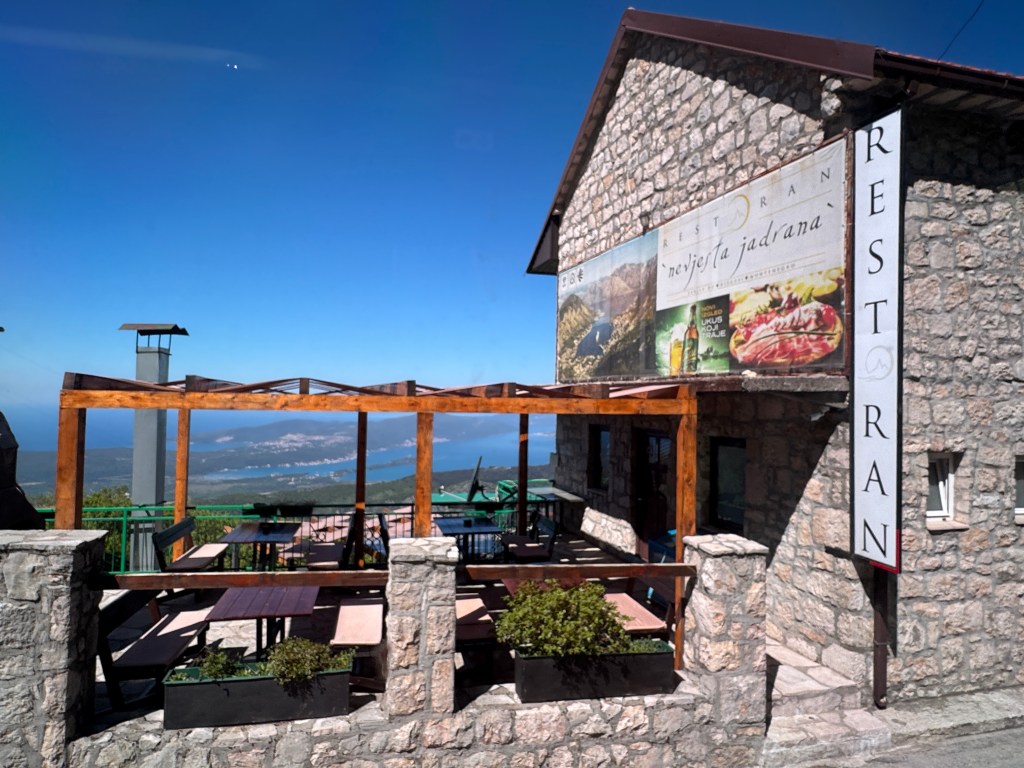
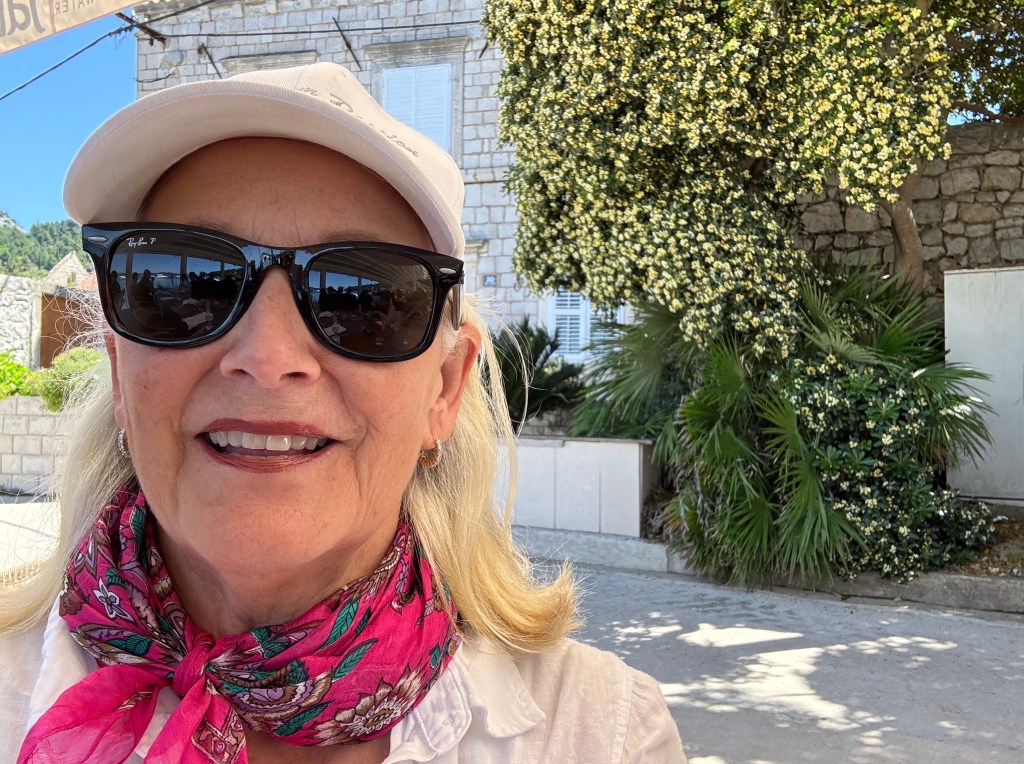
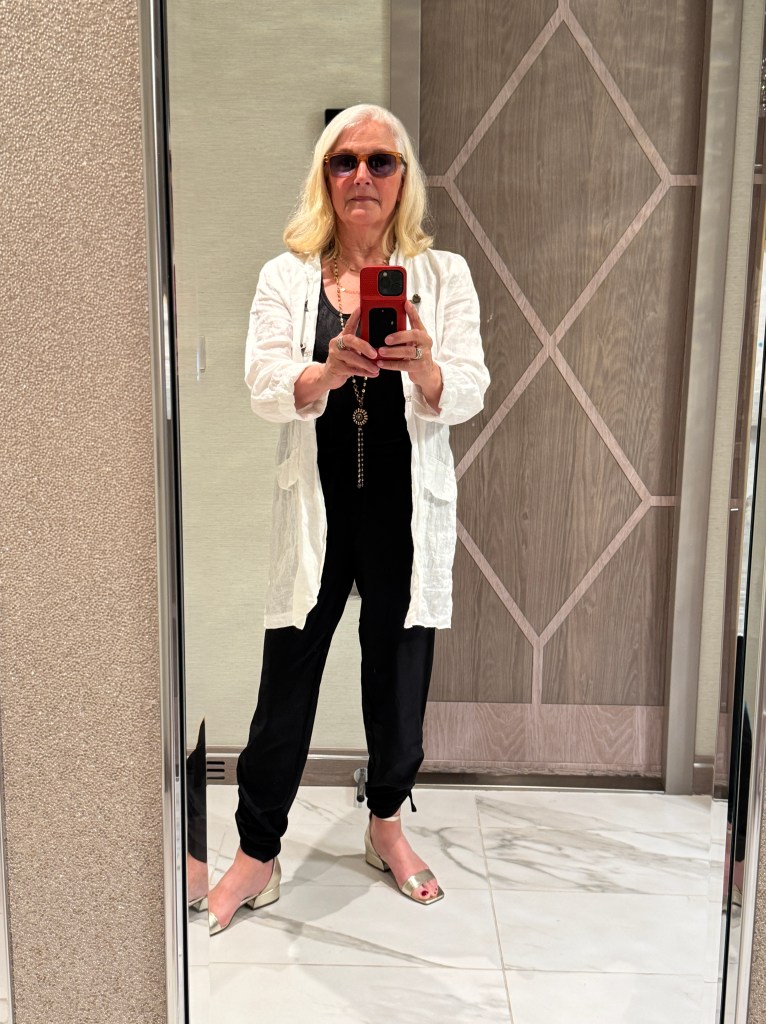
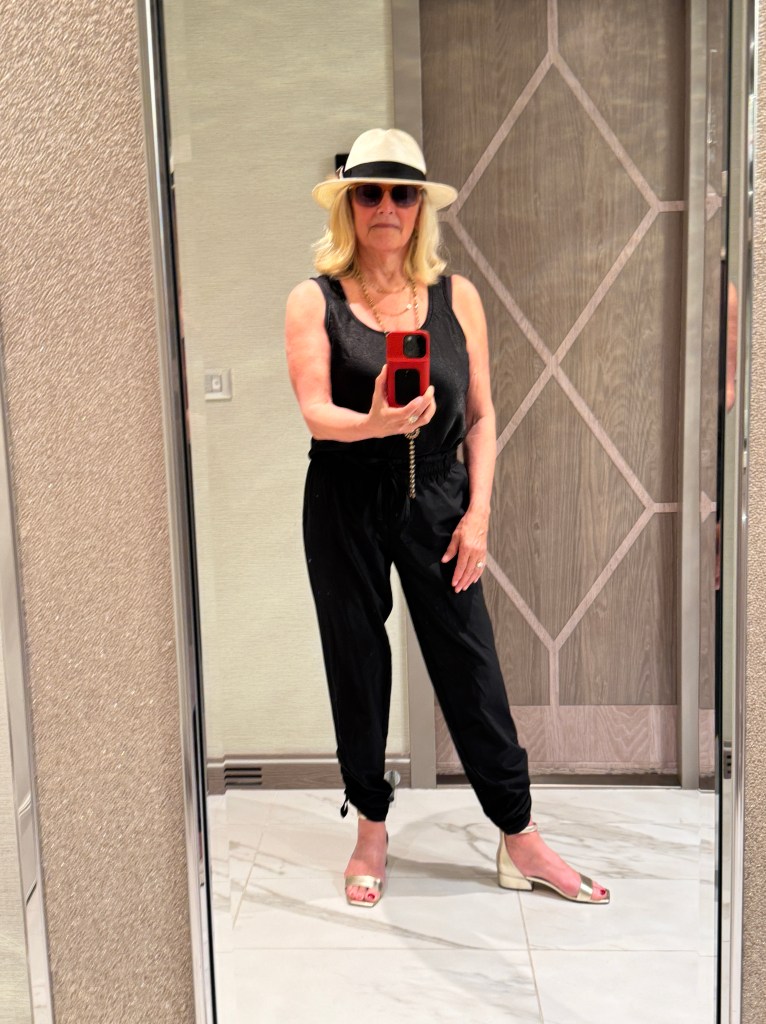
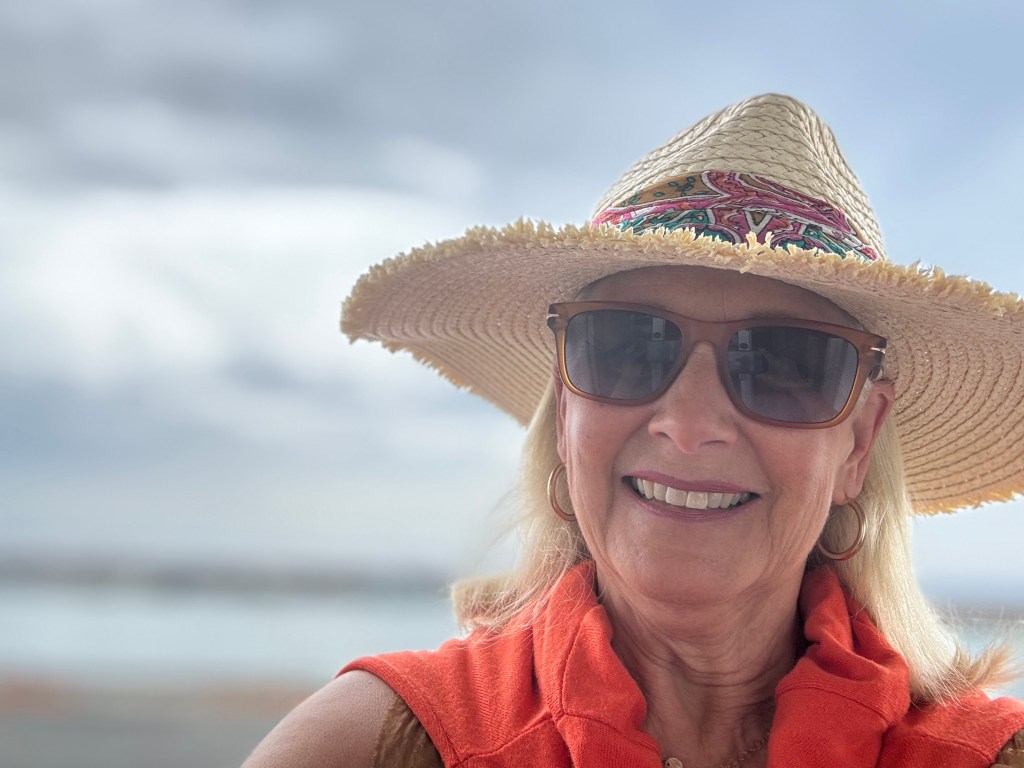
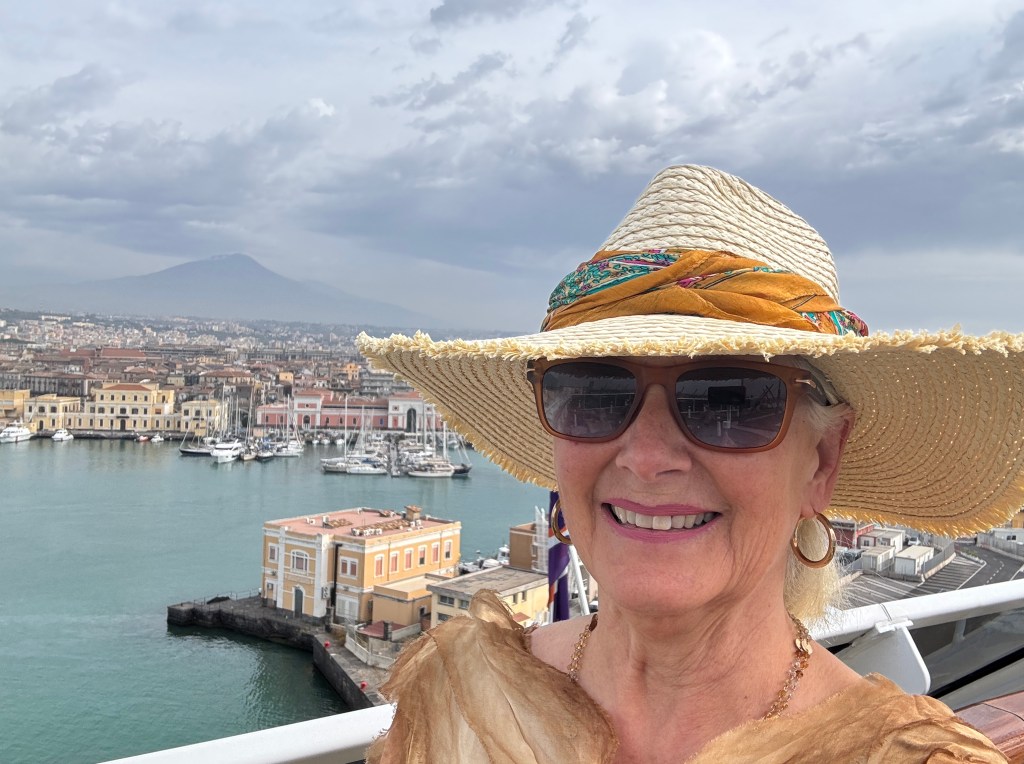
Dress with intent while summer traveling in Europe
Dressing for travel in Europe does not require excess. It requires intention.
by Melodie Miller |
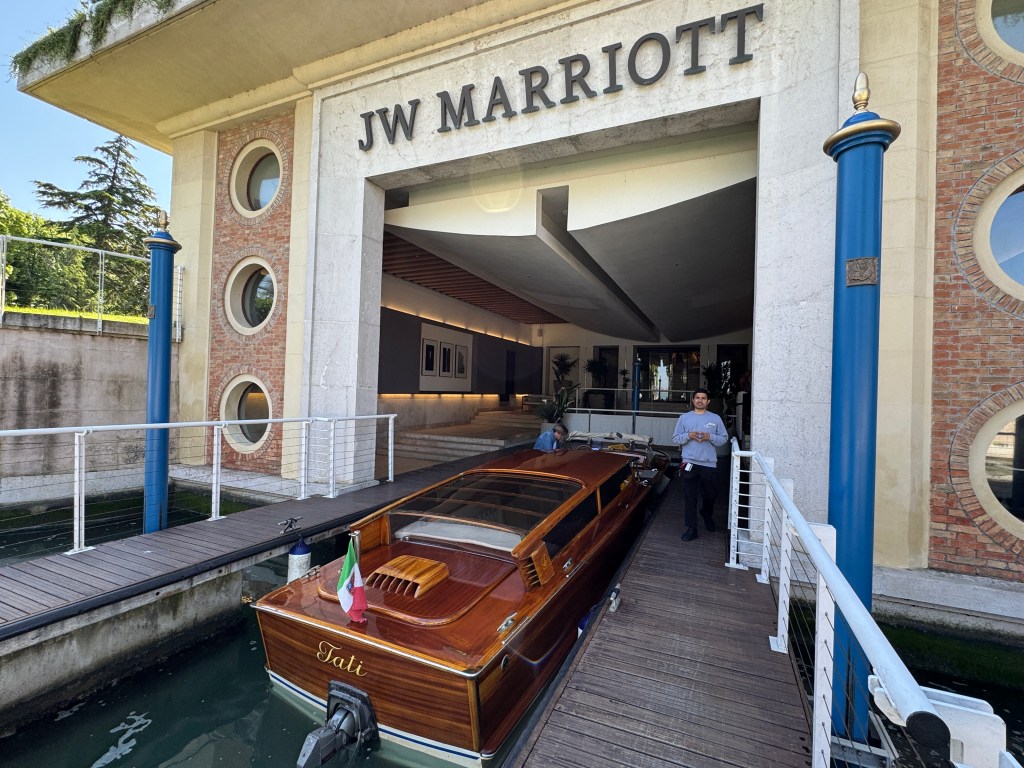
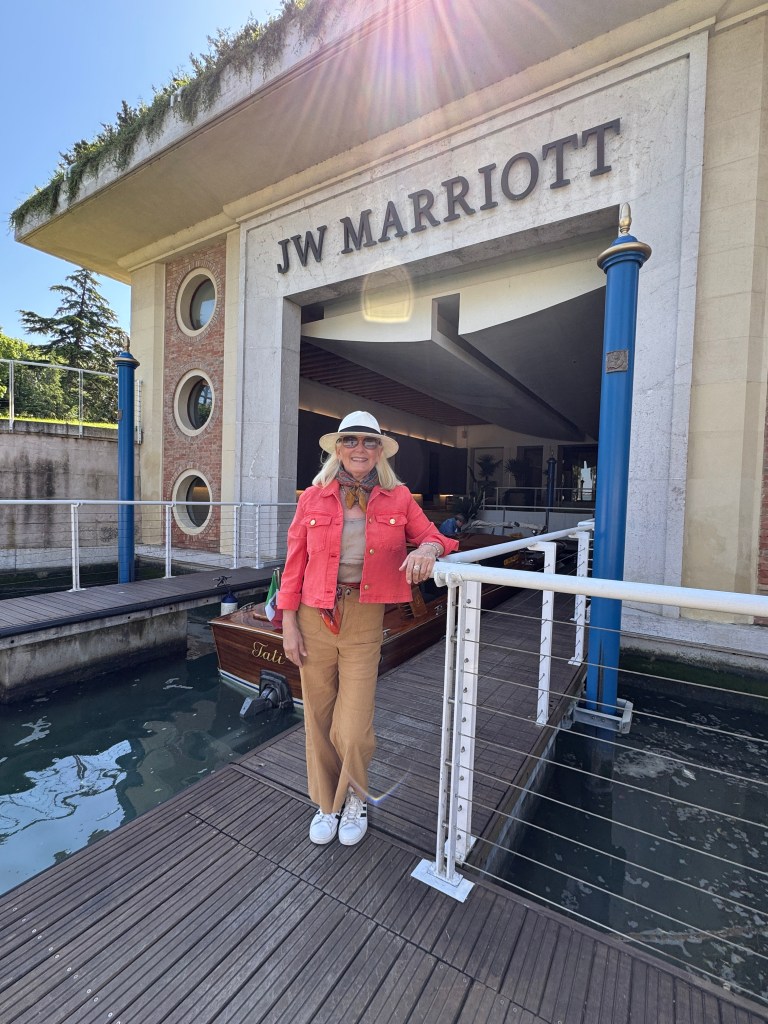
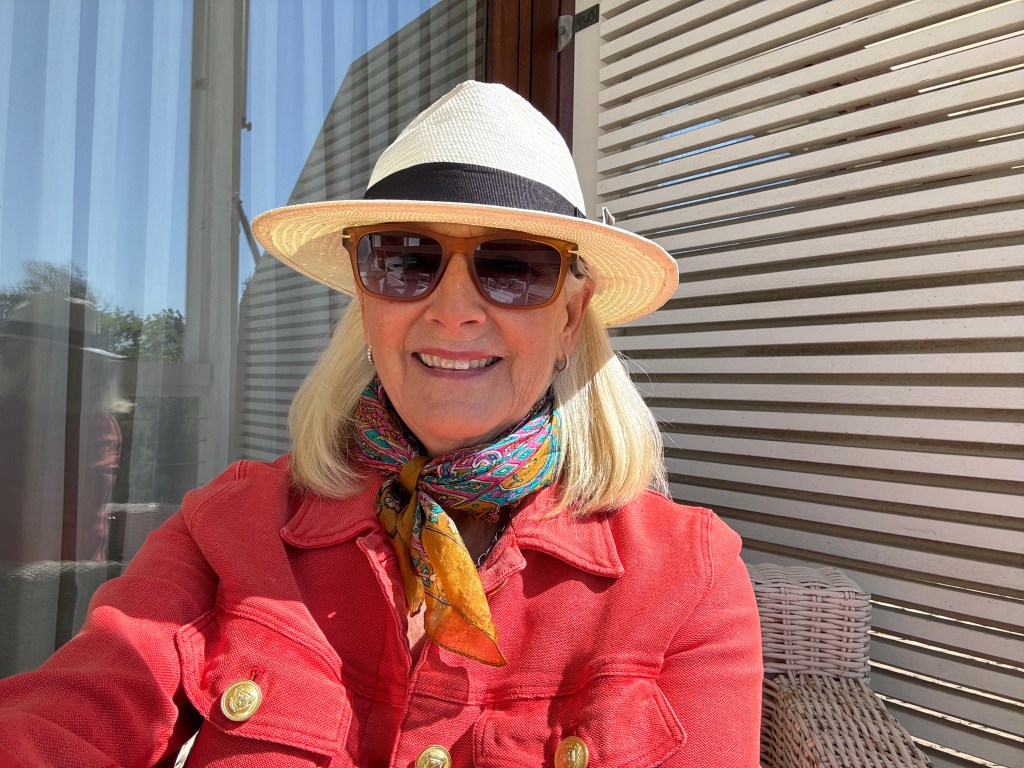
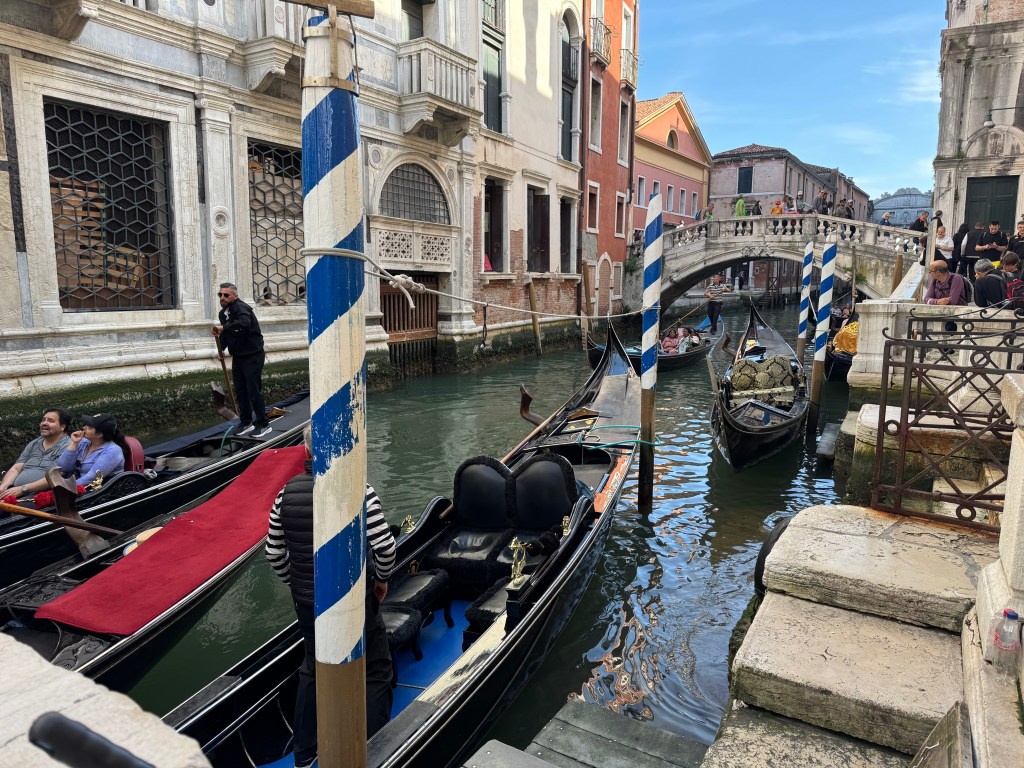
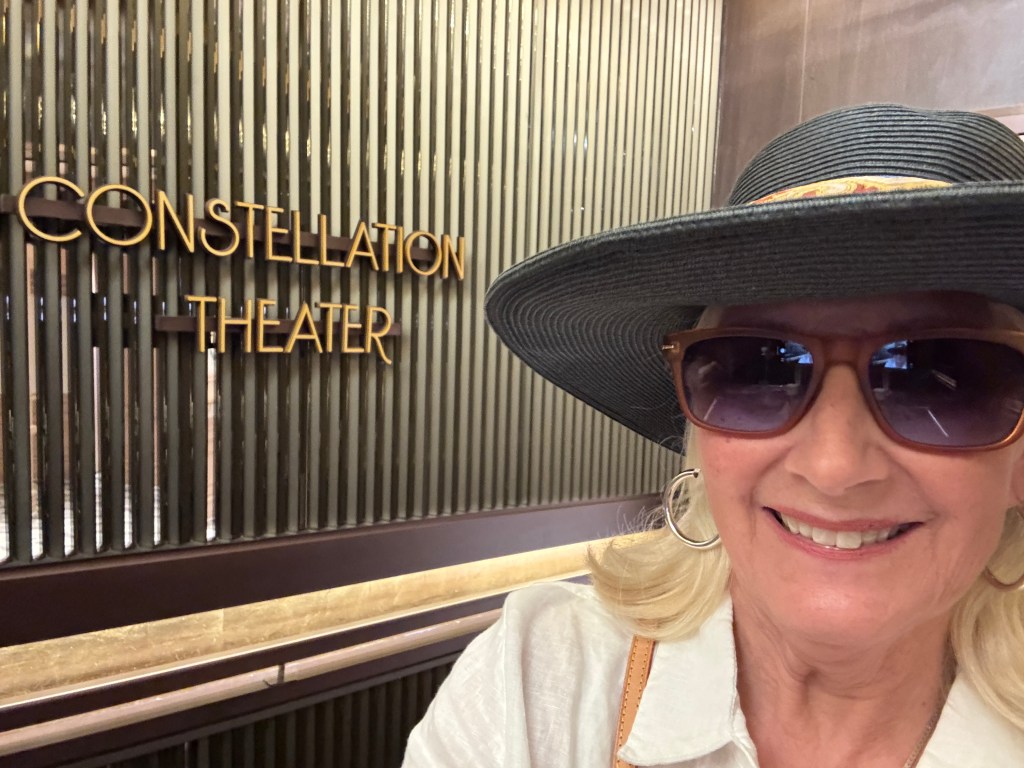
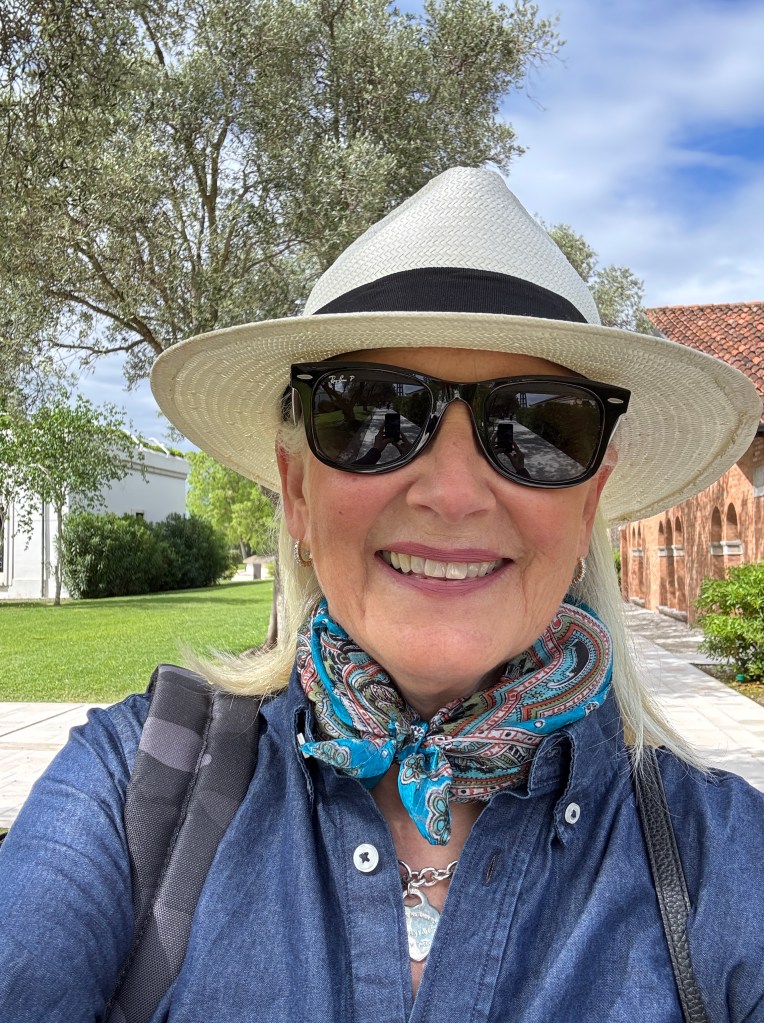
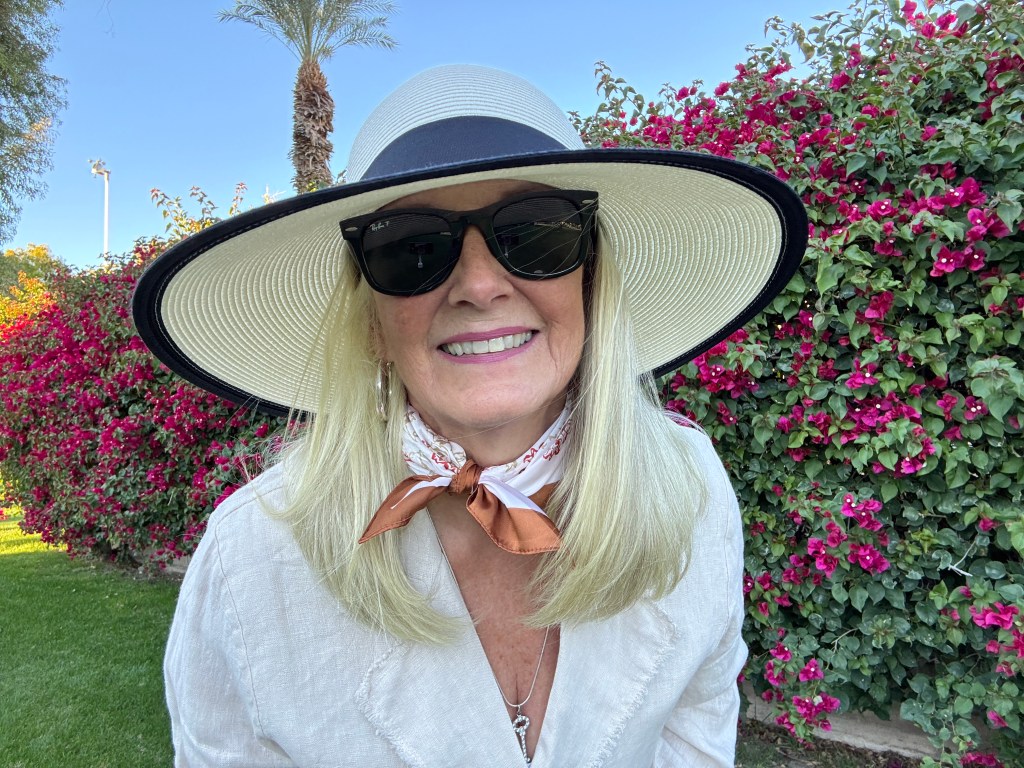
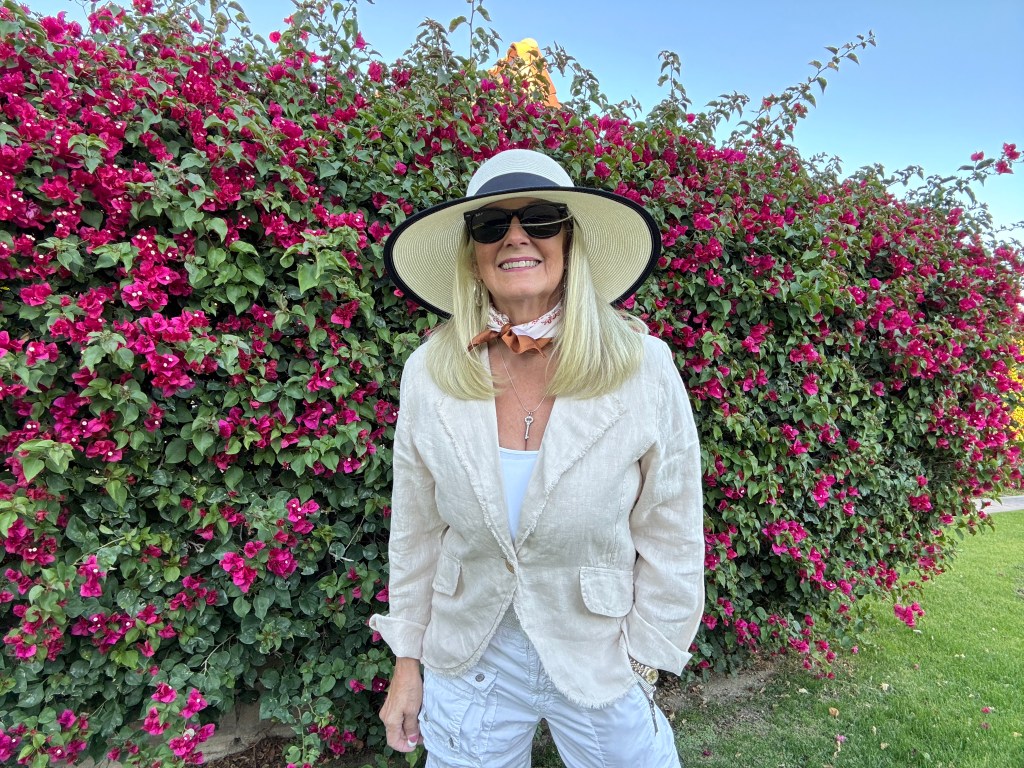
Pack three jackets, three scarves, and four hats. Add tennis shoes and flip-flops, one sweater, three tops and three bottoms, one dress, and one pair of evening shoes. Add two belts for styling. Each piece should work with the others.
With this structure, you can adjust for weather, setting, and occasion. The same garments shift from casual to formal by changing layers and accessories. The result is controlled, deliberate, and consistently polished.








-
Res Ball Actor and Comedian Dallas Goldtooth Uses Humor to Face Climate Change
Humor offers a chance to challenge the narrative of marginalization. This is according to Dallas Goldtooth, Res Ball (film) actor and environmental activist, who spoke on Tuesday, Sept. 24, at the University of Colorado Macky Theater. Goldtooth mixed his signature storytelling and humor with advocacy, gaining the audience’s trust.
“Buy American Spirit cigarettes,” he said when asked how non-indigenous allies can get involved.

Dallas Goldtooth of Dakota and Diné heritage speaks at Macky Theater on the Campus of University of Colorado at Boulderof his experience with environmental issues and activism . (Melodie Miller | Photographer)
Goldtooth is known for his character William Spirit Knifeman in the FX series Reservation Dogs. He is also the founding member of the 1491’s comedy group. He joked with the Boulder audience and reminded them that solving the climate crisis means acting on a larger scale. The climate crisis disproportionately impacts Indigenous communities and other marginalized groups.

Actor and activist Dallas Goldtooth as William Knife-Man in FX’s Reservation Dogs. (Photograph by Shane Brown / FX)
“I’m sure all of you are really happy about your hybrid car that you’re driving or that you switched your light bulbs to LED lights. It’s great. But we have to remind ourselves as we understand that the causation of climate chaos is capitalism. It also means that the fight to protect this planet is much more than environmentalism,” Goldtooth said.
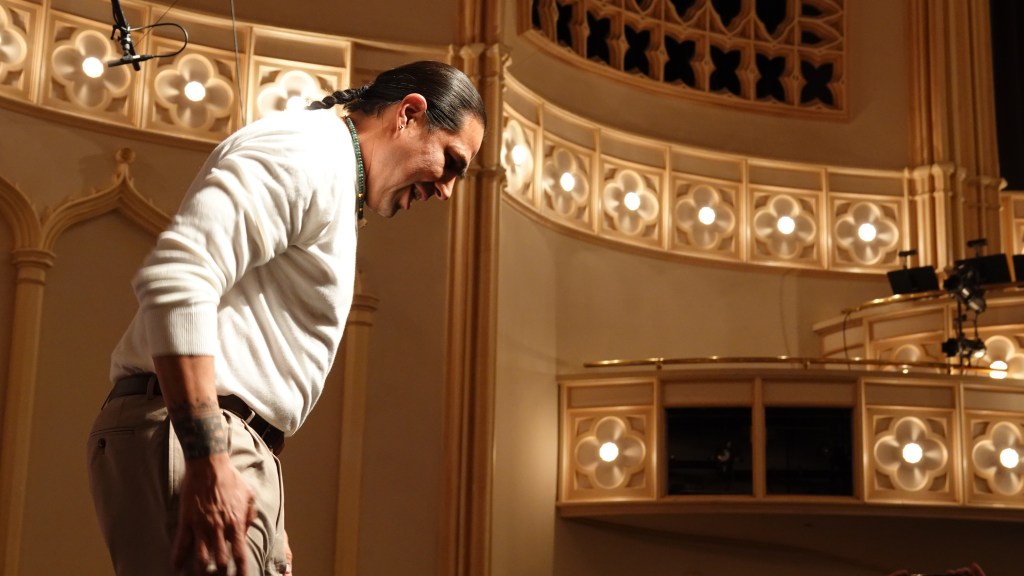
Activist Dallas Goldtooth encourages the audience to . (Melodie Miller | Photographer)
The fight for climate change is a fight for liberation, according to Goldtooth. Many areas affected by climate chaos are marginalized communities. Their citizens often lack the power to influence what happens to the land. They have no voice regarding the water, the air, or their bodies. He encouraged the audience to help lift marginalized voices.
“This will allow us to imagine a future that’s livable for everyone,” Goldtooth said.

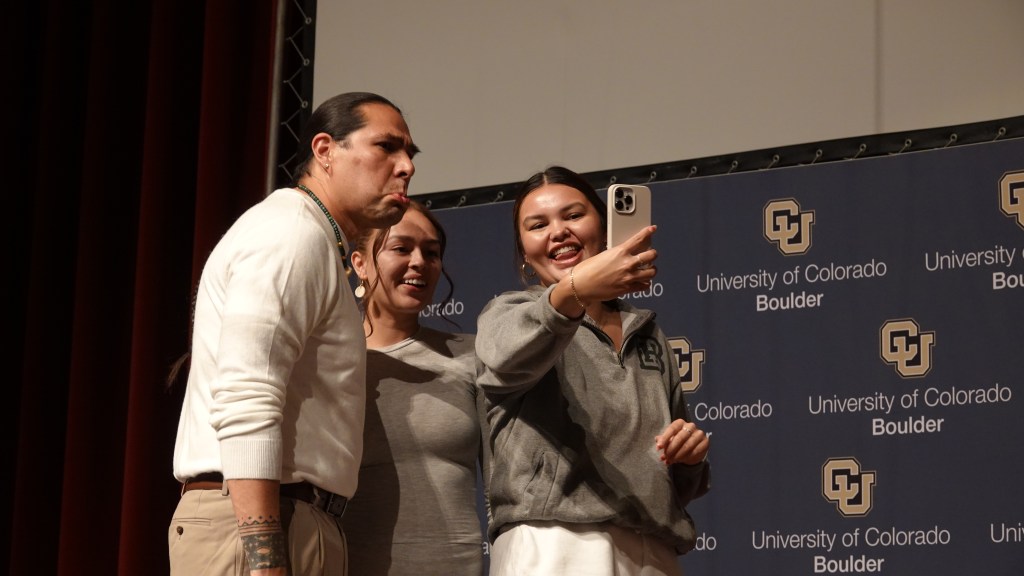
Dallas Goldtooth combined humor and inspiration for action with audience at Macky Theater on the Campus of University of Colorado at Boulder. (Melodie Miller | Photographer)
“Just bring people together around a common issue and let them talk with one another. You have right-wing ranchers, and you have left-leaning natives,” Goldtooth said, “working together to stop the Keystone XL pipeline to preserve clean water on their lands. I’m happy to say that we won the Keystone XL campaign.”

Dallas Goldtooth joked with the audience at Macky Theater on the Campus of University of Colorado at Boulder. (Melodie Miller | Photographer)
Goldtooth amplified the importance of the world’s “climate chaos as an issue that we are all dealing with on this planet.” He softened the message with a personalized joke when asked how he began his career as an activist. Goldtooth told the audience, “Well, I was 13 pounds when I was born. So, my mom knew injustice.”
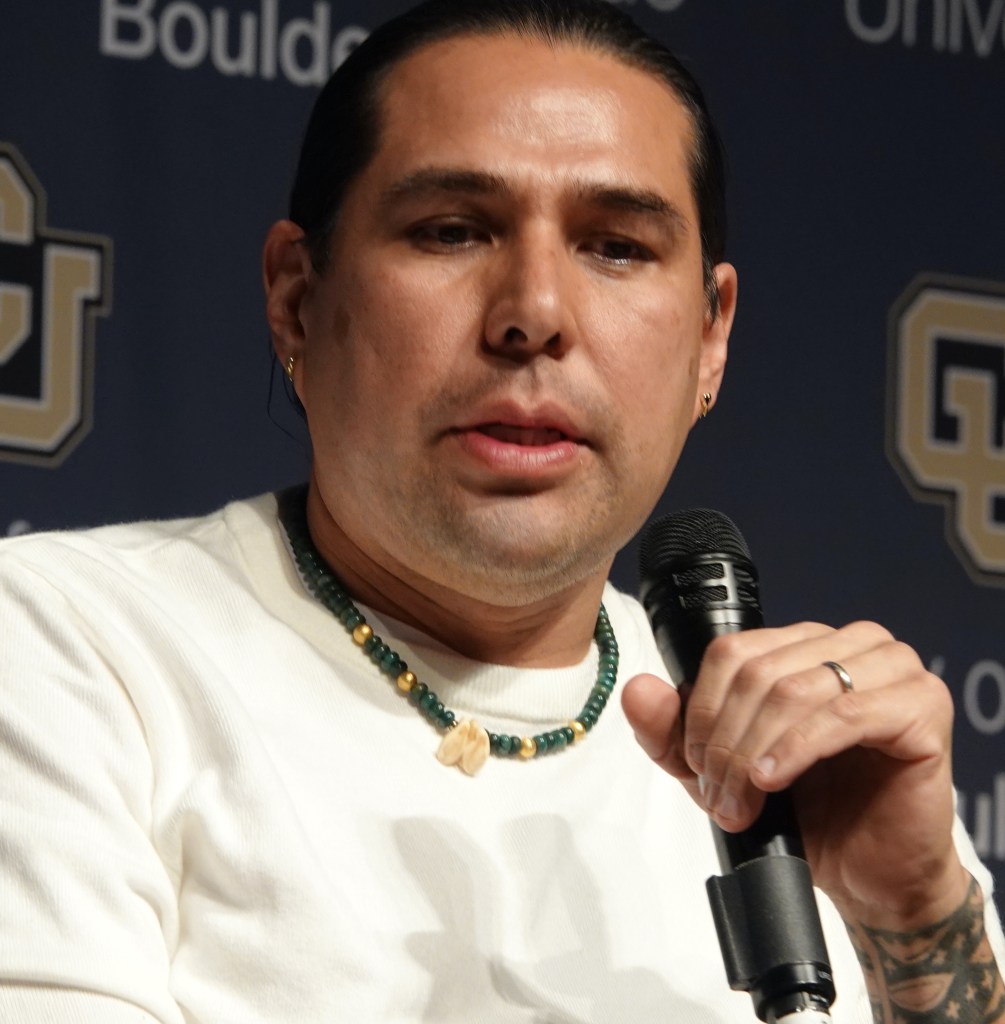
Dallas Goldtooth reminded the audience at Macky Theater on the Campus of University of Colorado at Boulder that the climate crisis affects marginalized communities disproportionately. (Melodie Miller | Photographer)
Storytelling is a “big part of the organizing effort to make this planet better,” Goldtooth said. Humor provides the “opportunity for you to disrupt the narrative because all of our fields have been impacted” by marginalization. For example, the United States insurance companies secure capitalistic investments. Goldtooth told the audience that “insurance companies are complicit in the destruction of the earth.”

Benny Shendo attended Goldtooth’s speech. He is the vice chancellor for Native American Affairs at the University of Colorado. Shendo is also a member of New Mexico’s Democratic Senate. “I think you will find humor across any country. I mean, it’s not any different in Pueblo or any different in Pani or any other tribe,” said Shendo.

Benny Shendo. University of Colorado alumni speaks to Congress. Members of Congress formally accepted a sculpture of Po’pay, a medicine man from Ohkay Owingeh who led the Pueblo Indian Revolt of 1680, to complete the U.S. Capitol’s Statuary Hall collection. (Photograph courtesy of the C-SPAN 2 Archives)
Phillip Gover is a Tribal Affairs Specialist for the Colorado Department of Human Service. He is an advocate for Indigenous Coloradoans and said, “I think Native Americans have always dealt with tragedy with a sense of humor. Most people would say, ‘What?’ Why would you laugh at that? If I’m not laughing, then I’m crying, and I’d rather be laughing.”

Phillip Gover, a Tribal Affairs Specialist for the Colorado Department of Human Service (Melodie Miller | Photographer)
Goldtooth uses joy and laughter to advocate for marginalized Native American communities disproportionately facing climate change.

Dallas Goldtooth shared the stage with students at Macky Theater on the Campus of University of Colorado at Boulder. (Melodie Miller | Photographer)
He is descended from the Minnesota Dakota/Diné (Navajo) tribe. He is a member of the Lower Sioux Indian Community. He is also a Dakota language instructor.
-
“Let the Right One In”
C.U. Presents closed its modern vampire love story to a packed house at the University of Colorado Loft Theatre in Boulder.
Director Heather Kelley’s adaptation of Jack Thorne’s play “Let the Right One In” closed to a sold-out audience on Sunday, Oct. 20, at the University of Colorado Loft Theatre.
by Melodie Miller

The audience waits for the sold-out presentation of Let the Right One In to begin. Scenic design by Hyley Delich. (Melodie Miller | Photographer)
Based on the novel by John Ajvide Lindqvist, first love, sexual intimidation, and school bullying transcend the borders of time and space in “Let the Right One In.” Eli, a 200-year-old vampire trapped at age 12, befriends Oskar, their 13-year-old neighbor, on the playground where Eli is bullied by classmates in 1981 Sweden.

Eli, played by Wyleigh Watson, is a 12-year-old trapped in the body of a 200-year-old vampire, climbing on the monkey bars. (Melodie Miller | Photographer)
The childhood friendship between Eli and Oskar is complex, creating “a dynamic narrative that centers on empathy and fighting for each other despite all the blood and scars,” Brosnan Bustamante, the stage manager, said.
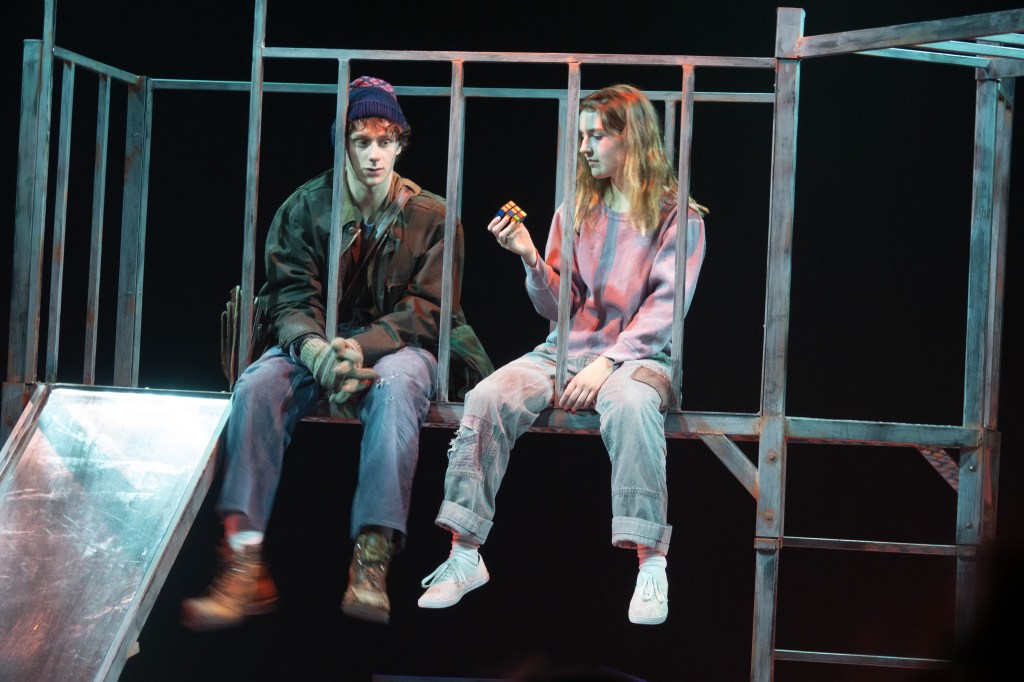
Oskar, played by Salem Channell, lives next door to Eli the vampire. Eli, played by Wyleigh Watson, contemplates a Rubix Cube. (Melodie Miller | Photographer)
Let the Right One In ”is a macabre story with a happy ending,” Scenic Designer Haley Delich, a Bachelor of Fine Arts in Design, Technology, and Management, said.
Oskar is “dealing with bullying and first love,” and Eli “is trapped with the body and the mind of a child.”
When Hakan dies, Oskar becomes Eli’s new companion, giving purpose to their lives.

Bullies Jonny, Jimmy and Micke, play by Ian Von Pechmann, Sam Stitt and Cade respectively, threaten to drown Oskar, played by Salem Channell.
Situated in 1981 Blackeberg, Sweden, the playground was the setting where Hakan, Eli’s parent figure, killed and procured blood from his victims for the thirsty 12-year-old child.
Roan Cochrane as Hakan (Right) drains the blood from his victim played by Ian McCance (Left). (Melodie Miller | Photographer)
The play’s emotional themes required stage manager Brosnan Bustamante, a C.U. student, to ensure a smooth production. Brosnan prioritized a supportive environment. He minimized stress to keep the team focused on the performance.

Savannah Gullett plays Oskar’s Mum (Left). Norah Shuey plays Halmberg, the police commissioner. (Right)(Melodie Miller | Photographer)
“It’s crucial that the stage, cast, and crew are functioning smoothly, especially in a production that is emotionally intense and technically demanding,” Bustamante said.
The menacing playground of “Let the Right One In” stands empty.(Melodie Miller | Photographer)
Filled with death, blood and bullying, the setting is ironic as a playground but fitting as a place of horror, where children act as monsters.
Bully Jonny, played by Ian Von Pechmann, talks with Oskar, played by Salem Channell. (Melodie Miller | Photographer)
Delich designed the set to evoke a “bit of the horrors of growing up and outgrowing the playground,” she said.
“Let the Right One In” playground setting designed by Hayley Delich is illuminated with pink light. (Melodie Miller | Photographer)
The cast of “Let the Right One In” take a bow at the close of their successful run.
Salem Channell as Oscar (center front); Middle row: Wyleigh Watson as Eli, Charlie Hough as Mr. Avila, Sam Stitt as Jimmy, Pechmann as Jonny. Back row: Roan Cochrane as Hakan, Ian McCance as Dad, Cade Heaton as Micke, Savannah Gullett (far right, back) as Mum. (Melodie Miller | Photographer)
The minimalistic rusted monkey bar set, designed by Delich, was intended to “mirror the stark lives of the characters,” she said. The characters had outgrown the playground but were emotionally stuck in their childhood experiences where they faced bullying and isolation every day in “Let the Right One In.”
“Let the Right One In” playground scenic design by Hyley Delich, illuminated with blue light. (Melodie Miller | Photographer)
The 2024 C.U. Presents, “Let the Right One In,” is part of the Artists Series, which spans over 80 years on campus. Kelley is pursuing a PhD in Theatre & Performance Studies at C.U. Boulder.
University Theatre Building, 261 University of Colorado, Boulder, CO 80302
-
The Heartbeat of the Powwow at the University of Colorado at Boulder
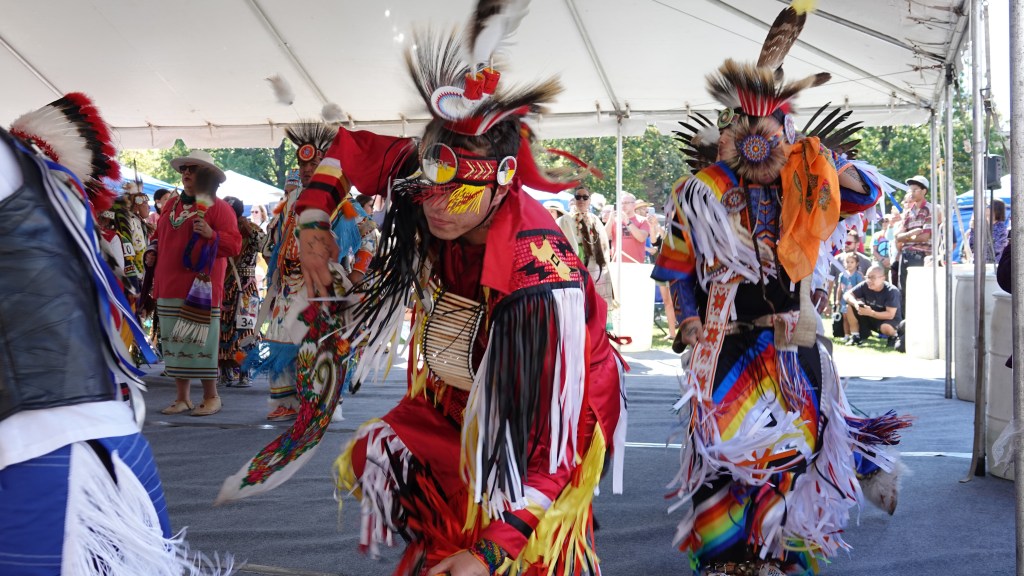
The Heartbeat of the Powwow returned to the University of Colorado at Farrand Field on Sept. 28, 2024. (Photograph by Melodie Miller)
Listen to powwow musician Tony Crank at the University of Colorado Farrand Field, Sept. 28, 2024. The Colorado American Indian Tribes In-State Tuition Act (CO SB 21-029) was passed to allow eligible students to pay in-state tuition at Colorado public universities and colleges. (Video, audio and voice over by Melodie Miller)
I went to historic Farrand Field on the University of Colorado campus in Boulder for the 2024 Native American powwow. It was a beautiful bluebird day without a cloud in the sky. The campus was built on the traditional territories and homelands of the Arapaho, the Cheyenne, and the Ute nations. The powwow is part of the universities commitment to continually improving and enhancing engagement with indigenous peoples locally and nationwide. It is the first powwow on campus in 23 years.
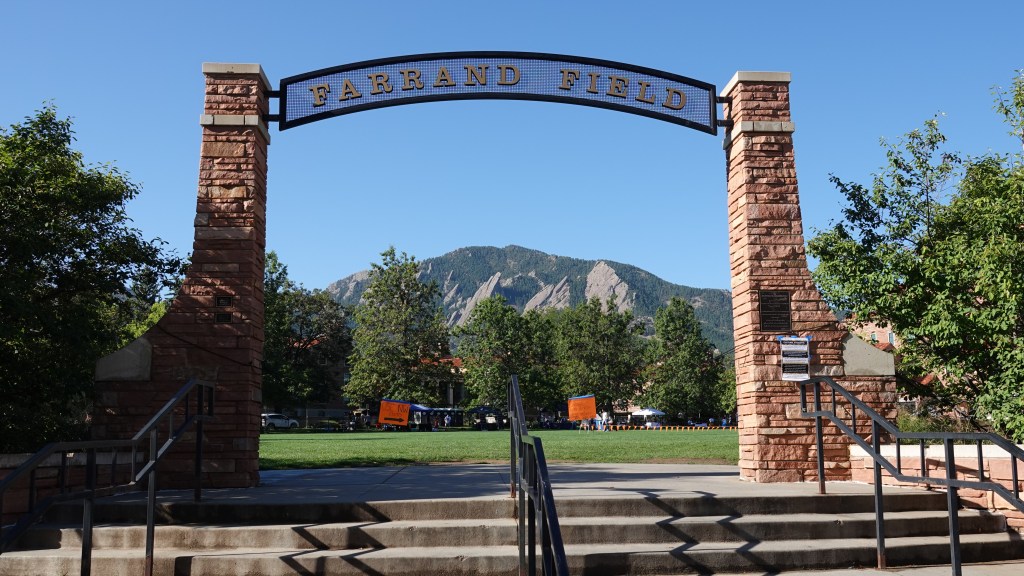
Farrand Field was named after Livingston Farrand, the University of Colorado Boulder’s fourth president, who served from 1914 to 1919. (Photograph by Melodie Miller)

After 23 years, the powwow returns to campus as a celebration of faith and tradition for the indigenous peoples of Colorado. (Photograph by Melodie Miller)
The 2024 CU Boulder Powwow was organized by the Oyate Native American and Indigenous Student Organizations on campus. It was a collaboration between the Center for Inclusion and Social Change (CISC), the Center for Native American and Indigenous Studies (CNAIS), the Oyate Native American and Indigenous student group and the native Graduate Student Group and the Theater and Dance Department.
Cultural etiquette was encouraged with guidelines posted as reminders for the audience. The aim is to elevate understanding and sensitivity towards respecting the customs of Native American nations.
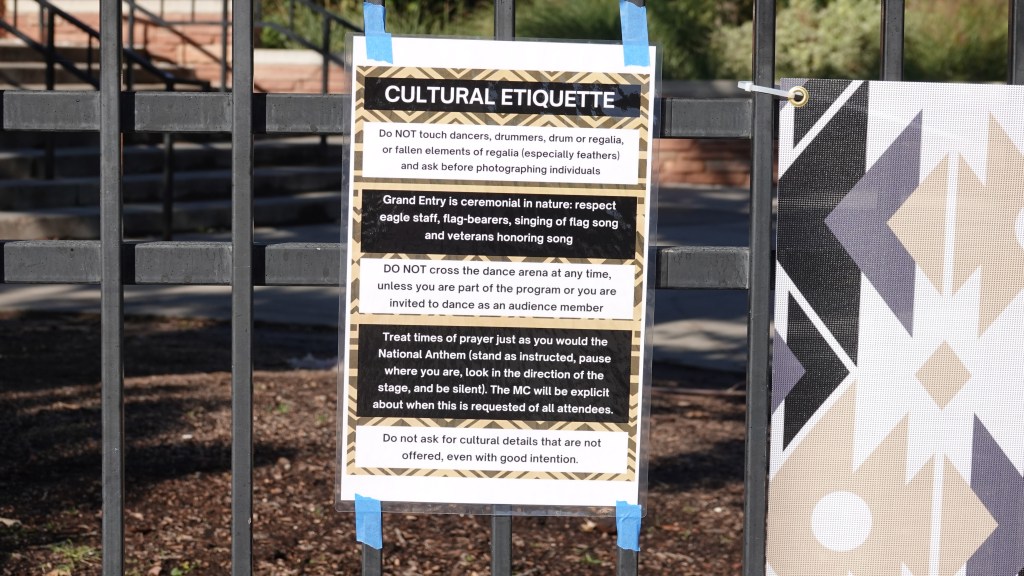
Cultural etiquette guidelines are displayed outside Farrand Field at the University of Colorado, Boulder. (Photograph by Melodie Miller)
Cultural etiquette is a unique set of understandings that guide people when interacting in different societies. At the powwow, these guidelines include not touching the dancers, their regalia, instruments or fallen feathers. “Do no ask for cultural details that are not offered even with good intentions.” Sensitivity and respect for these norms fosters positive cross-cultural understanding and connection.

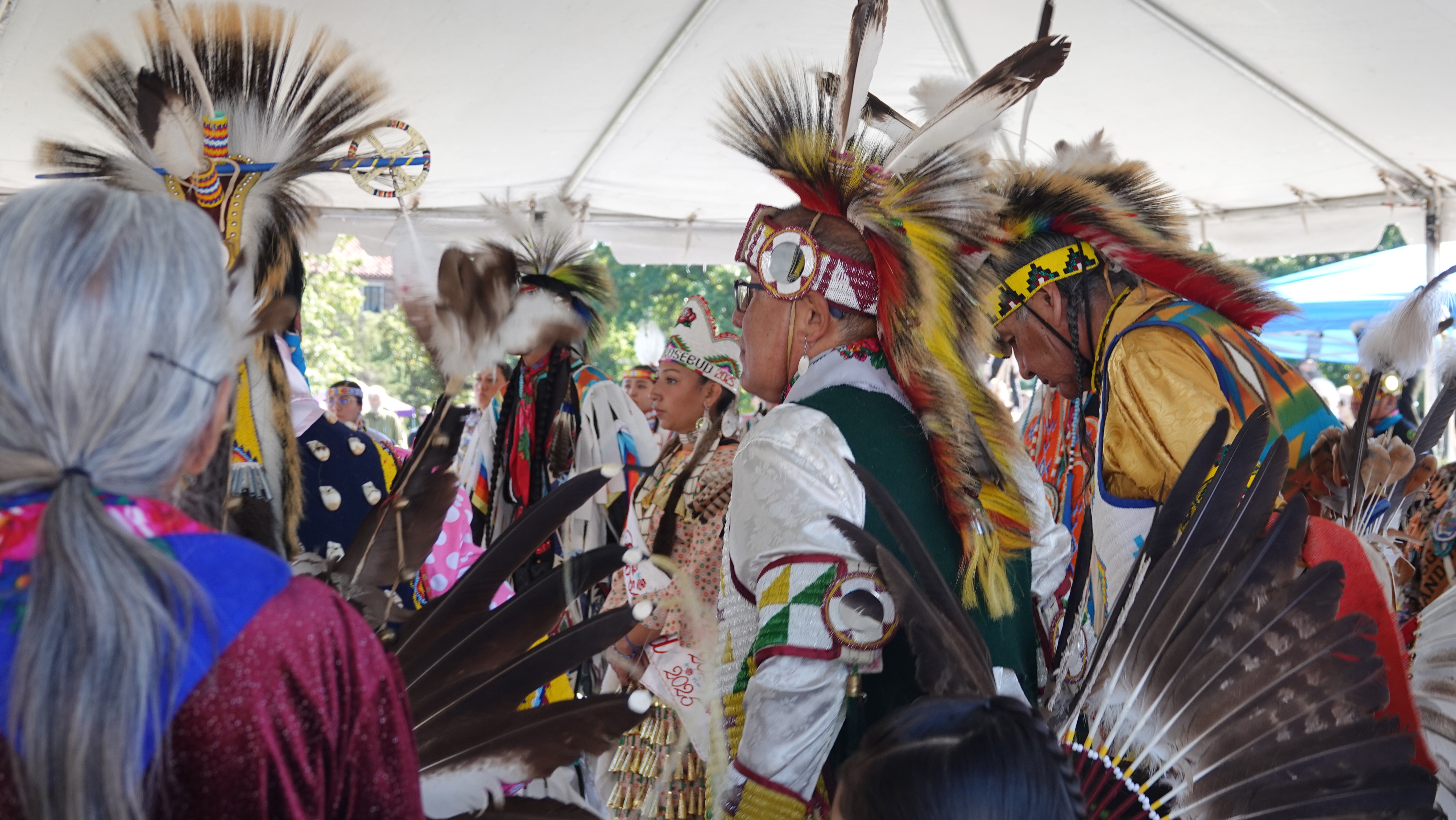
Grand entry for the powwow.(Photograph by Melodie Miller)
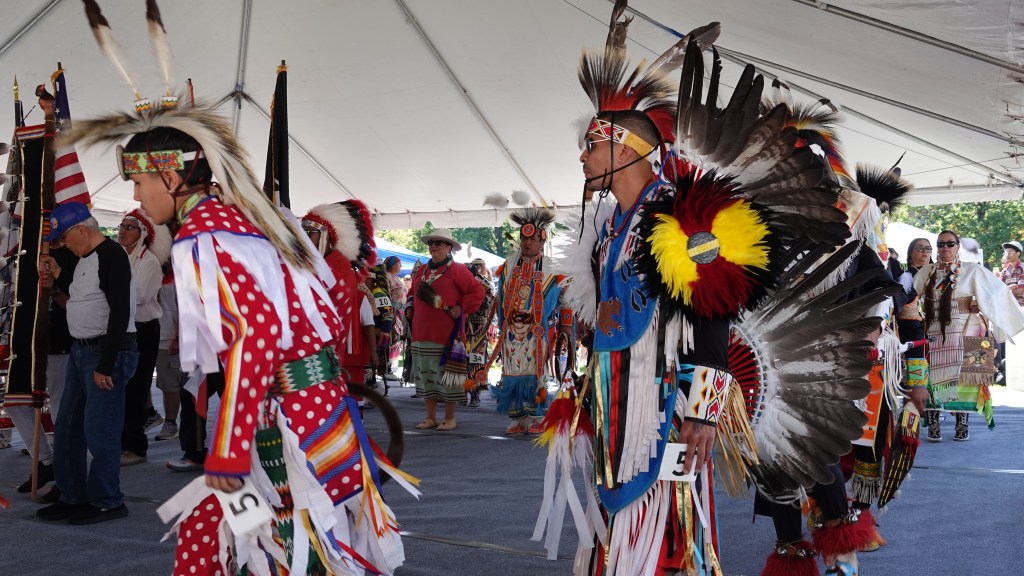
Dancers enter the powwow tent during the grand entry. (Photograph by Melodie Miller)
After 23 years, the powwow returns to campus as a celebration of faith and tradition for the indigenous peoples of Colorado. The grand entry victory song and two rounds of intertribals. (Photograph by Melodie Miller)
Saydie Sago told me she went to the last powwow 23 years ago, in 2001 with her parents when she was a small child. We are “bringing some Cheyenne, and Rapaho community from northern Rapajo members, southern Rapaho members, and Cheyenne members to come dance and be a partner. Of course, they were part of one of the many tribes that are historically tied to this part of the land and also Colorado. So we are inviting them back to their ancestral lands,” Sago said.

Saydie Sago, one of the powwow organizers, is a fourth-year PhD student here at CU. (Photograph by Melodie Miller)
“I know that my parents, I think, have actually been to the powwow 23 years ago. So it’s really nice to see it coming back, Redhorse said. “I’ve been going to powwows ever since I was one of the tiny tots. My mom put me in a jingle dress dance, and I got up on the dance floor. I really hope we can continue this ongoing tradition.”

Shaleen Redhorse is an aerospace engineering student here at CU. She danced powwows when she was younger. (Photograph by Melodie Miller)
I spoke with CU graduate Benny Shendo, the vice chancellor of Native American Affairs, about the future for Native American students in states outside of Colorado.
“We only have two federally recognized tribes here in the state of Colorado. But then there’s 46 other tribes that have historical connections to the state of Colorado,” Shendo said. Colorado state ” passed the law signed by the governor that will allow any students from those tribes to come into state tuition. Not only will this increase our Native American enrollment, both undergraduate, graduate, but also faculty and staff.”
“It’s a new day,” Shendo said. “It’s a new day, you know, it’s for us, and we’re hoping to elevate the presence of our native students at all levels.”

CU graduate Benny Shendo, the vice chancellor of Native American Affairs is a state senator for New Mexico. (Photograph courtesy of Common Ground Rising.org Blog)
Powwow Gallery


Powwow dancers at the University of Colorado Boulder.(Photograph by Melodie Miller)
Welcome to the 2024 Powwow on the University of Colorado at Boulder campus. This event offers an exhilarating experience spanning 200 years of cultural history. Every moment is an opportunity to witness and partake in the spiritual ceremony of the powwow. (Melodie Miller | Photographer)

Powwow dancers at the University of Colorado Boulder.(Photograph by Melodie Miller)


Powwow dancers at the University of Colorado Boulder.(Photograph by Melodie Miller)
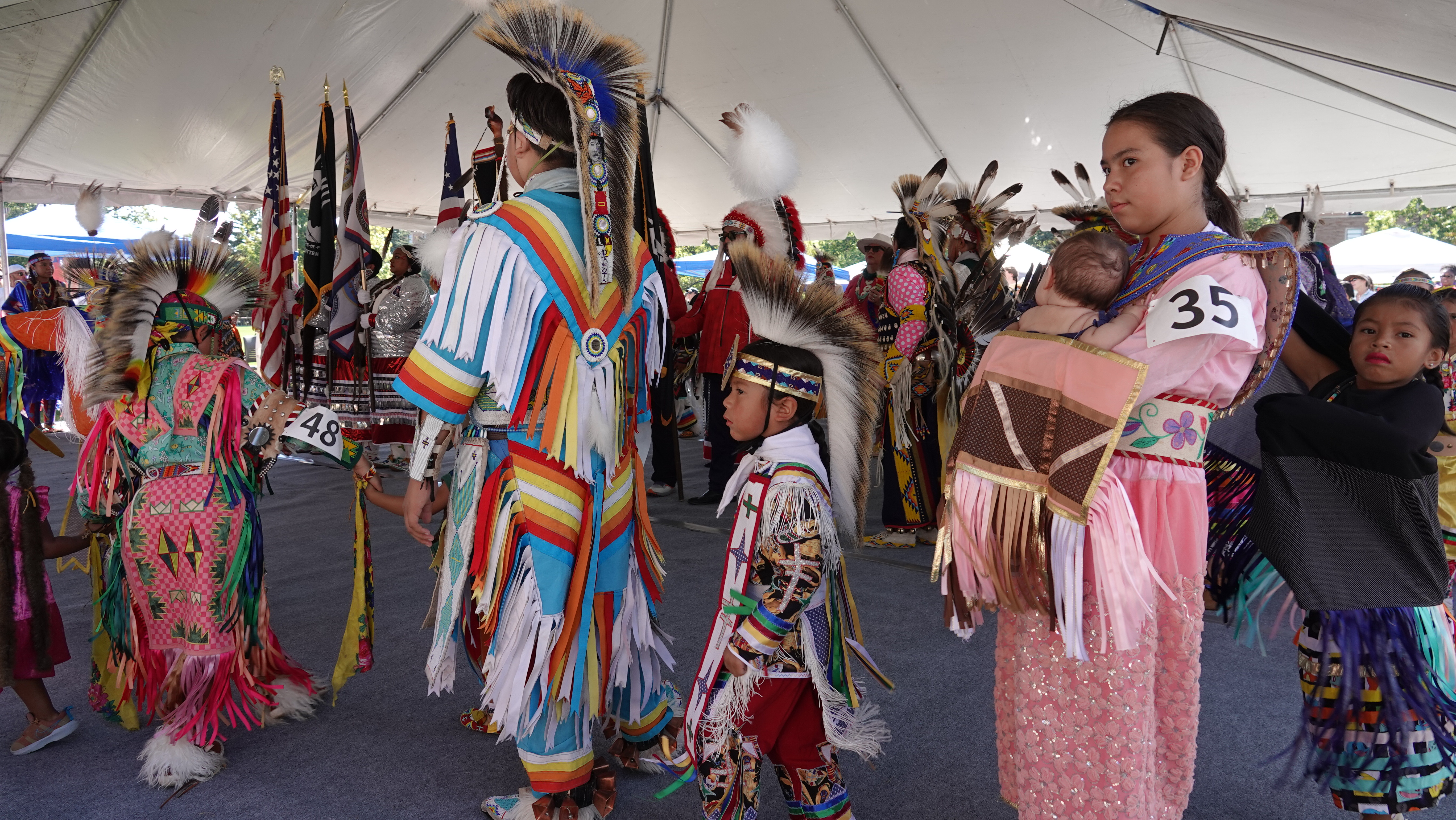


Powwow dancers at the University of Colorado Boulder.(Photograph by Melodie Miller)


Powwow dancers at the University of Colorado Boulder.(Photograph by Melodie Miller)


Powwow dancers at the University of Colorado Boulder.(Photograph by Melodie Miller)
Powwow dancers at the University of Colorado Boulder.(Photograph by Melodie Miller)
The University of Colorado Boulder is a public research university in Boulder, Colorado. Founded in 1876, five months before Colorado became a state. Colorado’s flagship university honors and recognizes the many contributions of Indigenous peoples in the state. The university acknowledges that it is located on the traditional territories of the Cheyenne, Arapaho, and Ute. It is also on the ancestral homelands of many other Native American nations. The university is dedicated to recognizing and amplifying the voices of Indigenous CU Boulder students, staff, faculty and their work.
-
Proposition 127: The end of lion hunting in Colorado?
Mountains northeast of Durango brings fourth-highest harvest of mountain lions
By Colorado Student News Service
Friday, Nov 1, 2024 11:00 AM Updated Friday, Nov. 1, 2024 5:59 PM
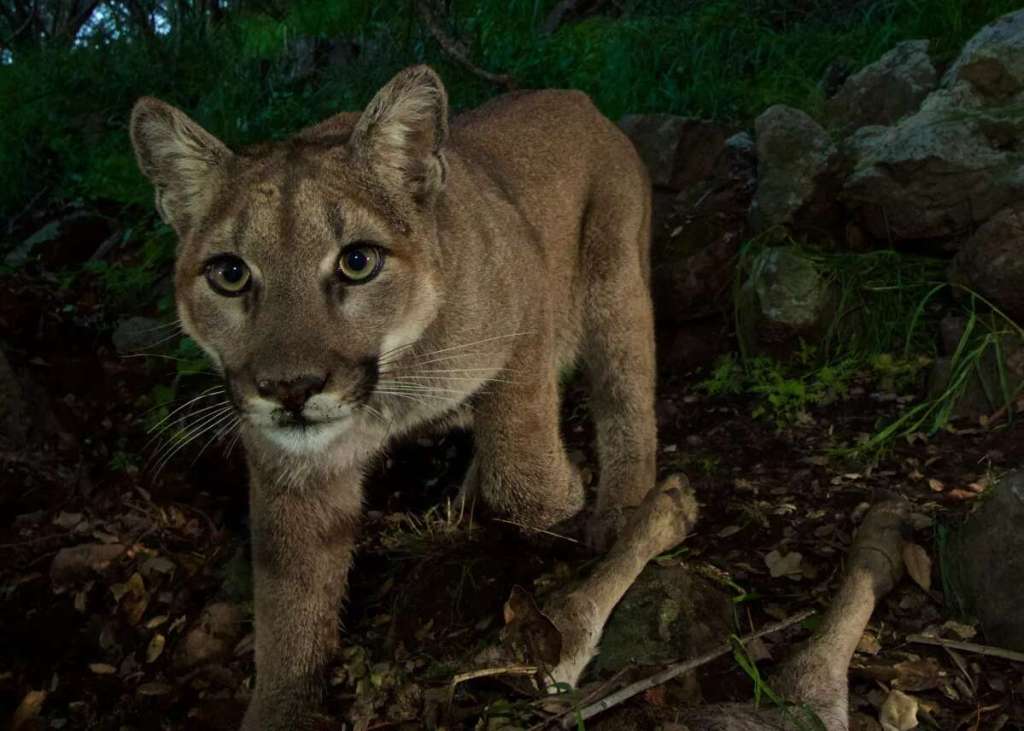
Records from Colorado Parks and Wildlife shows 2,600 hunters killed 502 mountain lions in 2022-2023, the most recent period for which statistics are available. (Courtesy of the National Parks Service, via The Colorado Sun)
In the early morning chill of Colorado’s rugged wilderness, the rhythmic panting of hounds echoes through the trees as they close in on their elusive target, a mountain lion.
For hunters, the video from a Durango outfitter, shows a moment steeped in tradition and survival skills, but such moments may soon disappear from the Colorado landscape. On Nov. 5, voters will decide the fate of mountain lion and bobcat hunting in Colorado, with Proposition 127 seeking to ban the practice entirely.
The group “Cats Aren’t Trophies” gathered about 188,000 signatures to put a measure on the November ballot.
While the group’s name references “trophies,” Colorado Parks and Wildlife considers trophy hunting to be illegal in Colorado. Hunters are expected to eat and use what they kill, based on a hunting brochure from the state agency.
Public records from the state agency show a highly regulated hunting environment where 2,600 hunters killed 502 cats in 2022-2023, the most recent period for which statistics are available.
The fourth highest number of mountain lions killed – 11 – came from an area in the mountains northeast of Durango and La Plata County. The rest of the mountain lions killed around the state were in the single digits, mostly in remote, mountainous areas.
The 21 mountain lions killed in a remote area northeast of Meeker in 2022-2023 was the largest number for any area in Colorado, based on public records provided by Kara Van Hoose, a Colorado Parks and Wildlife spokeswoman. The next largest number of mountain lions killed were in a mountainous southern part of the state near Interstate 25, where 16 were killed in one Colorado Parks and Wildlife statistical area and 15 were killed in the neighboring area. Colorado Parks and Wildlife maps do not follow county lines around the state but are numbered by region.
Van Hoose declined to comment on specific questions related to Proposition 127 so as to remain neutral during the election period. She declined to comment on how current legal hunts affect the economy or how banning mountain lion hunts could affect wildlife and cattle, among other things. Colorado Parks and Wildlife started regulating hunting licenses for mountain lions in 1965 after the mountain lion population declined, according to information on the state agency’s website.
Van Hoose said that Colorado Parks and Wildlife surveys wildlife populations by helicopter, among other things, to decide how many licenses will be available to hunters every year.
“We set licenses depending on a lot of different factors. There are environmental factors and external factors,” Van Hoose said.
The most emotional part of the hunting discussion appears to be how some Colorado outfitters use GPS-collared dogs to track and hunt mountain lions. Hound hunting is legal in Colorado.
Some 88% of Colorado residents disapprove of hunters using dogs to help with hunting and 78% disapprove of “trophy hunting” of mountain lions, according to an August Colorado State University study published in the Society for Conservation Biology journal.
Kelly Maher, a Colorado hunter, said she teaches her children to honor the animals that the family hunts “by consuming and using every part of the animal.” She said proponents of Proposition 127 don’t like the hound hunting, “but the cat needs to be stationary to identify its sex and status.”
The people who gathered signatures to get Proposition 127 on the ballot feel that hunting mountain lions with GPS-equipped dogs “gives our hunters a bad name for violations of fair chase,” according to Mark Surls, the volunteer and outreach coordinator for the group.
A group supporting continued mountain lion hunting is called Colorado’s Wildlife Deserve Better, which includes funding help from the Colorado Cattlemen’s Association and the Colorado Wool Growers Association. And the Board of Mesa County Commissioners in Grand Junction unanimously approved a resolution opposing Colorado Proposition 127 on Tuesday, Sept. 24.
Colorado Parks and Wildlife requires hunters to take an exam and buy a license to hunt mountain lions. About 3,800 to 4,400 mountain lions live in Colorado, according to the state agency, but most people never see them because they’re active at night.
About the Colorado Media Project
The University of Colorado journalism program has a $10,000 grant from the Colorado Media Project, as you know, and we’re working with eight newsrooms this semester in rural and underserved communities mostly around the Western Slope, including The Journal, Ark Valley Voice, Aspen Times, Bucket List Community Café, Colorado Newsline, Denver Urban Spectrum, Rio Blanco Herald Tribune, Sopris Sun/Sol del Valle and Enterate Latino.
Readers can the Colorado Media Project and the class by contacting Elizabeth Potter and the students at elizabeth.potter@colorado.edu.

Colorado Media Project | Courtesy of Colorado Media Project
Common Sense Institute Colorado, a nonpartisan group interested in protecting Colorado’s economy, reports that Proposition 127, if passed, would cause an overall “$4 million to $6.2 million in lost Colorado Parks and Wildlife revenue.”
Of the total, the Common Sense group says there would be a direct loss of $410,000 from mountain lion and bobcat hunting licenses. The group estimates that Colorado Parks and Wildlife would lose a separate $3.6 to $5.8 million in elk and deer hunting permit revenue because the increased mountain lion population would keep the elk and deer population down.
Reporting by Adair Teuton, Bella Hammond, Caniya Robinson, Jackson Jupille, Lincoln Roch and Melodie Miller.
https://www.the-journal.com/articles/proposition-127-the-end-of-lion-hunting-in-colorado/
-
Hercules (1997), an Academic Critique

Hercules (1997) Walt Disney Studios (Photograph courtesy of IMDB.com)
-
Risen (2016), a Roman Passion Play, a review

Kevin Reynold’s Risen (2016), set in 33 CE, stars Joseph Fiennes as Clavius, a Roman Tribune in Judea who is tasked with finding the missing body of Jesus Christ.
-
Powwow Heartbeat: a script (University of Colorado at Boulder)
The Heartbeat of the Powwow returned to the University of Colorado at Farrand Field on Sept. 28, 2024. (Melodie Miller | Photographer)
Listen to powwow musician Tony Crank at the University of Colorado Farrand Field Sept. 28, 2024. The Colorado American Indian Tribes In-State Tuition Act (CO SB 21-029) was passed to allow eligible students to pay in-state tuition at Colorado public universities and colleges.(Melodie Miller | Photographer)
This was the first powwow on campus in 23 years.
Farrand Field was named after Livingston Farrand, the university’s fourth president who served from 1914 to 1919.
After 23 years, the powwow returns to campus as a celebration of faith and tradition for the indigenous peoples of Colorado.
Grand entry for the powwow. (Melodie Miller | Photographer)
After 23 years, the powwow returns to campus as a celebration of faith and tradition for the indigenous peoples of Colorado. The grand entry victory song and two rounds of intertribals.
























-
A Hawai’ian Creation Story
Story interpreted by Melodie Miller | Designer | Illustrator

Keawe the Flaming Spirit of the Volcano (Melodie Miller, Illustrator, Adobe Illustrator)
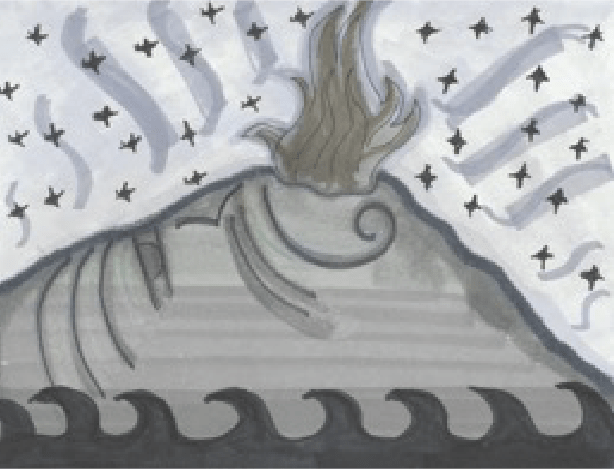
Po the Volcano and the Flames of Many Voices (Melodie Miller, Illustrator)
In the beginning there was Po, the all-powerful Volcano.

Keawe the Flaming Spirit of the Volcano (Melodie Miller, Illustrator)
And, Keawe, the flaming spirit of the Volcano.

Untimed Infinite Time Passing (Melodie Miller, Illustrator)
Surrounded by an abyss of empty darkness, together, they were alone.
One day Keawe, speaking his mind said, “Po, it is not good that I am so alone.”
“But we have always been alone together. It has always been our way. We are all powerful. We do not need another.” Po responded.

The Flames of Many Voices (Melodie Miller, Illustrator)
The Flames of Many Voices living inside Volcano echoed Po’s warning, speaking with crackling and slapping flames, “Yes, Yes, Yes. It has always been our way, way, way. We are all powerful, powerful, powerful. We do not need another, another, another.”
“But Po, I have no one to love.” Keawe said.
“Keawe, what is this word you say, Love?” Po asked.
“What is this word Love? What is this word Love? What is this word Love, Love Love?” the Flames echoed with the innocence of Many Voices, pushing and pulling at the walls of the Volcano.
Time passed.
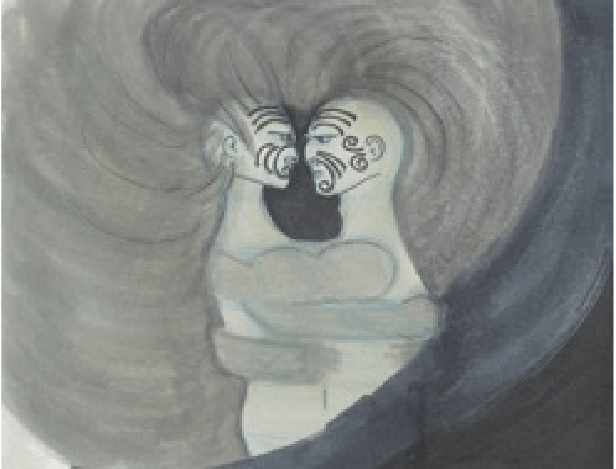
Na Wahine and Keawe (Melodie Miller, Illustrator)
Po did not want Keawe to be lonely, so he created Na Wahine for him to love.
“Keawe, I am Na Wahine. I have been waiting, alone for a long time, inside your heart. I am here now to share your love.” she said.
“Why did you not come sooner?” Keawe asked?
“Because you did not call for me.” she answered.
Looking down upon Keawe and Na Wahine, Po said, “Together you will rule. And, it is good.”
Then with a rumbling of the Volcano, Po commanded, “From your love, bring forth life to help you govern the heavens and the earth; bring forth beauty and all things will be good.”

The god princes and goddess princess of Hawai’ian legend (Melodie Miller, Illustrator)
Through Na Wahine, Keawe brought forth four sons.
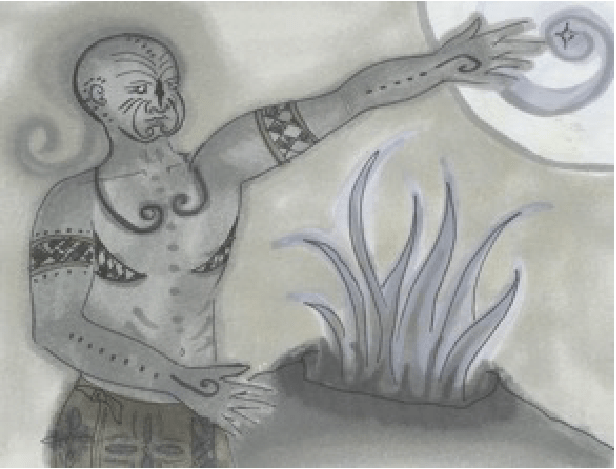
Kane the God Prince of Sky (Melodie Miller, Illustrator)
The first son was Kane, the god of the sky and all that it is.

Ku the God Prince of War and Peace (Melodie Miller, Illustrator)
The second son was Ku, the god of war and peace; and Kanaloa, the god of all things in and of the ocean;.

Kanaloa the God Prince of Ocean (Melodie Miller, Illustrator)
The third son was Kanaloa, the god of all things in and of the ocean.

Lono the God Prince of the Land (Melodie Miller, Illustrator)
The fourth son was Lono the god of the land and that which it brings forth, the harvest and its bounty.



The Flames of Many Voices (Melodie Miller, Illustrator)
Along the walls of the Volcano the envious Flames of Many Voices became angry and agitate. The Flames of Many voices felt alone because Keawe was not alone.
“Call for me. Call for me. Call for me,” the Flames of Many Voices echoed.
But Keawa did not answer.
Time passed.
“Four daughters will be yours,” Po said.

Laka the Goddess Princess of the Hula (Melodie Miller, Illustrator)
Your first-born daughter, Laka, will bring the hula, the language of the heart.” Po said. “Laka will keep the story; abide by her words.”
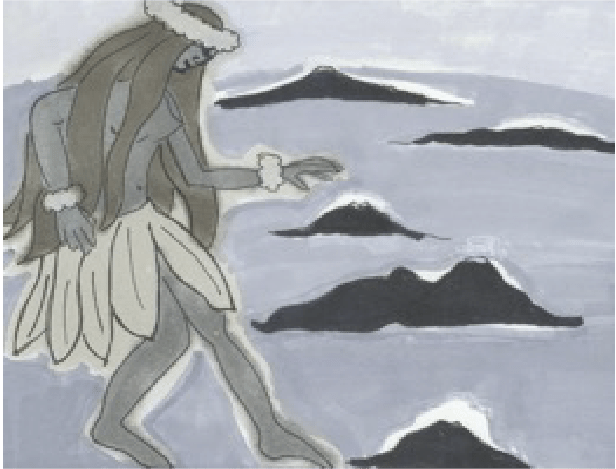
Hina the Goddess Princess of Sanctuary (Melodie Miller, Illustrator)
“Your second daughter Hina will give you sanctuary from danger, stand on her as a rock when in need.”

Kapo the Goddess Princess of the Lost (Melodie Miller, Illustrator)
“Your third daugher, hot tempered Kapo will govern furiously with her brother Kanaloa. Be remembered by Kapo when you are hungry and lost, she will feed you and lead you home.”

Papa the Goddess Princess of Nature and its Beauty (Melodie Miller, Illustrator)
The fourth daughter, Papa, “will rule all of nature with beauty beyond words. Anyone who looks upon her, even in her rage, will feel her power.” Po said.
Papas natural beauty will overpower the gazers senses, and none will find the strength to resist her.
“Once the beauty of Papa is gazed upon, she will enchant their heart forever,” Po said.

The Flames and the Goddess Princess of Nature and its Beauty (Melodie Miller, Illustrator)
The Flames of Many Voices gazed upon Papa and were stricken with love for her natural beauty, which was beyond challenge, thus they were lonely no more, They were enchanted.
To this day, anyone who looks upon the nature of Papa and the beauty of the Islands, will not have the strength to resist her love. Hawai’i will live in their hearts for eternity.
This is the creation story of the enchanting lands of Hawai’i, her captivating love and irresistible beauty.
-
Sunflower Farm Founder Podcast

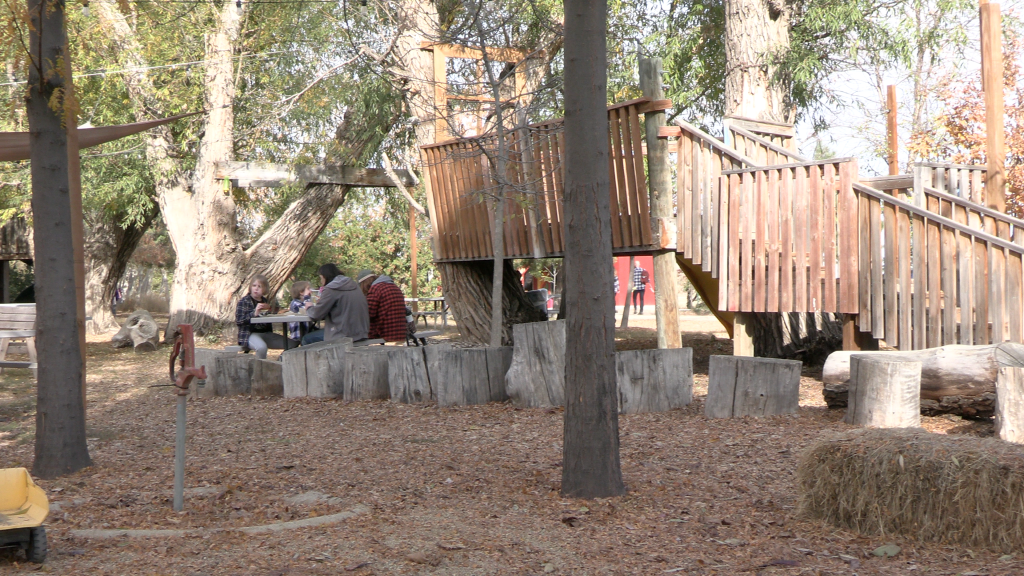
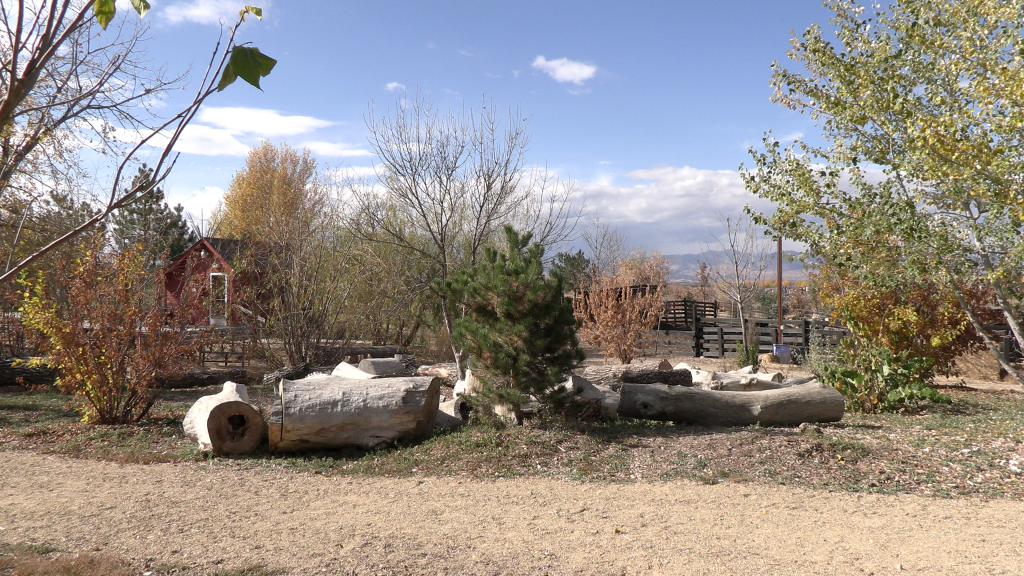
It was early morning on a crisp, cold, sunny Sunday in November on the 55-acre Sunflower Farm. Founder John Roberts fed wood to the crackling campfire to warm the Farmfest guests. Community members of all ages come to the sustainable farm to roam among the magical forest and farm animals.

The farm is a healing “resting place for the community,” Roberts said. You can come as a family “to mingle with others that you never would have otherwise met.” The farm creates connections and an “intertwining of community that I think is beneficial.”
Roberts earned a bachelor’s degree in English from Colorado Mesa University. He taught at a primary school in Moshi, Tanzania, Africa. While in Moshi, he observed the benefits of outdoor-based learning. “The students plant seeds in the spring. By the end of the summer, they see the benefits of their participation in the farm. “
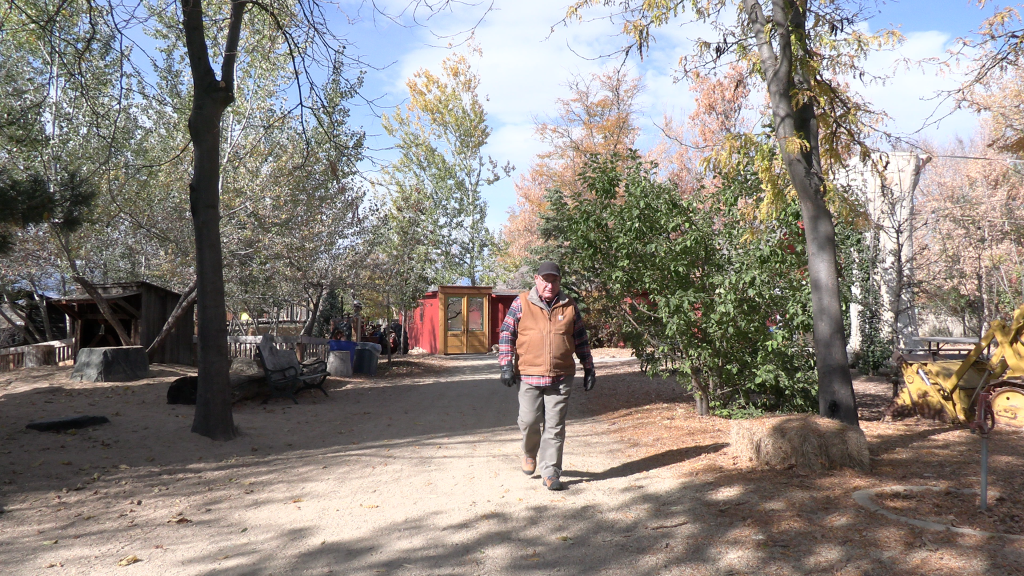
The children spend more than half their learning time out of doors. They play with the worms in the dirt and “begin to understand where their food comes from,” Liz Napp, the executive Sunflower Farm and Sunflower Farm Acres, said.

The farm is like an outdoor living room where Roberts introduces his guests to over 100 farm animals. “When I lived in Washington D.C., I realized that spaces are important,” Roberts said. “Over the last 25 years, I’ve created spaces for visitors to experience different things,” while enjoying the farm.
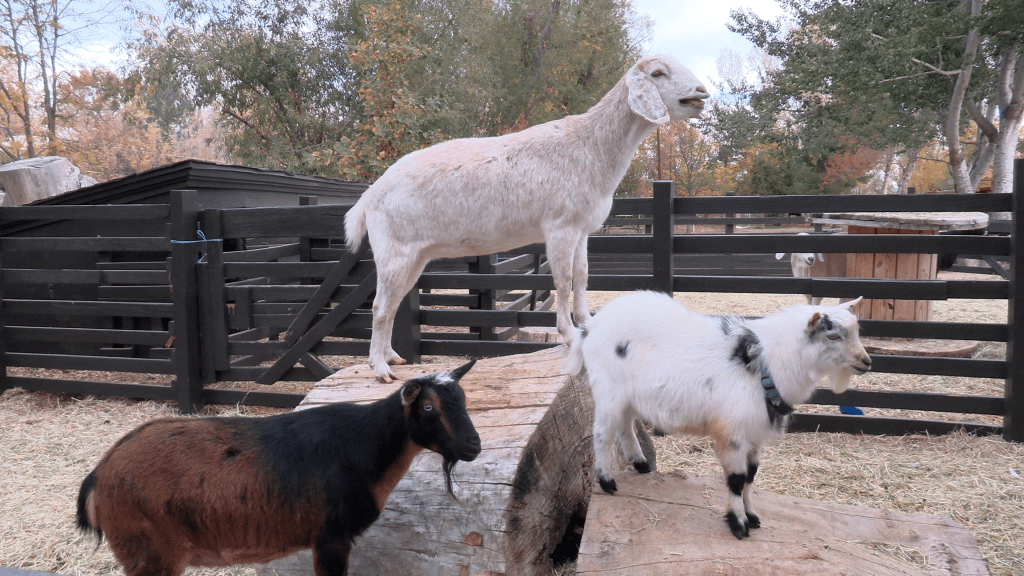
In 2024, Sunflower Farm became a production farm with an educational vision to immerse children in nature, land conservation and farming. Jacob McGuire, operations manager of Sunflower Farm Acres, said the children are “getting more than just the curriculum” as they navigate the property. They are “participating in preserving nature.”

As a conservation easement, Sunflower Farm is “required through contract to preserve much of the nature that exists,” McGuire said. This means no new structures can be built on the farm, so the preschool cannot grow.
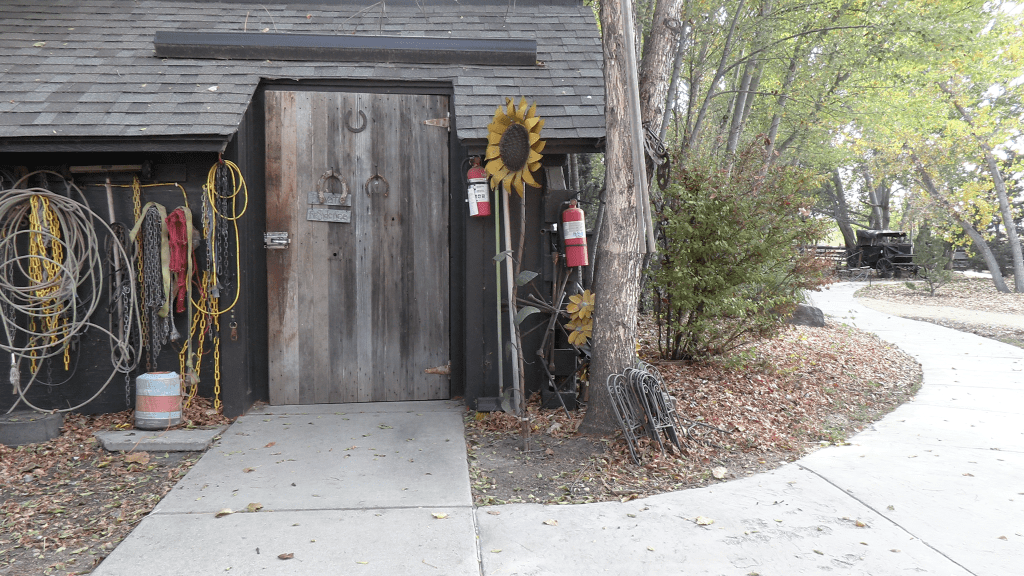
But there are other ways the farm can grow its contribution to the community. Healthy soil grows nourishing food, so Roberts is committed to working with aspiring local farmers.

We are “planning to expand educational internships focusing on regenerative farming practices,” McGuire, who has a master’s degree in international human rights from the University of Denver, said.
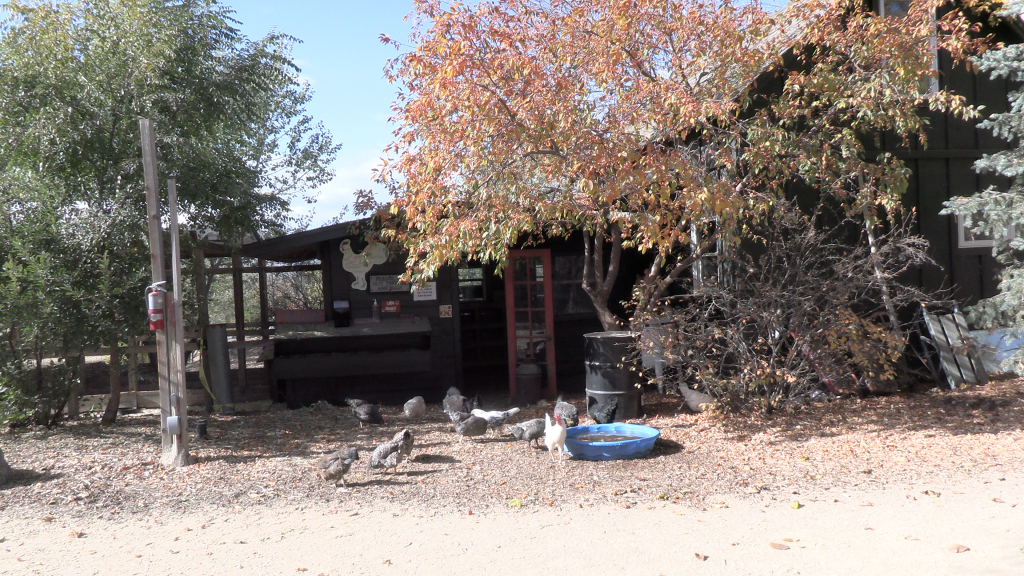
Roberts bought the homestead in 2002. It had a rundown farmhouse. However, Robert’s four children and their friends loved the place. Roberts, a master builder, improved the property, created the community spaces, and formed a preschool.

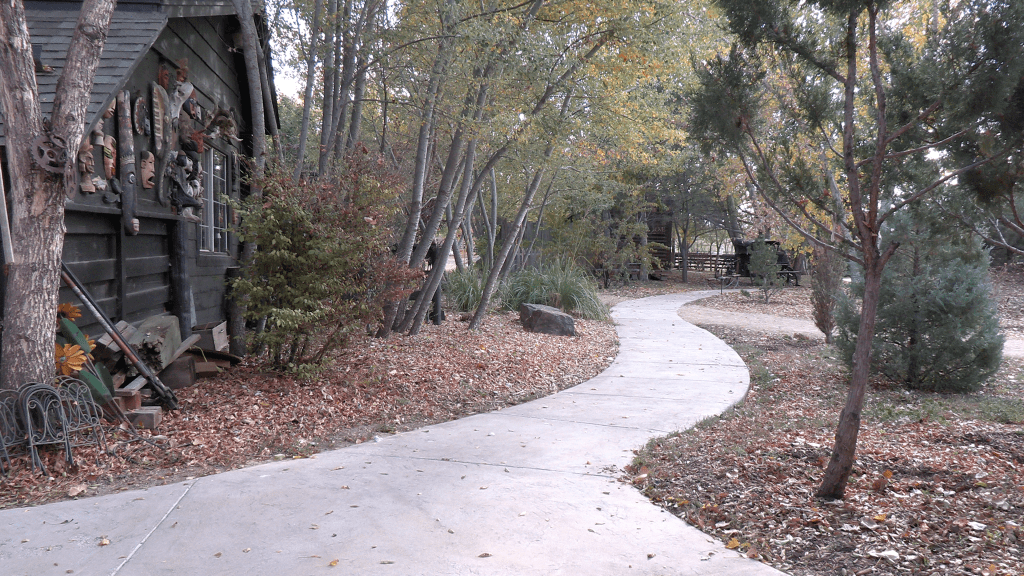
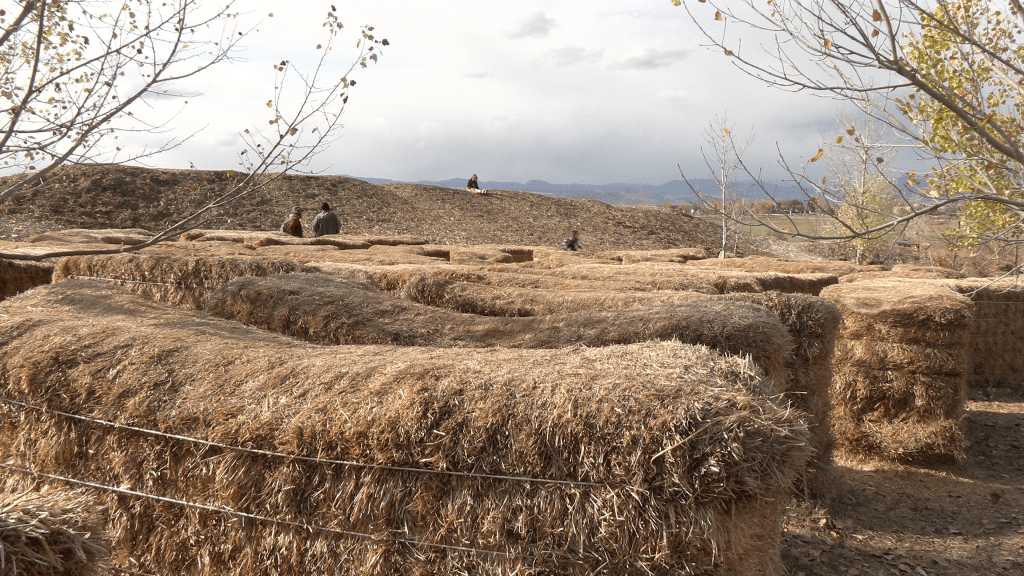
Roberts goal was to preserve the open space of the farm. He built winding pathways for visitors to explore a hay maze, a grain silo, and a twin-engine airplane. Guests can wander between hand-split wood enclosures where friendly goats and ponies greet everyone.
The farming and animal setting creates an “easy learning environment for kids to participate and they are eager to participate,” Roberts said. While planting pumpkin seeds, the children count and improve their “dexterity, and they’re also learning.”
Looking to the future, Roberts said, “You know, I don’t think there’s going to be another Sunflower Farm. The business model does not financially support” the preschool.
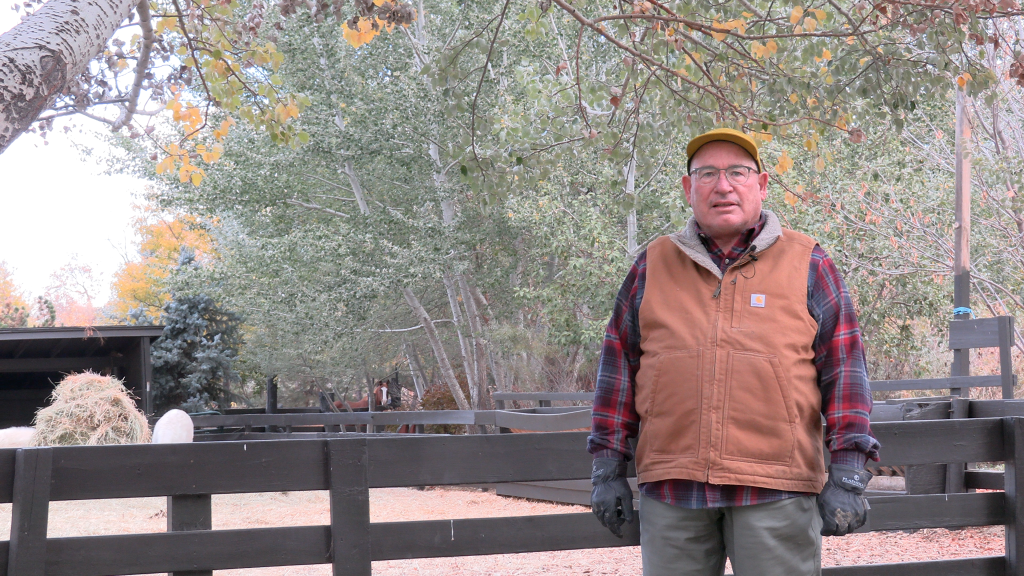
“I was raised poor, so money is not a motivating factor for me. Otherwise, I would have sold this farm years ago and retired.” Roberts said. “But I’ve made a commitment of myself to do this for the community. This is my purpose.”
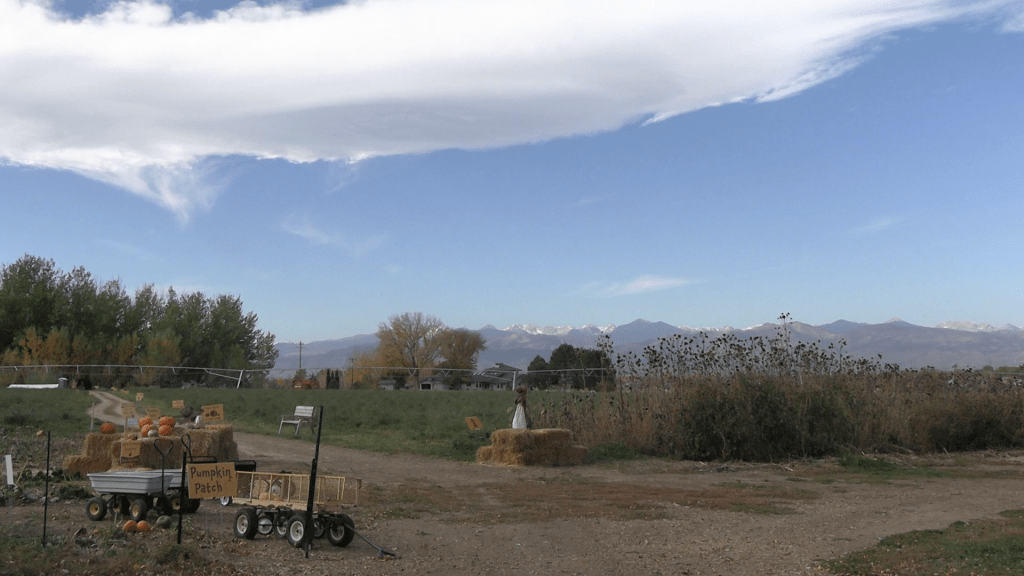
Visitors are welcome at the Sunflower Farm in Longmont Colorado with reservations.
-
Game in Luxury at the University of Colorado in Boulder

The Alienware Lounge at the Colorado Memorial Center on C.U. campus. (Melodie Miller / Photographer)
Game in luxury with state of the art Dell software can be found at the University of Colorado, Boulder lounge on the first floor of the Colorado Memorial Center. The gaming lounge is open seven days a week.

The Alienware Lounge features custom designed chairs for long periods of sitting. (Melodie Miller / Photographer)
The University of Colorado teamed up with Alienware, a hardware subsidiary brand of Dell in 2023 to build the second collegiate facility in the nation. According to the University, the 1,275-square-foot space inside the UMC was renovated with a $1.2 million donation from Dell Technologies and Intel.
The Alienware Lounge offers numerous games and open seating for up to one hour per session. Watch the Youtube video for a view of the facility. https://youtu.be/Dpi8Z01Gqcg (Melodie Miller / Photographer)
The luxury Alienware Lounge has 19 gaming desktops, three gaming laptops, and a console area that can comfortably seat up to 4 gamers. C.U. students receive 10 free days passes on their first visit.
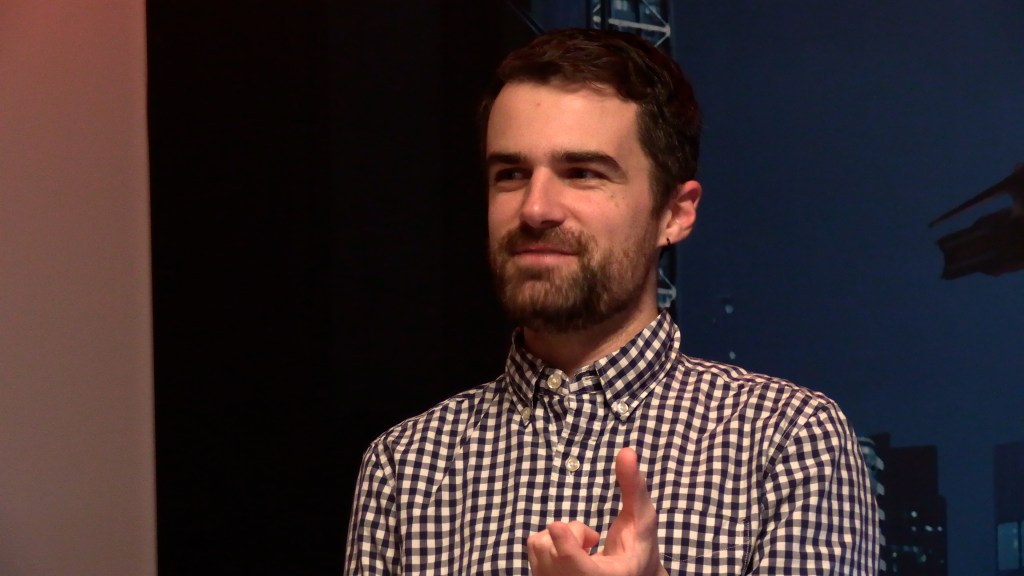
Adam Pallas, is the senior coordinator for gaming programs at C.U. Boulder. (Melodie Miller / Photographer).
Building a community at Alienware is one goal of the Center for Student Involvement at C.U. “I am full time. I am part of our Center for Student Involvement, which is where our gaming lounge is housed,” Senior Coordinator for Gaming Programs, Adam Pallas said. “I was brought on to the University in August 2023, prior to the opening of the gaming lounge, and I’ve been with it since then.”
UCM Alienware Gaming Lounge is open 7-days a week. 
Alienware Esports Lounge has ample, custom seating. 
Log into your account to play the game of your choice. 
Stations accommodate playing with multiple friends. 
The lounge has 50 games installed on its PC’s. 
The lounge has state-of-the-art Dell gaming stations.
UCM Alienware Lounge entrance. (Melodie Miller / Photographer).
Alienware hosts in person gaming night once per month with free pizza and tonight its Minecraft Bingo. “Minecraft is not normally a competitive game, but we thought we could make it competitive by doing the Bingo competition,” Pallas said.

Minecraft ( http://www.minecraft.net/en-us/aboutminecraft )
Accept the Minecraft bingo challenge? Achieve 5 down, 5 across or 6 diagonally and win the game.

How to play Minecraft Bingo ( https://minecraftbingo.com/?s=3-0-0-4_56400 )
Mojang Studios, a video game developer based in Sweden introduce Minecraft in May 2009 as a sand-box-style where players could freely explore, interact with others and create. The idea is that people can experiment by playing survival or creative modes. Mojang Studios sold Minecraft to Microsoft Gaming in 2014 for $2.5 billion dollars.

Graphic was designed and developed with Piktochart. (Melodie Miller / Designer).
Minecraft has evolved over the years but it remains a sandbox-style video game that gives players a lot of freedom to explore, interact, and create virtual worlds without following a set objective. It is an environment where players build and explore virtual worlds by discovering and extracting raw materials with craft tools and machines.

Minecraft landing page( https://www.xbox.com/en-US/games/store/minecraft/9MVXMVT8ZKWC/0010 ) Eli Grimm is a sophomore at C.U. majoring in engineering. His favorite game is Minecraft because it is a “creative game to play with your friends,” Grimm said. “Its a great way to connect with people. If you have close friends, but you guys live far away, you could play some games together. It’s something that’s social.”
Eli Grimm, C.U. gamer and engineering major. (Melodie Miller / Photographer)
The Alienware Lounge is “sponsored by Dell Alienware. So we have these amazing rigs. These are top of the line computers that would cost several thousand dollars to make on your own,” student gaming event planner, Jesse Helser said.

Jesse Helser is a student gaming event planner at the Alienware Lounge at C.U. (Melodie Miller / Photographer)
C.U. student, Colin Stewart, a junior majoring in psychology said, “My goal tonight is to win. This is the second time I’ve been here. I participated in the first event of this semester and I honestly have my own gaming PC in my dorm. But I enjoy coming out here.”
Colin Stewart, is a junior majoring in psychology at the University of Colorado in Boulder. (Melodie Miller / Photographer)
Although C.U. offers 50 games, Minecraft has become the best selling video game world wide since its release in 2009. Sales topped at 300 millions copies sold as of 2024 and according to Xbox, there are nearly 170 million monthly players exploring the critically acclaimed virtual worlds.

A C.U. student played a video game as his friends sitting near by joined in the same battle. (Melodie Miller / Photographer)
The Alienware gaming lounge is a place created for fun and competition that offers students the opportunity to team build playing on high-tech gaming equipment. They can grow a community of gamers facilitated by the Center for Student Involvement 7 days a week.

UMC Alienware gaming lounge. (Melodie Miller / Photographer) https://www.colorado.edu/involvement/gaming-lounge
The Alienware Lounge is a place of community where friends can join in video games for relaxation and enjoyment. Students will find Alienware hours and coming events on the website.
-
John Roberts shares his sustainable Sunflower Farm with the community
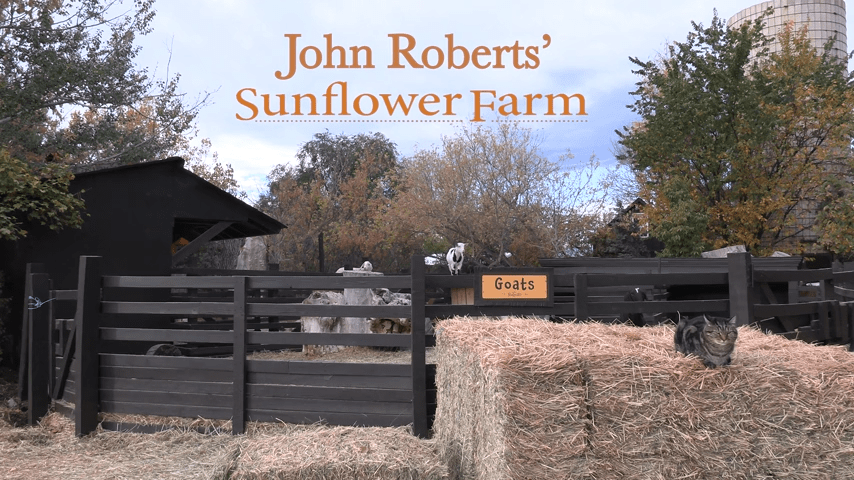
The Longmont Colorado Sunflower Farm video and interviews were written and produced by Melodie Miller.

Sunflower Farm, Longmont Colorado (Melodie Miller Photographer)
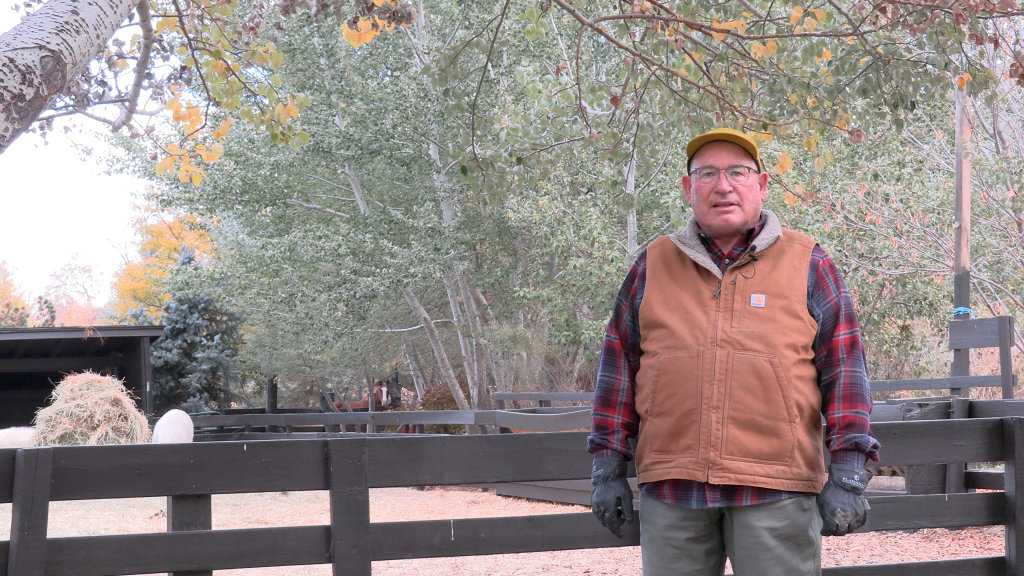
John Roberts, owner of Sunflower Farm, Longmont Colorado (Melodie Miller Photographer)

The tool shed on Sunflower Farm, Longmont Colorado (Melodie Miller Photographer)